The Fountains of Silence

A haunting and romantic novel set in post-war Spain by Ruta Sepetys – winner of the Carnegie Medal 2017.

Madrid, 1957.

Daniel, young, wealthy and unsure of his place in the world, views the city through the lens of his camera.

Ana, a hotel maid whose family is suffering under the fascist dictatorship of General Franco.

Lives and hearts collide as they unite to uncover the hidden darkness within the city.

A darkness that could engulf them all . . .

Master storyteller Ruta Sepetys once again shines light into one of history’s darkest corners in this epic, heart-wrenching novel about identity, unforgettable love and the hidden violence of silence.

Penguin

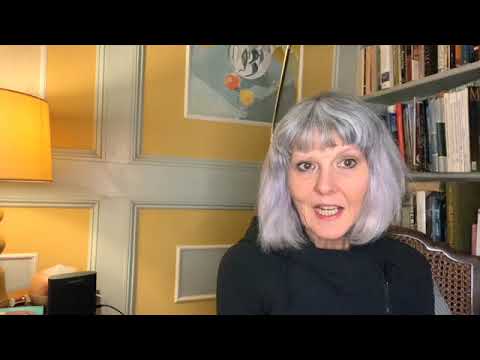
I was lucky enough to be invited to join a small Q&A session with Ruta Sepetys on zoom last month, to discuss her latest title THE FOUNTAINS OF SILENCE. It was an absolutely fascinating conversation between her and Carmen McCullough (editorial director at Puffin), followed by some questions from the invited bloggers. Do read all the other blogs to discover her answers to some really interesting questions about the research behind her writing as well as the writing itself and its reception.

Ruta talked about building narratives from what you know (and assume) about a person, and how important it is to give a voice to unheard stories to maybe change opinions and open up minds. It was amazing hearing about the lengths she went to in researching details to include that would immerse the readers in a sensory experience – to the extent that she owns a key to a room in the hotel that her American family stayed in, brochures they would have seen in the foyer, a spoon they would have used!

When it was my turn to ask some questions, mine weren’t really about FOUNTAINS at all (although it was relevant as it had recently been announced that it had been longlisted for this year’s Carnegie AND NOW SHORTLISTED!!!), but rather about her experience being nominated for and winning the Carnegie medal:

On your website it says your “books have won or been shortlisted for over forty book prizes”, but the Carnegie is the only one specifically mentioned, why is the medal so special?

Ruta’s answer to this question blew me away:

One of the oldest, most enduring prizes that is recognised world-wide…When I began writing…many of the true witnesses would say “don’t bother, no one’s interested, the world has forgotten us”, and to be recognised on a longlist for an award like this…is restoring a bit of dignity to these people…The true survivors feel honoured by the award, and that is really powerful. It brings history out of the dark.

Is it just a nice thing to win an award, or do you think they are important for bigger reasons?

Ruta made some great points about the Carnegie promoting a culture of reading, being a reading community, and bringing people together around one story. Reading is a creative partnership between the author and the reader:

…the author provides the text and the reader brings the character to life, the setting, amplifies the emotion…walks by their side for 300pages feeling their fear…Awards acknowledge that empathy, I think that’s the most important part.

Thank you so much to Ruta for the really thoughtful answers.

THE FOUNTAINS OF SILENCE is out in paperback now!

CKG21 Shortlists Announced!

The shortlists of the prestigious CILIP Carnegie and Kate Greenaway Medals, the UK’s oldest and best-loved book awards for children and young people, were announced today for 2021.

I’ve still got to read two of the Carnegie shortlist before I think about my personal winner, they’re so varied that I can only imagine the conversations the judges will have trying to pin down a winner, I’ve honestly loved all of those that I’ve read so far.

Again, two books I haven’t seen the inside of on the Greenaway list, but I’ve ordered them to shadow at school, really looking forward to sharing them with students! Fascinating fact on the announcement blog – this is the first shortlist ever that are all author-illustrator creations!

The winners will be announced on Wednesday 16th June, so get reading…

First Story Young Writers virtual festival

The Young Writers festival, the highlight of the First Story Young Writers programme, kicks off on 24 March 2021. This festival provides a unique opportunity for hundreds of young people from less advantaged backgrounds to engage with a literature festival , often for the first time. Pre-pandemic, staged annually (at Cambridge University), the festival is an inspiring day-long event featuring acclaimed speakers, book signings, readings and writing workshops. For 2021, the festival will become predominantly a free and open access festival online, in a pandemic-necessitated change. From hundreds of students previously attending the festival in Cambridge, this move enables thousands of young writers and readers to access the festival from across the UK and beyond.“We are amazed how many schools have welcomed the festival and registered this year; a day of stimulating creative activity is clearly very welcome at the end of a long challenging term’” said Antonia Byatt, CEO First Story.

First Story partner schools will all take part in live writing workshops with First Story Writers, streamed into their classrooms.

The festival events open to the public are as follows:

24 March Angie Thomas  – access will be open until 23 April 2021 

24  March Young Writers Showcase, chaired by Dean Atta

From 24 March, all Craft and Technique Resource short events will also be available to watch at any time.

All events can be accessed via the festival site here: https://firststory.org.uk/festival/

Sign up early as a school to the Angie Thomas event and receive free copies of THE HATE YOU GIVE:  https://firststory.org.uk/festival/#angie

A limited number of workshops, and a CPD event are for First Story members only. 

The Jericho Prize: Celebrating Black-British new writing for Children

The inaugural Jericho Prize for children’s writing, open to Black-British writers with great stories to inspire children aged 4 years plus and 7–9 has just been announced!

Find out more about it here: https://www.jerichoprize.com/

Show Us Who You Are

When Cora’s brother drags her along to his boss’s house, she doesn’t expect to strike up a friendship with Adrien, son of the intimidating CEO of Pomegranate Technologies. As she becomes part of Adrien’s life, she is also drawn into the mysterious projects at Pomegranate.

At first, she’s intrigued by them – Pomegranate is using AI to recreate real people in hologram form. As she digs deeper, however, she uncovers darker secrets…

Cora knows she must unravel their plans, but can she fight to make her voice heard, whilst never losing sight of herself?

Knights Of
Cover design by Kay Wilson

A Kind of Spark was one of my top 5 books of 2020, an outstanding debut, so I was anxious to not have too high expectations of Show Us Who You Are…but I worried for nothing because it is completely different but equally brilliant! I asked the author, Elle McNicoll, a few questions (which she answered brilliantly):

In SHOW US WHO YOU ARE, artificial intelligence is not shown in a particularly positive light. Did you do a lot of research into the technology or did a piece of tech news spark the idea?

I think it’s the humans controlling the AI that are not shown in a particularly positive light, but I’ll leave that to readers. A lot of AI stories are about AI vs humans and a sentient new being rising up to take over the world. I think that’s a fear that powerful people have about the marginalised–that they will rise up if granted humanity. An interesting fear that says a lot, but not what my AI Grams do. It’s not something that happens in Show Us Who You Are. The AI are very innocent and reactive and the uprising happens elsewhere. The idea was sparked by Prince’s death, when people said they wanted to show a hologram of him performing at concerts. I thought it was a revolting idea.

It feels like SHOW US WHO YOU ARE came extremely quickly after your debut! Had you started writing the idea before A KIND OF SPARK was published or did it come to you all of a sudden?

I was writing it from March 2020, so it was something to get me through the first lockdown. I had Covid and was stuck in my room, feeling horrid and wanting to write about a future with no virus and lots of adventure. I was deep into Show Us Who You Are when A Kind of Spark came out, so 2020 was a very eventful year. 

Both of your protagonists are autistic, and wonderfully different, were you thinking about stereotypes that you wanted to challenge or did you simply want to create representative characters?

I think the latter. I always want to create dynamic neurodivergent heroines who are full of brains and heart and have complete agency over their story. 

In both your books, a growing friendship plays a really important part in the story. Why does it matter so much, do you think, to include such relationships?

Being general here, but a lot of neurodivergent children experience extreme isolation and loneliness. I had a very difficult childhood when it came to making and maintaining friendships and I was bullied a lot for being different. So, that need for connection and being understood is very strong in my work. Adrien and Cora sort of save each other by becoming best friends. They’re kindred spirits and I think it’s essential for ND readers to know that they can find their people someday, and that they deserve to be celebrated. Not just tolerated.

Publishing two books in lockdown has…not been ideal, but have you found remote events a positive thing?

I’m grateful for virtual events, they’ve been wonderful. Doing virtual school visits has been fantastic. But it’s deeply frustrating to have fallen into two lockdown periods. I’ve never been able to walk into a bookshop on publication day. Never met a reader in the flesh. It’s really demoralising and makes it harder to go home and write uplifting things. I’m so grateful to Twitter for allowing me a way to speak to readers. 

When things are “back to normal”, have you thought about what kind of events you might enjoy doing with readers?

I’m desperate to do physical events where I can talk for more than ten minutes about my work and why neurodivergent representation matters. I wrote a middle grade so that I could have these important conversations with young people. Awards have been lovely, but I need to be able to speak to readers and young people about why these books are needed. So I’d love to do more events with booksellers, schools and libraries. That’s the dream.

What are you reading at the moment and who would you recommend it to?

I’m about to start Crater Lake: Evolution by Jennifer Killick. If you love comedic horror, she’s for you. I’m looking forward to seeing her fab characters again.

What’s next for you?

I am writing two books I’m really passionate about at the moment. One is a YA, so will need to go out into the world and find its home. I’m the only one that believes in it right now, but I have the same feeling that I did with A Kind of Spark. So, I’m following it.

Show Us Who You Are by Elle McNicoll is published 4th March by Knights Of in paperback original (thank you Ed PR for sending me a copy and organising the interview).

The Deep-Sea Duke

When Hugo and Ada travel to their friend Dorian’s planet for the holidays, Hugo is anxious about being accepted by Dorian’s powerful family. But when they arrive on Hydrox, there are more pressing things to worry about, as the planet has become a temporary home for refugee butterflies. Displaced from their home by climate change, the butterflies have been offered sanctuary by Dorian’s parents, but they’re quickly running out of space. Meanwhile, beneath the seas, a strange creature is wreaking all kinds of havoc … Can Hugo, Dorian and Ada step in before the crisis gets out of control?

Barrington Stoke
cover design: Helen Crawford-White

You all know how much I love the extra-readable YA from Barrington Stoke (and everything else they publish, but anyway…) so I’m always excited when I get the chance to review one of their titles. I was especially excited to see The Deep Sea Duke arrive, as The Starlight Watchmaker introduced some utterly amazing characters and I wanted to join them in another adventure. I also got a chance to follow up with the author, Lauren James:

When I interviewed you for TeenLibrarian around the publication of The Starlight Watchmaker, you mentioned that you had plans to write a sequel on Dorian’s planet because there was still a lot more story to tell about Dorian and Hugo’s relationship. I’ve loved to see that come true (and was really pleased to see my favourite character, Ada, still plays a large part – pun intended). Is the final version much different to what you had planned 18 months ago?

Not much, really! I’ve always had a really clear vision for these books, and one of the joys of writing short novellas (each book is around 20,000 words long) is that the edits tend to be quite low-key. Not much changes, unlike my novels, which are torn to bits before I’m through with them. But I’ve always been able to see exactly where Hugo and Dorian’s story is going, and it’s so nice to see it come together. 

There is a definite focus on climate change (and the causes) in this novella, did you find yourself doing a lot of research before (or during) the world building?

I’m very interested in climate politics in general, so a lot of the content in the book was stuff I was already aware of. I read a lot of newsletters about climate change, and reading articles helped me establish what I wanted to say with the novella.

What is your main piece of advice for a teen concerned about climate change, and how they can do anything about it?

So many of the climate fiction books I read focus on the effect that individuals can have on the planet, with the message that we all need to be more responsible, greener consumers. I wanted to look at how industry and businesses are causing pollution, to make it clear to my young, scared readers that it’s not their responsibility to fix climate change. No amount of careful consumption can fix an industry-wide problem.

However, there are some things people can do to help! My biggest tips are: 

  • Vote in all political elections you are able to, and make sure your representatives are aware that your vote is based on their climate policy views
  • Replace garden lawns with wildflower meadows
  • Switch to LED lightbulbs
  • Don’t fly – and pay for carbon offsetting for any flights you are required to take
  • Make sure your savings and pensions schemes are not invested in companies contributing to climate change. Ask your company to divest from their harmful default options
  • Avoid eating beef, and transition to dairy alternatives
  • Buy in-season food, grown locally (avoiding hot-house produce grown out of season)
  • Change to a renewable energy utility supplier
  • Buy electric cars – but only once your current car is absolutely unable to be fixed. Keep current cars on the road for as long as possible, to keep manufacturing emissions low
  • Install solar panels or solar roof tiles
  • Air dry clothing instead of tumble drying
  • Avoid disposable, cheap fashion and invest in long-term, quality pieces that can be worn for many years

And, of course, plant trees wherever you can. They truly are the lungs of our planet. Depleted forests, savannahs, peatlands, mangroves and wetlands have the ability to grow back quickly, but we need to give them the opportunity to do that. 

How did the Climate Fiction Writers League come about?

The idea was inspired by a similar writing collective, the Women Writers Suffrage League, formed in 1908 by activists, who said, “A body of writers working for a common cause cannot fail to influence public opinion.” They encouraged professional writers to create work about the suffrage movement working to give women the vote. These books were written and published before women got the vote – when they had no idea whether their activism would be successful. 

The comparison between the suffragettes and modern Extinction Rebellion activists is something I’d been thinking about a lot while writing my own climate fiction novel – it’s one of the big questions of our time, I think. Is political protest enough for something as urgent as the climate crisis? Should activists be taking direct action, similar to those taken by the suffragettes? 

I’ve been trying to answer that question for myself while writing my novel, and the Women Writers Suffrage League was mentioned in some non-fiction about the suffragettes. Immediately, I wanted to join a similar movement for climate fiction writers – but I couldn’t find any when I googled it. In fact, I couldn’t really find any comprehensive resources about climate fiction at all. It seemed like something that would be really useful to a lot of people, so I decided to set one up. 

The group has really taken on its own life beyond what I ever imagined, with over 100 authors on board now, and lots of essays and interviews to read: https://climatefictionwritersleague.substack.com/ 

I will always ask: what are you reading at the moment and who would you recommend it to?

I just read an early copy of A Psalm for the Wild-Built by Becky Chambers, which is a really lovely far-future look at a world where humans have worked to stop climate change – and succeeded! I think there’s a desperate need for futures which aren’t dystopian, to encourage people to keep trying to save the planet and not give up – and this does that really well. I also really enjoyed Winter’s Orbit by Everina Maxwell, a nice space opera romance.

What are you working on at the moment?

My next novel continues the climate change theme with Green Rising, set in a future where teenagers can grow plants, and use it to rewild the planet. I’m also working on the novel adaptation of my internet murder mystery An Unauthorised Fan Treatise, which I posted online at https://gottiewrites.wordpress.com/ So lots of stuff in the pipeline!

Huge thanks to Lauren for her wonderful answers and to Barrington Stoke for sending me a review copy. The Deep Sea Duke is out now!

Lauren James is the twice Carnegie-nominated British author of many Young Adult novels, including The Reckless Afterlife of Harriet Stoker, The Loneliest Girl in the Universe and The Quiet at the End of the World. She is also a Creative Writing lecturer, freelance editor, screenwriter, and the founder of the Climate Fiction Writers League. Her upcoming release is Green Rising, a climate change thriller.

Her books have sold over a hundred thousand copies worldwide, been translated into five languages and shortlisted for the YA Book Prize and STEAM Children’s Book Award.

Her other novels include The Next Together series, the dyslexia-friendly novella series The Watchmaker and the Duke and serialised online novel An Unauthorised Fan Treatise.

She was born in 1992, and has a Masters degree from the University of Nottingham, UK, where she studied Chemistry and Physics. Lauren is a passionate advocate of STEM further education, and many of her books feature female scientists in prominent roles. She sold the rights to her first novel when she was 21, whilst she was still at university.

Her writing has been described as ‘gripping romantic sci-fi’ by the Wall Street Journal and ‘a strange, witty, compulsively unpredictable read which blows most of its new YA-suspense brethren out of the water’ by Entertainment Weekly. The Last Beginning was named one of the best LGBT-inclusive works for young adults by the Independent.

Lauren lives in the West Midlands and is an Arts Council grant recipient.  She has written articles for numerous publications, including the Guardian, Buzzfeed, Den of Geek, The Toast, and the Children’s Writers and Artist’s Yearbook 2021. She teaches creative writing for Coventry University, WriteMentor, and Writing West Midlands, providing creative writing courses to children through the Spark Young Writers programme.

Bad Water by N.M. Browne

Ollu is a barger; a trader living and working on her mother’s matriarchal boat, The Ark. When they lose all their trade goods in a storm and her Mum gets sick, the only way to save her mother’s life and the life of her baby siblings is to make the most dangerous trade of her life. Ollu has to venture into forbidden waters, Bad Water, and she must go alone.

With her old allies under attack, she finds herself reluctantly welcoming two escaped slaves on board The Ark. Buzz is a genetically enhanced stranger from across the sea, while Ratter is a boy prophet, a spy from the old City. The Ark is forbidden to males but she has to accept their help. How many rules will she break to save her mother? Is she prepared to risk everything?

In a world reshaped by floods and the loss of technology, Ollu must make a perilous journey. She is pitted against gang leaders, slavers and violent machete-men. Only her courage, unexpected friendships and rediscovered technologies can save her mother’s life – and her family’s honour.

Nicky came to my previous school, many moons ago, to talk about her (then) new book, Warriors of Alavna (it is a great historical fantasy, look it up if you’ve not read it). She’s written a few (!) novels since and her latest is for a tiny press called Kristall Ink, BAD WATER: a dystopian thriller for ages 11+ with two great protagonists (I say, having only read 3 chapters so far…), Buzz and Ollu. Because there’s no chance of school visits at the moment, she’s filmed a 30minute WBD lesson that could be used for part of a 60+minute lesson:

She’s also interviewed herself in a much shorter clip as a taster!

Thanks for sending me a copy of Bad Water, Nicky (out now)!

Proud of Me

Becky and Josh are almost-twins, with two mums and the same anonymous donor dad.

Josh can’t wait until he’s eighteen, the legal age when he can finally contact his donor, and he’ll do anything to find out more ­­­- even if it involves lying.

Becky can’t stop thinking about her new friend, Carli. Could her feelings for Carli be a sign of something more?

Becky and Josh both want their parents to be proud of them…but right now, they’re struggling to even accept themselves.

Usborne

I loved Sarah Hagger-Holt’s debut MG novel, NOTHING EVER HAPPENS HERE and was lucky enough to have the chance to interview her, read it here, so I was really pleased to be asked to be on the tour for PROUD OF ME.

A Pride group is being set up at school, run by older students but our protagonists get involved (if you like the group scenes, I’d recommend Alex Gino’s RICK as well, for an American version). Friendships play an important role in this story – both brilliant friendships and less satisfying ones – and the feelings Josh and Becky have about their friends are wonderfully described, everything feels very true. In the meantime, Josh and Becky both find themselves keeping very different secrets as he investigates their donor father and she realises she might have feelings for a new friend.

Becky’s best friend Archie is a great character. Openly gay, he (rather than their Mums) is why Becky and Josh both initially go along to the Pride group, and he has some very interesting things to say, for example:

“…Look, if someone else puts a label on you and uses that to define you or put you in a box or to treat you like dirt, then of course that’s bad. But when people say that they’re not into labels, it’s probably because they’ve bought the whole idea that being LGBTQ or whatever is bad, so they don’t want to be associated with it. But labels can be good if you reclaim them, then you can share who you are with other people and be stronger together.”

but he also got into my bad books with this one, which will have every librarian shaking their head in despair, hah:

“Wow, did you know he even has his books in height order? Is your brother for real? Perhaps he’s not really a teenager at all, but a librarian disguised in a teenager’s body?” 

Josh’s secret investigations show him trying to find his place, and his uncertainty around friendships is brilliantly portrayed. It is a really positive book. Their Mums’ fears for them are genuine, remembering how different and difficult it was to “come out” 30 years ago, with the reactions of adults and children in the story really shining a light on how inclusive and safe (hopefully) schools today can be. The children are supporting one another and turning around the attitudes of surrounding adults with positivity!

Do take a look at the other sites for the rest of the tour, and thanks to Usborne for the review copy!

The Shark Caller by Zillah Bethell

I want to be able to call the sharks. Teach me the magic and show me the ways.

A beautiful tale of love, loss, family and forgiveness set in Papua New Guinea. Blue Wing is obsessed with revenge on the shark that killed her parents but is denied lessons that will enable her to become a shark caller giving her the ability to summon sharks to call to the one that she desires to slay.

Thrown together with Maple, a newcomer to the island at first they are combative but as they spend time together they form a tentative friendship and start unpicking the sadness and grief that they each possess and begin a slow journey towards understanding, acceptance and healing.

I received a copy of The Shark Caller via Netgalley and it arrived soon after my family had experienced a tragic loss. Reading this book helped me in a small way to cope with my loss and for that I will always be grateful to the author Zillah Bethel.

The Shark Caller is published by Usborne Publishing Ltd and will be released on February 4th 2021.

Calico by H.H. German & Javier Orabich

Humans have superheroes.
Animals don’t.
That’s about to change.

Violence in comics is nothing new, for decades now a Bat-obsessed billionaire has been beating up mentally ill criminals in a shadowy, crime ridden city; since the 1970’s a grief-stricken Viet-Nam veteran has been gunning down members of the Mafia and other crime syndicates around the world; and for the past decade one of the best-selling comics has featured a dwindling band of survivors battling off the walking dead while trying to find safety and a place to put down roots.

Most, if not all vigilante-based comics are based on blood and vengeance, a crime is committed and people call out for justice and a shadowy figure that knows what evil lurks in the hearts of men answers the call to mete out bloody revenge on the perpetrators of crime. In this regard Calico is similar to other comics within the genre, but he is also different! Sure he is a spandex-wearing seeker of justice, but unlike other comics those he seeks to avenge and protect are not his fellow humans, rather they are those who cannot speak or call out for mercy or help for they are pets, laboratory specimens and the majestic beasts of the wild who live and die at the mercy of one of the cruelest species that has ever existed – mankind.

From the common cruelty of those that abuse pets for fun in the home or on the street, to the wealthy who flout the law by participating in the inhumane practice of canned hunting and the smuggling of rare and endangered species. From that moment on, they become the prey of The Calico, a man driven to extract vengeance for those creatures that cannot defend themselves.

Calico is published by a new publisher with a singular mission – Sigma Comics.

Sigma Comics was created to give a stronger voice to a group that cohabitates this planet with us, yet are routinely encroached upon, threatened, abused and killed. Through both print and digital mediums, Sigma Comics creates and distributes stories inspired by actual events, which often receive very little media coverage in the news.

The violence in Calico is graphic, but not gratuitous, the cruelty shown to animals is not fiction, if you search the news you will not have to look for long before you find reports of senseless cruelty to animals, from pets being poisoned by random strangers or stolen to participate in dog fights and then discarded; to rare and beautiful creatures being stuffed into cases and dying agonizing deaths while being smuggled across borders and more. this violence is widespread and hard to police and control.

Calico is the answer to the question: “What if animals had their own costumed protector to strike back at those who abuse, and kill innocent creatures for no good reason?”

The script by H.H. German is paired well with the art of Javier Orabich neither of whom pull any punches with this phenomenal piece of graphic storytelling!

Due to the violence and graphic nature of the story The Calico is rated M for Mature and is recommended for readers aged 18+ but honestly is sure to find a readership among all ages of comic fans, especially those who believe that all creatures need to be protected!

Issue one is available to order now: https://sigmacomics.com/order-issues/