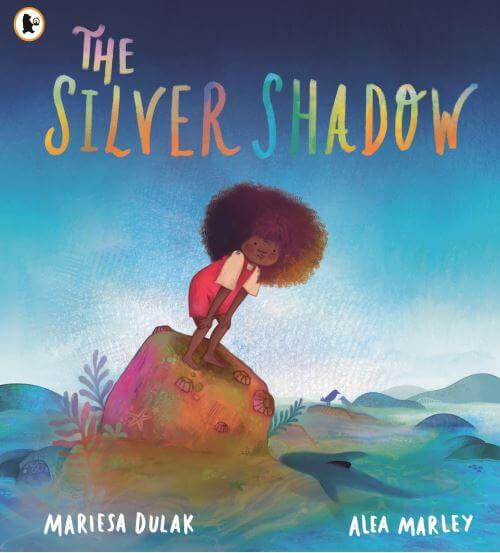
Black History Month is in October in the UK, and this year’s theme is Honouring our Communities, do have a look at the resources on the site. Despite having basically given up on social media now (I occasionally post on Bluesky), I don’t want to stop highlighting my annual faves! I try to prioritise books by UK based Black authors and illustrators but a few from elsewhere or another ethnicity sneak in, and some are a little more than a year old but I only read them since last October…
And for the 31st, have 3 bonus books:
The 25th (!) anniversary edition of Noughts and Crosses by Malorie Blackman
A new Penguin bind up of some of the iconic poetry of Benjamin Zephaniah.
I just received a proof of the 10th Anniversary edition of The Hate U Give by Angie Thomas
School girl. Skater boy. What if neither label fits? A poignant LGBTQ+ graphic novel about self-discovery, skateboarding and finding your true community of friends, perfect for fans of Heartstopper.
At school, Elliot gets bullied for being ‘different to other girls’ whereas at the skate park, everyone welcomes Elliot – presuming they’re male – but neither label feels right.
As Eliot’s love of skateboarding and friendships grow, their worlds collide at a sports expo where the school netball team and skate crew are competing. Can Elliot find the courage to share what they’ve learned about non-binary identity? Will best friend Jess or the skateboarding crew accept Elliot for who they are? And what about Ryan, the skater who Elliot has been feeling increasingly close to?
The first volume of a new graphic novel series that will steal your heart!
As I said on Bluesky earlier today, I don’t want to just say you should read KickFlip because it is an important book at this point in time, coz it undoubtedly is…I mainly want you all to read it because it is a heartwarming, funny, thoughtful story of friends & family & finding yourself. I loved everything about it, but especially how supportive Elliot’s mum is (and L.D.’s response below about what teen readers want is really interesting regarding parents in stories).
I loved Jamie by L.D. Lapinski, a middle grade story of a non-binary child faced with choosing between the boys and girls secondary schools in their town. Jamie was quite certain about their identity, but it doesn’t come so easily to everyone, and I think a comic style was such a wonderful choice of medium for KickFlip, to convey the thoughts of a questioning teen really succinctly and powerfully.
L.D. and Logan have both given some great recs below for other reading, but I’d like to quickly shout out HomeBody (which has just won the shadowers’ choice award for the 2025 Carnegie medal for illustration) and the teen novel ‘Jay’s Guide to Crushing It’ by Ruby Clyde.
I had a few questions for LD and Logan:
LD: did you want to write a graphic novel & come up with a story, or did you think of Elliot and decide a graphic novel was the best way to tell their story?
Kickflip was born during a teaching session, when I was working with young adults to improve their own diverse stories as part of a scheme with Pop Up Projects. We were discussing what they as readers in their teens wanted to see in a queer story, and what they were sick of seeing. They wanted a coming-out story, they wanted the main character to have a hobby that they loved, they wanted to see relatable struggle and a plotline that didn’t shy away from bullies but did have supportive friends or family. The discussion got filed away, but the idea of a trans character discovering themselves through a hobby kept nagging at me. At that time, I was not very sporting, but I knew I wanted the character to do something physical, to learn to be comfortable within their body, as they learned to use it in other ways. Skateboarding seemed like a natural choice, given that it’s typically very masculine, split-gender when it comes to competitions, and something that you could stumble across in the park.
Elliot arrived in my head more or less fully-formed… With JAMIE about to be published at that time, I didn’t feel that a prose book was the way to go; it felt too repetitive. I’d never written a graphic novel script before, but I had written teleplays at uni, so decided to write Elliot’s story that way, in the hopes I would be paired up with an artist, like a picture book writer, if it sold to a publisher.
LD: Having written the script and worked with an artist, what is the main difference between this and writing full text novels? Do you have a preference?
I can’t speak for other comic script writers, but for me this was very much a filmic experience – I could see Elliot and their friends in my head, but the actual interpretation of them was down to Logan, with support from designers Sam and Caitlin. In that way, they were the casting directors and film-makers, and I was the script writer who’s just excited to see their story come to life! When it comes to writing prose novels, you have to describe a lot, and in this script there was very little description – only what was important to me to include.
Logan: How did you get involved in the project?
I met my art director, Samuel Perret, a few years ago at a conference called New Designers. My illustrations were on display and I got asked to sample for a skateboarding comic about a non-binary character about a year later (Kick Flip, but I didn’t know that yet!!) This was my dream commission so I was really excited. After creating a few different examples of characters and skateboarding spreads, I was asked to illustrate LD’s story!
Logan: Who was your favourite character to draw?
My favourite character to draw was Elliot – I spent a lot of time imagining what their days looked like and how they would react to things. Every time I draw them it feels like drawing someone I know really well. I also have a soft spot for Alex – he’s such a goof and I kept trying to make myself laugh by making his expressions weirder and weirder in different scenes!!
Have you any advice for adults working with teens in libraries about how to be obviously but professionally inclusive and supportive?
LD – We’ve come a long way since the days of Section 28, but the recent government attitudes in the UK will be making some teens and young adults wary about who is a safe adult to be themselves around. Having a well-stocked and diverse library is always a good way to be supportive, and simple initiatives like a Pride display say a lot without using words.
Logan – Having a diverse selection of books on display, and being open to any questions from readers. Understanding pronouns and LGBTQ+ identities – theres a lot of charities like Mermaids UK, The Trevor Project and Stonewall that have educational resources on their websites. All the incredible librarians throughout my life have always opened the door to learning and encouraged questions and new ideas. Helping students feel safe enough to talk and learn about themselves is a huge step – and fostering a safe space where they can be who they are.
Are there any other books that you wish you could have read as a teen?
LD – I think comics like HEARTSTOPPER, BLOOM, THE GIRL FROM THE SEA and WELCOME TO ST HELL would have made a world of difference to me as a teenager! Queer books were banned in schools until I got to university in 2003, and I remember borrowing Judith Butler’s GENDER TROUBLE from the uni library so often that I got a warning about it…!
Logan – I wish I could have read Tillie Walden’s comics as a teen. I love the way she draws, talks and thinks about comics. I grew up with a lot of traditional super hero comics and didn’t really relate to the characters – even though I loved the stories and the drawings. Seeing diverse casts of characters who are openly LGBTQ+ in comics is really exciting. I didn’t see a lot of comics about everyday life when I was a kid – it’s great to see more artists like Alice Osman, Maia Kobabe and Tillie exploring that today.
What are you reading at the moment and who would you recommend it to?
LD – I’m reading Greenwild: The Forest in the Sky by Pari Thomson. Definitely a great read for fans of The Strangeworlds Travel Agency, Pages and Co., and Nevermoor.
Logan – I’ve just started a manga called ‘The Summer Hikaru Died’ by Mokumokuren. It has queer characters/themes with a supernatural twist – my favorite!! I’d recommend it to anyone who loves comics and manga who is looking for more LGBTQ+ representation.
L.D. Lapinski (photo credit: Karen Thorburn) and Logan Hanning
Thank you so much to Orion books for an early reading copy, LD & Logan for thoughtful answers, and to everyone involved in creating the book. It is out in the UK now!
A gorgeously illustrated, accessible celebration of queer activism, by the creator of the award-winning Suffragette, David Roberts. With an afterword by Juno Dawson.
Touching on major moments in the story of the fight for LGBTQ+ rights including the Stonewall Uprising, the first Gay Pride Rally and the dazzling history of drag and the ballroom scene, We Are Your Children is a wide-ranging and inclusive account of a multifaceted movement, with detailed and characterful colour artwork.
This book showcases figures from queer history like Harvey Milk, Julian Hows, Carla Toney, Crystal LaBeija, We Wha, Vincent Jones, Marsha P. Johnson, Alan Turing, Sylvia Rivera and many more.
From the secret slang adopted by gay Londoners in the 60s, to the decades of sit-ins and marches, there are countless fascinating stories to be told: stories of resistance, friendship, love, fear, division, unity and astonishing perseverance in the face of discrimination and oppression.
This is the *most* beautiful book. Perfect for Pride month, although I went to a talk David gave about researching the book and he made a point of saying that it isn’t a book about Pride but the wider history of LGBTQ+ activism – notice there are no Pride flags or rainbows on the cover (though there is on the spine).
If you’ve seen David’s Suffragette you’ll have an idea of how wonderfully the pages are laid, out with illustrations and fascinating (and very well written) less-well-known information, though this is pitched for a slightly older audience (16+). The stories have been chosen mainly from the US and UK between 1950-2000, with a few pages about the 21st Century. Each decade begins with a timeline and a spread of influential voices from the time.
At the moment it does seem that so much of the progress is being massively rolled back, the final note on the 21st Century timeline is 2025 Trump announcing that trans, non-binary, and intersex people may no longer use their identities reflected on their passports etc. but the book doesn’t shy away from how much of a fight the LGBTQIA+ community is used to and capable of. As Juno Dawson says in the afterward:
By knowing our past, we can protect our future.
At his talk he shared photographs that inspired some of the stories (their sources are meticulously referenced in the back of the book), including this gorgeous gay liberation chain:
The amount of history packed in is astonishing, and the bits from my lifetime where I thought I knew about it still hit me hard. I was an 80s baby so my entire school career was under Thatcher’s Clause (section) 28 – from 1987 right up until 2003 – I only realised that a few years ago and so few people know about it.
David wrote a piece for us about the books he wishes he could have seen in his library when he was 16.
1. The Black Flamingo by Dean Atta, illustrated by Anshika Khullar Published by Hodder
I adore this book. I found it very accessible to read for a person like myself who struggled with reading. I can only imagine how I might have felt emboldened to celebrate my own unique style, queerness and homosexuality if I’d had this book as a teenager.
2. Jerome by Heart by Thomas Scotto, illustrated by Olivier Tallec Published by Enchanted Lion Books
This book holds so much beauty, visually, in its storytelling and in its assertive expression of the love between two friends. A boy declaring his love for another boy in a picture book when I was growing up was unheard of but would have thrilled me!
3. Voguing and the House Ballroom Scene of New York, 1989–92 edited by Stuart Baker, photography by Chantal Regnault Published by Soul Jazz Books
As a big fan of non-fiction, information books often grabbed my attention more than fiction and I LOVE this one. Particularly accessible to me through its visual language of photography, I know I would have spent hours reading the pictures before embarking on the text. I would have found the fabulousness and joy captured in this book totally inspiring and an escape from the homophobic bullying I was experiencing. I’m sure if I’d had this book at sixteen, I would have walked a bit taller and with a swish in my step.
4. The Naked Civil Servant by Quentin Crisp Published by Flamingo
This book was actually out when I was sixteen as it was re-released in 1985, but I didn’t come across it until much later in life. I knew who Quentin Crisp was through television chat shows where he was often a guest and I thought he was fabulous and fascinating, witty and brilliant – the stories he would tell had me utterly beguiled. But it was only on reading his memoir that I realized what a trail-blazer he was in being unapologetically queer, never changing to please society’s rigorous expectations of masculinity, gender expression and sexuality.
5. David Bowie Made Me Gay by Darryl W. Bullock Published by Duckworth Overlook
I’ve always been a big music fan. I mentioned in We Are Your Children how queer pop stars had been my first positive glimpses of queer people in the media. Seeing artists on Top of the Pops like Jimmy Somerville, Divine, Boy George and Marilyn, who fast became my heroes, absolutely opened up a road to finding my own positive acceptance of my queer self. This book would have shown me a multitude of queer musical artists not accessible to me at the time and broadened my understanding of queer art and music.
Thank you so much David for writing We Are Your Children,and to Two Hoots imprint of Macmillan for publishing it. It is out now!
Everyone wants a piece of the Drew Schafer, the talented and troubled lead singer of up-and-coming band The Kerbs. Only his girlfriend Ruby knows the real Drew – the gentle, vulnerable boy beneath the stardust. But no one else even knows that Ruby exists…
Told over three music festivals, this searing new novel from bestselling prize winner Sara Barnard charts the highs and heartbreaks of what it means for a dream to come true.
I’m clearly not the target audience for This Song is About Us, being well out of my youth, but Sarah Barnard is one of my favourite writers, in any genre for any age group, and this is one of her best. This might seem a strange statement from me if you know that I tend to balk at the idea of “escapist romance”, as this was pitched, but she is just absolutely brilliant at writing the most real characters that the reader ends up rooting for whether they feel they can relate to them or not. I was . It also has that most precious and elusive of things: a satisfying and believable ending (no spoilers)!
The basic idea of idolising musicians isn’t new, I had brilliant festival experiences as a teen and had posters of my favourite bands (though mine came from Kerrang magazine instead of Smash Hits), but I never quite got into a fandom…Sara has written a piece for TeenLibrarian about how her love of pop as a youth inspired This Song is About Us, and how much some things never change…
On your experience with fandom and music as a teen and what that means to you, and how it inspired This Song is About Us
What did you love as a teenager? I mean, really love. Love in the way that it became a part of you. Love you made a personality out of. Love that made you understand yourself, and explain yourself to the world.
Me, I loved music. I loved books as well; reading and writing and everything in between. But music – specifically, pop music – was something else, because loving pop music, loving a band, means you become something very special: a fan.
The late ’90s and early noughties were a great time to be a fan of pop music, because it was everywhere. It was Radio 1 and Party in the Park. It was the majority of the charts. Most of the 99p singles on sale at Woolworths or ASDA. This was the era of magazines like Smash Hits and TOTP, which were full of posters and interviews, facts and lyrics. Saturday morning kids’ and music TV shows like CD:UK, with performances and comedy skits. The earliest days of official websites, with community spaces like message boards where you could talk to other fans – people who understood.
As a fan, you had access to your idols on what was, at the time, an unprecedented scale. You could go online and watch videos whenever you wanted. Email in questions to be answered on an online Q&A. That seems like a strange thing to say now, in 2025, when social media is ubiquitous and stars post TikToks from their living rooms and livestream their make-up routines. What once felt like precious glimpses into the possible lives of little more than fictional characters is now ordinary, even expected. It’s content.
What hasn’t changed in this new world is the very thing that eluded me as a teenage fan: these popstars aren’t fictional characters. They’re real people, living a real life, just one that is being packaged and sold. This was always true, and it’s the kind of thing that seems obvious as an adult, but in those long-ago days, when I was a teenager breathlessly flicking through Smash Hits for what I honestly believed was a real insight into someone I idolised, I wouldn’t have believed it. I was being sold a product; I was the consumer. Everything about those popstars was carefully curated especially for girls like me. It’s easy to forget now how much this is still the case, even if the packaging has changed so drastically. The curation may be more about TikTok FYPs and Instagram feeds than Smash Hits interviews and Sunday paper exclusives, but it’s still curation. We are conditioned to believe that the glimpses we see of famous people – celebrities, if we want to use the word – amount to their whole lives, their whole selves, when of course they don’t. They can’t, and they shouldn’t. There’s a big gap between the version we’re sold and the real life they’re living.
It’s this gap that has fascinated me in adulthood, as I continue to love pop music – and other music, too! – and the people who make it. There’s so much that happens in that gap that we never see, and barely even think about. But what does it do to a person, psychologically, to live in it? In a music industry so consistently obsessed with youth, what happens to young stars who never have the chance to develop a sense of self before they’re told who they are by managers and critics, and even their own fans? And when all of this is packaged as a dream, what right do they have to complain? How can they learn to balance giving enough of themselves so it feels authentic to the fans they really do love, appreciate and value, but not so much that they lose themselves along the way?
These are the kinds of questions that make my brain spark, and they’re the reason I wrote This Song Is About Us, which is the story of Drew – talented, troubled and tantalisingly close to fame – and his long-term girlfriend, Ruby, when Drew’s band, The Kerbs, achieves the dream of fame, fortune and success. Ruby and Drew decide to keep their relationship a secret to protect it from the fans, the press and the savage world of social media, because so long as they know what’s true, nothing else matters.
But what does ‘true’ mean in the world of the famous when the headlines and TikToks and Discord posts and blinds are where everyone else looks for answers?
Drew and Ruby are about to find out.
Sara Barnard is a bestselling author of seven novels for young adults. Her debut, Beautiful Broken Things, was a Zoella Book Club Pick, and she went on to win the YA Book Prize with her third novel, Goodbye, Perfect. This Song Is About Us is her second novel with Walker Books. Sara believes that sad books are good for the soul, and happy books lift the heart. She hopes to write lots of books that do both.
Huge thanks to Walker Books for a review copy, This Song Is About Us is out now!
From the author of If You Still Recognise Me comes a delicious story of two people brought together by a shared love of food as they figure out themselves and each other.
Auden is finding different ways to be themself. The first – using their new chosen name, which feels most authentically them. The second – starting a food blog where they can share their passion for food, through family recipes and the stories behind them. And when the blog brings them Valerie, they discover more than they’d ever expected.
It’s been over a year since Valerie lost her mum – her beautiful, vibrant mum who loved cooking. Since her mum’s death, Valerie and her dad have drifted further and further apart, the kitchen left cold and empty, until Valerie finds Auden’s blog. The blog (and its writer) spark something in Valerie. Could she have found a recipe for happiness?
I interviewed Cynthia when their first novel IF YOU STILL RECOGNISE ME came out, so was very keen to read their next offering and pleased to see that the premise was completely different while still focusing on young people reflecting on their identities and exploring relationships (friendships, romances, and family). I asked a few new questions:
The parents played a significant role in this story. I really appreciated that they weren’t perfect but also weren’t awful, they felt very real. Did you consider making Auden’s parents more or less supportive?
I did think about making them less supportive, but I know that there’s a desire for something a bit more upbeat when it comes to narratives around trans/nonbinary characters. And I didn’t want dealing with unsupportive parents to be a big focus of the book – and if the parents were less supportive, I felt like that would have to take up too much space within the narrative. That wasn’t the story I was trying to tell.
So I did also consider making them more supportive, but I personally don’t find it very satisfying or easy to write about parents who are wholly supportive – maybe because I don’t actually know anyone whose parents are like that. (If your parents are, then I’m thrilled for you!)
That’s why they ended up more in the middle, and I’m glad they seem real!
Yes, I do! Although I don’t think of myself as a great cook, I can follow a recipe well enough and I cooked for myself for years. My wife Olivia now does the majority of the cooking in our household (she’s incredible at it) but I still cook regularly.
When I asked you about the reaction from teens to IF YOU STILL RECOGNISE ME you hadn’t really had any as it was still brand new…what response from readers has the last couple of years brought you?
Readers who have messaged me about how the book helped them through a tough time, how it felt like a warm hug or made them feel less alone – these are the responses I treasure the most. One teen reader I met in a signing queue said they found me inspirational as a person from a different background discovering their identity, which is something I wrote down word for word in my diary because it moved me so much! I’m really glad my books can be there for queer teens who don’t always feel seen.
Have you started working on a fantasy novel yet or can we expect more beautiful contemporary characters?
Yes, I have started working on a fantasy novel – very slowly! It’s a contemporary fantasy though and I’m especially interested in trying to balance a contemporary narrative that includes my usual elements of queer romance and identity – understanding yourself and figuring out who you want to be in the world – with the fantastical aspects.
Cynthia So (credit Caitlin Wilder)
Cynthia So was born in Hong Kong and lives in London. Their work has been published in speculative fiction magazines such as Uncanny, Strange Horizons and Anathema. They are also one of the new voices in PROUD, an anthology of LGBTQ+ YA stories, poems and art by LGBTQ+ creators, published by Little Tiger in March 2019. When they’re not writing, they can often be found at the theatre, entranced by a play or a musical. They’re also extremely enthusiastic about board games and tabletop role-playing. If You Still Recognise Me – shortlisted for the Waterstones Prize, the YA Prize and the Diverse Book Awards – was their first novel.
THIS FEAST OF A LIFE is out now in the UK, published by Little Tiger. Thanks to Jade for sending me a review copy and co-ordinating interview questions.
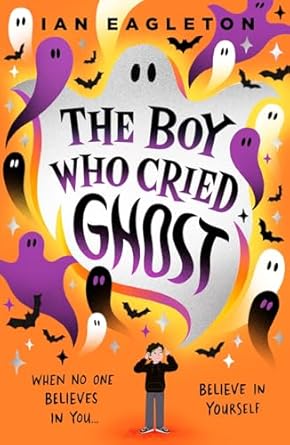
There’s a ghost in Richard’s wardrobe. Every day he carries out a series of rituals that he believes will keep the ghost trapped inside. He tries to tell his friends and family, but they dismiss his worries and concerns as being part of his OCD. But then one day, the wardrobe door is opened… And that’s when the hauntings begin.
Cover illustrator, Melissa Chaib and designer Sarah Baldwyn
I loved everything about this book: the main character, his friends, and the supportive adults. Adored the book recommendations, bad jokes, and actually-quite-scary bits…so I was very pleased to be able to ask the author, Ian Eagleton, some questions!
What can you tell us about your new book, The Boy Who Cried Ghost? The Boy Who Cried Ghost is a spooky, thrilling, heartwarming and funny story, full of twists and turns. It was inspired by my love of horror movies, Hocus Pocus, the Goonies, Buffy, Casper, and a friend who used to tell the most terrifying ghost stories when we went away camping. Richard is just starting Year 6 when he has to move with his mum into his grandma’s old house. He is angry and resentful and filled with worry about making new friends at a new school. He is also consumed by obsessive behaviours, low self-esteem and grief. I always think the best ghost stories are nothing to do with the ghost, but instead explore what it’s like to be haunted by trauma. Over the course of his journey, Richard has to learn to accept himself and understand how to start dealing with his OCD.
You’ve said that you have OCD and hope that it means you’ve portrayed it well, but did that personal connection also mean that it was difficult to write? So difficult! I really wanted the story to feel authentic, raw and challenging, as well as being fun and gripping too. I had to dig deep and go back in time to explore my own experiences of living with OCD. Throughout the story, we get to read Richard’s flashbacks and memories as he comes to terms with how his brain works. These were all based on my own memories, so it was often very emotional and draining to write. I remember being absolutely terrified as a child and teenager by these strange, intrusive thoughts and all-encompassing rituals I carried out. However, I do really feel that books for children and young adults are the MOST important of all books and that my readers therefore deserve the absolute best of me. this means putting everything I have into my writing, no matter how painful it might be at the time. By the end of the process, I often feel a sense of relief and acceptance. Writing can definitely be cathartic!
There is a growing selection of titles for children that feature mental health issues and disability in a positive way, but are there any other books you’ve read that you think represent OCD well? There are three books which stand out for me. They are: The Goldfish Boy by Lisa Thompson When I See Blue by Lily Bailey A Flash of Fireflies by Aisha Bushy
Have you any suggestions for how those that work with a child/teen with OCD might best support them? As an adult, I read Because We Are Bad by Lily Bailey, which was life-changing and really helped me understand what I had experienced myself as a child and teenager with OCD. I would also recommend the following books to people who work with children and teenagers with OCD: The Man Who Couldn’t Stop by David Adam Pure by Rose Bretécher Brain Lock by Jeffrey M. Schwartz I think these books portray the terror and uncertainty of OCD particularly well and would really help people understand the complexity of this mental health disorder.
I would also remind people that saying things like ‘Oh, I’m SO OCD’ just because you like things to be neat or tidy can be quite harmful and offensive to people who suffer with OCD.
I love the diversity of your characters, in all your books. Are they ever based on friends or colleagues? Hmmmm. Sometimes they are. A good friend of mine told me a story once about how she’d whacked a nasty boy at school around the face with a bouquet of stinging nettles. I was so shocked and amused by this story – don’t try it at home – that I asked her if I could include it in my first middle-grade book, which was Glitter Boy. She kindly agreed! In The Boy Who Cried Ghost, one of the adults in Richard’s life is called Mr Levick, who is based on someone I know. He often wears gender-defying clothes and is openly gay and I felt like this sort of positive role model should be celebrated in the story. Sometimes, however, my characters are based on what I like to call ‘wish-fulfilment’. In Glitter Boy, James has an amazing teacher called Mr. Hamilton who is marrying his boyfriend, Sam, and spends a lot of time talking to the class about LGBTQ+ history and rights. This would have been transformative for me as a queer teenager, but it wasn’t something that ever actually happened. I just wish I’d had a teacher like Mr. Hamilton who could’ve supported and guided me.
I know a lot of the jokes were suggested by your dad while you were writing the book, but do you have a favourite? There’s a scene in the story where Richard’s stepdad, Tony, and his new school friend, Quinn, are trading jokes and quips and I LOVE it! Here’s an extract from it, which you might enjoy!
But Tony and Quinn were already walking off, chatting happily and loudly. “I’ve been telling everyone at school about the benefits of eating dried grapes today,” Quinn was saying animatedly. “I’ve been raisin awareness…” Tony burst out laughing and slapped Quinn good-naturedly on their back. “That’s nothing!” Tony began. “I asked someone at work today to bring me a newspaper. They told me that newspapers are ‘old school’ and handed me their iPad instead. Well, that fly didn’t stand a chance!” “Oh … my…!” Quinn guffawed. “That was HILARIOUS! Tell me more!”
I think Tony’s joke about evolution and Darwin has to be my favourite though – I hope you enjoy it too!
What are you reading at the moment and who would you recommend it to? I’m currently reading A Ship in the Dark by Yarrow Townsend. It’s about a young girl called Anna, whose father is arrested for smuggling. She sets out to prove his innocence and soon discovers that the truth may lie on a mysterious, missing ship called the Albatross. Yarrow Townsend’s A Map of Leaves was one of my standout books of 2022 and I am thoroughly enjoying their new story. The writing is fresh. gripping and immediate, whilst also being beautiful and lyrical, and the story is a rip-roaring adventure full of twists and turns. I would recommend A Ship in the Dark to readers who have enjoyed The Girl of Ink & Stars and The Lost Whale.
‘An uplifting, hopeful, empowering memoir that celebrates self-discovery and self-love’ – Alice Oseman, author of the bestselling Heartstopper series
An unmissable graphic novel perfect for fans of the global hit Heartstopper and Juno Dawson’s What’s the T?
Hello! I’m Theo. I like cats, Dungeons & Dragons . . . and I’m trans and non-binary.
Ever since I was young, I’ve been on a journey to explore who I am. To discover the things that make me . . . me.
Sometimes it can feel like the world is trying to fit you into a box, to label you one way or another, but there is nothing more wonderful than finding your true authentic self, whoever you are. Whether you are transgender or cisgender, we are all searching for ways to make our houses feel like homes . . .
In Homebody, Theo tells the heartwarming story of discovering how to live life on their own terms through beautiful illustrations and lyrical text.
The way Theo looks back on their life so far is so honest and eloquent, figuring out how they feel about themselves as well as how to present themselves to the world on their own terms, and could really help teens and adults not only empathise but reflect on their own path and the journey they’re still on. I absolutely *adored* this book and wish everyone that has “concerns” about trans youth would read it to really think about what it means to be comfortable in yourself, something that many people take for granted especially as they get further away from the growing pains of their teen years. Some people will know themselves and hardly change, others will go through lots of different outward expressions before they feel that the world’s view of them matches their own, some are scared to express themselves honestly, while others still will think that they know themselves until they come across something new to them that opens their eyes to an aspect of themselves they’d neglected.
So much of it resonated with me: When I was a teenager I was frequently mistaken for a boy because of my short hair and baggy clothes and I had conversations with family and friends (not all, but enough) about how no one would ever love me if I didn’t change the way I looked…all the thoughts about what girls and boys should like and not fitting in and knowing that it *shouldn’t* matter what your hobbies are or what you wear wear or how you style your hair but that society will tell you that you’re getting it wrong because for some reason it *does* matter. I keep going back to the book because there are so many beautiful, insightful pages. Anyway, a boy did (does) love me, short hair and all, so listen to Theo’s advice below.
I was lucky enough to be given the opportunity to share some pages from the book, and also ask Theo a few questions:
Tell us about your new graphic novel
Homebody is an uplifting and affirming graphic memoir about life outside of the gender binary. An honest and heartwarming look at the joy and beauty of finding yourself and the positive impact of living as your authentic self. Homebody speaks to a universal experience of exploring what makes us who we are, how we express that to the world and of the relationship we all have between our minds and bodies. Whether you are transgender, cisgender or still figuring it out, we are all searching for ways to make our houses feel like homes, and to come to a place of ease within ourselves.
Which advice would you pass on to your younger self?
Find the people who love and accept you for who you are, exactly as you are, you don’t have to change anything about yourself to be liked. Instead of trying to figure out what other people want or expect you to be, focus on being the person that you want to be and the rest will fall into place.
Homebody is such a unique book, but do you have any titles you could recommend for teens that devour your story?
I have a long list of graphic novels I love! But my top picks for teens who enjoyed Homebody would be: ‘The Girl From the Sea’ by Molly Knox Ostertag- a sweet coming of age sapphic romance with a sprinkle of fantasy. ‘Deadendia’ by Hamish Steele – a funny and imaginative series set in a theme park that’s connected to demonic realms, with a trans protagonist and great LGBTQ+ and neurodivergent representation. ‘Welcome to St Hell’ – a hilarious, honest and relatable autobiography from trans creator Lewis Hancox about his time at high school and figuring out his trans identity.
Have you any other projects on the go that are developing into full books? After such a personal debut, what would you most like to write about?
I am currently working on my second graphic novel, which is going to be another fairly personal book actually! It’s based on my experiences of moving through the world as neurodivergent but not realising that until much later in life. Beyond that I would love to write fantasy as it’s one of my favourite genres to read.
Homebody is published today by Macmillan, aimed at age 14+
Sometimes it only takes a stranger in a dark place… to say we have the right to be here, to make us warm in the coldest season.
In 2019, Neil Gaiman asked his Twitter followers: What reminds you of warmth? From the thousands of replies he received, he composed an extraordinary poem in aid of UNHCR’s 2019 winter appeal. This poem will now be available in a beautiful hardback edition, featuring contributions from 13 extraordinary illustrators. Every copy sold will be supporting the work of UNHCR.
What You Need to Be Warm is an exploration of displacement and flight from conflict through the objects and memories that represent warmth in cold times. It is about our right to feel safe, whoever we are and wherever we are from, and about welcoming those who find themselves far from home.
I was lucky enough to be sent a copy of this book and it is so beautiful, the notes from the illustrators (*so* many talented creators) about how they approached their page are very moving. It, unfortunately, remains very pertinent.
There is a celebration at Waterstones Piccadilly on the evening of the 2nd November, I’m sure it will be a wonderful event.
I said on twitter (‘X’) that I wasn’t going to do a thread of favourite books for Black History Month this year because I’m trying to wean myself off it (but also it may well have imploded by the end of October…) but then I felt bad because there have been some real gems this year! So I decided to put a month’s worth in a blog post (each picture should have a link to more details)…
The eagle eyed amongst you might notice that there are only 30 books there and 31 days in the month of October…that’s because my last recommendation is in recognition of this year’s official theme of SALUTING OUR SISTERS…that you simply must read (and push on younger readers) everything by the inimitable Catherine Johnson, Patrice Lawrence, Nadia Shireen, and Malorie Blackman (even if they are all terrible at updating their websites 😅)!
There are loads of resources on the Black History Month UK website, including a reading list of books for grownups.
While it is still accessible, have a look through my old lists for some more faves!
For the last 5 years I've done a thread (sometimes broken) for #BlackHistoryMonth of some of my favourite books (mainly) created by UK based Black authors/illustrators. Not doing it this year because I'm avoiding here, but please do peruse the old lists, tangled together here: https://t.co/z7eBMtZIKZ
The Yoto Carnegies celebrate outstanding achievement in children’s writing and illustration and are unique in being judged by children’s and youth librarians, with the respective Shadowers’ Choice Medals voted for by children and young people.
Matt and I have both been judges for the awards, many moons ago, and it is and extraordinarily rigorous process involving reading and re-reading dozens of books and forming proper arguments as to why things should be shortlisted (or not…in fact sometimes I was very passionate about *not* letting something get further…), judges can’t just say “this is my favourite because it is cute”. So we love seeing the longlist and then shortlist announcement and imagining the conversations that went on for them to be the chosen few! I definitely have favourites in this year’s lists:
The 2023 Yoto Carnegie Medal for Writing longlist is (alphabetical by author surname):
· The Light in Everything by Katya Balen (Bloomsbury Children’s Books)
· When Shadows Fall by Sita Brahmachari, illustrated by Natalie Sirett (Little Tiger)
· Medusa by Jessie Burton, illustrated by Olivia Lomenech Gill (Bloomsbury Children’s Books)
· The Eternal Return of Clara Hart by Louise Finch (Little Island)
· Needle by Patrice Lawrence (Barrington Stoke)
· I Must Betray You by Ruta Sepetys (Hodder Children’s Books)
· The Blue Book of Nebo by Manon Steffan Ros (Firefly Press)
The 2023 Yoto Carnegie Medal for Illustration longlist is (alphabetical by illustrator surname):
· Rescuing Titanic illustrated and written by Flora Delargy (Wide Eyed Editions)
· Alte Zachen: Old Things illustrated by Benjamin Phillips, written by Ziggy Hanaor (Cirada Books)
· The Worlds We Leave Behind illustrated by Levi Pinfold, written by A. F. Harrold (Bloomsbury Children’s Books)
· The Visible Sounds illustrated by Yu Rong, written by Yin Jianling (UCLan Publishing)
· The Comet illustrated and written by Joe Todd-Stanton (Flying Eye Books)
· Saving Sorya: Chang and the Sun Bear illustrated by Jeet Zdung, written by Trang Nguyen (Kingfisher)
Click here to read more about the fantastic books that have been chosen.