As the chosen one to battle the powerful Neci, the stake of the warrior world is on Emily’s shoulders but with family betrayals and super powers being stolen, everything is falling apart. Can Emily rise above it all and defeat her toughest opponent? Will she live up to the expectations of being number one? Win or lose – this is the final battle.
A series of 4, but Abiola’s 10th book in less than 10 years. The first book she published was Emily Knight I am…, which she started writing as a young teen, and her writing has been going from strength to strength. What I think is amazing is that the 6 other books she’s written in the meantime are all *completely* different! She literally has something for almost everyone under her belt (just missing a picture book). I’d say that my favourite of her books is the YA Love in Winter Wonderland, but I do have a soft spot for the Emily Knight series, as it launched her into publishing and without it there would be no Hashtag Press and no Diverse Book Awards! Emily is a brilliant, flawed, honest protagonist, and her surrounding cast are well rounded and interesting characters, built up through the series. It can get quite violent and no one is safe, even the most central characters aren’t guaranteed to survive the adventure, but that makes the tension very real and really keeps you turning the pages. This is a very satisfying conclusion to the series…but it would be great to see more Emily one day!
Huge thanks to Hashtag Press for a review copy and for including TeenLibrarian in the publication week blog tour!
Everyone wants a piece of the Drew Schafer, the talented and troubled lead singer of up-and-coming band The Kerbs. Only his girlfriend Ruby knows the real Drew – the gentle, vulnerable boy beneath the stardust. But no one else even knows that Ruby exists…
Told over three music festivals, this searing new novel from bestselling prize winner Sara Barnard charts the highs and heartbreaks of what it means for a dream to come true.
I’m clearly not the target audience for This Song is About Us, being well out of my youth, but Sarah Barnard is one of my favourite writers, in any genre for any age group, and this is one of her best. This might seem a strange statement from me if you know that I tend to balk at the idea of “escapist romance”, as this was pitched, but she is just absolutely brilliant at writing the most real characters that the reader ends up rooting for whether they feel they can relate to them or not. I was . It also has that most precious and elusive of things: a satisfying and believable ending (no spoilers)!
The basic idea of idolising musicians isn’t new, I had brilliant festival experiences as a teen and had posters of my favourite bands (though mine came from Kerrang magazine instead of Smash Hits), but I never quite got into a fandom…Sara has written a piece for TeenLibrarian about how her love of pop as a youth inspired This Song is About Us, and how much some things never change…
On your experience with fandom and music as a teen and what that means to you, and how it inspired This Song is About Us
What did you love as a teenager? I mean, really love. Love in the way that it became a part of you. Love you made a personality out of. Love that made you understand yourself, and explain yourself to the world.
Me, I loved music. I loved books as well; reading and writing and everything in between. But music – specifically, pop music – was something else, because loving pop music, loving a band, means you become something very special: a fan.
The late ’90s and early noughties were a great time to be a fan of pop music, because it was everywhere. It was Radio 1 and Party in the Park. It was the majority of the charts. Most of the 99p singles on sale at Woolworths or ASDA. This was the era of magazines like Smash Hits and TOTP, which were full of posters and interviews, facts and lyrics. Saturday morning kids’ and music TV shows like CD:UK, with performances and comedy skits. The earliest days of official websites, with community spaces like message boards where you could talk to other fans – people who understood.
As a fan, you had access to your idols on what was, at the time, an unprecedented scale. You could go online and watch videos whenever you wanted. Email in questions to be answered on an online Q&A. That seems like a strange thing to say now, in 2025, when social media is ubiquitous and stars post TikToks from their living rooms and livestream their make-up routines. What once felt like precious glimpses into the possible lives of little more than fictional characters is now ordinary, even expected. It’s content.
What hasn’t changed in this new world is the very thing that eluded me as a teenage fan: these popstars aren’t fictional characters. They’re real people, living a real life, just one that is being packaged and sold. This was always true, and it’s the kind of thing that seems obvious as an adult, but in those long-ago days, when I was a teenager breathlessly flicking through Smash Hits for what I honestly believed was a real insight into someone I idolised, I wouldn’t have believed it. I was being sold a product; I was the consumer. Everything about those popstars was carefully curated especially for girls like me. It’s easy to forget now how much this is still the case, even if the packaging has changed so drastically. The curation may be more about TikTok FYPs and Instagram feeds than Smash Hits interviews and Sunday paper exclusives, but it’s still curation. We are conditioned to believe that the glimpses we see of famous people – celebrities, if we want to use the word – amount to their whole lives, their whole selves, when of course they don’t. They can’t, and they shouldn’t. There’s a big gap between the version we’re sold and the real life they’re living.
It’s this gap that has fascinated me in adulthood, as I continue to love pop music – and other music, too! – and the people who make it. There’s so much that happens in that gap that we never see, and barely even think about. But what does it do to a person, psychologically, to live in it? In a music industry so consistently obsessed with youth, what happens to young stars who never have the chance to develop a sense of self before they’re told who they are by managers and critics, and even their own fans? And when all of this is packaged as a dream, what right do they have to complain? How can they learn to balance giving enough of themselves so it feels authentic to the fans they really do love, appreciate and value, but not so much that they lose themselves along the way?
These are the kinds of questions that make my brain spark, and they’re the reason I wrote This Song Is About Us, which is the story of Drew – talented, troubled and tantalisingly close to fame – and his long-term girlfriend, Ruby, when Drew’s band, The Kerbs, achieves the dream of fame, fortune and success. Ruby and Drew decide to keep their relationship a secret to protect it from the fans, the press and the savage world of social media, because so long as they know what’s true, nothing else matters.
But what does ‘true’ mean in the world of the famous when the headlines and TikToks and Discord posts and blinds are where everyone else looks for answers?
Drew and Ruby are about to find out.
Sara Barnard is a bestselling author of seven novels for young adults. Her debut, Beautiful Broken Things, was a Zoella Book Club Pick, and she went on to win the YA Book Prize with her third novel, Goodbye, Perfect. This Song Is About Us is her second novel with Walker Books. Sara believes that sad books are good for the soul, and happy books lift the heart. She hopes to write lots of books that do both.
Huge thanks to Walker Books for a review copy, This Song Is About Us is out now!
London, 1951: Clem Fatale, the youngest crook in the city, is on a mission to find her dad. Jimmy Fatale, notorious jewel thief and leader of the Spider Gang, has gone missing and with him the greatest prize in London: the Fool’s Canary.
Along with her prisoner and/or sidekick Gilbert (depends who you’re asking), Clem sets off on a rip-roaring chase through the London underworld. Racing through dodgy dives, glamorous nightclubs, greasy spoons and secret alleyways, Clem and Gilbert are soon pursued by a host of friends and foes.
Will Clem find her father in time? Or will the most sinister villain this side of the river put a stop to all her plans?
A rollicking middle grade series full of madcap escapades, fast-talking dames and unlikely heroes, perfect for fans of MURDER MOST UNLADYLIKE, ENOLA HOLMES, ADVENTURES ON TRAINS and Katherine Woodfine.
illustrated by Honie Beam
Eve really has written the ultimate pacey thriller for MG readers, literally every page has drama and/or intrigue. I read pretty fast and felt quite breathless with how quickly everything happened! She had good reasons for writing in this way, and she has written a fab piece for TeenLibrarian about it:
How to help dyslexic children foster a love of books by Eve Wersocki-Morris
When I wrote my latest book, Clem Fatale Has Been Betrayed, my central aim was to make it entertaining. I packed in twists and turns, mysteries and moments of mayhem, whenever I felt like a chapter was getting a little too slow. I have always liked fast and funny books. As a child, I really struggled to read some of the long, complicated epics my classmates were reading – no matter how beautiful the covers or how much my friends raved about the stories. I found it really hard to focus on books which had more description than action and always found my mind wandering off (often coming up with my own story based on the beautiful illustrations on the book’s cover).
When I was twelve years old I was diagnosed with dyslexia. I was really worried that this meant books weren’t for me. Luckily books and I have continued to have a lifelong friendship!
Here are some of my top tips in helping dyslexic kids engage with books:
Let them pick their own books – I soon found out that I liked fast and exciting books with lots of action. Even if I didn’t understand every word, finding out what happened next helped keep me motivated to read on!
Listening to audiobooks is good – the recent NLT research has shown us that children and young people are listening to a lot of audio and podcasts. This isn’t necessarily a bad thing. I loved audiobooks as a child. I loved listening to them over and over again and then going away and re-reading the physical book. Even if I was often reading by memory, it helped give me confidence and enjoyment in reading alone.
Talk as you read – books are for fun! Stories are for sharing! Parents and teachers, when you’re listening to a dyslexic child read aloud make sure you get them excited in the story. Discuss clues and theories – don’t focus too much on the words they’ve got wrong.
Books are for everyone and we shouldn’t let anyone miss out on the amazing worlds inside their pages.
Clem Fatale Has Been Betrayed by Eve Wersocki-Morris is out now (Little Tiger)
Eve Wersocki Morris grew up in North London and has been making up stories her whole life. Diagnosed with dyslexia aged 12 and called out by a teacher as the ‘worst speller in the class’, she is now the author of two novels for older MG readers, with her debut The Bird Singers now nominated for multiple awards. A standout performer at school events thanks to a background in drama, Eve is also a volunteer with Coran Beanstalk Literary Charity.
Libraries across the country have started feeling the effects of the IMLS being effectively shut down and having grants cancelled. If you search for IMLS on any social media site you will see dismayed reports from Libraries and Library Workers documenting in real time what is happening in their branches.
Hoopla is a relatively expensive service for libraries to provide and even before DOGE took aim at the IMLS libraries were letting their subscriptions to the service lapse.
On March 24, Sacramento Public Library announced that they were discontinuing Hoopla on May 4th. While the timing could have been coincidental, coming soon after DOGE first entered IMLS headquarters, it may be that they moved to preemptively offset a potential loss of grant funding.
As Libraries discover what the loss of essential grants entail, it is likely that more will be forced to cancel their subscriptions to popular, yet costly digital services.
I will be documenting the effects of the IMLS cuts as and when news from libraries across the US breaks. If any library workers and/or patrons discover what is happening in their libraries you can contact me confidentially here if you wish to share this information.
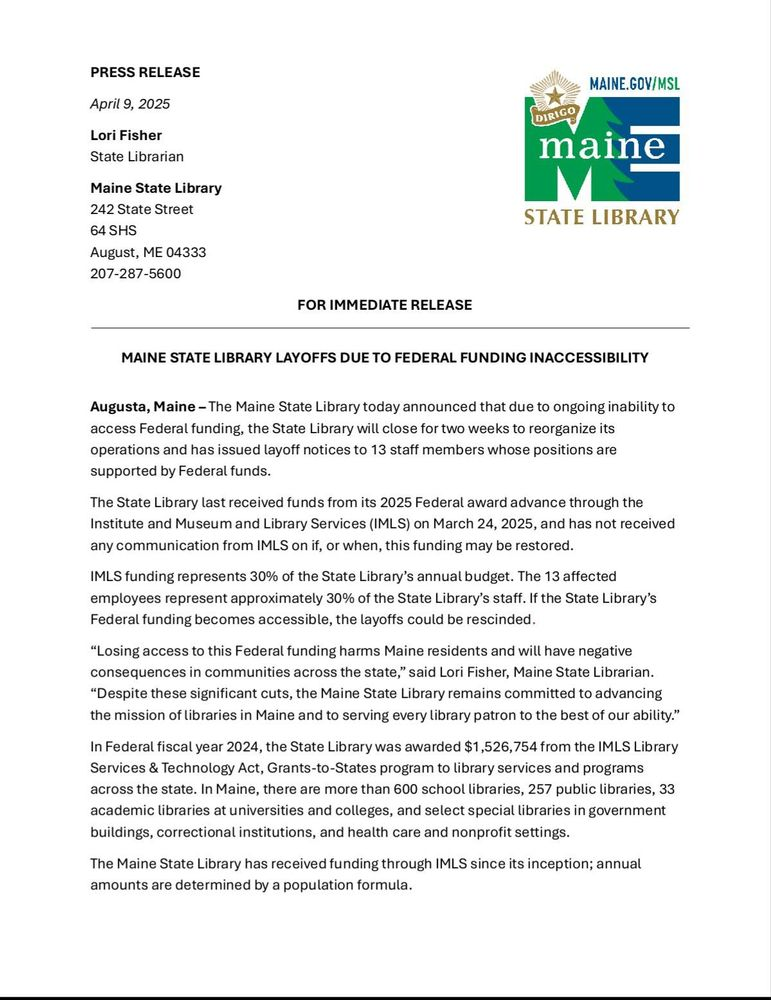
State Libraries have started receiving notifications that their LSTA grants have been terminated:
I've obtained a copy of the letter sent by IMLS Acting Director Keith Sonderling to state library grantees letting them know their funding was being pulled, effective immediately:
The California State Library has been notified by the federal Institute of Museum and Library Services (IMLS) that, effective April 1, 2025, the 2024-25 federal grant awarded under the Library Services and Technology Act (LSTA) has been terminated.
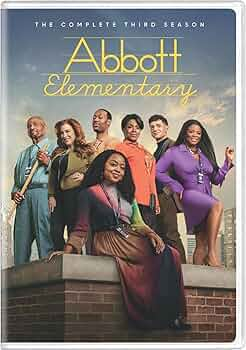
ABBOTT ELEMENTARY follows a group of dedicated, passionate teachers – and a slightly tone-deaf principal – who are brought together in a Philadelphia public school where, despite the odds stacked against them, they are determined to help their students succeed in life. Though these incredible educators may be outnumbered and underfunded, they love what they do – even if they don’t love the school district’s less-than-stellar attitude toward educating children.
Isn’t that description of Abbott Elementary awfully dry? You would have no idea just how damn good the show is if you just read that! The show is a thing of beauty – it is incredibly funny and all-too human, featuring flawed, wonderful characters in whom we can see the educators that taught us in our formative years and maybe even ourselves!
Quinta Brunson is a stellar actor and a phenomenal writer, but everyone in this show brings their A game. It is inspiring, but it should not have to be.
Although framed as a comedy, I see Abbott Elementary as a tragedy masquerading as a humor show, sure if you only want to watch it for laughs you can do that and enjoy it, but it goes so much deeper! We watch dedicated teachers and other educators working themselves ragged to provide the best education possible for the children in their care. They fight for everything they need to teach their students and also educational extras to provide wonder and joy; they fail as often as they succeed and oh how we laugh at their travails.
Truly it is an indictment of our public education system, but it is a damn funny one!
Anyone who has worked in schools or just supporting the teachers they entrust their kids to will know the truth of what Abbott Elementary shows its viewers, like Mary Poppins says, “A spoonful of sugar, helps the medicine go down!”
You know if The Bear can be billed as a comedy ( looking at you Golden Globes) then Abbott Elementary should be lauded as one of the greatest dramas ever, and one that makes us laugh! As I write this, season 4 is coming to an end on TV. You should get all of them (if you haven’t already) as the show and characters develop and grow over time.
Abbott Elementary Season Three (as well as seasons one and two) are all available here as DVDs and downloads.
I have been doing some deep thinking about the use of AI in Libraries, and like many other colleagues I reached the inescapable conclusion that there is currently no ethical way to use generative AI at all, let alone within Libraries.
As information professionals, Library Workers have historically and contemporaneously firmly positioned ourselves on the side of copyright protection and against piracy and intellectual property theft. It is widely documented that generative AI programs have been trained on illegally downloaded and stolen materials so I am constantly being surprised and horrified when I see colleagues gushing about how much fun they are having learning to use generative AI in their libraries, “It saves so much time”, “I no longer have to think too much about creating lesson plans”. I have been urged not to worry too much about it as AI is the wave of the future and that there is a push to get governments to regulate the companies creating AI programs to make sure that AI training is done legally, but the genie is out of the bottle on that one and barely a day goes by without authors and artists posting more evidence that their works have been stolen by multi-billion dollar organizations to feed the beasts that are their generative AI programs.
Libraries are not immune to the looming threat of generative AI, there have already been reports of AI slop (this is a real term for works created by AI trained on pirated works) appearing on digital platforms such as Hoopla that are available through libraries. I fear that in the not too distant future library services will incorporate AI programs to complement and eventually cut down on paid staff.
Databases containing information about read-alikes, pen names, ghost writers, genres as well as every user-generated tag and category you can think of will be fed into a program that will be able to spit out recommendations when a patron types in a question looking for more books in specific genres or on certain subjects. If such a program is integrated into library management software it will eventually be able to create a patron profile and generate suggestions based on a patron’s reading history and general preferences as well as their use of library digital media and what they access online through library computers. The potential for privacy violations aside, this type of program may end up funneling readers into a reading cul-de-sac, keeping them reading books that they like, which may not seem like a problem but this could prevent them from finding new authors, or reading outside their comfort zones and broadening their reading horizons.
If library services are outsourced and run by for profit entities that own publishing companies, it is entirely possible that an AI program will eventually have enough data scraped from library users to determine the most popular items loaned out by the library; books and stories can then be algorithmically generated, then published by the publishing arm of the company (or just be made available in e-format to keep physical costs down), the local authority that pays the company to run their libraries will be charged for these slop titles that are placed into the collection. They will be catalogued by another AI program and made generally available for library users, eventually it will become a perfect circle of AI generated works based on other slop works that were once based off actual works created by humans.
This horror story may seem like the stuff of paranoid fantasy, but with the current push for AI in all industries it is only a matter time before it is integrated into pubic services and services that once relied on human interaction will be rolled into an customized library AI program.