This Book Kills

There’s a murderer on the loose in an elite boarding school… But who is going to be next? This Book Kills is the YA thriller of 2023, perfect for fans of Holly Jackson and Karen McManus.

“I’ll make it clear from the start: I did not kill Hugh Henry Van Boren.
I didn’t even help. Well, not intentionally.”

When Hugh Henry Van Boren, one of the most popular and richest kids in Jess Choudhary’s school, is found dead, the student body is left reeling and wondering who the murderer could be… Jess, a student under strict instructions to keep her record clean or risk losing her scholarship, finds herself at the centre of the investigation when it’s revealed that Hugh died in the exact same way as a character in a short story she wrote.

And then Jess receives an anonymous text thanking her for the inspiration.

With time running out, Jess knows if she doesn’t solve this mystery she’ll finally have something in common with Hugh Henry.

She’ll be dead too.

Usborne

This Book Kills is a debut UKYA and bound to be one of the most gripping crime thrillers of 2023. I had the opportunity to ask the author, Ravena Guron, a few questions!

When you thought of a story inspiring a murder, did the murder come to you first or the school setting?

The school setting came first – I wanted to write a book set in a confined space, and the boarding school surroundings were perfect for that. The boarding school also fit in well with the themes of privilege and confidence that I wanted to explore in the book. The set-up for the murder, with the main character, Jess, writing a short story that is brought to life by the killer, came quite quickly after that. Inspiration was sparked by the school setting, because I started thinking about the classes Jess might be having, and how it would be quite easy for her to be assigned a short story to write… And what might happen if that piece of homework took a deadlier turn…

Were you a big writer at school?

I was! I was a massive bookworm, and that translated into wanting to write my own stories. I was very lucky to be taught by some really encouraging English teachers, who told me about short story competitions I could enter. As well as that, I also took part in First Story, which is a charity initiative that brings published authors into schools to work with teenagers from underrepresented communities. It was an incredible opportunity that I’m really grateful for and sparked lots of creativity in me.

Did you do any research into real boarding schools?

Yes! I wanted Heybuckle, the boarding school in This Book Kills, to feel really authentic. Luckily, I had a few friends who had gone to boarding school, or worked in a boarding school, and were willing to let me pick their brains. There were some elements where I knew I would need to use some creative license in order to make the story work, but I wanted things like the timetable to feel realistic, or what the students might be served for dinner… Just day-to-day aspects to make it feel like an actual school.

What kind of events would you like to do for the book (dream event and realistic, if they differ)?

I’d love to go to book festivals – like Edinburgh International Book Festival, and Hay Festival – they always look so incredible! And I went to YALC last year for the first time and had the most amazing day meeting other YA authors and readers – it would be an absolute dream to do a panel. I’d also love to do events at bookshops and libraries all around the country – explore different areas and meet readers all over. I’d love to do all the events!

Have you had much feedback from young readers?

Not yet, but now that I’m published I’m so incredibly excited for This Book Kills to find its way to teenagers!

What are you reading at the moment and who would you recommend it to?

I’ve just finished reading Daughter of Darkness by Katherine and Elizabeth Corr, which is a YA fantasy – it’s inspired by Greek mythology, and it’s super original. I’d recommend it to readers looking for a fast-paced and twisty read.

Can we expect more murders from you?

Yes you can! I’m currently working on my second book – I can’t say too much about it, but there’s murder galore and I’ve had so much fun writing in all the twists…

This Book Kills is out now in the UK from Usborne Books

New Year same Librarian!

2023 marks 16 years of TeenLibrarian (as blog, the newsletter is in its 17th year now).

I know that last year was fairly fallow with only one issue of the newsletter and sporadic updates on the site itself, with most of the heavy lifting done by my UK-based colleague and friend Caroline, with some news posts and reviews written by yours truly. This year I am planning on being more present here and put more newsletters out well.

One plus point for this year is that we are going back to in-person teen events and my teen group is kicking off again for the first time in over two years so I will be able to share whatever successful group sessions are run plus anything else that comes up this year.

As always I am always happy to run guest posts from library workers who are willing to share what they are working on or would like to trumpet and celebrate any successes they have had in their libraries – just let me know!

Speak Up by Rebecca Burgess

Twelve-year-old Mia is just trying to navigate a world that doesn’t understand her true autistic self. While she wishes she could stand up to her bullies, she’s always been able to express her feelings through singing and songwriting, even more so with her best friend, Charlie, who is nonbinary, putting together the best beats for her. Together, they’ve taken the internet by storm; little do Mia’s classmates know that she’s the viral singer Elle-Q! But while the chance to perform live for a local talent show has Charlie excited, Mia isn’t so sure. She’ll have to decide whether she’ll let her worries about what other people think get in the way of not only her friendship with Charlie, but also showing everyone, including the bullies, who she is and what she has to say.

Harper Collins

Rebecca Burgess draws comics about their experience of autism and sexuality (check out HOW TO BE ACE as well), honestly and unpatronisingly for younger readers. There’s also a sharable comic available on their contact page called UNDERSTANDING THE SPECTRUM that should be read by any adult that works with autistic young people. I asked a few questions about SPEAK UP!

Are you as passionate about music as Mia?

I do really enjoy singing, I take part in a local show choir every week! I also, similarly to Mia, use music and headphones to get through noisy situations, such as travelling or shopping.

Mia’s Mum has found the worst kind of “advice” online and her telling Mia to, for example, hide her stimming, made me very sad & angry. I hope plenty of parents like her read this book, but have you any advice for young readers on how to respond with that (wrong) approach?

I think the first response is to really, not let any shaming from others get to you. Be proud of yourself, and if something is making you feel calm and happy then it is a good thing, no matter how much an adult might try to convince you it’s not. On a more practical level, if a younger reader is able to communicate their own feelings about something, I think they should try and share with a caregiver about how they’re feeling- most parents use behavioural therapy because they’ve been told by others its helpful. If they knew it was making their child unhappy I think most wouldn’t use it. If a young reader is not taken seriously or cannot communicate very well, trying to find other voices that can communicate what you want to say- such as books or articles from autistic adults might be helpful.

Have you had any feedback from young readers or done any live events?

I haven’t had any direct feedback from younger readers, but I’ve had lots of happy parents telling me that their kids are loving the book and reading it all in one sitting, which is amazing to hear! I’m hearing especially good feedback from parents of autistic kids (this has been my experience with all of my books and my web comic). I think other autistic people probably feel the same as me, and so barely see our own personal feelings in a story, that when we do see something we genuinely relate to we just end up becoming obsessed with it!

What do you want neurotypical readers to take from the book?

There’s a lot of stereotypes around autism, and also a general belief that our lives are somehow ‘sadder’ than other people’s and that our lives need to be ‘fixed’. I want neurotypical readers to get a broader idea about the autistic experience, and also have a chance to read a happy fun story about being autistic rather than a sad serious one!

Will we meet Mia & Charlie again?

Yes! I’m currently writing and sketching out the second book, which will explore more issues around being an autistic teenager and just a teenager in general! It’s scheduled to be published in 2024.

What are you reading at the moment and who would you recommend it to?

I normally have several books on the go at once haha! Right now I’m reading ‘Neveda’ by Imogen Binnie, ‘Tokyo Revengers’ by Ken Wakui, and just read last night ‘Margaret’s Unicorn’ by Briony May Smith.

Neveda is a very inward looking drama about being a trans woman, I think I’d recommend to anyone wanting a very personal, honest sharing on some more common experiences within the trans community, or if you are just looking for very clever writing!

Tokyo Revengers has all the key storytelling elements that makes Japanese comics so popular and influential the world over, and I would recommend it to anyone wanting an insight into this specific style. Its pacing and art is cinematic, the story is a page turning thriller, and the characters are full of heightened emotion. I keep gasping out loud in dread/anticipation at the end of each volume and then immediately ordering the next volume, which is essentially what all good Japanese comics are hoping you will do.

Margaret’s Unicorn is a beautiful picture book. I love everything by this author/artist and can’t get enough of her work. I recommend this to anyone who wants to cultivate in their kids a love and appreciation of nature and the British countryside, or just wants to stare at some beautiful art for hours on end!

Thank you Rebecca for answering some questions for TeenLibrarian.

SPEAK UP! is out now from HarperCollins.

The Rise and Resurrection of Vampires in YA ~ Amy McCaw

I’ve been interested in vampires for as long as I can remember. Some time in those early readings of Point Horror, Anne Rice and Stephen King, vampires stood out to me. Watching Buffy the Vampire Slayer in my early teens cemented the fascination. A lot of people I know are constant vampire readers like me, but every now and again they fall out of favour. So what vampire books do I think you should read, and why are we currently in yet another vampire heyday?

Twilight came out in 2005, igniting a fresh obsession with vampires and other supernatural beings that spread from the intended YA audience to adult readers. This sparked a flood of paranormal YA books, leaving publishers tentative to take on any more and readers seeking out vampires that were more sparkly than scary.

I enjoy all kinds of vampire books, so I was fine with that trend. Part of the reason I think vampire books continue to be revived is that there’s so much room for variety and reinvention.

Even in the 90s, The Vampire Diaries by LJ Smith was exploring that vampires can be tortured souls with a conscience or witty murderous antagonists that might kiss or kill the main character. Later books like The Morganville Vampires series by Rachel Caine did their own spin on vampire mythology (in this case, a town overrun with vampires that humans can’t leave once they enter). Holly Black also did her take on a vampire town in The Coldest Girl in Cold Town. For historical vampire fiction, try The Beautiful by Renee Ahdieh, All These Bodies by Kendare Blake or Hunting Prince Dracula by Kerri Maniscalco.

There’s also been a fun subgenre of vampire books that deal with contemporary issues alongside vampires. Fell of Dark by Caleb Roehrig; Big Bad Me by Aislinn O’Loughlin (also featuring werewolves); The Reluctant Vampire Queen by Jo Simmons; Vampires, Hearts and Other Dead Things by Margie Fuston and Carry On by Rainbow Rowell fit nicely into this category.

You might be thinking that the current trend for dark academia is more your speed. If you want a boarding school book with vampires, Vampire Academy by Richelle Mead, Marked by PC and Kristen Cast and Crave by Tracy Wolff have got you covered.

Recently, even my ultimate vampire favourite Buffy the Vampire Slayer has been given a reboot. Kendare Blake is writing a trilogy set over a decade after season 7 of Buffy, first with In Every Generation and in January 2023 with One Girl in All the World. William Ritter has also given Spike the prequel novel he deserves in Bloody Fool for Love. I also need to check out Big Bad by Lily Anderson, set in an alternative reality Sunnydale in 1999.

So why are vampire books just as popular as they’ve ever been? YA horror is seeing a lot of mainstream success, with TV shows like Stranger Things and the Fear Street movie fueling the obsession. I also think the pandemic and recent world events have left people craving escapism more than ever, and visiting a world of fun scares and supernatural goings on is just what a lot of people need. I know I do.

Amy McCaw is the author of Mina and the Undead & Mina and the Slayers

Universal Music Group and The Reading Agency gift books by Black authors to libraries across the UK

As Black History Month reaches its conclusion, The Reading Agency and Universal Music Group (UMG) are pleased to announce the ‘Mark My Words’ campaign, providing copies of books by Black authors to libraries across the UK. The Reading Agency partnered with UMG through the company’s UK Task Force for Meaningful Change (UKTFMC), which focuses on the unique challenges facing the UK’s Black community.

The titles, including both fiction and non-fiction books for both children and adults, will be donated to local authority hubs across the UK. Selected collaboratively between UMG and The Reading Agency, the collection of engaging and accessible titles has been chosen to appeal to a broad audience of all reading levels.

The ‘Mark My Words’ campaign supports a joint commitment to social justice, championing the role that reading plays in tackling inequality. By gifting the titles directly into public libraries, ‘Mark My Words’ will ensure that the books are freely accessible to those who will benefit from them most.

Research on children’s books in the UK shows that published authors and illustrators do not reflect the UK population at large. In 2019, 8.68% of children’s book creators were people of colour, with just 2.86% being British people of colour.[1]Research demonstrates that children’s books can support young people in the exploration of themselves and others, providing recognition for readers who can identify, and insight and understanding for those who don’t.[2] Similarly for adults, studies show that writers of colour are ‘undervalued’ by the publishing industry, affecting the acquisition, promotion, and sales of their books.[3] A survey of writers across the UK found that while 13% of respondents identified as being from a minority ethnic background, only 9% earned more than £30,000 annually for their writing[4]. By gifting these books into libraries UMG and The Reading Agency hope to shine a light on Black authors and their creativity.

The series of gifted books will be announced in November and will include titles from the 2022 Quick Reads series, The Reading Agency’s life-changing programme which tackles the UK’s adult literacy crisis by helping less confident readers get reading.

The titles will be available to borrow in public libraries from early December and will be accompanied by a series of events in libraries across the country with some of the books’ authors. Full details of the events programme will be announced in the coming weeks. The children’s titles will also be supported with free Chatterbooks resources, consisting of activities designed to support children’s development by encouraging them to read and talk about books.

Karen Napier, CEO, The Reading Agency says:“We are delighted to be partnering with Universal Music Group on this inspiring campaign. A key objective for The Reading Agency is to ensure the work and impact of The Reading Agency is reflective of the society in which we live and of those we serve. Working together on this campaign offers an exciting opportunity to fulfil some of these objectives and celebrate important books by excellent Black authors.”

Dr. Menna Demessie, Senior Vice President and Executive Director of Universal Music Group’s global Task Force for Meaningful Change says: “Supporting initiatives like ‘Mark My Words’ is extremely important for us. To be able to help place Black authors’ work into more hands, to help push Black stories into more spaces – it’s so important to this journey of empowerment, empathy, and unity that we are all on as a nation. We thank The Reading Agency for helping us to deliver such a powerful project.”

[1] We Need Diverse Books (2021); Ramdarshan Bold (2020), ‘Representation of people of colour among children’s book authors and illustrators’

[2] CLPE (2020) Reflecting Realities

[3] Saha and van Lente (2020), ‘Re:Thinking Diversity in Publishing’

[4] Royal Society of Literature (2019), ‘A Room of My Own: What writers need to work today’

Antiracist Reading for All Ages

Penguin Young Readers has updated and released a curated book list that explores multifaceted identities of People of Color (of the Global Majority) and provider context and calls for action for grades PreK-12.

Title of the document

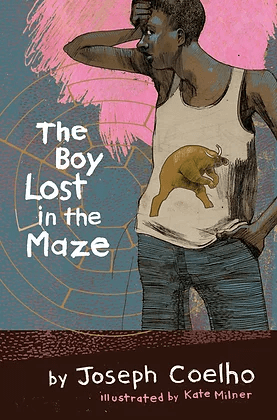
The Boy Lost in the Maze

I am writing this review as I am re-reading The Boy Lost in the Maze, the stories of Theo, Theseus, the Minotaur – each protagonist’s story mirroring the others in their similarities – tales as old as time told, and retold until edges have blurred and new lights are cast on elements often obscured in previous tellings.

I drowned in Joseph Coelho’s poetry, as I finished each (brief) chapter I felt like I was coming up for air before submerging myself in the narrative again..

The rawness of their search for fatherhood and identity to help scrub away their feelings of abandonment and shame left me feeling overwhelmed yet unable to lay the book down.

The choose your own adventure element came as a delightful surprise and kept it from being a cover to cover read, allowing the reader to decide what actions should be taken, influencing the story and having a slightly different experience with each reread.

This work will win awards, not just because Joseph is the current Waterstones Poet Laureate, but because in the deceptive simplicity of the lines and verses lies a deep, complex story that will swallow you whole and hold you entranced until the final page is turned.

The Boy Lost in the Maze is the third work by Joseph Coelho and artist Kate Milner. It is published by Otter-Barry Books and is available from October 6th. 

Highly recommended for readers of all ages!

The Bookstart Bear and Tala the Storyteller

Who is The Bookstart Bear?

Matt temporarily an avatar of the Bookstart Bear

30 years ago The Bookstart Bear was introduced as the national mascot for the BookTrust’s Bookstart programme, as part of their resources to encourage families to read and share stories with their children as early as possible.

As a result of brand refresh in 2020, BookTrust began phasing out the Bookstart Bear character and introduced a range of new characters to ensure their resources would continue to appeal to families today and in the future.

Many local authorities and libraries have continued to use the Bookstart Bear character in their own activities and the BookTrust is happy for them to do so for as long as they find it a helpful tool to engage with their local families.

Other libraries and local authorities have started creating their own characters to engage with families and young readers.

This brings us to Tala the Storyteller.

Who is Tala?

Tala the Storyteller

Tala the Storyteller is a friendly alien who likes to go on journeys, seeking out stories and rhymes to share with children.

Tala was created by local artists Emma Phillips and Eva Povey using funds from an Arts Council National Lottery Project Grant for Hertfordshire County Council. They worked with families through interactive workshops to find out what appeals to young children and used these ideas in their design.

Tala is an alien child and as such is neither male or female (allowing children of any gender to identify with them).

Who is Maya Forstater?

Maya Forstater is a British business and international development researcher who is the claimant in Maya Forstater v Centre for Global Development.

On September 29th Maya Forstater tweeted:

The accusation that Tala was a trans bear set off a global firestorm on social media. Hitchin Library tried to answer the questions posed by Maya’s tweet

Even the official twitter account for the Hertfordshire County Council tried to intervene and calm things

but to no avail.

Over the next few days Maya doubled down and hammering at Hitchin Library and Tala the Storyteller, trying to foment an gender critical uprising against a reading mascot that was created with input from young people from the community it served.

Tala the Storyteller seems to be becoming the most recognized reading mascot around the world. With news organizations from Hitchin News Hub & Pink News to conservative outlets the New York Post, the Daily Mail and more covering the story.

Defenders of Herts Libraries and Tala include

Maureen Johnson

Billy Bragg

Danny Pearson

Joanne Harris

and a whole raft of believers in equality and equity of representation and access.

This attack on Tala the Storyteller is just another front in the culture war against libraries being welcoming and inclusive that has opened up.

Way back in 2010 I was honoured to serve as an avatar of the Bookstart Bear. Over the last 30 years, many of my colleagues have done the same, some female, some male (like me) and others whose genders I did not know. Did this make the Bookstart Bear genderfluid or trans? Who cares? If the question had been asked even a few years ago it would have been ridiculed as people making a fuss over Tala have been ridiculed and called out today.

When Gender Critters Attack

Once the dust of this overhyped non-controversy has settled and exclusionary gender critters have moved on to another target Hertfordshire Libraries will still be running family library events with Tala and BookTrust will still be offering support and resources to those who need them most. You can find out about some if these below.

Earlier this year BookTrust developed a new pilot, Bookstart Toddler and Bookstart Pre-schooler which are packs and resources specifically aimed at disadvantaged children and families and will be delivered through targeted approaches by a range of nurseries and children’s centres to ensure we reach children most in need. Last year they launched a new pilot library initiative BookTrust Storytime. Aimed at families with children aged 0-5, especially those who are disadvantaged, BookTrust Storytime is designed to support families to share stories together and make visiting the library a regular part of family life.

The Diverse Book Awards 2022

The Diverse Book Awards is now in its third year, showcasing the talent of marginalised voices. I’ve been lucky enough to read all of the books nominated for the children’s and YA lists to help whittle down to a long list, but yesterday the shortlist was revealed! The winner will be announced on the 20th October.

Children’s

​Danny Chung Does Not Do Maths by Maisie Chan, illustrated by Anh Cao (Piccadilly Press)

Hey You! by Dapo Adeola, Diane Ewan, Onyinye Iwu, Jade Orlando, Bec Glendining, Derick Brooks, Joelle Avelino, Dunni Mustapha, Kingsley Nebechi, Chanté Timothy, Nicole Miles, Camilla Sucre, Jobe Anderson, Alyissa Johnson, Chatlot Kristensen, Sharee Miller, Reggie Brown, Selom Sunu, Gladys Jose (Penguin Random House Children’s)

How I Saved the World In A Week by Polly Ho-Yen, illustrated by George Ermos (Simon & Schuster Children’s UK)

Me, My Dad and the End of the Rainbow by Benjamin Dean, illustrated by Sandhya Prabhat (Simon & Schuster Children’s UK)

The Best Diwali Ever by Sonali Shah, illustrator Chaaya Prabhat (Scholastic)

The Lightning Catcher by Claire Weze (Bloomsbury Children’s Books)

The Shark Caller by Zillah Bethell (Usborne)

The Very Merry Murder Club by Abiola Bello, Annabelle Sami, Benjamin Dean, Dominique Valente, Elle McNicoll, E.L. Norry, Maisie Chan, Roopa Farooki, Nizrana Farook, Patrice Lawrence, Joanna Williams, Serena Patel, Sharna Jackson, illustrated by Harry Woodgate. Edited by Robin Stevens and Serena Patel (Farshore)

​Young Adult

​Ace of Spades by Faridah Àbíké-Íyímídé (Usborne)

Being Amani by Annabelle Steele (Hashtag BLAK)

​Skin of The Sea by Natasha Bowen (Penguin Random House Children’s)

Splinters of Sunshine by Patrice Lawrence (Hodder Children’s Books)

​The Crossing by Manjeet Mann (Penguin Random House Children’s)

The Henna Wars by Adiba Jaigirdar (Hodder Children’s Books)

What We’re Scared Of by Keren David (Scholastic)

You’re The One That I Want by Simon James Green (Scholastic)

​Adult

​Black Water Sister by Zen Cho (Pan Macmillan)

His Only Wife by Peace Adzo Medie (Oneworld)

Next of Kin by Kia Abdullah (HQ)

Open Water by Caleb Azumah Nelson (Viking Books)

The Day I Fell Off My Island by Yvonne Bailey-Smith (Myriad Editions)

The Island of Missing Trees by Elif Shafak (Viking Books)

The Jigsaw Man by Nadine Matheson (HQ)

​This One Sky Day by Leone Ross (Faber)

For more info please email hello@thediversebookawards.co.uk

For PR enquiries please email info@literallypr.com 

​Official blogger is Samia Aziz @readwithsamia

The Carnegies

Well the latest news took me by surprise, actually it seems to have taken a lot of people by surprise, it may just be me but the name “The Carnegies” sounds more like a soap opera or sit-com – but wait, I am getting ahead of myself here.

Let’s rewind back to February of this year when the news broke that CILIP & Yoto had entered into a partnership for Yoto to become the headline sponsor of what was then known as the CILIP Carnegie & Kate Greenaway Awards, and that they were being renamed the Yoto Carnegie & Kate Greenaway Medals.

Being an inquisitive sort and having what may kindly be described as a possessive attachment to the awards (an affliction that most ex-judges seem to have) I reached out to the press people with some questions (see below) that I had put together after reading the press release several times.

Questions:

  • How did the idea of a partnership between CILIP & Yoto with regards to the Carnegie & Kate Greenaway Awards come about?
  • How will this partnership work with books that do not have audio versions? Take for example, the 2020 Carnegie winner Lark by Anthony McGowan which is published by Barrington Stoke who do not currently offer audiobooks.
  • If no official audio versions are available, is there a deal with Calibre Audio or the RNIB Talking Books to offer the audio versions they make available for print disabled readers through Yoto?
  • If the answer to the previous question is yes, how will this affect the rights of copyright holders?
     Will CKG shortlisted titles available on Yoto be sold via the official book suppliers Peters or will they be exclusively available via the Yoto store?
  • Does CILIP endorse Yoto Player as the “official” audiobook device for the Carnegie & Kate Greenaway Awards in any way?
  • With fuel, transport & food costs skyrocketing across the UK is there a concern that the price of the Yoto Players and smartcards may be a barrier to equitable access?
  • How does CILIP envision Yoto being “able to engage and include more young people in reading the best books for pleasure”?
  • How will “audio content for promotion through point of sale for retail, libraries and schools” work? Will there be excerpts of the books available to download, interviews with authors/illustrators etc?
  • What does the Yoto Player offer to CKG Shadowing that audiobooks via digital library services like Overdrive and Playaway or CD audiobooks do not?
  • How will Yoto actually work with promoting the Kate Greenaway Award? It is a Medal for an “outstanding book in terms of illustration for children and young people” being a screen free device, the Yoto Player will not be able to show the best of the works nominated for it?
  • Do audiobooks downloaded onto the Yoto Player stay on the device until they are deleted or do they have to be redownloaded periodically?
  • Will Yoto smartcards be available through Public & School Libraries?
  • If no – why not?
  • If yes will there be a limit on the number of times each item is able to be loaned?

I was put in touch with Jake Hope, the Chair of the CKG Working Party and, after several e-mails back and forth we were able to arrange a date for a skype chat to discuss the sponsorship news.

The long-term battering that Public Libraries in the UK had been experiencing brought up the question of the awards sustainability and that they (CILIP) had been looking for sponsorship for quite some time, and, working with Agile Ideas to find new opportunities of spreading the messaging of the awards and increasing their reach they had been connected with Yoto. Jake stressed during the interview that it was less a partnership and more straightforward sponsorship deal. In Yoto CILIP had found an organization that was as driven by a passion for promoting reading for pleasure that matched the passion held by those that worked in driving the CKG awards forward.

Neither CILIP nor the CKG Working Party would endorse the Yoto Player as an official device, rather they see it as a new element of accessibility, joining the options already offered by their RNIB & Calibre Audio partners.

All in all Jake felt that the positives of the (not) partnership far outweighed any potential negatives and would make the awards sustainable for years to come.

I always enjoy chatting to Jake and for years have found him to be a nigh-inexhaustible well of information and great stories about the medals and librarianship in general. However, he was not able to answer any of the Yoto specific questions I had, the biggest one (in my mind anyway) being: How will Yoto actually work with promoting the Kate Greenaway Award? It is a Medal for an “outstanding book in terms of illustration for children and young people” being a screen free device, the Yoto Player will not be able to show the best of the works nominated for it?

Sadly, when I reached out to the Yoto, their press officer declined to participate in an interview or answer the questions I had via email as (and I am quoting here): Given that we worked closely with Jake on his kind replies to your recent enquiries, we feel we’ve responded to the queries as best we can at this stage.

They did however offer to send me a Yoto Player and some cards. It is a fantastic device and very child friendly – I will be posting a review of it in due course.

Unfortunately the questions I had for Yoto still remain unanswered – except for a clarification coming over the future of the Kate Greenaway Medal tht came out of the news today, and, sad to say, I think my concern was justified.

Now back to the news that broke today of the rebranding of the Carnegie & Kate Greenaway Medals as “The Carnegies” I found the documentation very interesting, but what caught my eye was this sentence in the Q&A document: The three-year sponsorship deal with Yoto Player, was secured on the basis that the brand would be refreshed

Was deemphasizing the Kate Greenaway Medal and making it just one of “The Carnegies” the price that CILIP and the working party had to pay to close the deal with Yoto? Instead of “elevating the illustration medal” as they claim, does this not just make it harder to stand out from the medal for writing? The medal for writing has historically always had a higher profile, but the awards were in no way dependent on each other. This is just my reading of it and I welcome being corrected, but my concern that an audio device sponsoring an illustration medal did not make complete sense seems to be borne out, it is easier to overlook it as the Carnegie Medal for Illustration than it was when it was the separate Kate Greenaway Medal.

The Carnegie Medal and the Kate Greenaway Medal were always two distinct awards and now the line between has been blurred and I feel that with this rebrand something is being lost.

It also looks as if The Carnegies are being positioned to appeal more to children. Historically the awards previously known as the Carnegie & Kate Greenaway Medals were awarded to writers for an outstanding book & artists recognizing distinguished illustration in a book (both for children). In the past judges have seldom voted for the popular choice, and many librarians who ran shadowing schemes complained that the books awarded the medals were often a hard sell to young readers who often selected other titles as shadower’s choices.

My feeling looking to the future is that there will be more changes coming down the pipeline, possibly splitting the Carnegie Medal for Writing into an older & younger award. This has always been rejected by the Working Party and everyone involved with the awards, but with the scale of the current changes, it remains impossible to rule out.

The muted response to this news on social media is also very telling; in the past, updates and changes to the awards have been hotly debated and discussed, but this refresh appears to have been received with little warmth, however, only time will tell as the news trickles down to everyone with an interest in the awards.

Something else I have noticed, the website for the Carnegie & Kate Greenaway Medals as they were ended in a .org.uk indicating that it was a not-for-profit organization or charity. The address https://carnegiegreenaway.org.uk now points to https://yotocarnegies.co.uk/  a new website ending in .co.uk –  denoting a commercial domain address more commonly used by businesses. The http://yotocarnegies.org.uk/ address currently remains unclaimed.

Only time will tell if these changes will lead to a watering down of the awards and if they will move in a populist choice direction, becoming one of many book awards or if they will maintain their position as “the one that all authors and illustrators want to win. Indeed throughout their history the Carnegie and Kate Greenaway Medals have provided a literary standard by which other books are measured…

I may be wrong, it is possible that I have been involved with the awards for so long that I am unable to see the good things that this may bring. Do you disagree with me? Let me know via editor@teenlibrarian.co.uk

Also if any of of past and present awards judges from YLG that participated in the consultation group are interested in chatting to me (in confidence) please drop me an e-mail