Category Archives: Authors

Is the spectre of US style book bans arriving in Great Britain with the increase in challenges to books and author visit cancellations in the UK?

Redolent of the worst aspects of Section 28, the current frenzy among Britain’s right-wing reactionary tabloids and supposedly respectable conservative newspapers (The Telegraph) and other commentators is reaching fever pitch.

Section 28 of the Local Government Act 1988 was a law passed in 1988 by a Conservative government that stopped councils and schools “promoting the teaching of the acceptability of homosexuality as a pretended family relationship.” It came about in part after a complaint about a book titled Jenny Lives with Eric and Martin by Susanne Bösche. Headlines from the Daily Mail in the wake of this included Save the children from sad, sordid sex lessons (4th June 1986) and Bizarre truth about happy family in the gay schoolbook (22nd September 1986). Then Education Secretary, Kenneth Baker, declared that this grossly offensive homosexual propaganda’ was put into libraries by ‘left-wing authorities’.

Ancient history? It was not very long ago or far away, and this all looks and sounds very familiar if you have been paying attention over the past few years

The Sun ran with this article earlier this year: TRANS DAD BOOK RAP Fury as ‘irresponsible’ school reading list for children aged 10 includes book about a trans dad (link to archived article)

Recent articles from The Daily Mail include: Schools ignore parents’ concerns over diversity reading lists as young children exposed to ‘trans-activist’ books without their permission(link to archived article)

and:

Trans lobby hijacking primary school reading with ‘sex-change propaganda’ as damning report reveals more than 60 books featuring children ‘born in the wrong body’, women with beards and bizarre ‘non-binary’ guinea pigs(link to archived article)

The Telegraph has published several articles over the past few years including:

‘Sparkly’ pro-trans books targeting toddlers (link to archived article)

Trans books for toddlers are an outrage (link to archived article)

‘Woke’ libraries stock more trans than gender-critical books, data shows (link to archived article)

The report referenced in some of the articles was released by three anti-trans organizations. SEEN in Publishing, Transgender Trend and Biology in Medicine, the report describes the alleged capture of children’s publishing and library services by trans activism. It is titled:

Through the Looking Glass: trans activism in children’s literature and library services

You can find a copy of the report (not hosted by Transgender Trend) by clicking on the link above or here.

While this report deserves a well thought out and comprehensive rebuttal, I am not going to attempt to do so here, as I wanted to use it as an example of one of the tools being made available to potential book banners and censors. Just looking at the recommendations made in the report (pages 10-12) makes it clear what their end goal is. The recommendations boil down to:

  • Stop publishing trans-activist literature – fiction as well as non-fiction – for all age groups catered to by children’s publishing, up to and including YA.
  • Children’s librarians must stop shelving trans-activist titles.
  • Librarians and booksellers must stop recommending trans-activist titles to parents and children
  • Instead of publishing trans-activist titles, children’s publishing should concentrate on putting out excellent stories with captivating characters
  • The CEOs of publishing houses, their imprint heads and publishing directors should be mandating that acquisitions lists are broadened out again to attract genuinely diverse and excellent submissions
  • Children’s publishing and the library services must move away from cancel culture by implementing robust HR practices
  • Educational publishing, libraries and schools must collaboratively observe statutory KCSIE and RSHE guidance, ensuring age-inappropriate and factually-incorrect, trans-activist books no longer find their way into children’s hands

That the authors of this report are so open about their aims of banning and censoring books to push transgender folks out of the public eye is concerning to say the least. The language used in the report contains gems like ‘trans-activist literature’ in place of children’s books, teen books and picture books; conflating a drop in reading for pleasure with a rise in the publication of books by and about transgender people, raging about the ‘trans cult’ and the claim that CILIP (the Chartered Institute of Library & Information Professionals) & library services have a ‘preference for trans-activist children’s books’ would be laughable if they were not so deadly serious.

The report and the news articles linked to above feel like early positioning for supporting concepts like ‘Parents rights’ – the idea that adults can control and limit what books and information children can access in schools and libraries.

Back in 2022 Simon James Green became one of the first YA authors to have a school visit cancelled due to his books containing LGBTQ+ themes. He wrote about his experience here: We’re not banned, but…

Authors Kristina Rahim and Jen Carney both discuss having school visits cancelled due to some LGBTQ+ content in their works in this article from The Bookseller: LGBTQ+ authors see school visits cancelled after ‘complaints from parents’ (link to archived article)

Author Ian Eagleton has also posted about children being removed from his school visits due to LGBTQ+ content is his books: https://www.instagram.com/p/DaLmVlgjs-T/?img_index=1

Schools in the UK are on their summer break so it no new information may break for some time, but if any authors, library folk or teaching staff would like to contact me in confidence you can do so using the methods outlined on the Submit News section of my website.

Every Hunter is Hunted -a Review

Brides are being murdered on their wedding nights. Soaked in blood and draped in lace. With nothing left behind to help them find the killer, the FBI is at an impasse. Their only, desperate hope is to convince Jasper Dent, the son of two serial killers and a former teen prodigy at hunting down such monsters, to emerge from his self-imposed exile.

Barry Lyga’s I Hunt Killers trilogy has long been one of my go-to favorite crime stories. Not just my favorite YA crime fiction but crime in general! Who does not enjoy reading about teens doing stupid, dangerous shit (in this case hunting serial killers), I wrote a review back in 2012, you can read it here.

Last year Barry released Before the Hunt, a collection of short stories and novellas about Jazz and other characters who appear in the original trilogy. For months he has been teasing Every Hunter is Hunted, the first in a new series about Jasper Dent. The story opens with a suitably gory prologue (this is a serial killer story after all) and when we get to Jazz, we find him older, wiser and still as isolated as he was as a teen in the small town of Lobo’s Nod. Every Hunter is Hunted is not a YA novel, although teens who read IHK will no doubt love it as much as I do! It has a slower pace than the stories that came before, Jazz is no longer the gung-ho serial killer hunter that he was in his teen days, as an adult he can no longer do, or get away with many of the things he did a few years previously; well he could, but the consequences if he got caught would be more severe. His doubts about his abilities and the things he did as a youth plague him, and, against his better judgement when the FBI comes calling he reluctantly accedes to their request for assistance in tracking down a serial killer in Seattle.

One of the things I loved about the original stories was the cast of characters, his best friend Howie, girlfriend Connie and Sheriff G. William Tanner are still in Jazz’s life but are conspicuous by their absence throughout much of the story; all of them having grown up (& older) alongside him. This gave the story more verisimilitude than it would have had if they were still revolving around Jazz rather than having moved on with their careers and retirement.

You don’t have to have read I Hunt Killers or the other books before picking up Every Hunter is Hunted, it works as a fresh start, but you will develop a deeper connection with Jazz and his struggles if you do! Plus they are bloody (pun intended) brilliant and well worth a read!

Every Hunter is Hunted is out now and available anywhere you can buy books, plus from your local library – and if they don’t have it you can request it!

Buy it or borrow it and read it! You won’t regret it! Trust me I am a Librarian!

Neurodivergent Moments: Sex, Sunscreen, Turtles and How (Not) to Pack a Suitcase – a Review

Across 24 short essays spanning school, work, relationships, travel and everything in between, Wells and Schamaun draw on their popular podcast, Neurodivergent Moments, to offer an honest, funny and refreshingly un-self-helpy portrait of neurodivergent life – not as a problem to be fixed, but as a different, and often hilarious, way of being in the world.

Neurodivergent Moments, written by two Comedians Joe Wells & Abigoliah Schamaun is an honest, at times painfully funny and eminently enjoyable work that gave me insights into living with autism and ADHD. It also provided me with a soupçon of self-awareness as, while reading Neurodivergent Moments there were a few moments when I stopped and thought “Wait, am I neurodivergent?” as I saw some aspects of myself reflected in the stories. I have never been tested for neurodivergence although a number of my friends over the years have told me that I have some neurospicy traits.

If you are a book selector for libraries looking for more representative works by neurodivergent authors then I cannot recommend this book highly enough! If you have ever wondered what it may be like to be neurodivergent then this book is for you, if you are neurodivergent and are looking for more representative works, then this book is for you! If you are just looking for a collection of humorous biographical stories then, yes you guessed it, This book is for you!

I am no prognosticator, but I do know that once you have read this book you funny bone will itch for more work by Abigoliah and Joe, fortunately they have an awesome podcast (also called Neurodivergent Moments) that you can listen to.

Look you can also do it the other way around, listen to some of the podcast first and then buy yourself a copy of the book, or ask your local library to order a copy – libraries are great, and librarians love having patrons recommend titles that may not be on their radar yet!

They also have websites where you can find information about their stand up gigs and videos of their comedy specials. Joe’s website is here: https://www.joewells.org.uk/ and Abigoliah’s website is here: https://abigoliah.com/

Neurodivergent Moments is available here and from just about every other bookshop!

Get a copy now, you will love it! Trust me I am a Librarian!

Eight Questions With… Luz Maria Mack

Can you introduce yourself to anyone in the audience who may not know who you are?

I’m Luz Maria Mack, a Dominican American children’s book author, filmmaker, and literacy advocate. I was born in Villa Mella, Dominican Republic, immigrated to New York as a young child, and now proudly reside in the South Bronx, where I continue creating stories that celebrate culture, family, and belonging.

Many of my books are inspired by my own experiences growing up and by conversations I’ve had with my three children. Whether I’m writing about Dominican traditions, disabilities, mental health, music, or family, my goal is always the same: to create stories where children feel seen, valued, and proud of who they are. Alongside my books, I also produce animated adaptations and educational resources that help make reading more engaging and accessible for young learners.

What are your greatest inspirations when it comes to creating stories?

My greatest inspiration is my family and the community that raised me. I often think about the stories I wish I had seen when I was growing up, stories where Dominican children, Afro-Latino families, and bilingual households simply existed without explanation.

Many of my books begin with real moments. My daughter once asked me why her hair wasn’t blonde like her friends’. That single question changed my career and inspired me to create books that celebrate the beauty of our own cultures. I also draw inspiration from my childhood in the Dominican Republic, family traditions, music, faith, and everyday conversations that remind us how extraordinary ordinary moments can be.

What’s your process when you’re writing? Do you plot or do you let your characters grow as you go?

I usually start with a feeling rather than a plot. I ask myself, “What do I want a child to feel when they finish this book?” Once I know that, I build the story around it.

I create a simple outline but leave room for the story to grow, or better yet, for me to look at the story from a different angle. I read my manuscripts aloud many times to make sure it sound right, and I’m always asking my friends, especially former editors and literacy teachers, to take a look.

When you work with illustrators, how do you find the collaborative process? Is it back and forth, does the artist’s style inform your writing, or is there a strict division between creating the story and the illustrating thereof?

Working with illustrators is one of my favorite parts of publishing because they bring a whole new layer to the story. I give enough direction to share the heart of the book, but I also want the illustrator to bring their own creativity and ideas.

One of my favorite examples is my upcoming book, I See Love. The illustrator suggested that instead of beginning the story at the park, we first show the family getting ready and traveling there. I loved the idea and even shared it with my trusted beta readers before making the change. It made the story feel even stronger.

I see the author-illustrator relationship as a true partnership. Together, we create an experience that helps children connect with the story in ways that words alone sometimes can’t.

Apart from writing, you also work with the streaming service kweliTV. Do you create new stories for streaming, adapt your books, or is it a mix?

It’s a mix. Many of the animations available on kweliTV are adaptations of my books because I want children who may struggle with reading, or simply enjoy visual storytelling, to experience the stories in another format.

I also create original educational content designed as an online game so kids can have fun with the characters. Expanding stories beyond the page allows me to reach more families and classrooms while reinforcing literacy through multiple forms of media. My goal has always been to meet children wherever they are, whether that’s with a book, an animation, or an interactive activity.

As an immigrant American myself, I have strong ties with my home country and stay in contact with authors and other creators whose works I can recommend to friends and colleagues. Are you able to recommend books by Dominican or Dominican American authors and artists for people who wish to read globally?

Absolutely. We have an incredible community of Dominican and Dominican American creators whose work deserves a global audience.

For children’s literature, I’d recommend books by Kianny Antigua, whose stories beautifully celebrate Caribbean culture, and Elizabeth Acevedo, whose poetry and novels have inspired countless readers, including my oldest daughter. For older readers, I recommend Junot Díaz and Angie Cruz, whose work explores Dominican identity with honesty and depth. I’d also encourage readers to discover authors like Alyssa Reynoso-Morris and the many talented writers I’ve had the privilege of meeting through the Dominican Writers Association and other writing communities.

I also encourage readers to seek out independent Dominican authors and illustrators from both the Dominican Republic and the diaspora. The more diverse stories children read, the more they realize that every culture has meaningful stories worth celebrating.

What are you reading at the moment, and who would you recommend it to?

I always have a children’s picture book nearby because I’m constantly studying how authors create emotional impact with very few words.

I always have a children’s picture book nearby because I’m fascinated by how authors can create such powerful emotions with so few words. Also, started reading Mangas, one of the most recent Mangas I read wasThe Problematic Prince and Betrayal of Dignity.

Outside of children’s books, I enjoy reading memoirs and romance novels, because who doesn’t love the feeling of a perfect first date, even if it’s through a book? I also love books about creativity and personal growth because they make me a better writer and storyteller.

One book that really stayed with me was What Will They Say? by my mentor, Denise Soler Cox. It reminded me that finding your voice is one thing, but unlearning the behaviors that keep you from using it can be even harder. That message has stayed with me both personally and professionally.

I am aware that you do offer author visits both in person and virtually. Can you let us know more about this for libraries and schools looking for inspiring authors to invite to their institutions?

Absolutely! My author visits are designed to be interactive, engaging, and culturally relevant for students from elementary through middle school.

Whether I’m visiting virtually or in person, I combine read-alouds with storytelling, conversations about culture, identity, creativity, and the writing process. I also share animated adaptations of my books, interactive activities, and behind-the-scenes looks at how an idea grows into a published book. Students are encouraged to ask questions throughout the presentation, making each visit feel like a conversation rather than a lecture.

For virtual visits, I use Zoom or Google Meet and include real-time interaction, downloadable activities, and multimedia that keep students engaged from beginning to end. For in-person visits, I bring a more hands-on experience with movement, audience participation, activity materials, and opportunities for book signings.

No matter the format, my goal is the same: to help students discover that their stories matter, that reading can be joyful, and that they already have everything they need to become storytellers themselves.

If you’d like to see what my author visits are like, you’re welcome to watch a few examples here:

Neurodivergent Moments Interview: Eight Questions with Joe Wells & Abigoliah Schamaun

Today I am welcoming stand-up comedians Abigoliah Schamaun & Joe Wells to TeenLibrarian to answer some questions about their new book Neurodivergent Moments.

First off, can you introduce yourselves for those in the audience who may not have come across you or your work before?

We’re both stand-up comedians based in the UK. Abigoliah is ADHD and Joe is autistic. Most of our time is spent telling knob jokes to drunk people but occasionally someone lets us write a book… which we’ve filled with knob jokes.

How did the two of you first meet and (related) how/when did you start working together

We met doing a kids comedy show in Chichester where we bonded over our love for fancy shoes (Joe’s were glittery but Abigoliah’s lit up!) – a few years later we were chatting in another green room (green rooms are our only social life) and decided to do a podcast called Neurodivergent Moments and that podcast inspired a book, also called Neurodivergent Moments – we’re better at jokes than we are at original titles!

Neurodivergent Moments was an absolute delight to read! It reminded me of some of my experiences growing up! Can you give an elevator pitch to convince potential readers to pick it up

Joe talks about his bum and Abigoliah talks about getting chlamydia. This is for a teen website right?

Short of attending a stand-up venue, where can your future fans access your work?

You can buy the book at any independent bookshop or evil global megacorp. The podcast is available on all podcatchers and we’re @abigoliah and @joewellscomedian on Instagram

Actually do either of you have any comedy tours planned?

Yes! We’re doing a bunch of book readings all over the UK and Joe will be touring his show, Daddy Autism, this autumn.

Apart from buying or borrowing a copy of Neurodivergent Moments can you recommend other resources for neurotypical people to learn more about the lives of neurodivergent folks?

Pete Wharmby’s What I Want to Talk About, Shaparak Khorsandi’s Scatterbrain and Nobody Nowhere by Donna Williams are good places to start.

What inspired you to write Neurodivergent Moments, and how long did it take from inspiration to publication?

The book is about 2 years in the making. We wanted to write a funny, irreverent book about neurodivergence. It’s not a self-help book, a memoir or academic thesis, it’s just a fun slice of our unconventional lives.

Are you currently reading anything good and can you recommend it to the audience?

Abigoliah is reading The House In The Cerulean Sea by TJ Klune and Joe is reading Selling Out The Spectrum by Liam O’Dell.

Thank you for giving up for time to answer these questions!

Neurodivergent Moments: Sex, Sunscreen, Turtles and How (Not) to Pack a Suitcase will be published on June 18.The pre-order link is HERE.

Mac Believes…

… that 94.7 percent of kids’ books are crud.

Mac being Mac Barnett, the current National Ambassador for Young People’s Literature and best-selling author for young readers.

In his new book Make Believe: on Telling Stories to Children he has written “I have a nagging fear that children’s literature suffers from a slightly higher crud percentage than literature as a whole…maybe more like 94.7 percent of kids’ books are crud.“

A hyperbolic statement? Almost certainly, but also utterly tone deaf and incredibly dismissive of the tens of thousands of authors across the world who write books for children and young readers. Who gets to chose which books are worthy and which ones are, not to put too fine a point on it… crud?

Mac is not alone in believing that this, there are people and organizations around, like Moms for Liberty and their fellow travelers, who believe that many kids books are crud, full of themes, ideas and people that they do not want their children exposed to. Mac’s belief gives cover and credence to these people and their hateful views.

Who knows, Mac’s book may be a paean to children’s literature, extolling its virtues, but sadly the nagging fear that he shares may be all that many people take away from it. This negative publicity may in fact deter people who may benefit from reading it from picking it up. I have ordered a copy and will read (and review) it as I have long been a fan of his work, but honestly he (or his editor) should have thought about that sentence before the book was published.

If this is something he truly believes then he should resign the position of ambassador and let someone who truly sees the value young people’s literature assume the position!

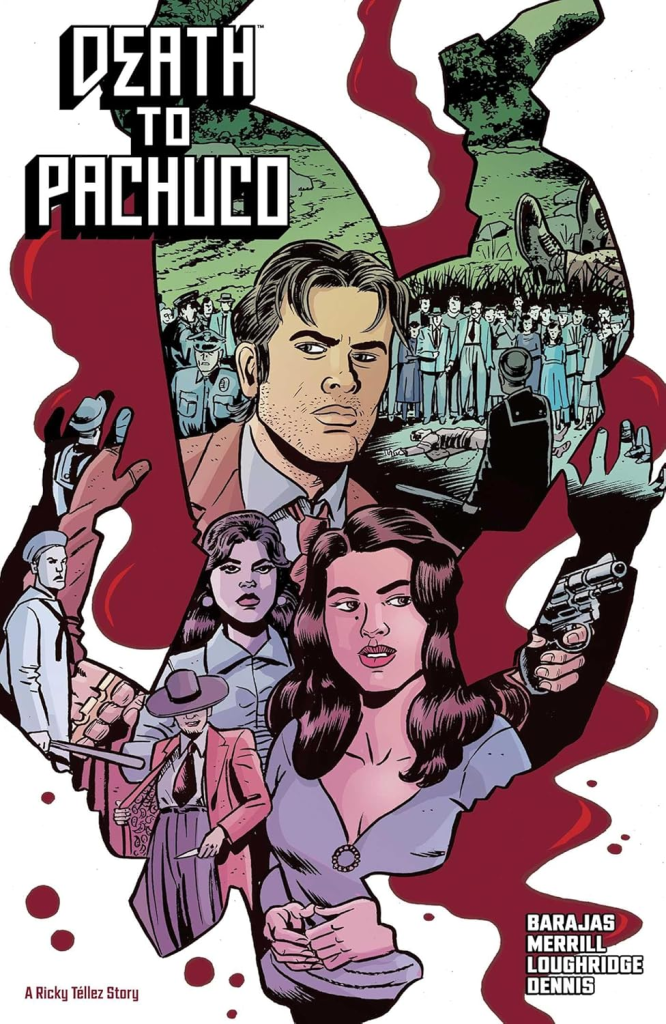
Death to Pachuco Interview with Henry Barajas

Hello, and thank you for taking the time to answer a few questions about Death to Pachuco. Before we begin, could you please introduce yourself to those reading this who may not be aware of who you are? I’m Henry Barajas. My roots are in Tucson but I live in Los Angeles. My passion is making comic books. My most notable work is La Voz De MAYO Tata Rambo art by J. Gonzo, letter art by Bernardo Brice, and edited by Claire Napier.

Are you able to give an elevator pitch to convince a potential reader to pick up a copy of Death to Pachuco? Death to Pachuco is a chicano noir taking place during 1940s war-time Los Angeles centered around racist events: the Sleepy Lagoon Murder Trial and Zoot Suit Riots.

How did you and Rachel come to collaborate on Death to Pachuco A mutual friend shared Rachel’s “Adult Romance” comic online. I was looking for an artist to work with on DTP and her sensibilities and inking style drew me to her work. I respect that she has her own style when there tends to be a homogenized artistic standard. She’s not trying to draw like anyone else, but good at extracting her influences. 

How did you and Rachel come to work together? Was there a strict separation between writing and art or was it a more back-and-forth collaborative approach? Thankfully, she started working on Gil Thorp with me. This was our chance to fine tune the band and get us ready for something larger than what we’re used to doing. I write full scripts. She would do some breakdowns; ultimately, we went straight to inks for DPT because she had an idea of what I was looking for. She is good at taking notes but also shows the professional attitude to learn and apply it to her craft. I also letter the comic, so I was able to make adjustments to my script to fit the structure of the page. The editor, Will Dennis, was key to bridging a lot of communication and having a third person to have a more objective voice to what worked and what didn’t.

Originally, this was going to be black and white. But the comic book gods blessed us with Lee Loughridge. He was able to fit us in his busy schedule and made the whole book sing.

What is the background to the story of Death to Pachuco? The background for me is the uncomfortable truths and history this country would much rather forget than learn from. Immigration and Customs Enforcement (ICE) has been supercharged for the purpose of terrorizing and maintaining white supremacy. This was what happened during the 1943 Zoot Suit Riots. The sailors took justice upon their own hands and tried to beat, strip, and burn Mexican counterculture appropriated by Black jazz musicians. I tried to make that clear without spelling it out for people.

How much research went in to creating this story? La Voz de MAYO was a four-and-half year long journey of research. I learned from that. Story supersedes research. You can have all the answers, but if your story sucks, no one will care. Thankfully, that wasn’t the case with La Voz. But I could’ve done one more project in those five years. I give myself a year of pre-production that usually takes place while I’m working on something else. But I’m getting older and slower, so I am starting from scratch again with my current project.

For people who may be interested in L.A. in the 1940’s and the Zoot Suit Riots what works can you recommend? I would say Manuel Ramos’ The Skull of Pancho Villa and Other Stories. He’s the godfather of Chicano noir. The obvious is Raymond Chandler’s Phillip Marlowe series, and The Good Asian by Pornsak Pichetshote, Alexandre Tefenkgi, and Loughridge. DTP is the first comic I have woven film as a major reference in my work. I would say the 1952 classic No abras nunca esa puerta by Carlos Hugo Christensen is a gem I watched thanks to the Noir City Film Festival.

For those readers who after finishing DtP may want to read more of your works, what can you recommend? (either in print or online) My work with the Civics For All group that educates the NYC public students. I wrote two comics for hispanic history, one on Dolores Huerta and migrant farmworkers and Sal Castro. Free to read and download.

What are you reading at the moment? I am inspired by Jazmine Ulloa’s El Paso nonfiction book on the incredible relationship the US has with El Paso specifically. It’s truly the Ellis Island of the Southwest. 

Thank you for giving up your time to answer these questions! Thank you for reading and supporting our work!

You can find links to Henry’s work, interests and socials here: https://linktr.ee/henrybarajas

Eight Questions With… Ben Dean

Hi Ben welcome to TeenLibrarian and thank you for giving up your time to answer some questions about Bury Your Friends!

Thank you for having me!

Can you introduce yourself to those in the audience who may not know who you are?

Of course! My name’s Ben and I’m a bestselling author of (mostly) thriller books that centre queer characters of colour. I have a background in celebrity interviewing and journalism, so I love scandal and gossip, which is often a core theme in my books. What can I say – I love the drama! So, if you’re picking up a Benjamin Dean book, buckle up for a ride with plenty of twists and turns.

What is the elevator pitch for Bury Your Friends?

Bury Your Friends is a nepo baby slasher where the fractured friendships of a privileged group of teens is put to the test by a deranged serial killer who locks them inside a country manor and demands that they evict one person from the house every hour starting from midnight…

When writing, in general what usually inspires you (and what inspired BYF)?

I’m usually inspired by some kind of scandal and mess, and I flesh the story out from there. For this book, I had been away for a weekend with friends in the countryside and I’m unfortunately just reeeeeally not a countryside kind of person – I think it’s beautiful in the day, but the moment the sun sets, I think the vibes are terrifying! So, there we were in this huge house mostly made of glass, and in the dark, all you could see was your own reflection. I just couldn’t stop imagining someone hiding in the dark and watching us – it really creeped me out! So that was the first seed, which was quickly followed by the idea of two boys going missing and only one of them coming back to crash their own vigil. I thought that posed a lot of interesting questions and gave me the chance to try my hand at an unreliable narrator, which was really exciting for me as a writer.

For readers new to your work, where would you recommend they begin?

Ooooh, I’ve never actually thought about that before! I think you can start with any of my books and whichever one interests you the most, but if you wanted one book that really gives you an introduction to me as an author…I’d maybe say How to Die Famous. It brings together so many of my favourite things – fame, pop culture, scandal and secrets – and it gives readers a good insight into what to expect from me in my other YA books.

What are you currently reading?

I’m currently in the middle of reading Silvercloak by L. K. Steven, which is an adult fantasy book with a magic system fuelled by pleasure and plain. I really love reading books set in fantasy worlds and this one has me hooked!

I know this one is a bit unfair to ask as you have just had a book published, but can you drop any hints about what you are currently working on?

Haha! You know what, I hate to disappoint but I’ve actually been taking a small writing break to refill the well and enjoy various hobbies without an impending deadline to worry about. But my brain is ticking, and I have some ideas that I’m excited to explore which might be a twist on what readers are used to from me.

For fans who enjoy following writers do you have any publicly available socials?

I do! You can find me procrastinating on either TikTok or Instagram @NotAgainBen. If you see me on either too often, feel free to shout at me to do some work!

Do you ever do school or library visits? If you do, what is the best way for library folk to get hold of you to organize these?

I do them here and there throughout the year! The best way to get in touch about them is to reach out to my agency at Madaleine Milburn to check my availability.

Thanks again for answering the questions!

You’re welcome, thanks so much for having me!

Benjamin Dean – credit Sam Taylor-Edwards.jpg

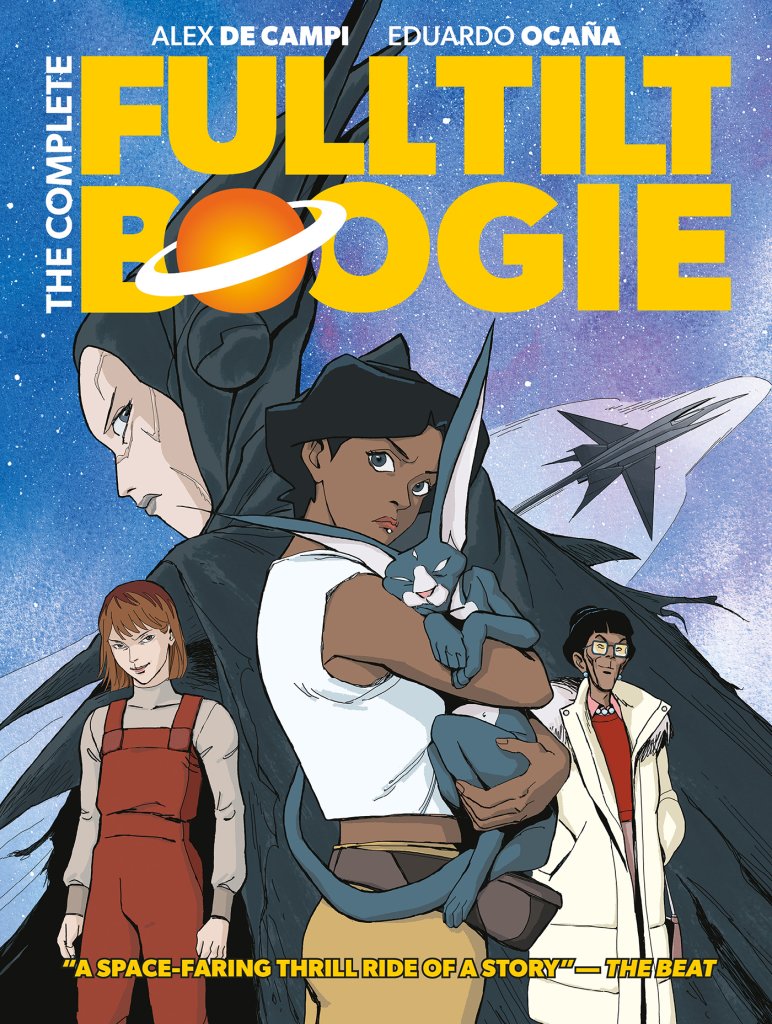
Going Full Tilt with Alex de Campi

Hi Alex, welcome to TeenLibrarian and thank you for taking the time to answer some questions about your amazing Full Tilt Boogie!

Alex de Campi: Hi Matt! It’s great to be here, thank you for having me! 

First question – when developing FTB, what came first, the title or the story?

de Campi: They sort of both happened at the same time. I used to do a lot of sailing when I lived in Hong Kong, racing dayboats called Etchells, and some of the boats had just fantastic names. I mostly raced on a boat called Bellwether, there was an Aussie boat called Lunchcutter, and then another boat called Full Tilt Boogie. I thought, what a great name that would be for a spaceship! 

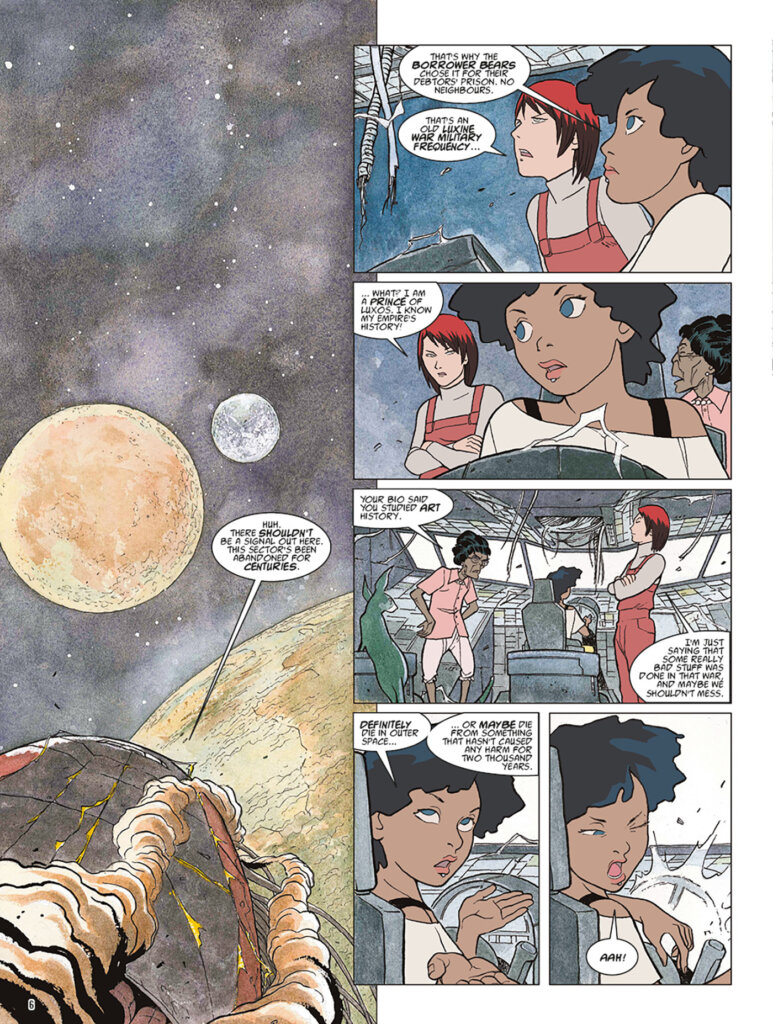
The FTB story came about through me having grown up on the US dubs of Gatchaman and Space Battle Cruiser Yamato, and wanting to take the things I loved about classic Japanese space opera anime and maybe deconstruct them a little, while also keeping both the emotional arcs and the funny moments. 

I’d spent a lot of time before and during FTB working on books that were more grounded and needed more research, or at least were nominally set in the real world—Bad Girls, Dracula, Motherf**ker!, Parasocial, Bad Karma. So FTB was its own special treat where I could just let my imagination run wild and make things up as I went along—and a whole galaxy to play in!

 How did you first get to work with 2000 AD, the galaxy’s greatest comic?

de Campi: I lived in the UK for a long time, and had a lot of friends who wrote and/or drew for the Prog. Tharg’s door was always open to me, I just never… walked through it, until noted Dredd writer Art Wyatt (Judge Dredd: A Better World and more) kind of strongarmed me through it. He just told me we were writing a Dredd miniseries together.  

2000 AD is really refreshing to write for as a woman writer, because they just don’t care. I’m so used to the big US comic companies only wanting women to write niche or female-led books, but Tharg was immediately like “yeah here’s Dredd, you can kill him if you want” (it was a Dredd movieverse series). 

I can’t tell you how unlikely it would be for DC to call me up and go “yeah here’s Batman, go for it” and Marvel—well, it’s the year of our lord 2025 and Iron Man has still never had a woman writer. But for Tharg, to paraphrase Neko Case, I wasn’t a woman in comics—I was a writer in comics. And that made all the difference. 

If you had to give an elevator pitch to a reader that was not sure about picking up a copy of FTB how would you describe it to them?

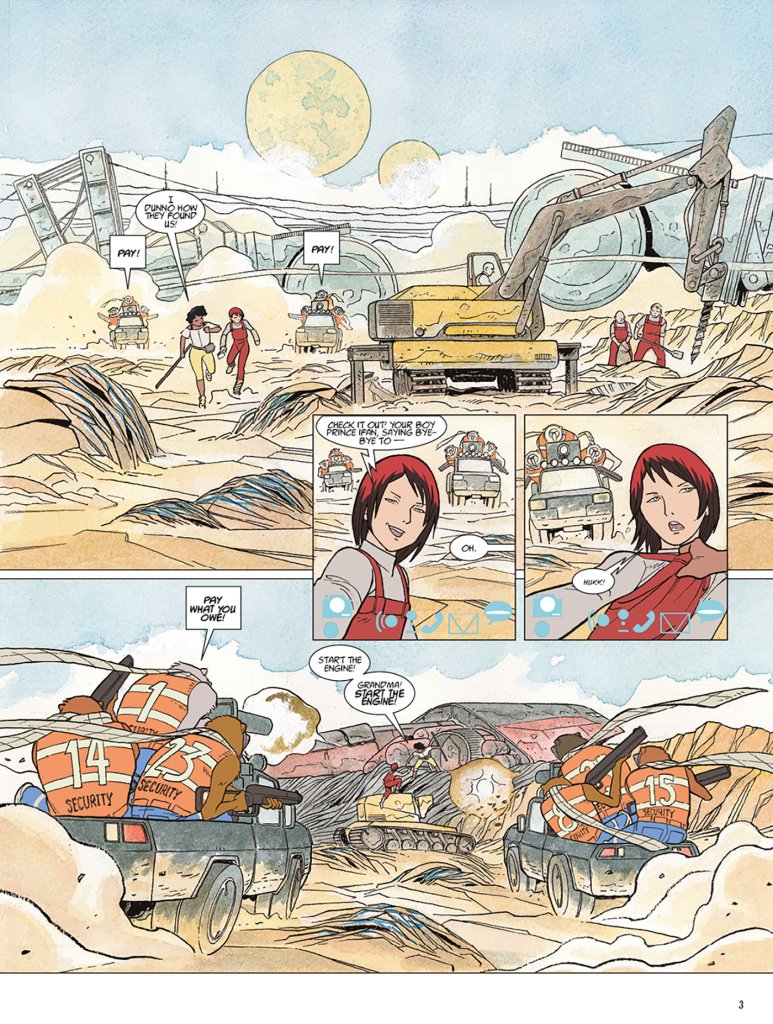
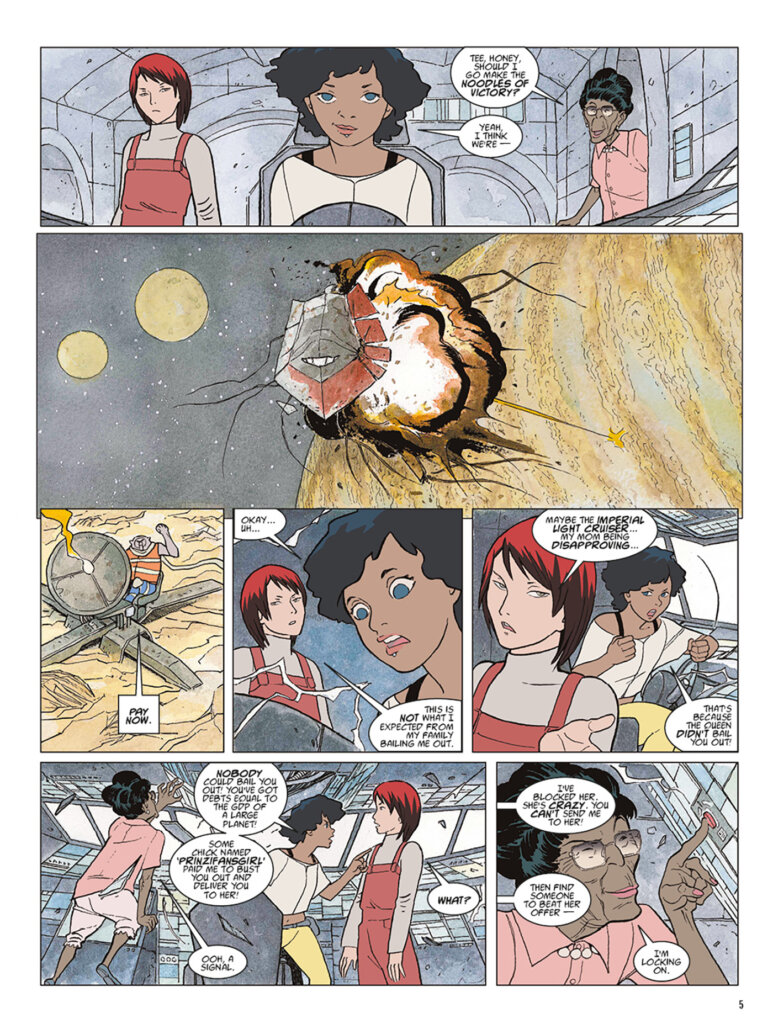
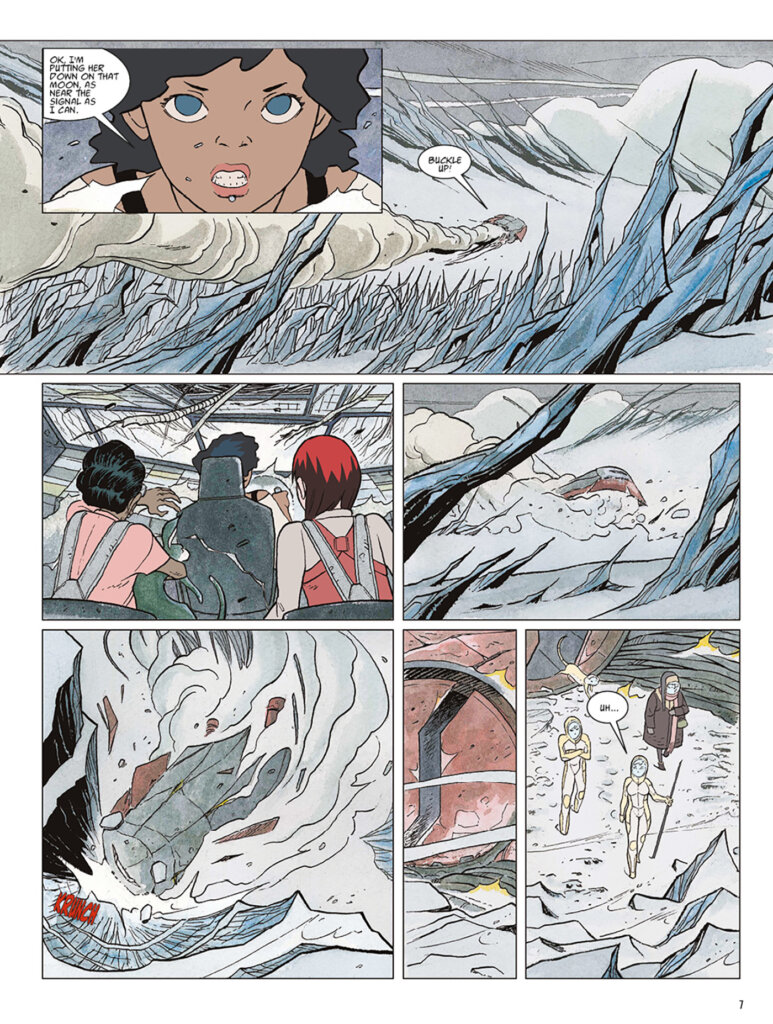
de Campi: Broke teenager and her cat jobbing in the galactic gig economy as a bounty hunter accidentally restarts thousand year old galactic war. There’s also a teen super sentai team but some clubs turn out to be a real bummer after you join.

FTB is a glorious love-letter to space opera – what were your inspirations in writing this story?

de Campi: Heavens, so much—from Lois McMaster Bujold’s Vorkosigan books to classic Japanese space anime (and even more modern ones like Witch from Mercury). 

Full Tilt Boogie made its first appearance in an issue of 2000 AD Regened – a special aimed at attracting younger readers. Apart from FTB can you recommend any of the other Regened stories to readers new to 2000AD?

de Campi: My absolute fave from Regened is Roger Langridge and Brett Parson’s Pandora Perfect—what if teenaged Mary Poppins was a cat burglar? Honestly anytime you see Roger Langridge’s name on a book you should pick it up, he’s one of our greatest writers.

Do you have a favourite 2000 AD character and are there any that you have a hankering to write for?

de Campi: I’ve been doing a few Judge Anderson (Psi Division) scripts recently and I find I have a lot more Anderson stories in me than Dredd ones—which is good, because Art Wyatt and Rob Williams are just turning out epic Dredd story after epic Dredd story, the SMALL HOUSE > CONTROL -> A BETTER WORLD run is one for the ages.

I like digging into the weird side of Mega-City One. I like Judge Giant, I know he just went to space in ENCELADUS but I want to do an Expanse-style story with him.

I would like to ask one question about Rogue Trooper (if I may) – he, Helm, Gunnar and Bagman are some of my all-time favourite characters in 2000 AD, did you feel any pressure about being given the keys to Nu Earth ahead of Duncan Jones’ movie? (I am also a fan of your collaboration Madi that came out a few years ago)

de Campi: I was PETRIFIED. I felt so much pressure, but it was all self imposed. The brief was to create something that would fill in new readers on classic Rogue Trooper, but not be a retread, or a full reimagining. Sometimes you spend ages circling a story and trying to figure out a way in, but then when you do it all falls together with a certain inevitable elegance. That was GHOST PATROL, the long Rogue Trooper story Neil Edwards (who is KILLING it on art) and I have starting in September in the Prog. I hope readers like it. The 2000 AD audience has been very kind and supportive of my work so far, so fingers crossed.

And we just reissued MADI in a revised, refreshed, expanded edition with Image Comics, which means we finally have a digital edition available on Hoopla/Libby!

Where can readers find you online if they want to find out more about you and your works?

de Campi: I’m really only on Bluesky now: @alexdecampi.bsky.social. I also have a free newsletter, buttondown.com/themagpie, which is kind of monthly and filled with strange gain and interesting links.

Full Tilt Boogie is written by Alex de Campi, drawn by Eduardo Ocaña and will be published by 2000AD on October 21. It will be available wherever great comics are sold! You should order yourself a copy or request that your local library purchase a copy, you will not de disappointed! Trust me I am a Librarian!

New Platform Launches in Response to Class Crisis in UK Writing Industries

Actor and philanthropist Michael Sheen has supported the founding of a new literary magazine and platform for working-class writers, The Bee. 

The magazine, launching on May Day, Monday May 5, is edited by Richard Benson, the former editor of iconic 80s and 90s magazine The Face, and supported by the British publishing house Faber, home to Sally Rooney, Simon Armitage, and Kazuo Ishiguro.  

The Bee has been created to fight the increasing marginalisation of working-class writers, and of working-class people in publishing. In 2014, 43 per cent of people in publishing came from middle-class backgrounds, with 12 per cent being of working-class origin. Since 2019, the former figure has risen to sixty per cent, and as recent news stories about access to the arts have shown, the barriers for the less well-off are increasing. 

Benson said: “Justice and fairness demands that people from the less well-off sections of society have the chance to tell their stories, and to get them heard. But it’s also about common sense. Much of the important writing being done today, and so many of the best-loved stories come from ordinary working people. So often, it’s stories from the working classes that express what’s really happening in the world.”  

The Bee’s channels include a website, literary magazine, podcast, and a large-scale outreach programme to seek out, and support the professional development of, new writers from working class backgrounds. It will publish fiction and non-fiction.  

The initiative was born out of A Writing Chance, a UK-wide programme for working-class writers co-founded with the actor and philanthropist Michael Sheen, Joseph Rowntree Foundation, and Northumbria University, and produced by the writing development charity, New Writing North. A Writing Chance alumni have already gone on to become published authors, including Tom Newlands whose novel Only Here, Only Now was published in 2024 to critical acclaim.  

Claire Malcolm, CEO of New Writing North, the writing development charity producing The Bee, said: “Our research shows that despite incredible success stories from these initiatives the class crisis continues to grow. There’s never been so much debate about class in the creative industries but nothing has changed and things are actually getting worse and inequality more entrenched, hence the need to make our own reality.  

“Talent is classless. Opportunity, however, is class-bound. The Bee is an urgent response to that.”  

Richard Benson grew up on a small farm in Yorkshire and began his writing career as a reporter for the Beverley Guardian. After editing The Face magazine in the 1990s, he went on to be shortlisted for the Guardian first-book award for his bestselling 2005 memoir, The Farm. In 2016 his memoir The Valley, about a Yorkshire mining family, won the James Tait Black prize for biography, and the Portico prize.  

He said: “Class has always been hard to define precisely, and it can mean different things to different people. But what is clear is that in 2025, your background can still affect your life chances and career prospects.  

“It’s not just about your income or job, it’s also about family, upbringing, education, opportunity and lived experience. As society changes, we need a grown-up, nuanced debate about class, which will be an important subject for us.  
 
“Readers want this. In our survey of working-class readers, 63 per cent said it was important to them to see people of their background represented in books – and not just represented, but represented accurately. There is a market for this, but to meet that demand we need more people from working-class backgrounds working in publishing and making key decisions.”  

Claire Malcolm pointed out that just 10% of authors and writers are from working-class backgrounds, whilst 47% are from the most privileged social starting points* and 44% of newspaper columnists attended independent school (only 7% of the population attend independent schools). **  

She added: “Working-class means a multitude of things depending on who you are and who you ask, but what we do know is that in 2025 your background can still affect your life chances and career prospects. We see very few working-class voice and stories visible in mainstream publishing. Representation matters. Real change often happens from outside of the mainstream, and we hope to build a new community of writers and readers around The Bee to support real change, and to highlight the talent that is out there.”