I am currently building a deck of cards based on Librarian Jessamyn West’s www.librarian.net/notoai/ page with extra cards about the risks inherent in AI/LLMs to help people help others disable AI and also have talking points about why genAI is a bad idea.
I have had a load of requests for copies of the cards so I have made the cards I have made so far available to download below. The first file is in US letter size and the second is A4 page size for non US residents.
Every child deserves a classroom of books. In celebration of the National Year of Reading 2026, Pushkin Children’s is helping to make that happen.
Pushkin is gifting 500 books – 50 to 10 state primary schools across the UK. This includes a complete set of Pushkin Children’s Classics, plus 32 additional titles to be selected from a tailored list spanning different ages, levels and interests.
Applying couldn’t be easier: just fill out the form at pushkinchildrenssupportsprimaries.com with your contact details and school’s name by September 30th. The winners will be selected at random, ensuring everyone has an equal chance.
Pushkin Children’s mission has always been to share the world’s greatest stories with young readers – from gorgeous picture books to classic fantasy adventures. We hope this campaign helps children experience the joy a good book can bring.
From double Paralympic gold medallist, five time World Champion and award-winning children’s author Danielle Brown MBE comes a bighearted, empowering handbook about sport, confidence and self-belief.
Drawing on stories from inspiring athletes, as well as Danielle’s own gold-medal-winning experiences (including the hiccups along the way), Shoot for the Stars gives practical examples of how to overcome obstacles, find the courage to dig deep and discover sporting success on your terms – whether you’re a seasoned pro or just starting out!
Packed with awesome quizzes, team talks, advice from sporting champions, and all kinds of tips and tricks, this interactive handbook will have you covered for every sporting situation, offering reassurance and giving you the confidence to strike out and live your best your life!
Perfect for fans of Fantastically Great Women Who Changed The World, HerStory and It’s a Brave Young World.
I really enjoyed reading this thoughtful guide. My daughter has already chosen her sport (a wonderful fluke) but I can see this being very useful to encourage girls to try new things and reflect. This was published a couple of weeks ago, so huge apologies for posting this lovely Q&A with Danielle Brown so late:
This book could start great conversations. Have you had a chance to share it with groups of girls and get feedback?
It’s early days, but the feedback I’ve had so far has been very encouraging. It was the conversations with girls about their experiences in sport that inspired me to write Shoot for the Stars in the first place. I kept hearing about the same challenges. Some told me that their parents wanted them to focus on their schoolwork rather than sport, others said they felt embarrassed wearing their PE kit, or thought certain sports weren’t for girls.
I’ve included some of their quotes in the book because I wanted it to reflect real challenges and I hope it sparks some honest conversations. When we talk about these issues openly, we change the culture around sport and break down barriers, helping more girls stay in sport and enjoy it more.
There are so many inspiring women quoted in the book. Were there any favourites you had to leave out?
Choosing who to include was one of the hardest parts. I came across so many brilliant stories of women doing incredible things in sport, each with their own unique journey and challenges. I tried to include a wide mix of voices, from different sports and backgrounds, but I could have easily filled several more chapters. Some athletes I really wish I could have squeezed in were Laurentia Tan, Jessica Fox and Chloe Kim.
Do you prefer writing biographies or advice?
This is a tough question. I love writing biographies because it is inspiring to research incredible sportswomen and learn about what makes them tick. However, I probably prefer writing advice because I hope it will help readers realise their own potential and start to feel more confident in themselves.
Shoot for the Stars is brilliantly presented; it’s full of information and questions but never feels overwhelming. How involved were you in the design and layout of the book?
The illustrators and designers have done an amazing job, and the book has come out better than I ever could have imagined when I started with an idea and blank page. I am very lucky to work with an amazing publishing team at Little Tiger, who collaborated with me closely and took my feedback on board to make sure Shoot for the Stars was engaging and accessible to the readers I had in mind.
Is there a sport you haven’t tried that you think looks particularly fun?
I love trying new activities, and adventure sports look like a lot of fun. There’s something exciting about being outdoors, and I enjoy being in environments where it’s just you, focusing on the challenge ahead. I want to give skiing, adaptive mountaineering and surfing a go. They look like great ways to build confidence, stay active, and feel proud of yourself for doing something out of your comfort zone.
What are you reading at the moment, and who would you recommend it to?
I’m reading Yusra Mardini’s Butterfly, which is a beautiful autobiography about her journey as a swimmer and a refugee, and how she found strength through sport. I’d definitely recommend it for people looking for an inspiring read about courage, resilience and hope.
Danielle Brown MBE is an award-winning children’s author, double Paralympic gold medallist in archery, and five-time World Champion. She was World number one for her entire career and made history when she became the first disabled athlete to represent England – and win gold – in an able-bodied category at the 2010 Commonwealth Games.
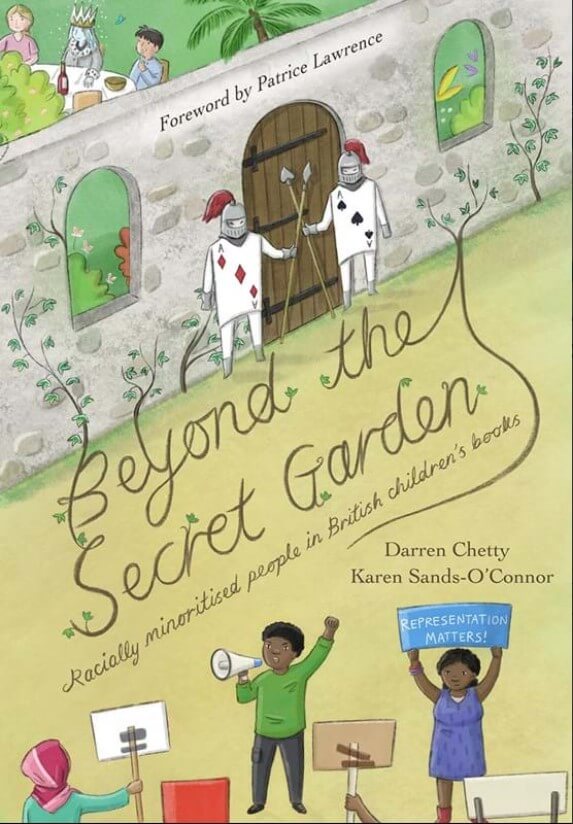
Drawing on and expanding their long-running column for Books for Keeps, Dr Darren Chetty and Professor Karen Sands O’Connor trace how Black and racially minoritised characters have been represented in ‘the secret garden’ of British children’s literature from its earliest stages. Examining how children’s literature has both been shaped by, and shaped, prevailing attitudes towards people of colour, they take a thematic approach that offers teachers and parents contextual knowledge that will enrich how books are discussed with children.
Beyond the Secret Garden has long been my favourite article in the (entirely brilliant) Books for Keeps virtual magazine, exploring the representation of Black and racially minoritised characters in British children’s literature, so when Darren and Karen were supported to expand that into a book by the English Media Centre I was thrilled. It is essential reading for anyone involved in children’s books in any capacity. I’ve heard Darren speak a number of times about the importance not only of representation, but of *positive* representation, in the books children consume. The duo have written us a piece about how teens specifically are engaged.
Teen Readers and YA Books Beyond the Secret Garden
When we conceived of our column, Beyond the Secret Garden, we were mostly thinking about British children’s books and the way that they created a safe haven—adventure without risk, and with a nice hot something waiting to eat or drink at the end of it—but only for certain readers and certain characters. White British characters in books like Frances Hodgson Burnett’s The Secret Garden (1911) or C. S. Lewis in the Narnia chronicles get to have the adventure, while Mary Lennox’s servants are ‘not people’ and the Pevensie children fight the dark-skinned Calormenes in The Last Battle (1956). But children’s books traditionally follow a home-away-home pattern, so their main characters are always going to have the keys to the secret garden, and people who are not like them are barred out. Teenagers, on the other hand, more typically are on a quest away from home, away from safety. They are, in some sense, leaving the secret gardens behind to find new continents and new worlds, or new ways to be themselves. So, does that make YA literature inherently beyond the secret garden already?
Historically, the answer is no. Before YA literature had a label, books for teen boys and teen girls published in Britain had very separate functions. Books for teen boys, written by the likes of G.A. Henty or Captain Marryat for example, were about conquering and maintaining the Empire, which often involved recreating Britain in far off locations such as India and an often generic version of Africa. Books for teen girls, such as Julia Horatio Ewing’s Six to Sixteen, were about becoming good future wives and mothers when the adventuring boys returned home. But Henty’s heroes, like the Pevensie children, had ‘savages’ to tame and Margery in Six to Sixteen (1872) exchanges an Ayah’s education for the freedom of the Yorkshire countryside—much as Mary Lennox would do a few decades later. Black and Brown ‘savages’ and servants alike disappear from the narratives the closer the teenaged British character comes to achieving their proper adult role.
Many modern British YA novels begin with the secret garden of childhood already destroyed. Clare Furniss’s The Things We Leave Behind (2024) opens with a picture of the main character, Clem’s, last perfect day, a birthday picnic with nostalgic childhood food and best friends she’d known most of her life. Yet despite the perfection, cracks are already appearing—Britain (minus Scotland which has seceded) is run by an authoritarian leader who wants to expel or imprison all foreigners and refugees. This includes Clem’s stepmother, Claudia, who is Jamaican by birth and who is forcibly removed from their home and detained. Following a mass protest in London, Clem and her younger half-sister Billie (Claudia’s and Clem’s father’s daughter) are separated from their father, and ultimately must escape from London to Edinburgh in order to survive. Clem’s thoughts are constantly on her stepsister, but Billie remains carefree throughout. The ending of the book contains a reunion, but it is a broken reunion, and the perfection of the picnic birthday is gone forever, as is any semblance of childhood innocence.
Like Clem, Patrice Lawrence’s character Charlene in Needle (2022) is concerned for her younger half-sister Candy. However, unlike Clem, Charlene is Black British, living in present-day Britain rather than a dystopia, and the concern she has for Candy is portrayed differently from the concern Clem has for Billie. Clem’s sense of responsibility for her sister leads to a mental breakdown, which is treated by the adults around her with kindness and compassion. Charlene, on the other hand, is constantly under surveillance and is always presumed to be leading her sister astray rather than looking out for her. Charlene does not become mentally ill over her concern for her sister, she becomes angry, and this anger leads to her eventual arrest and a journey through the juvenile justice system. She, unlike Clem, is not granted a reunion, even a broken one, because she remains angry at those who would separate her from her half-sister, including a foster brother who, despite inciting Charlene’s anger, is free to carry on at university without punishment. While both books examine teenage experiences outside of the secret garden of childhood, only Clem is allowed to keep sacrosanct the idea of innocent childhood that the secret garden protects, at least in her memories. Black youths like Charlene, and even Billie, do not get to remain safe in Britain’s secret garden; instead, their well-being is viewed by society as less important than that of the white youths who retain innocence – this is seen starkly in real-life cases of ‘adultification’ where Black children are treated as adults by authority figures.. While all young adult characters may be outside the secret garden, their access to it was never equal to begin with.
Professor Karen Sands O’Connor is Visiting Professor at the University of Sheffield and a former British Academy Global Professor specialising in the history of Black, Asian and Minority Ethnic children’s literature and publishing, and the author of three books on children’s literature. Dr Darren Chetty taught in primary schools for over twenty years. His essay in the best-selling The Good Immigrant has been used in schools, and universities and shared widely in children’s and young adult publishing. In addition to their Books for Keeps column, Darren and Karen advise on CLPE’s Reflecting Realities research and contributed to the CILIP Carnegie Awards Diversity Review.
I said on twitter (‘X’) that I wasn’t going to do a thread of favourite books for Black History Month this year because I’m trying to wean myself off it (but also it may well have imploded by the end of October…) but then I felt bad because there have been some real gems this year! So I decided to put a month’s worth in a blog post (each picture should have a link to more details)…
The eagle eyed amongst you might notice that there are only 30 books there and 31 days in the month of October…that’s because my last recommendation is in recognition of this year’s official theme of SALUTING OUR SISTERS…that you simply must read (and push on younger readers) everything by the inimitable Catherine Johnson, Patrice Lawrence, Nadia Shireen, and Malorie Blackman (even if they are all terrible at updating their websites 😅)!
There are loads of resources on the Black History Month UK website, including a reading list of books for grownups.
While it is still accessible, have a look through my old lists for some more faves!
For the last 5 years I've done a thread (sometimes broken) for #BlackHistoryMonth of some of my favourite books (mainly) created by UK based Black authors/illustrators. Not doing it this year because I'm avoiding here, but please do peruse the old lists, tangled together here: https://t.co/z7eBMtZIKZ
Penguin Young Readers has updated and released a curated book list that explores multifaceted identities of People of Color (of the Global Majority) and provider context and calls for action for grades PreK-12.
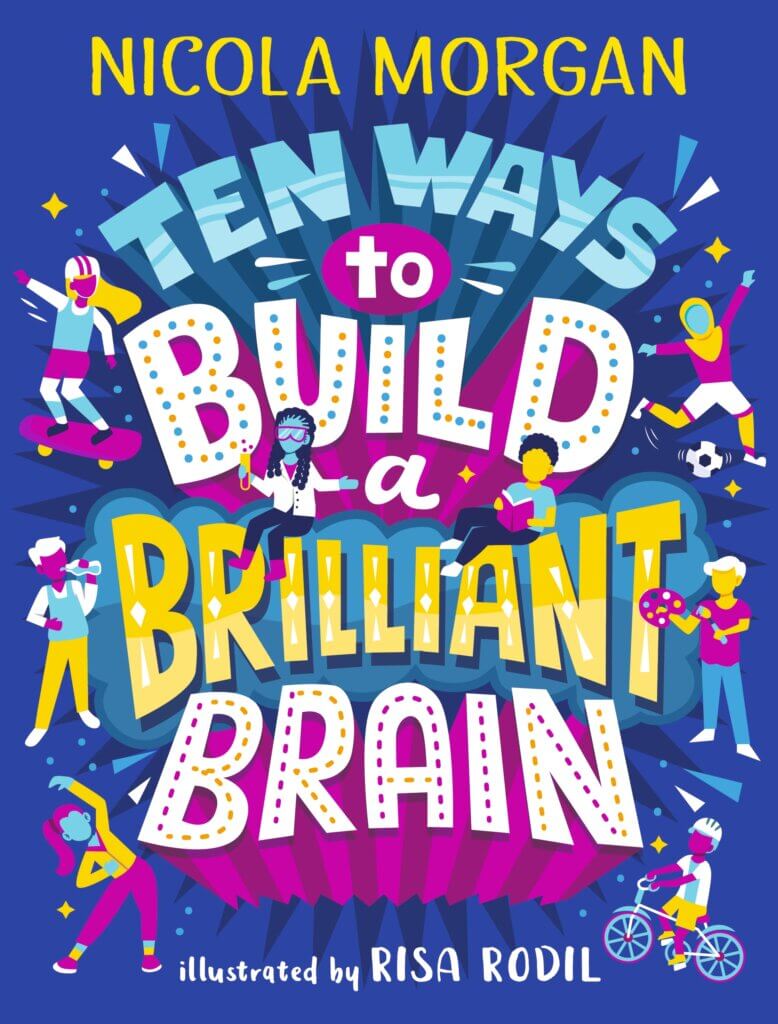
A fun and practical guide to making your brain brilliant, from well-being expert Nicola Morgan.
Build a brilliant brain with this fun and practical guide for young people from award-winning well-being expert Nicola Morgan. From the benefits of the right food, sleep and exercise, to how to be creative, curious and resilient, discover the incredible science and top advice to make your brain the best it can be. Packed with fascinating facts and brain boosting activities, this illustrated guide gives you the power to build your brilliant brain!
Ten ways your brain is different from the person’s sitting next to you
By Nicola Morgan
One of the most important things a human has to learn is that everyone else is both the same as and different from them. Our brains are wired the same as every human’s for hundreds of thousands of years but we have different psychologies and personalities, influences and experiences, different biology, and so we will not always think, feel, behave or react the same as another person in the same situations. Knowing that is the basis of empathy and of how we make our way through our world.
What are ten specific differences to be aware of as you think about the person sitting next to you?
1. Genes
Our genetic make-up makes each of us literally unique, including in the detail of our brain. We don’t know exactly what the genetic effect is in a given situation but we know it’s there and for some things more strongly than others. For example, we know that dyslexia often has some genetic link.
2. Age
Age makes a difference. Obviously, if the person sitting next to you is two, or 102, and you’re 42, their brain is not the same as yours. And there are biological stages of development that make a typical 12-year-old teenage brain different from both a typical two-year-old brain or a typical 19-year-old or 40-year-old brain. There are some things that older brains can do better than younger brains and vice versa. And we all age differently, too, depending on genes and lifestyle, amongst other things.
3. Past experiences
Everything that happens stamps its mark on our brain and changes us in ways big or small. A significant, perhaps memorable, experience can directly affect how we act later. Someone praising us or not praising us can make a difference to our confidence – we might not remember the original moment but it will leave its mark. No two people have identical experiences.
4. Neuro-divergence
The person sitting next to you might have a neuro-divergence. It could be dyslexia or dyspraxia, ADHD or colour-blindness. Whatever it is, it makes their brain different from yours – even if you also have the same neuro-divergence. No two are really the same even if they have the same name!
5. How time has been spent
The brain of a person who has spent a lot of time playing the violin is physically different from the brain of someone who spent the same amount of time reading books. What we spend time on changes our brain.
6. Introversion/extroversion
Introversion/extroversion is widely regarded as a largely fixed personality trait. It’s a fascinating topic and when I give INSET talks in schools it’s usually the bit that teachers are most intrigued about as it impacts learning so much. It’s not about shyness but a biological level of sensitivity to stimuli, especially when people are the stimuli. Understanding the introverted nature of the people around you will really give you insight into their experience of the world.
7. Type A/B
Another personality aspect is to do with reaction to goals, ambition, success. Type A people are fiercely competitive and beat themselves up when they don’t come top; Type Bs are more laidback and are better at switching off. Their brains behave differently.
8. Support network and friendships
Our mental strength is very much affected and changed by support from the people around us. Do we have people who make us feel confident, people we can go to with a problem or doubt, who we can share success and excitement with? Each friend and connection is part of us and changes us – and therefore our brain.
9. Optimism
Optimism is not a fixed personality trait but more a mindset or learned behaviour. But how optimistic someone is (at the moment) will profoundly affect how they behave or react and whether they go for opportunities. And optimistic or pessimistic thoughts are formed in and by our brains. You can train your brain to think and behave more optimistically and in doing so change your neural pathways. Check out my ‘Pathways exercise’ on my website – or ask me to speak to your staff about building positive neural pathways.
10. Luck
There’s so much we can each control in our lives – and that’s what I focus on, teaching people of all ages that their brains can be ‘in their hands’. But there’s also a lot we can’t control. We should spend very little time thinking about that but it’s worth recognising that a lot that makes our brains how they are is down to luck. Knowing that helps us not be judgmental.
I don’t know who’s sitting next to you. I don’t know you. But I know that your two brains are different in fascinating ways. You could, if you wished and if it is appropriate, start to talk to them and get to know them. Then you’ll know a bit more about what is in their brains – you’ll find similarities and differences. You still won’t know exactly what is going on in their brain, but the endless quest to get closer and closer to the mind of another person is what connects us. It’s pretty much the whole meaning of life – not to feel alone but to be at peace with the brain inside our own head as well as the ones nearby.
Nicola Morgan, aka The Teenage Brain Woman, is an award-winning author and speaker on many areas of well-being and learning. Her best-selling examination of the teenage brain, Blame My Brain, was shortlisted for the Aventis Prize; the prize-winning Teenage Guide to Stress, along with The Teenage Guide to Friends, Positively Teenage, Life Online, Body Brilliant, The Awesome Power of Sleep and Be Resilient, underline Nicola’s unparalleled expertise. In 2018, she was awarded the SLA’s prestigious award for Outstanding Contribution to Information Books. She used to be a teenage novelist and one day will be again. Her new book is TEN WAYS TO BUILD A BRILLIANT BRAIN, published by Walker Books. www.nicolamorgan.com
EMPATHY DEFICIT FOR LOCKDOWN GENERATION COUNTERACTED BY POWER OF READING
EmpathyLab launches its 2022 Read for Empathy book collection at a time when empathy has never been needed more. An expert judging panel has selected 60 books for 4-16 year-olds, each chosen to empower an empathy-educated generation.
The primary collection features 35 books for 4-11 year olds; the secondary collection has 25 books for 12-16 year olds. 43% of the collection are by authors of colours, and there are seven illustrators of colour. Many of the books help readers understand the lives of those experiencing tough situations, from becoming homeless, or a refugee. Others help children build their understanding of emotions or inspire positive action towards the climate or animals or people in their community.
The Young Writers festival, the highlight of the First Story Young Writers programme, kicks off on 24 March 2021. This festival provides a unique opportunity for hundreds of young people from less advantaged backgrounds to engage with a literature festival , often for the first time. Pre-pandemic, staged annually (at Cambridge University), the festival is an inspiring day-long event featuring acclaimed speakers, book signings, readings and writing workshops. For 2021, the festival will become predominantly a free and open access festival online, in a pandemic-necessitated change. From hundreds of students previously attending the festival in Cambridge, this move enables thousands of young writers and readers to access the festival from across the UK and beyond.“We are amazed how many schools have welcomed the festival and registered this year; a day of stimulating creative activity is clearly very welcome at the end of a long challenging term’” said Antonia Byatt, CEO First Story.
First Story partner schools will all take part in live writing workshops with First Story Writers, streamed into their classrooms.
The festival events open to the public are as follows:
24 March Angie Thomas – access will be open until 23 April 2021
24 March Young Writers Showcase, chaired by Dean Atta
From 24 March, all Craft and Technique Resource short events will also be available to watch at any time.
Ollu is a barger; a trader living and working on her mother’s matriarchal boat, The Ark. When they lose all their trade goods in a storm and her Mum gets sick, the only way to save her mother’s life and the life of her baby siblings is to make the most dangerous trade of her life. Ollu has to venture into forbidden waters, Bad Water, and she must go alone.
With her old allies under attack, she finds herself reluctantly welcoming two escaped slaves on board The Ark. Buzz is a genetically enhanced stranger from across the sea, while Ratter is a boy prophet, a spy from the old City. The Ark is forbidden to males but she has to accept their help. How many rules will she break to save her mother? Is she prepared to risk everything?
In a world reshaped by floods and the loss of technology, Ollu must make a perilous journey. She is pitted against gang leaders, slavers and violent machete-men. Only her courage, unexpected friendships and rediscovered technologies can save her mother’s life – and her family’s honour.
Nicky came to my previous school, many moons ago, to talk about her (then) new book, Warriors of Alavna (it is a great historical fantasy, look it up if you’ve not read it). She’s written a few (!) novels since and her latest is for a tiny press called Kristall Ink, BAD WATER: a dystopian thriller for ages 11+ with two great protagonists (I say, having only read 3 chapters so far…), Buzz and Ollu. Because there’s no chance of school visits at the moment, she’s filmed a 30minute WBD lesson that could be used for part of a 60+minute lesson: