Category Archives: News

Is the spectre of US style book bans arriving in Great Britain with the increase in challenges to books and author visit cancellations in the UK?

Redolent of the worst aspects of Section 28, the current frenzy among Britain’s right-wing reactionary tabloids and supposedly respectable conservative newspapers (The Telegraph) and other commentators is reaching fever pitch.

Section 28 of the Local Government Act 1988 was a law passed in 1988 by a Conservative government that stopped councils and schools “promoting the teaching of the acceptability of homosexuality as a pretended family relationship.” It came about in part after a complaint about a book titled Jenny Lives with Eric and Martin by Susanne Bösche. Headlines from the Daily Mail in the wake of this included Save the children from sad, sordid sex lessons (4th June 1986) and Bizarre truth about happy family in the gay schoolbook (22nd September 1986). Then Education Secretary, Kenneth Baker, declared that this grossly offensive homosexual propaganda’ was put into libraries by ‘left-wing authorities’.

Ancient history? It was not very long ago or far away, and this all looks and sounds very familiar if you have been paying attention over the past few years

The Sun ran with this article earlier this year: TRANS DAD BOOK RAP Fury as ‘irresponsible’ school reading list for children aged 10 includes book about a trans dad (link to archived article)

Recent articles from The Daily Mail include: Schools ignore parents’ concerns over diversity reading lists as young children exposed to ‘trans-activist’ books without their permission(link to archived article)

and:

Trans lobby hijacking primary school reading with ‘sex-change propaganda’ as damning report reveals more than 60 books featuring children ‘born in the wrong body’, women with beards and bizarre ‘non-binary’ guinea pigs(link to archived article)

The Telegraph has published several articles over the past few years including:

‘Sparkly’ pro-trans books targeting toddlers (link to archived article)

Trans books for toddlers are an outrage (link to archived article)

‘Woke’ libraries stock more trans than gender-critical books, data shows (link to archived article)

The report referenced in some of the articles was released by three anti-trans organizations. SEEN in Publishing, Transgender Trend and Biology in Medicine, the report describes the alleged capture of children’s publishing and library services by trans activism. It is titled:

Through the Looking Glass: trans activism in children’s literature and library services

You can find a copy of the report (not hosted by Transgender Trend) by clicking on the link above or here.

While this report deserves a well thought out and comprehensive rebuttal, I am not going to attempt to do so here, as I wanted to use it as an example of one of the tools being made available to potential book banners and censors. Just looking at the recommendations made in the report (pages 10-12) makes it clear what their end goal is. The recommendations boil down to:

  • Stop publishing trans-activist literature – fiction as well as non-fiction – for all age groups catered to by children’s publishing, up to and including YA.
  • Children’s librarians must stop shelving trans-activist titles.
  • Librarians and booksellers must stop recommending trans-activist titles to parents and children
  • Instead of publishing trans-activist titles, children’s publishing should concentrate on putting out excellent stories with captivating characters
  • The CEOs of publishing houses, their imprint heads and publishing directors should be mandating that acquisitions lists are broadened out again to attract genuinely diverse and excellent submissions
  • Children’s publishing and the library services must move away from cancel culture by implementing robust HR practices
  • Educational publishing, libraries and schools must collaboratively observe statutory KCSIE and RSHE guidance, ensuring age-inappropriate and factually-incorrect, trans-activist books no longer find their way into children’s hands

That the authors of this report are so open about their aims of banning and censoring books to push transgender folks out of the public eye is concerning to say the least. The language used in the report contains gems like ‘trans-activist literature’ in place of children’s books, teen books and picture books; conflating a drop in reading for pleasure with a rise in the publication of books by and about transgender people, raging about the ‘trans cult’ and the claim that CILIP (the Chartered Institute of Library & Information Professionals) & library services have a ‘preference for trans-activist children’s books’ would be laughable if they were not so deadly serious.

The report and the news articles linked to above feel like early positioning for supporting concepts like ‘Parents rights’ – the idea that adults can control and limit what books and information children can access in schools and libraries.

Back in 2022 Simon James Green became one of the first YA authors to have a school visit cancelled due to his books containing LGBTQ+ themes. He wrote about his experience here: We’re not banned, but…

Authors Kristina Rahim and Jen Carney both discuss having school visits cancelled due to some LGBTQ+ content in their works in this article from The Bookseller: LGBTQ+ authors see school visits cancelled after ‘complaints from parents’ (link to archived article)

Author Ian Eagleton has also posted about children being removed from his school visits due to LGBTQ+ content is his books: https://www.instagram.com/p/DaLmVlgjs-T/?img_index=1

Schools in the UK are on their summer break so it no new information may break for some time, but if any authors, library folk or teaching staff would like to contact me in confidence you can do so using the methods outlined on the Submit News section of my website.

Reform UK and Public Libraries

Reform UK, also known as the Reform Party, is a right-wing populist and far-right political party in the United Kingdom.

Reform has an outright majority in 24 councils across Great Britain and is the largest party in 10 more but does not have an outright majority in those.

You may be asking yourself, “What does this have to do with libraries?” the answer is relatively simple, Public Libraries in the UK (& elsewhere) often function as a canary in a coalmine for society at large, they are usually the first places to see changes in policy being enacted. The first collections attacked are those in the Children’s and Youth areas of the library; the figleaf excuse most often used is that only books and materials that are “inappropriate” for those ages are being targeted. However, the process for determining what is inappropriate is opaque and the decisions are made by those in power.

This is a partial list of the local authorities run by Reform that have limited or banned outright Pride displays and other events that they find distasteful from the Library Services that they control.

Essex County Council

Leading council member Chris Hossack instructed the county’s 74 libraries to scale back on highlighting events that do not relate directly to day-to-day council services, pausing social media communications and dedicated displays.

After a petition set up in protest at this move gained over 17,500 signatures, a council spokesperson clarified that events are not banned, but promotional activities remain under review.

It was announced that promotional book displays will require approval from senior managers, with the leader citing that some Pride displays may have contained “inappropriate” material for certain visitors.

Kent

A boast by a Reform UK councillor that he ensured the removal of “trans-ideological material and books” from the children’s section of his county’s libraries has fallen flat after it emerged that no such material ever existed there.

Lancashire

Reform UK has been criticised for withdrawing all Lancashire libraries from a scheme supporting refugees because it was not value for money – despite being free.

Norfolk County Council

Reform UK, which now runs Norfolk County Council, stopped flying the Pride flag at County Hall and said it had prohibited political messaging, events and displays – including Pride – at the county’s 47 libraries.

Norfolk Libraries shared a post by the County Council on Facebook addressing the news reports. You can read it here: https://www.facebook.com/share/p/15zHbaScDAR/

Local news outlet Eastern Daily Press has been covering this story and has a great article here:

The Reform administration at County Hall has said it is “content” for library staff to take part in Pride events and set up themed displays – only days after its councillors suggested they would be banned.

Staffordshire

Reform UK-led Staffordshire County Council says it will not feature LGBTQ+ Pride displays in its libraries…

Warwickshire

Reform-led Warwickshire County Council proposes censoring what children read, even if residents don’t agree with them

St Helens, Merseyside

Displays celebrating Pride month have been replaced in libraries across part of Merseyside after a new Reform UK council leader announced the authority would not be engaging with the event in any way.

Council leader George Woodward said he had instructed council officers to cease engagement with all aspects of Pride, including removing displays in libraries.

The throughline from Reform leadership in all the councils is that libraries (and other council services) are to remain “politically neutral”.

Leaving aside the observation that identity and lived experience is not political, the argument that libraries should be neutral is one that I and many others find to be specious. To quote Archbishop Desmond Tutu: If you are neutral in situations of injustice, you have chosen the side of the oppressor. If an elephant has its foot on the tail of a mouse and you say that you are neutral, the mouse will not appreciate your neutrality.

Libraries should be non-partisan, not endorsing one ideology or political party over another and remain open forums for fostering dialogue and offering access to information and ideas.

When Independent Publishers Disappear, We Don’t Just Lose Businesses, We Lose Stories

Award-Winning Hashtag Press Calls for Support as Crowdfunder Reaches Two-Week Mark

https://www.crowdfunder.co.uk/p/hashtagpress

Award-winning independent publisher Hashtag Press is calling on readers, authors, educators and supporters of diverse books to rally behind its six-week Crowdfunder campaign to help build a sustainable future for independent publishing and continue championing the diverse voices and stories that deserve to be heard.

Founded by publishing entrepreneurs Abiola Bello and Helen Lewis, Hashtag Press has spent the past decade championing underrepresented voices and publishing books that celebrate diversity, inclusion and authentic storytelling across children’s, young adult and adult fiction and nonfiction.

As many independent publishers continue to face increasing financial pressures and several have already been forced to close in recent years, the team behind Hashtag Press says the stakes extend far beyond the future of one company.

Independent publishers are often the ones taking chances on debut authors, championing marginalised voices and publishing stories that might otherwise never reach readers, said Helen Lewis, Co-Founder of Hashtag Press. When independent publishers disappear, we don’t just lose businesses. We lose opportunities. We lose stories. We lose representation. And ultimately, readers lose access to books that help them better understand themselves and the world around them.

The appeal comes at a time when conversations surrounding access to books, representation and freedom of expression are increasingly making headlines around the world. Campaigners and authors have raised concerns about growing challenges to diverse books and LGBTQ+ literature, while debates around immigration, identity and social cohesion continue to dominate public discourse.

Abiola Bello, Co-Founder of Hashtag Press, said: Stories have the power to build empathy, challenge prejudice and help young people feel seen. Publishing has always been about more than selling books. It’s about ensuring that everyone has the chance to recognise themselves in the stories they read.

Since launching in 2016, Hashtag Press has built a reputation for publishing inclusive stories and supporting emerging talent. The independent press, based in Kent, has worked with debut and established authors alike and has become known for giving opportunities to voices that have traditionally been underrepresented within the publishing industry.

Alongside the Crowdfunder, Hashtag Press has temporarily reopened its online bookshop www.hashtagpress.co.uk/shop, allowing readers to purchase books directly and support independent publishing while discovering new authors and diverse stories.

The team is encouraging supporters to contribute what they can, share campaign posts, recommend Hashtag Press titles to friends and family, and help spread the word online.

“Even a £5 donation can make a difference,” added Abiola Bello. “We recognise that support isn’t only financial. Sharing our posts, recommending our books and talking about why diverse stories matter are equally important.”

The Crowdfunder runs until 14 July 2026. To support the campaign, visit: www.crowdfunder.co.uk/p/hashtagpress

What is a “DEI Book”

A rational person (such as myself and quite probably you dear reader) may assume that a DEI Book is a non-fiction tome such as DEI Deconstructed: Your No-nonsense Guide to Doing the Work and Doing It Right by Lily Zheng, or Reconstructing Inclusion: Making DEI Accessible, Actionable, and Sustainable by Amri B. Johnson.

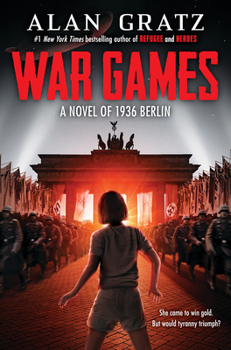
One author whose books I would not automatically have put in the “DEI Books” list (not that I have such a list, but it appears others do) is best-selling young readers author Alan Gratz. I do not know Alan at all but have been aware of his books for years. His works are perennially popular, and his stories mix historical fact with high adventure and derring-do and have been described as emotionally charged, complex subject matter told in a way children can understand, …incorporating informative, real-world scenarios and events with relatable characters and narratives.

However, according to the famously balanced & impartial Heartlander News (archived link here) War Games by Alan Gratz is apparently a “diversity, equity and inclusion (DEI) graduate seminar inside a story about the theft of gold from the German National Bank during the Olympics.“

I have bumped up against Heartlander before as detailed here, and they have targeted libraries in the Kansas City metro a number of times over the years but I am astounded by how scant the evidence is that they are using to back up their assertions. I took the time to look up War Games on Common Sense Media, and their coverage of this book showed no reason for even the most concerned of parents to be worried.

This is the description of Diverse Representation in War Games from CSM:

Karl Hühnerbein is German and gay and Ursula Diop is biracial (her father is from Senegal and her mother is White and German), which means she’s considered “physically and morally degenerate” by the Nazis. Solomon Monday is White and British and Heinz Fischer’s mother is Jewish. Hitler believed the Olympics would showcase the superiority of White athletes, something that was shattered when Black American Olympian Jesse Owens won four gold medals. While only 18 athletes on the US team were Black (16 men and 2 women), they would win 14 medals, eight of then gold.

It appears that merely the presence of Black, Gay and Jewish characters in a book is enough to get it branded as “DEI”. I have requested a copy of War Games and will read and review it here next week.

I have also reached out to Alan Gratz through his agent and if he has any comment I will post it here if I hear back.

Children with vision impairment will be able to take part in this year’s World Book Day with books provided in audio and braille editions by the Royal National Institute of Blind People (RNIB)

Lara Marshall, RNIB’s Library Services Manager, said: For children with vision impairment reading opens up a world of imagination and information that’s vital in enriching their lives and developing their education. RNIB’s Library ensures children with vision impairment always have access to books in accessible formats such as braille and audio so they can delve into the stories they love and hear and feel them come to life. What better way to celebrate World Book Day than to recognise literature in all its forms – and the life-changing impact accessible formats can have for children – enabling them to access stories on a par with their sighted peers.

The 2026 World Book Day books are available in braille and audio with help from RNIB. Call 0303 123 9999 or email helpline@rnib.org.uk.

Children with vision impairment have also been invited to a very special event in partnership with the British Library, World Book Day, Penguin Random House, The Roald Dahl Foundation and VICTA – a charity which supports children with vision impairments –  set to take place at the British Library on March 15. Author Sibéal Pounder, one of this year’s World Book Day writers will be leading three sessions for children with vision impairment based on her Willy Wonka book, Chaos at the Chocolate Factory. Other events will follow later in the year.

To access books throughout the year, readers of every age with a vision impairment or sight loss will find more than 52,000 books in accessible formats including audio and braille from the Royal National Institute of Blind People (RNIB). Visit the RNIB Library for audio or braille books at www.rniblibrary.com and RNIB Reading Services for digital downloads at readingservices.rnib.org.uk

Students and Education Professionals can also access education resources in accessible formats through RNIB Bookshare: www.rnibbookshare.org

For more information on reading with vision impairment, take a look at www.rnib.org.uk/reading and Children’s Reading | RNIB Education and Learning | RNIB

GLL Literary Foundation announces 2026 awards for children’s authors

Now in its second year the GLL Literary Foundation has selected 20 children’s authors from across the UK to receive bursary placements for 2026 worth up to £4,000 each.

The Foundation was established in November 2024 to support children’s authors, inspire young readers and champion public libraries. It brings together writers, librarians and communities from across Bromley, Dudley, Greenwich, Lincolnshire and Wandsworth, areas where GLL operates public libraries under its ‘Better’ brand. GLL is a worker-owned charitable social enterprise.

The 2026 GLL Literary Foundation authors are:

· Truly Johnston – Bromley – Chicken House

· Penny Chrimes – Bromley – Hachette; Firefly Press

· Venessa Taylor – Bromley – Hashtag Press

· Abiola Bello – Bromley – Simon & Schuster; Hashtag Press

· Poppy T. Perry – Dudley – Fox & Ink Books

· Donna David – Dudley – Oxford University Press; Pan Macmillan

· Siren Knight – Dudley – Usborne Publishing

· Clare Harlow – Greenwich – Puffin

· Ryan Crawford – Greenwich – Oxford University Press

· Nicola Kent – Greenwich – Little Tiger; Andersen Press; Oxford Children’s Books

· Auriol Bishop – Greenwich – DK; Headline Home

· Lisa Williamson – Greenwich – Guppy Books

· Luan Goldie – Greenwich – Walker Books

· Cheryl Diane Parkinson – Lincolnshire – Dinosaur Books Ltd

· Anne Miller – Lincolnshire – Oxford University Press; HarperCollins Children’s Books

· Lui Sit – Wandsworth – Macmillan Children’s Books; Knights Of Media

· Eve Wersocki-Morris – Wandsworth – Little Tiger

· Jane Porter – Wandsworth – Otter-Barry Books

· Iqbal Hussain – Wandsworth – Penguin Random House Children’s

· Ramzee – Wandsworth – Hachette

Entries were assessed by a board of trustees drawn from GLL libraries, children’s librarians and the publishing world.

Each author will receive a £750 bursary alongside in kind professional development support valued at up to £4,000. Authors are paired with a dedicated librarian mentor who helps shape events, develop school and community partnerships and introduce opportunities with booksellers, festivals and local organisations. Specialist training in branding, marketing and business skills supports authors to build sustainable careers while sharing their stories with young readers.

Through author visits, workshops and community events, the Foundation helps children discover the enjoyment of reading and develop confidence as readers. Meeting authors and engaging directly with stories encourages reading for pleasure, supports literacy development and helps libraries connect more young people with books and learning opportunities.

Rebecca Gediking, GLL Library Services Director, said:

“Last year we welcomed an inspiring group of authors to the GLL Literary Foundation, and it has been wonderful to see the relationships that have grown between writers, librarians and local communities. Watching authors develop their confidence, support one another and bring stories to life for children has been incredibly rewarding. We are excited to continue working with our inaugural authors while welcoming a fantastic new cohort for 2026.”

Philip Donnay, Chief Executive Designate of GLL and Chair of the GLL Literary Foundation, added:

“As a charitable social enterprise working in partnership with councils, our role is to create lasting social value for local communities. The Foundation brings authors, libraries and communities together in a way that strengthens the literary ecosystem while delivering meaningful cultural impact. The energy and collaboration we saw in the first year makes us incredibly excited for what comes next.”

Joseph Coelho OBE, Patron of the GLL Literary Foundation, said:

“Meeting an author can be a life changing moment for a child. The GLL Literary Foundation creates those moments by bringing writers into libraries and placing stories at the heart of communities. Seeing authors continue their journey together while welcoming new voices makes this an exciting and important programme for the future of reading.”

In its inaugural year the Foundation helped 20 authors to deliver more than 60 events across libraries, schools and community venues, engaging over 3,000 children and more than 500 adults in reading activity. Authors developed new professional skills, strengthened networks and increased visibility for their work, while libraries reported new memberships and increased borrowing following events.

All authors from the 2025 cohort will now continue into a second year through the Foundation’s Alumni Programme. Having built strong partnerships with their librarian mentors and local communities, these writers will deepen their engagement, collaborate with new authors and help shape the future of the programme.

As part of the National Year of Reading 2026, the expanded Foundation will continue building partnerships with schools, publishers, festivals and community organisations to inspire reading for pleasure and demonstrate the vital role public libraries play in the UK’s cultural life.

For further information visit:

www.better.org.uk/library/gll-literary-foundation

School Library Association and Barrington Stoke launch new Reader of the Year Award in the National Year of Reading

Ahead of World Book Day, and to celebrate the National Year of Reading, the School Library Association (SLA) is launching a brand-new award in collaboration with one of the UK’s most innovative children’s publishers. 

The Barrington Stoke Reader of the Year Award will be the only national award to celebrate young readers, recognising pupils in Year 7 and 8 who have overcome challenge to discover the joy of reading. The winner will receive £400 worth of Barrington Stoke books for their school library, a £100 book token for themselves, and a digital subscription to First News for both home and school. 

Nominations are now open for the award, which celebrates engagement, enjoyment and determination over academic attainment or reading fluency. Awarded by the SLA, the Barrington Stoke Reader of the Year Award will also highlight the vital role school libraries and librarians play in getting the right books into the hands of the right pupils, helping every child develop their own positive relationship with reading.  

Teachers, headteachers and school librarians from across the UK can nominate Year 7 and 8 pupils (S1 and S2 in Scotland). The closing date for nominations is Friday, 15th May, after which a prestigious judging panel will decide on a shortlist. The winner will be announced at the SLA’s Annual Awards Ceremony, taking place on 18th November 2026 in London.  

Jane Walker, Sales & Marketing Director at Barrington Stoke, said: “At Barrington Stoke, young people are at the heart of everything we do, and we know that some of them face real challenges on the path to developing a love of reading. We’re therefore thrilled to be working with the School Library Association, sponsoring an award to celebrate those readers, while also recognising the crucial role of the school librarians who support them on that journey.”

The judging panel will include SLA School Librarian of the Year 2025 – Julie Broadbent, author and SLA Patron Tom Palmer and Barrington Stoke author Catherine Johnson, as well as representatives from Barrington Stoke, the School Library Association and children’s newspaper First News, who will join the award as media partner.  

Catherine Johnson said:“I am so excited to be a judge for the brand-new Barrington Stoke Reader of the Year Award! I firmly believe that school libraries and librarians are an integral part of any school community. And I am thrilled to help shine a light on those students – a vital part of those communities – who have found their way into books.”

Victoria Dilly, CEO of the SLA, said:“Launching a brand-new award that celebrates young readers puts children and young people at the heart of our National Year of Reading activity. We are thrilled to be joining forces with Barrington Stoke – their focus on making books accessible to every reader makes them the perfect partner for an award specifically recognising young people who have had to overcome challenge to discover the joy of reading. The Barrington Stoke Reader of the Year Award will celebrate the curiosity, empathy and imagination that all children and young people can unlock when they discover the joy of reading. 

With children’s reading for pleasure at an all-time low, and a mandatory Year 8 reading test soon to enter the curriculum, the need to celebrate children’s reading enjoyment has never been so important. We know that school libraries and school librarians help millions of children to develop more positive relationships with reading, and I can’t wait to hear about some of them.”

Nominations for the Barrington Stoke Reader of the Year Award can be made at: sla.org.uk/reader-of-the-year

More information about all SLA Awards can be found here.  

The Best Information Books for Children:  2026 Information Book Award shortlist announced with a new publisher sponsor

London, 22 January 2026: The School Library Association (SLA) has revealed the shortlist for the 2026 Information Book Award (IBA), celebrating inspiring UK-published information books for young people, up to age 16. Children across the country can now read the shortlisted titles and cast their votes in the Award’s Children’s Choice categories.  

All schools who sign up to take part in the Book Club receive free resources, and those who do so before Friday 13th February will have the opportunity to receive a free pack of shortlisted books in one age category, thanks to generous support from the Authors Licensing and Collection Society (ALCS). 

The voting period will run until May 2026, giving schools the chance to hold meaningful book club sessions across several weeks. Taking part in the IBA Book Club will help children develop critical thinking skills, develop confidence in communicating their opinions, find new interests and fire up their love of reading. 

The SLA has also announced new sponsorship for the IBA, with DK, the UK’s number one children’s non-fiction publisher, joining the Award as sponsor. This is an exciting new development, which reflects the IBA’s growing focus on pupil voice and school engagement. 

Sarah Later, Managing Director of DK Children’s said: “At DK, we champion the transformative power of books. In the National Year of Reading, school libraries matter more than ever. As many young readers gravitate toward non-fiction, the Information Book Award is essential, celebrating the remarkable talent that makes our world come alive.” 

The 12 books on the IBA shortlist range from picture books to choose your own adventures and encyclopaedias, covering everything from why we sleep, to where we came from: 

Under 7 age category shortlist: 

  • A Billion Ways to Be, Chitra Soundar, illustrated by Ana Sanfelippo, Franklin Watts, Hachette Children’s Group 
  • Frog: A Story of Life on Earth, Isabel Thomas, illustrated by Daniel Egneus, Bloomsbury Children’s Books 
  • Recycling Day: What Happens to the Thing We Throw Away, Poly Faber, illustrated by Klas Fahlén, Nosy Crow 
  • Where Did She Go?, Cariad Lloyd, illustrated by Tom Percival, Hodder, Hachette Children’s Group 

8 – 12 age category shortlist: 

  • About Time, Rebecca Struthers and Alom Shaha, illustrated by Lucy Rose, DK 
  • Choose Your Own Evolution, Jules Howard, illustrated by Gordy Wright, Nosy Crow 
  • Science Detective Agency, Steve Derrick, illustrated by Miriam Serafin, Wayland, Hachette Children’s Group 
  • Why Do We Sleep?, Cathy Evans, illustrated by Polya Plavinskaia, Cicada Books 

13– 16 age category shortlist: 

  • Explodapedia: The Brain, Ben Martynoga, illustrated by Moose Allain, David Fickling Books 
  • It’s a Brave Young World, Anu Adebogun, illustrated by Soofiya and Lila Cruz, Little Tiger 
  • Normal Women, Philippa Gregory, illustrated by Alexis Snell, Red Shed, Farshore 
  • Owning It: Our Disabled Childhoods in Our Own Words, edited by Jen Campbell, James Catchpole and Lucy Catchpole, illustrated by Sophie Kamlish, Faber and Faber 

The shortlist was selected by a panel of judges made up of SLA member librarians, industry representatives and authors, including SLA Patron Smriti Halls. 

Chair of judges, Helen Cleaves said: “From automata to autism, this shortlist is nothing if not diverse, offering a wealth of information adventures for children from toddler to teen. What’s more, these books have the whole package: stunning artwork and meticulous design combine with engaging text for maximum impact.” 

Judges’ comments about each individual title on the shortlist are available here. 

The winners of the IBA and the Children’s Choice accolades will be announced in the summer. Four awards will be given by both the judges and the school children shadowing the Award, with each group choosing a winner in each age category and an overall winner. Last year’s overall IBA winner was Black History for Every Day of the Year by David, Yinka and Kemi Olusoga, while the overall Children’s Choice went to Amazing Asia by Rashmi Sirdeshpande, illustrated by Jason Lyon. 

Victoria Dilly, CEO of the SLA said: “For librarians, teachers, parents and children, information books can offer a new route into reading, which encourages curiosity about the world around us, and creates an ideal opportunity for a shared experience: whether that’s sharing newfound facts, looking at engaging illustrations together, or exploring a freshly discovered interest. This year’s IBA shortlist showcases a diverse collection of books that cover a vast range of subjects. I can’t wait to hear from all the librarians and pupils who will be exploring these books through the IBA Book Club.”  

Book packs of the shortlisted titles will be available to buy from Peters Books at a discount of 20%

First Amendment cannot be used to challenge book removals in Public Libraries (according to the Fifth Circuit Court of Appeals)

The Fifth Circuit Federal Appeals Court ruled en banc that the First Amendment cannot be used to challenge book removals in Public Libraries as a library’s collection decisions are government speech and
therefore not subject to Free Speech challenge.

ACLU Attorney Josh Block has a comprehensive thread on Bluesky that covers this breaking news:

En banc Fifth Circuit overrules decades of precedent and holds that there is no First Amendment right to receive information in a public library.

— Josh Block (@joshablock.bsky.social) 2025-05-23T14:35:16.501Z

You can read their ruling here:

The ruling is summarized as: Plaintiffs have a First Amendment right to read books. They don’t
have a First Amendment right to force a public library to provide them. So I
agree that we should reverse, and accordingly concur.

The ruling was not unanimous as three judges dissented, the dissent is also included above and is worth reading in full. The dissent begins with: Because the majority forsakes core First Amendment principles and
controlling Supreme Court law, I dissent.

and ends with: Because I would not have our court “join the book burners,” I dissent.

The Fifth Circuit Court is widely considered to be the most conservative court in the US. It remains to be seen if this ruling will be overturned on appeal, but it is concerning that the activist judges on the court are trying to remove the First Amendment from the arsenal of people fighting to prevent book bans ad censorship in libraries.

You can find out more about the court case Little vs Llano county here: https://www.aclu.org/cases/little-v-llano-county

Links to More Information

5th Circuit rules Texas library patrons have no First Amendment right to information – Austin-American Statesman

New Platform Launches in Response to Class Crisis in UK Writing Industries

Actor and philanthropist Michael Sheen has supported the founding of a new literary magazine and platform for working-class writers, The Bee. 

The magazine, launching on May Day, Monday May 5, is edited by Richard Benson, the former editor of iconic 80s and 90s magazine The Face, and supported by the British publishing house Faber, home to Sally Rooney, Simon Armitage, and Kazuo Ishiguro.  

The Bee has been created to fight the increasing marginalisation of working-class writers, and of working-class people in publishing. In 2014, 43 per cent of people in publishing came from middle-class backgrounds, with 12 per cent being of working-class origin. Since 2019, the former figure has risen to sixty per cent, and as recent news stories about access to the arts have shown, the barriers for the less well-off are increasing. 

Benson said: “Justice and fairness demands that people from the less well-off sections of society have the chance to tell their stories, and to get them heard. But it’s also about common sense. Much of the important writing being done today, and so many of the best-loved stories come from ordinary working people. So often, it’s stories from the working classes that express what’s really happening in the world.”  

The Bee’s channels include a website, literary magazine, podcast, and a large-scale outreach programme to seek out, and support the professional development of, new writers from working class backgrounds. It will publish fiction and non-fiction.  

The initiative was born out of A Writing Chance, a UK-wide programme for working-class writers co-founded with the actor and philanthropist Michael Sheen, Joseph Rowntree Foundation, and Northumbria University, and produced by the writing development charity, New Writing North. A Writing Chance alumni have already gone on to become published authors, including Tom Newlands whose novel Only Here, Only Now was published in 2024 to critical acclaim.  

Claire Malcolm, CEO of New Writing North, the writing development charity producing The Bee, said: “Our research shows that despite incredible success stories from these initiatives the class crisis continues to grow. There’s never been so much debate about class in the creative industries but nothing has changed and things are actually getting worse and inequality more entrenched, hence the need to make our own reality.  

“Talent is classless. Opportunity, however, is class-bound. The Bee is an urgent response to that.”  

Richard Benson grew up on a small farm in Yorkshire and began his writing career as a reporter for the Beverley Guardian. After editing The Face magazine in the 1990s, he went on to be shortlisted for the Guardian first-book award for his bestselling 2005 memoir, The Farm. In 2016 his memoir The Valley, about a Yorkshire mining family, won the James Tait Black prize for biography, and the Portico prize.  

He said: “Class has always been hard to define precisely, and it can mean different things to different people. But what is clear is that in 2025, your background can still affect your life chances and career prospects.  

“It’s not just about your income or job, it’s also about family, upbringing, education, opportunity and lived experience. As society changes, we need a grown-up, nuanced debate about class, which will be an important subject for us.  
 
“Readers want this. In our survey of working-class readers, 63 per cent said it was important to them to see people of their background represented in books – and not just represented, but represented accurately. There is a market for this, but to meet that demand we need more people from working-class backgrounds working in publishing and making key decisions.”  

Claire Malcolm pointed out that just 10% of authors and writers are from working-class backgrounds, whilst 47% are from the most privileged social starting points* and 44% of newspaper columnists attended independent school (only 7% of the population attend independent schools). **  

She added: “Working-class means a multitude of things depending on who you are and who you ask, but what we do know is that in 2025 your background can still affect your life chances and career prospects. We see very few working-class voice and stories visible in mainstream publishing. Representation matters. Real change often happens from outside of the mainstream, and we hope to build a new community of writers and readers around The Bee to support real change, and to highlight the talent that is out there.”