Category Archives: Interviews

If You Still Recognise Me

If you loved Heartstopper and need more feel-good LGBTQ+ romance – If You Still Recognise Me is the one for you!

Elsie has a crush on Ada, the only person in the world who truly understands her. Unfortunately, they’ve never met in real life and Ada lives an ocean away. But Elsie has decided it’s now or never to tell Ada how she feels. That is, until her long-lost best friend Joan walks back into her life.

In a summer of repairing broken connections and building surprising new ones, Elsie realises that she isn’t nearly as alone as she thought. But now she has a choice to make…

Little Tiger

This is the debut UKYA novel by Cynthia So, and they are definitely one to watch! Loved the enthusiasm & passion blended with uncertainty in protagonist, I knew where the story was going but it was *so* satisfying. And So Much +ve rep! I loved the queer people of all ages, the delight of teens sharing a fandom, intergenerational relationships & intricacies of family life & how people show love…& realising what *isn’t* love…it is a must read this Pride Month.

I was lucky enough to get the chance to ask Cynthia a few questions:

If You Still Recognise Me is your debut novel but you had a short story in the PROUD book, edited by Little Tiger, did you already have the idea of IYSRM? They’re very different, do you have more ideas for your phoenix?

I had started to write IYSRM by the time PROUD came out in March 2019, but I don’t think I had the idea for it when I first drafted my short story “The Phoenix’s Fault” back in March 2018. I didn’t really have any ideas for a novel at all back then! I’ve always adored YA contemporary, and I’ve also always loved fantasy, but something about writing a fantasy book is a little more daunting to me. I have trouble writing things longer than a short story, so I needed to push myself past that self-doubt of “I’ll never write a good novel” by starting with something that to me has a breezy, casual vibe, and IYSRM is what resulted. I was very self-indulgent while writing it. I just wanted to write my dream summer queer YA book, and to have as much fun as possible while doing it.

I don’t have more ideas for my phoenix. I think we left her and her humans in a good place. I could definitely write more queer stories in that universe though, based around different creatures in Chinese folklore and myth. The Legend of the White Snake for example!


The background to the comic, so that the fandom would make sense, feels like you have a whole story planned out! Have you written more that wasn’t included?

There were some little details that I included in earlier drafts that didn’t make it into the final version, but otherwise there’s not a lot in my head that isn’t on the page. I think this is a good lesson for any author, that you need just enough detail to suggest something bigger – you don’t need to have it completely fleshed out, which may be a waste of time if you don’t have a lot of time to dedicate to writing! Coming up with a few specific details goes a long way towards making something seem real.


While you were writing, did you share it with many people or wait until it was finished?

I didn’t share it with anyone while I was writing. I’m an intensely private person! Every author’s different, but for me, to share something with someone before I finish it would be to jinx it, somehow. I feel like I have to be alone with the story, to know that it is, for a time, mine and only mine, to learn to love it properly. The sort of relationship I have with a story changes once I start to share it with others, because I worry so much about what others think. By not sharing it until it’s done, I can hone in on my own vision for the story and honour it to the best of my ability.

And it also gives me the drive and motivation to complete it, because I know that unless I finish it, I’ll never be able to let anybody else read it, and that would be a huge shame after pouring months into trying to write it!


The comic book shop is wonderful, is it based on one that you’ve been to or is it wishful thinking?

It’s not based on any particular comic book shop, but I do love the vibe of any indie bookshop, including comic book shops. Gosh! Comics in Soho is such a lovely, cosy little place, and I also always think fondly of havens like Gay’s the Word. Indie bookshops are truly the best.


Have you had any reaction from teen readers yet? What would you like them to take away from the book?

I don’t think I’ve had any reaction from teen readers yet (that I know of), but there’s lots of things I would like them to take away from the book. Here are a few of those things:
1) I want queer teens who want romantic love to know that they will find that romantic love, even if it takes time, and it may take time. I worry that teens might look at YA romances and feel sad that they don’t have that romance in their lives right now, and believe that that means there’s something inadequate about themselves. Though my book is a YA romance, it also has lots of stories in it about queer people who find love much later on in life, and it’s no less wonderful or beautiful. One day, you will be loved for who you are, by someone who sees you. And you deserve that kind of love. Real love shouldn’t require you to make yourself smaller for it.
2) Coming out doesn’t have to be the end goal. I think when I was a teenager I felt so much angst about not feeling brave enough to come out to people other than a few of my friends. But not coming out to your family doesn’t mean you’re not brave enough. It doesn’t mean you’re ashamed. You can be proud of who you are, without coming out to lots of people.
3) It’s OK to change. It’s OK not to know exactly who you want to be yet. You have time to figure it out.


What are you reading at the moment and who would you recommend it to?

Just finished Gay Club! by Simon James Green – it’s funny and extremely readable like Simon’s books always are, and the characters are a delight, and there’s such a powerful message at the centre of it. I would recommend to all teens who are part of LGBTQ+ clubs at school, or those would like to start one. It’s also so incredible to me to think about the fact that some teens get to be part of LGBTQ+ clubs at school now, so if you’re an adult and you wish you had that kind of support and community as a teen this book is also totally for you.

I also finished I Kissed Shara Wheeler by Casey McQuiston not long ago, and oh my god. This is the queer book of my dreams. It’s all of my fave YA books I read when I was growing up, but QUEER, finally, queer! It’s such a dreamy, exhilarating romance set against the backdrop of a Christian high school between two academic rivals who are utterly obsessed with each other, and the scavenger hunt element is so fun. It’s a fantastically escapist summer read. I would recommend this to everyone who likes John Green, and also anyone growing up in a small town and/or with a religion that makes them feel complicated about their queerness. This book is really uplifting in that regard and full of shining defiance and hope.


What are you working on at the moment?

My second YA contemporary novel with Little Tiger. It’s going to be another queer romance, and it will involve lots of food, and lots of family, and lots of yearning, because those are some of my favourite things to write about. Other than that, I don’t want to say too much – you’ll have to wait and see! 🙂

Thank you so much Cynthia for answering my questions, and writing such a great book, and thanks to Little Tiger for a review copy and facilitating the q&a!

If You Still Recognise Me publishes on the 9th June 2022
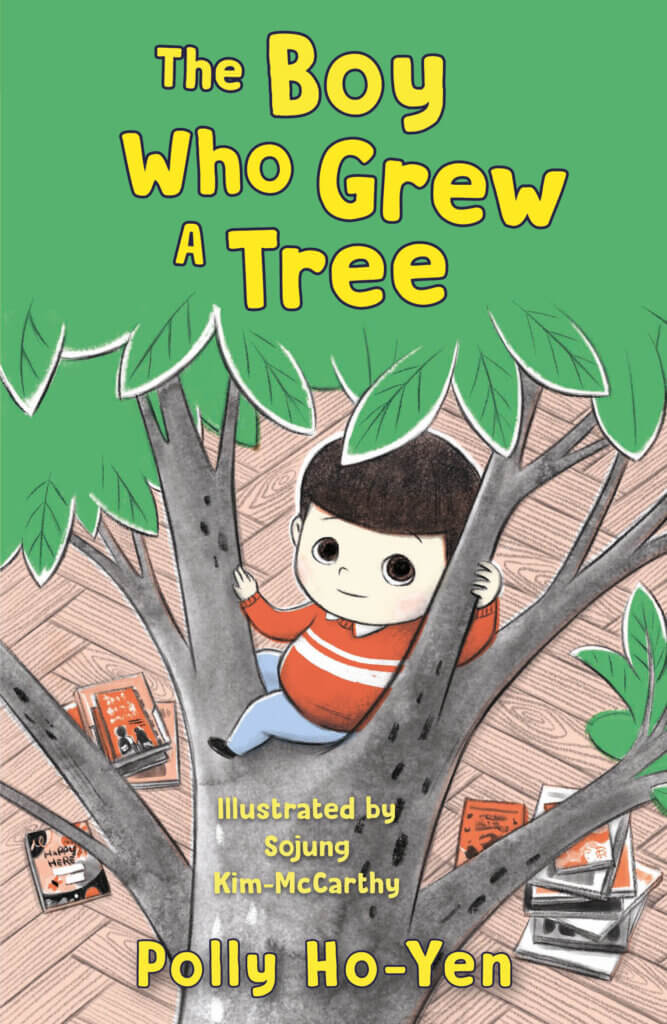
The Boy Who Grew a Tree

Nature-loving Timi is unsettled by the arrival of a new sibling and turns to tending a tree growing in his local library. But there is something magical about the tree and it is growing FAST… and the library is going to close. Can Timi save the library and his tree, and maybe bring his community closer together along the way? A charming early reader for ages 5-8, filled with black-and-white illustrations.

Knights Of
Illustrated by Sojun Kim-McCarthy

I know this blog is called *Teen* Librarian, but I read a lot of books for younger reader as well, with Bea but also for the school that I work in…and when I saw what this book was about I just had to be part of the blog tour! It really is one of the best early readers I’ve come across, beautifully written and engaging with lovely illustrations, and could be enjoyed by and provoke discussion with readers of all ages. I asked the author, Polly Ho-Yen a few questions:

What is your fondest memory of using or working in a library?

This is a toughie because I have so many special memories being in libraries. I used to love running the baby bounce classes because the babies looked so amazed to be there and were (mostly) brimming with joy. I also helped out with a reading group where it felt like every week, the poem or story made a huge impact on all of us. I liked hearing the different thoughts of everyone there; in one session I’ve never forgotten, a blind man shared that he saw people as colours. A favourite memory from being a library user was overhearing a kid saying his imaginary friend was particularly powerful in the library because it got its strength from all the books.

How different was it writing for a younger audience? Was the idea for this story always for beginning readers or did it evolve that way?

I was pretty nervous before I began writing about whether I would be able to do it, to be honest! I knew how important every sentence, every word is – there’s no room to ride when writing for younger audiences. But once I put my worries aside and got started, I found the voice and finished it fairly quickly. And then I had a nervous wait to hear what my editor thought. I always find it useful to read my work aloud and this was even more important for this story.

I’ve had bits of this ideas floating around for a while but when I asked myself to think about a story for a younger audience, that’s when it really developed to become ‘The Boy Who Grew a Tree.’

What are you reading at the moment and who would you recommend it to?

I read more picture books than anything else at the moment because I have a book-obsessed two-year-old and so the last book I put down was ‘Where’s Lenny’ by Ken Wilson-Max. It’s a real favourite because it speaks so brilliantly to the games that are at the centre of a toddler’s world.

I’m also reading ‘The Ice Palace’ by Tarjei Vesaas which is such an intriguing read, with perfectly-drawn characters and a killer setting to boot. I’m only at the beginning but I’m recommending it to everyone, so far!

Will you be writing more early chapter books or have you more middle grade ideas?

I would like to write both because I have ideas for both and it’s a great challenge to write for different readerships. Also I know about myself by now that I get a bit overexcited about writing and creating and so writing across genres is a dream come true.

Polly Ho-Yen

The Boy Who Grew a Tree, written by Polly Ho-Yen, illustrated by Sojung Kim-McCarthy, published by Knights Of is out now, priced £5.99

Check out the rest of the tour! Thank you EDPR for organising

Fight Back!

Aaliyah is an ordinary thirteen-year-old living in the Midlands. She’s into books, shoes and her favourite K-pop boy band. She has always felt at home where she lives … until a terrorist attack at a concert in her area changes everything. As racial tension increases, Aaliyah is bullied, but instead of hiding who she is, she decides to speak up and wear a hijab. She’s proud of her identity, and wants to challenge people’s misconceptions. But when her right to wear a hijab at school is questioned and she is attacked and intimidated, she feels isolated. Aaliyah discovers she’s not alone and that other young people from different backgrounds are also discriminated against because of their identity, and feel scared and judged. Should she try to blend in – or can she find allies to help her fight back? Channelling all of her bravery, Aaliyah decides to speak out. Together, can Aaliyah and her friends halt the tide of hatred rippling through their community?

An essential read to encourage empathy, challenge stereotypes, explore prejudice, racism, Islamophobia and inspire positive action.

A story of hope, speaking up and the power of coming together in the face of hatred.

#FightBack #FindYourVoice #OurVoicesAreStrongerTogether

A. M. Dassu

Boy, Everywhere, was such an astonishingly good debut that I have to admit I was quite worried about how Az might follow it up. I had the absolute pleasure of reading an early version of Fight Back! and was totally blown away by how good it is, and now that it has been polished it is even better. I’m very proud to have my quote in there:

I asked a few questions of our esteemed author:

Your 2 novels (+1 short chapter book) have very different protagonists! Does the character come to you first or the plot? Yes, they are so different! I think the plot always comes first. Although Sami definitely came to me with a loose plot for him in mind. And Aaliyah formed in my head because this time I wanted an upbeat, feisty character who you’d connect to but also hopefully make you laugh through the way she observed things. But with both books, my characters had something they had to say and that needed to be more widely discussed.

I’m so impressed with how you’re able to include so many “issues”, helping young* (*& old…frankly everyone needs to read your books to bolster their empathy) readers to understand at the same time as keeping them engaged with a brilliant story. Is there anything you’ve really struggled with making accessible? Thank you! I thought Boy, Everywhere would be the hardest book I’d write, but actually I found writing Fight Back so hard because the themes are challenging and painful. Adults tend to think that young people don’t think about what’s happening in the news, but sadly the ripple effects of events in the news can be far reaching and when writing, I kept in mind that there are children all over the world experiencing the same prejudice Aaliyah does. And that was simultaneously a struggle but also motivating.

What advice would you give to a girl considering beginning to wear the hijab to school? Ooh! Hold your head high. Be proud to be different, be your best self and take each day as it comes.

You’ve written non-fiction as well, how different is your research and writing process? What do you prefer to write? Interestingly, the process is so similar. Of course writing fiction is much more fun but also in some ways more stressful as you don’t want to make things up about a character from a particular background that might stereotype them or harm them. It’s about finding a fine balance of a plot that is gripping that is still based on fact. I do a lot of research! With non-fiction I can check facts via books or websites and I can trust that references are sound, but with fiction I go beyond this and ask people for their views and experiences – it feels like a bigger responsibility and always lies heavy on my heart. And even though Fight Back is own voices, I still had to do the same amount of research as I did for Boy, Everywhere, which surprised me. Again, I wanted to ensure the story was nuanced, where readers would feel seen and also perhaps discover something and so my editing process meant I double checked my research and cried a lot (writing and editing makes writers cry, part of the job).

I know you’ve done a number of virtual school visits with ‘Boy, Everywhere’, have you thought about what you’d like to do with students in person for ‘Fight Back’? I have already planned them! In the Fight Back workshops I’ll ask students to engage in an activity exploring identity, and we will discuss how you can help someone being bullied/discriminated against because of their identity or because they’re different. We will explore what it means to be an ally and the importance of coming together in the face of discrimination and ways to support those that are being bullied/discriminated against. We might even look at the United Nations  Convention on the Rights of a Child  to express themselves.

As well as your own writing, you’re also a director of Inclusive Minds, how did you get involved with them? Inclusive Minds is a unique organisation for people who are passionate about inclusion, diversity, equality, and accessibility in children’s literature. We have a big network of Inclusion Ambassadors from across the country with diverse lived experiences of race, ethnicities, disability, neurodivergence, LGBTQIA+ etc. I connected with the founders a few years ago at a conference and soon became an ambassador. Then in 2019 they asked if I’d be interested in taking over from them and despite me just having signed my first book deal, I couldn’t say no. It was a brilliant opportunity to help amplify our ambassador’s voices at events, ensure they get paid and give them the chance to work with publishers to check if books being published are authentic and accurate.

What are you reading at the moment and who would you recommend it to? Oh my goodness, I picked up my proof of The Midnighters by Hana Tooke the other night and I am hooked. I’m only five chapters in but it is so sumptuously written I must finish it. I think it’ll be a classic! It’s perfect for middle grade and adults too (of course).

Are you working on anything that you can tell us about? I have some extremely exciting news that I can’t talk about but let’s just say you’ll all meet Sami and Ali again. The Boy, Everywhere spin off is going to happen in a number of ways!
I am also plotting my next standalone novel and this time it will be a dual narrative – two characters who couldn’t be more different, a girl and a boy. It’s nothing like anything I’ve written before and I am so excited to write it! Please just send me some time!

A. M. DASSU is the internationally acclaimed author of Boy, Everywhere, which has been listed for 25 awards, including the Waterstones Children’s Book Prize, nominated for the Carnegie Medal, is the 2021 winner of The Little Rebels Award for Radical Fiction and is also an American Library Association Notable Book. A. M. Dassu writes books that challenge stereotypes, humanise the “other” and are full of empathy, hope and heart. Her latest novel, Fight Back has just been published by Scholastic and A. M. Dassu is currently touring the country signing as many copies in as many bookshops as she can!

Fight Back! is published in the UK this week by Scholastic

Mark My Words

Fifteen-year-old Dua Iqbal has always had trouble minding her own business. With a silver-tongue and an inquisitive nature, a career in journalism seems fated. When her school merges with another, Dua seizes her chance and sets up a rival newspaper, exposing the controversial stories that teachers and the kids who rule the school would rather keep buried.

Dua’s investigations are digging up things she shouldn’t get involved with about family, friends and her community and as exams rattle towards her, she needs to make some hard decisions about when to leave things alone. But when she discovers that some kids at school are being blamed for selling drugs when the real perpetrator is right in front of their noses, she can’t keep quiet any longer.

Macmillan Kids

Muhammed Khan writes such great voices! I’ve talked about his previous two YA novels on the blog before, Ilyas from KICK THE MOON is still one of my favourite fictional teens and I loved the nod to him in MARK MY WORDS, Khan’s newly published high-school based thriller. Khan’s characters make mistakes and sometimes do the wrong thing, Dua is no exception, but they all care deeply about their friends and family and community and always want to make things better. In that, I think they’re very real teenagers, and even if the reader can’t see themselves in the main protagonist they will recognise the well developed side characters and empathise. I’d love to hear the reactions of students from both state and private schools!

I was given the opportunity to ask a few questions as part of the blog tour (see banner below for the rest of the tour):

As a teacher, have you worked in a Minerva or Bodley?

Yes! Covid made me realise I couldn’t afford to be a full-time author and I was really missing the classroom environment. Before I got my current post, I dipped my toe in supply teaching. I got a different school every day and the contrast really jumped out at me. I thought it would be a fascinating dichotomy for a YA novel. Thus, Minerva and Bodley were born!

Dua often thinks about her faith, never doubting it, did you talk to young hijabi women to help with the voice?

I grew up around hijabi women, and a number of my students wear the hijab too, so I was passionate about getting the representation right. I had lots of interesting conversations. Macmillan also got a number of sensitivity readers to make sure the characterisation felt believable.

So many things that can affect young people are broached in the book, what was most important for you to get across?

The story always comes first in my books. Teenagers hate to be preached at. Having said that I hope young people will feel inspired by Dua and her friends to speak out whenever they see wrong and not give up if they are not heard but to have the strength to keep going. We shouldn’t underestimate peer pressure or drugs culture.

Are any of your characters based on students or colleagues?

Definitely! I’m always amazed and inspired by my students and their passions. Dua is based on a few girls I’ve taught who had a level of bravery I could only have dreamed of as a teen. Hugo is based on a student I met at a very posh school.

Sadly, Dua’s mum’s story is also based in reality. In my years of teaching, I’ve heard a number of harrowing stories from colleagues facing discrimination. The power imbalance is something people are finally starting to speak up about without serious recriminations. But there’s lots more to do!

Have you thought about including covid restrictions in a future novel?

I’ve thought about it but I’m kind of hoping, like everyone else, that the restrictions will be over soon!

What are you reading at the moment and who would you recommend it to?

My students have got me into manga in a big way. I’m currently reading Kimetsu No Yaiba (Demon Slayer) by Koyoharu Gotouge. Such a great read with wonderful characters and brilliant world building. I recommend it to every lover of fantasy and horror.

MARK MY WORDS by Muhammad Khan is out now in paperback (£7.99, MCB)

Illustrated Classics: The Wonderful Wizard of Oz

Discover the magical world of Oz as we accompany Dorothy on her journey to the enchanted Emerald City. Packed with stunning illustrations and exclusive interactive features, MinaLima™ reimagines an essential tome of American pop culture.

MinaLima

MinaLima are very clever people. I wanted to know a bit more of the background to their beautiful Illustrated Classics series, so was pleased to be given the opportunity to ask a few questions!

What prompted you to start creating these beautiful reimaginings of classics?

Miraphora: During our 20-year journey of creating graphic designs for the Wizarding World, we had the opportunity to create many books as props for the films but also behind-the-scenes  film “tie-in” books for the “real” world. In this way we developed a good relationship with our publisher Harper Design. Together we had the idea of redesigning the classics – we knew that these were stories loved by readers across the world but also that these were tales set in fantastical worlds, which we love.

Do you do everything collaboratively or do you each have particular roles when working together?

Miraphora: The whole process starts with Eduardo reading through the book and creating a book map of all the interesting, quirky and intriguing occurrences in the book that we feel should be marked as illustrations or interactive elements. Then, we begin developing an overall creative direction, creating rough sketches of the characters and locations.

Eduardo: Mira usually starts these early sketches. We have a fantastic team, who then picks these up and starts drawing the illustrations in more detail. They also begin crafting all the paper engineered interactive elements, cutting and pasting different sections to see if they work. We believe that the sum of the parts are always greater than any individual illustrator or designer and we bring this collaborative approach to everything we do.

How have you chosen the titles you’ve done so far? Do you have a favourite?

Eduardo: We have chosen the titles we all know and love; these are fairytales we have all grown up reading. My favourite book is definitely Pinocchio –  I have loved this story since I was a child and I knew from the beginning that this had to be in our MinaLima Classics collection!

Miraphora: My favourite is The Wonderful Wizard of Oz, which is our latest title – so Eduardo got to reimagine his favourite first!

If you could reimagine any book, without having to worry about permissions, what would it be?

Eduardo: I love the Agatha Christie books but the descriptions are so beautifully detailed that I am not sure if they leave much room for reimagination!

What are you tackling next?

Miraphora: This year is a very special year for us: we are celebrating 20 years of working together. So we are crafting a very special book:The Magic of MinaLima, which will be published by Harper Collins in 2022. 

Eduardo: This book charts our experience of creating the graphic universe of the Wizarding World, from films in which you can escape to books you can delve into, from products you can hold to experiences in which you can immerse yourself.

MinaLima is an award-winning graphic design studio founded by Miraphora Mina and Eduardo Lima, renowned for establishing the visual graphic style of the Harry Potter and Fantastic Beasts film series. Based in London, the MinaLima studio is renowned internationally for telling stories through design and has created its own MinaLima Classics series, reimagining a growing collection of much-loved tales including Peter Pan, The Secret Garden, and Pinocchio.

Mina Lima, Portraits


Instagram: minalimadesign | Twitter: @minalima | Web: www.minalima.com

Thankyou to Harper360 for sending me a review copy of their latest title, The Wonderful Wizard of Oz

The Royal Rebel

Born in 1876, Princess Sophia Duleep Singh was the daughter of the last Sikh ruler of the Punjab, and goddaughter of Queen Victoria. After her father lost control of his empire and was exiled to England, Sophia had a privileged but troubled upbringing that left her unsure about where she belonged – in India or England. Sensitive to injustice, she became an suffragette and fought hard to win the vote for women. This is the extraordinary story of her life.

Barrington Stoke
artwork by Rachael Dean

Bali Rai has such a range when it comes to writing, he really has done something for just about every reader, but I have a soft spot for his Barrington Stoke titles, I reviewed his previous one, STAY A LITTLE LONGER, here. Barrington Stoke titles are a little bit special because there is not a word wasted, they’re written to engage and not patronise children and young people. This particular book, THE ROYAL REBEL, is based on the real life story of Princess Sophia Duleep Singh, who led an extraordinary life. I was filled with sadness reading it, about how affected her life was by British colonialism and politics, but she was a fascinating character and Bali Rai’s writing from her perspective has really brought her to life.

I asked Bali Rai a few questions!

What prompted you to write about Princess Sophia Duleep Singh?

My family is Sikh, so I had known the story of Sophia’s grandfather, Maharajah Ranjit Singh, and of her father, Duleep Singh, since childhood. However, I had never been told of the role Sophia played. So, when I discovered who she was and her role within the Suffragette movement, I was determined to bring her story to younger readers. I am passionate about representing unheard voices in British literature and always have been.

Has your research led you to any other figures in history that you would like to write about?

Yes, I learned of the roles played by the Royal Indian Army Service Corps at Dunkirk, and Mohinder Singh Pujji (RAF) during World War 2. I have written about both. The next figure I want to write about is an Indian revolutionary called Udham Singh, whose story is much darker, but just as important. There are many unheard voices throughout British history, and I hope to write about many more.

You’ve written in a wide range of genres, is writing a historical novel a very different process to that of writing about contemporary characters? Do you favour one over the other?

My main genre is reality based fiction, so the research involved in writing historical fiction is very different. I actually enjoy the historical research more than the contemporary stuff. I’ve always loved history and like nothing more than getting stuck into research. It’s often time-consuming but always worthwhile. We can learn a great deal about where we are now, based on what came before us.

You’ve written a number of books for Barrington Stoke, as well as longer novels, for middle grade and YA audiences. How do you choose which of your ideas to use for the shorter novellas and for what target age?

I generally think of an idea, and work on that with my agent and the editors at Barrington Stoke. That’s most true of the more contemporary stories I’ve written for them. The Royal Rebel was only possible because of that partnership (I reworked the idea several times) and it’s a collective effort that I value highly. The age range doesn’t really enter into my head. I have a voice that I want to write, and a theme to explore – and the target age and reading level are determined by the amazing people at Barrington Stoke. Since my first books for them, Dream On, it’s been a team effort, and it’s a process I love to be part of. Barrington Stoke are wonderful publishers, doing something vitally important.

Which of your books are your favourite to do events for?

My younger historical fiction books are now firm favourites for events. The response to them has been amazing. And much as I adore working with older teens, there’s something even more wonderful about introducing diverse British history to KS2 and KS3 pupils. The levels of enthusiasm for the events just add to that pleasure.

What are you reading at the moment and who would you recommend it to?

I’m currently reading lots of non-fiction about the British Empire, for a new young adult series I’d like to write. The last children’s book I read was How I Saved The World In A Week by Polly Ho-Yen. I’d recommend that to anyone who loves imaginative and thrilling adventure stories. It’s brilliant and Polly is a superb writer!

What can we expect from you next?

I have a junior series for Reading Planet out soon, called Green Patrol, and a short novel called Wolf Girl. I’m currently researching and working on a new young adult idea, and also a new World War 2 story with British Indian characters. Oh, and I’m reworking an older adventure series idea, in the hope of showing that to an editor at Penguin.

THE ROYAL REBEL is out now from Barrington Stoke, thank you to them for a review copy and to Bali Rai for answering my questions, I’m really excited to see more about your next ventures!

Michael Rosen’s Sticky McStickstick

After being admitted to hospital in 2020 with coronavirus, Michael Rosen had to learn to walk again. With the support of doctors and nurses and a walking stick he names “Sticky McStickstick”, he manages to embark on the slow steps to recovery. This moving picture book from the former Children’s Laureate, with illustrations from Tony Ross, tells a story of perseverance and hope, and is a testament to the importance of overcoming fear and learning to accept help.

Walker Books
Sticky McStickstick is illustrated by Tony Ross

Michael Rosen is a National Treasure and so many people were very worried about him when he was hospitalised with Covid-19 in 2020. It took him a long time to recover, and while he did he had the support of his walking stick (as well as family and NHS staff, obviously). Many Different Kinds of Love, a collection of Rosen’s poems and the coronavirus diaries of his nurses, was published by Ebury in March 2021 for grownups to read, but this is for everyone…and I mean everyone. When I was asked if I’d like to send a few questions for him, of course I said yes!

‘Many Different Kinds of Love’ has already been published, on adult lists, did you write the two books at the same time?

No. I wrote MDKOL first but I noticed that I had mentioned Sticky McStickstick. People asked me about the stick and I started telling them things about where it is or what happened when I tried to walk with it and so on. A voice in my head told me that I could personify the stick and it then became fun to write it all out as a story. 

This complements your Sad Book beautifully. Why do you think having books about such emotive subjects is important for children?

Books for children can be about anything that the adults who care for children think are OK things to talk about. Society has taboos around children and childhood and writers have to respect these. Subjects like death and serious illness are on the edge of the taboos. Some people won’t take their children to funerals, for example. Or they might not tell their children about a terminal illness. That’s their choice. My two books go into an area where some have those taboos but others think that it’s helpful to talk about experiences such as these which are as much about life as eating or sleeping. All books open up trains of thought and conversations. I’d be very glad if both those books do just that with children being looked after or brought up by people who think it’s a good idea to talk about such things. 

Do you have thoughts about how ‘Sticky McStickstick’ might best be used in schools?

I would start with a class talking in pairs to each other their illnesses and accidents, swapping stories, perhaps writing about them or drawing pictures of them. Then reading my book. Or it could be the other way round. Reading my book first, perhaps. There are open-ended trigger questions that are helpful too e.g. Is there anything in this book that makes you think of anything that has happened to you or to anyone you know? Is there anything in this book that makes you think of anything you’ve ever read before, or heard in a song, or on the TV or in a film? If you could ask anyone in the book a question, what would you ask? Can you answer that question? If you could ask the author a question, what would it be? Can you answer that question? Are you affected by any part of the book? Which part? How?  Why? 

Tony Ross has illustrated a number of your books. Do you let him get on with it or do you make suggestions about what the illustrations might look like?

I most certainly do let him get on with it. I write the words. The illustrator, designer and editor make the book.

Sticky McStickstick was published on 4 November 2021 by Walker Books

(9781529502404, £12.99, Hardback)

The Hideaway by Pam Smy

The Hideaway tells the story of a boy, Billy McKenna, who runs away from a difficult situation at home and takes refuge in an overgrown graveyard. While hiding there he meets an elderly man who is tending the graves in preparation for a day in November when something magical is set to happen.

The book is written in two alternating narratives, both different aspects of the same story. One thread tells of Billy’s experience of hiding away in the graveyard, his mixed-up feelings and emotions, and the supernatural events he eventually witnesses. The other tells of his mother’s situation at home and the police search for Billy. Covering themes of family, childhood, separation and reunion, domestic violence and doing the right thing, this is an important and beautiful book for middle grade readers right up to adults.

Billy’s story is illustrated throughout with tonal and textured black and white drawings, until the event on All Souls’ Eve, when the text gives way to a series of double page images of the supernatural happening.

The Hideaway is a compelling, exciting and emotional story that will stay with you long after you finish the last page.

Pavilion Books

Pam Smy is such an interesting illustrator, Thornhill is a wonderfully unique book (shortlisted for the Carnegie Award), so I was very excited to be sent a review copy of her 2nd novel The Hideaway…which is haunting and sad and uplifting and will really stay with you…and then even more excited to ask her a few questions! And of course, the most appropriate book to highlight for Halloween!

Which aspect of The Hideaway came to you first?

The scene-setting of The Hideaway came to me first. The graveyard where it is set is a real place here in Cambridge, and it has the chapel in the middle, the row of yew trees, the poem carved into the back wall, and most importantly, the World War 2 pillbox. The combination of the meaning of the poem All Souls’ Night by Frances Cornford and the idea that someone could use the pillbox to hide away sparked the idea for the book.

Thornhill was alternate chapters, a wholly illustrated contemporary voice and a historical diary, while The Hideaway is an illustrated story. Did you draw and write at the same time or had you mainly got the words down before choosing which sections to illustrate?

With Thornhill I wrote the text and made the rough drawings for the story in turn, so both elements of the story evolved at the same time. With The Hideaway I wrote the manuscript first, and then illustrated it – but I knew that I wanted there to be a wordless sequence in it from the outset and I knew what I wanted the feeling of the graveyard to look like in the illustrations.

Do you lay out the pages alone or with a designer?

For The Hideaway I worked directly into an InDesign document so that I could move the text around the illustrations I was making, and the very patient designer, Ness Wood, tidied it all up at the end.

They’re both a bit spooky with extremely atmospheric illustrations, very suitable for Halloween season, is the supernatural your favourite genre to read?

I read a variety of books. I love books about people and relationships, and stories that are set in the past or in rural environments. I also love crime novels. I read a lot of picture books and illustrated books of all kinds for all ages. I wouldn’t say that I especially read supernatural books, although they are certainly on my bookshelf.

I think I am drawn to write and illustrate spooky books because I love making atmospheric artwork, and building a world that is based on the everyday, but is different from what we may typically see – but without tipping into fantasy or sci-fi.

You’ve also published a picture book, Merrylegs! Three very different books, which was most enjoyable to work on?

I enjoyed making the artwork to The Hideaway the best. I was trying to work without using much linework – so it was a new challenge for me.

The Mermaid in the Millpond, written by Lucy Strange and illustrated by you, is being published in January by Barrington Stoke. Do you find it easier or harder when the words aren’t your own?

Both easier and harder. If I am illustrating my own ideas the vision of those illustrations is already in my head, and the excitement and the challenge is to get that across on paper. When I am illustrating someone else’s writing it is a joy to be able to bring to life the words, and to add atmosphere or understanding to what is being described. I love illustrating other people’s texts, especially if the art direction and design layout isn’t too prescriptive and I have a little bit of a free reign.

What are you reading at the moment and who would you recommend it to?

I am reading and re-reading Captain Rosalie by Timothee de Fombelle, illustrated by Isabelle Arsenault. I am recommending it to everyone I know, and buying copies of it to send to my friends. I think everyone who is 6 and over should read it. It is a beautiful piece of writing and Arsenault’s illustrations are absolutely stunning. Also by my bedside is While You’re Sleeping by Mick Jackson and John Broadley, and All Among the Barley by Melissa Harrison.

What might we see from you next?

I am working on developing a few collaborations at the moment which I am VERY excited about, but can’t say anything about yet.

The Hideaway by Pam Smy is published by Pavilion Books, out now, 14.99 hardback.

Yusuf Azeem Is Not A Hero

Yusuf Azeem has spent all his life in the small town of Frey, Texas—and nearly that long waiting for the chance to participate in the regional robotics competition, which he just knows he can win. Only, this year is going to be more difficult than he thought. Because this year is the twentieth anniversary of the 9/11 terrorist attacks—an anniversary that has everyone in his family on edge. After reading his uncle’s journal from that time, Yusuf feels like he almost understands what that nationwide fear and anger felt like. But when certain people in town start to say hateful things to Yusuf and his community, he realizes that the anger hasn’t gone away. And soon he will have to find the courage to stand up to the bullies, with understanding, justice, and love.

Saadia Faruqi

I really enjoyed Saadia Faruqi’s previous middle grade book, A Thousand Questions, so was very happy to host an interview with her for the blog tour for her new title, Yusuf Azeem Is Not a Hero.

Why did you decide to write about the attacks of September 11, 2001, knowing that your readers may
not care about an event that happened so long before their births?

The events of 9/11 and everything that happened afterwards – the wars in Iraq and Afghanistan, the
changes to regulations of airport security, the suspicion of anyone who was “different” – were so
monumental that they literally changed the world. It was worrying to me that an entire generation of
readers were not too concerned about this event even though their lives too were affected by it in a
myriad of ways. Although generally young readers find it hard to connect with historical events, 9/11
was different for two reasons: it was very much alive in the mind of readers’ parents and grandparents;
and it affected how many of the readers and their families were treated in their communities. That’s
why I decided to write a book about the last twenty years and showcase history in a very contemporary
context for children.

Are any of the characters in Yusuf Azeem Is Not A Hero inspired by real people?

Every author puts pieces of themselves or people they know in the books they write. None of the
characters in this book is based on a single person, but there are some parts of me and my family and
friends in them. Even the main villain Trevor Grant is based on a pretty horrible person I once met! Yusuf
himself is a little like my son at that age – sweet and nerdy and just trying to go through life without
attracting any attention. He was also treated unfairly and unkindly by his classmates and teachers when
he was younger, and it’s very much affected his behavior in small ways. So I definitely had that in mind
as I was writing Yusuf’s scenes… just that feeling of uncertainty and discomfort. I love putting the nicest
characters into situations that test them, which is what happens to Yusuf and his friends.

This book is mostly contemporary, based in current times with mention of the pandemic and white
supremacist groups and so much more. Yet there’s also twenty-year-old journal entries. How did you
manage that balance of time periods?

I decided to set the main story in current times because I know young readers identify better with
contemporary settings. They want to know why they should read a story, what’s the pull for them? I also
didn’t want to write a historical novel because in my mind 9/11 isn’t really a historical event, even
though it’s twenty years old. It’s current because there are millions of people feeling it’s repercussions
all over the world even today, whether it’s because a family member is in the army in Afghanistan, or
they’re a Muslim boy who gets teased in school, or they’re randomly selected for additional screening
every time they enter an airport. So I knew I wanted to base this story very firmly in the present, to
showcase the rise of intolerance, of white nationalism, and all the horrible ways outsiders are treated
every single day. The journal entries are written every three chapters, as a window into the world
twenty years ago, and in very strategic ways they draw parallels to the action in the contemporary part
of the story.

Many readers are not aware of how Muslims were treated after the attacks of September 11. As a
Muslim, did you experience any of the prejudices described in this book?

I was in college when the attacks happened, and immediately after I escaped notice because I didn’t
look visibly Muslim. I didn’t wear the hijab, which was a huge red flag for people in those days – and still
is. But in the years after the attacks, as I grew more confident about my religious and cultural identity,
including wearing the hijab, I certainly faced prejudice from my coworkers, neighbors, parents of my
kids’ friends… the list is endless and exhausting. I also saw many of my family go through these things,
and it was obvious that anybody who was “other” was being targeted. It only made me more firm in my
belief that we needed to talk about these issues, describe what was happening, so that we could make
changes.

This is a book with emotionally heavy topics. How did you ensure that it was appropriate and
understandable for younger readers?

Yusuf Azeem definitely has emotionally charged scenes. A lot of pretty awful things happen to Yusuf and
his friends and family in the book. I didn’t want to shy away from that trauma because I wanted to show
reality, and I know readers are brave enough and curious enough to want to know the truth. I also want
readers who go through bullying to know that they’re not alone. However, overall this book isn’t a sad
book. There are jokes and laughter, funny characters who bring comedic relief. There is an intense
robotics competition and a robot called Miss Trashy. Overall, there is a hopeful ending as Yusuf’s
community rallies together and helps him, and showcases ways that one can be an ally to others.

What do you want readers to do after reading Yusuf Azeem?

I’d like readers to learn more about 9/11 from a variety of perspectives. I’d also like them to discuss this
topic from the adults in their lives – parents, teachers, family friends – to understand what it was like in
those days. Also ask adults if they know about the discrimination faced by the Muslim community. They
will be surprised to know that many adults are also unaware of the far-reaching repercussions of 9/11.
Talking about these repercussions is the first step to healing and making changes.

You’ve written books for children of all ages, specifically the popular Yasmin series. Which category do
you like to write best?

I love writing for all ages. Each of my books has a slightly different aim and purpose. The Yasmin books
are about a little girl from an immigrant family, doing everyday things at school and in her
neighborhood. These stories help give young readers the confidence they need, while also teaching
about tolerance and welcoming communities. Yasmin is based on my own daughter, so that may be one
of my favorite characters ever! On the other hand, my middle grade novels like Yusuf Azeem Is Not A
Hero focus on real-world challenges that children face when they look different, or when their families
and culture are seen as “other”. These books are about allyship, and as such they have a special place in
my heart as well.

The Sound of Everything

Winner of the Everything with Words’ YA Competition 2019 judged by Patrice Lawrence, The Sound of Everything is a heart-felt coming of age story for all those who struggle to feel like they deserve love.

Betrayal, rejection, violence Kadie has known it all. She’s tough and prepared for everything. Everything except love.

Kadie has has just arrived in yet another foster home. She trusts no one and lives by the rules: don’t count on anyone, always act, be prepared to lose everything. She’s lost everything more times than she can count but then she meets Lips and learns that some things are even more important than survival. But she has secrets of which she must let go if she is to make a stab at friendship and love.

Everything With Words

I was immediately interested in reading this book when I saw that Patrice Lawrence had helped to choose it as the winner of the Everything With Words’ YA competition 2019, because she has good taste in stories and I wasn’t disappointed, I was gripped from start to finish by the events of Kadie’s life. I was also pleased to read a book by a fellow school librarian, although Rebecca hasn’t been in the role for very long, hopefully it will give her some ideas for a future story! After sending these questions through the publisher, I found out about Rebecca’s musical background, which really helps to explain how much music features in the book (though she is more classically trained on the violin), and that she’s been working on this story since she was the age of her main characters.

Did you decide to write about a girl in foster care and that turned into Kadie, or was it her character that started you writing this story? I believe I decided to write about foster care first, out of which came Kadie – but it’s been so long since I had the initial idea that I can’t really recall what the process was. Kadie herself took a long time to develop into the complex character that she is, but foster care was definitely always a large part of the story, I think because there was so much to explore within it, beginning with the daunting prospect of being dropped into a new environment in the middle of GCSE years. I think what really touched me when I was learning about the realities of foster care was the amount of pain that a lot of young people go through as they are shafted by the system. I quickly learned that it’s not as simple as just being put with a family and staying there.

Did you have to do much research before/while writing?
Yes! I did a lot of research. I knew next to nothing about foster care, so I researched and researched some more. I read real life stories, newspaper articles, blog posts; I watched videos, looked at film renditions, and found what I could in the library. I love the research side of things. I find it particularly important, once you think you have exhausted all your sources, to go back some time later and dig around for new stuff. There’s always a wealth of information out there.

Do you think there should be a trigger/content warning on the book for the self harm element? I think just to err on the side of caution I would add a trigger warning just in case, if it was up to me. I don’t think I was particularly explicit about the self-harm, but I always want readers to be prepared for sensitive topics the same way I would want to be prepared if I was reading a book that covered serious issues.

Who was your favourite character to write? Was there anything or anyone (without spoilers) that you found difficult to get onto paper?
That’s really hard. Really hard! In first place has to be Beverly. She’s just so huggable. She’s partially inspired by siblings (“I’m stuck. In boredom.” – one of my favourite lines.) Very, very close second would be Lips best, particularly when it came to fleshing out his character right down to the nitty gritty bits like his likes and dislikes, his fashion choices, his little quirks – I thoroughly enjoyed that. Lips is almost like one of those big mascots at sports events – big and clumsy, though perhaps not cuddly, although he might chase you for a hug.

In terms of getting things written down, I didn’t find any bits of the book hard to write, but quite a few of the scenes did undergo some serious overhauls that took a little brainstorming before I got them right. That said, I think Shadavia was a hard character to write and I’m actually a little bit not 100% happy with her. I’m not sure whether she’s a friend or an enemy, which is off-putting because I think I wanted her to be either or.

You won the Everything with Words 2019 YA competition, has the story changed much between your submission and the published book?
A lot has changed since the manuscript that I entered into the competition, but at the same time not much has. The bits that have changed are fundamental to the plot but not in a way that changes the direction of the story. Previously I had focused on Kadie’s issues and the things she was trying to hide, without expounding on the reasons for things, the complex background to why she thinks the way she does.

Also, a lot of my secondary characters were very flat in the original. I had a lot of great fun making them into real people. Readers will never know most of the details about Eisha or Josh or even Kelly, but I know them, and that’s the important thing, because it really makes a difference when the background characters have a full personality.

As you work in a school library, did you make the most of your access to teenagers and get them to read early drafts for feedback, or did you keep it to yourself? It may surprise you that I actually didn’t work in a secondary school at the time I wrote The Sound of Everything. I am just a word nerd, obsessed with London slang. I started studying it for a story some time back and became interested in the way it evolves and spreads out to the rest of the country (kids in Swindon often talk with what could be considered London slang, only with a Swindonish edge to it). I learned to imitate the language by listening to interviews and watching vlogs to see how young people talk in their comfort zones. I really, really enjoy the dialogue side of things, which you can probably tell.

Nobody really read early drafts before the competition. I don’t know that I would have had the confidence to convince a student to read the manuscript before it was published!

What are you reading at the moment and who would you recommend it to? I am currently reading Ballet Shoes by Noel Streatford and Harriet the Spy by Liz Fitzhugh. Ballet Shoes is a classic story about sisters and the struggle for money, and I think would appeal to little girls who like to read challenging. However, it would also still appeal to teenage girls too, if they like historical fiction.

Any plans for a 2nd novel?
Ooh . . . not at the moment. I have a lot going on, including scraps of other ideas, but nothing that could be called a plan for a second novel.  

THE SOUND OF EVERYTHING is out now! Huge thanks to Mikka at Everything With Words for sending me a review copy and organising the interview.