‘There were twenty-eight of us in the tiny dinghy, packed in like dates in a crate…’
My name is Samim.
I’m thirteen years and three months old, I love chess — and I’m a refugee.
I was happy in Afghanistan, until the day bombs ripped my life apart. I escaped with my best friend Zayn, hoping to find safety in the UK. But the journey was dangerous and we lost so much along the way…
Now I’m here, trying to make new friends and a new home, but will the authorities let me stay?
First, I must tell my story. Are you ready to hear it?
At the 2024 CILIP YLG National conference in Glasgow I met the publisher and publicist of this middle grade (& older) novel and they thrust a proof in my hands with promises that it would be a book that stayed with me. I actually read it on the way home, in one sitting, and then sat thinking about it until the end of the journey (luckily Glasgow to London takes some time)! I sent a few questions to the author, debut Fidan Meikle:
The first line is a tremendous hook. Did you always intend to start the story with Samim already in a UK detention centre, looking back at his journey, or did it evolve that way?
It took me some time to figure out the best way to tell Samim’s story. I debated for a long time whether to start with the moment his home was destroyed by a bomb or dive straight into the dramatic scene in the English Channel. But Samim’s story is really two stories in one: his journey to the UK and his journey within the UK. I needed a point where both narratives could unfold together. Having him recount his experiences during an asylum interview felt like the right choice – on one hand, he’s telling us about his past, and on the other, he’s stepping into his future, entering foster care and starting school. In the end, both journeys align as he searches for a place to belong.
What kind of research did you do before and during writing?
I have a background in Asian and Middle Eastern Studies, specialising in Afghanistan, so I already had an understanding of its history, languages, literature, religion, and geography. I’d spent years studying the country, but I knew that to tell Samim’s story properly, I needed to go beyond textbooks and research real experiences.
I read memoirs and personal accounts from refugees, collected stories from Afghan asylum-seekers, and studied reports from charities working directly with migrants. I also looked into immigration policies, especially those affecting unaccompanied minors, to make sure I got the legal side right. Watching documentaries and following investigative journalism helped me understand the constantly changing situation better.
One of the most valuable parts of my research was working with an Afghan photojournalist Through his friends and acquaintances who fled Afghanistan, I gained invaluable insights that also helped to shape the book.
How did you balance the true horror of many refugee experiences with a hopeful but realistic story?
With great difficulty at times! This isn’t an easy topic to soften – it’s a harsh reality for millions of children around the world. I wanted to do justice to their experiences, but I also wanted the book to be accessible for primary school children, something that could spark meaningful discussions rather than overwhelm young readers. To keep that balance, I made sure there was always a sense of hope, even in the darkest moments. Zayn’s lively personality helped a lot – his humour and resilience bring light to the story, reminding us that even in hardship, joy and friendship can exist.
Are there other books on the theme of refugees that you recommend?
I highly recommend The Lightless Sky by Gulwali Passarlay, a powerful memoir about a young boy’s journey as a refugee. I also love Hinterland by Caroline Brothers, which follows two Afghan brothers navigating Europe alone.
What are you reading at the moment, and who would you recommend it to?
I’m currently reading Tali Girls by Siamak Herawi, an adult novel that delves into the lives of Afghan women under the Taliban’s draconian rule. It’s a deeply moving and eye-opening read, a story about women who are often silenced but never powerless.
Do you have any more stories planned?
I have several works in progress, all in different genres, too. But the book I’m dedicating most of my time to right now is a Young Adult fantasy novel. I’m really excited about this project and can’t wait to hopefully publish it someday.
Fidan Meikle is an Azerbaijani-British writer, linguist and translator. She writes poetry and prose for children and adults. When she isn’t writing, Fidan can be found teaching languages, indulging her love of Azerbaijani cuisine, or exploring the Scottish Highlands with her husband and children. Her debut middle-grade novel, My Name is Samim, is inspired by the true stories of young refugees who undertake courageous journeys in the hope of finding a safe home. She lives in West Lothian, Scotland.
From the author of If You Still Recognise Me comes a delicious story of two people brought together by a shared love of food as they figure out themselves and each other.
Auden is finding different ways to be themself. The first – using their new chosen name, which feels most authentically them. The second – starting a food blog where they can share their passion for food, through family recipes and the stories behind them. And when the blog brings them Valerie, they discover more than they’d ever expected.
It’s been over a year since Valerie lost her mum – her beautiful, vibrant mum who loved cooking. Since her mum’s death, Valerie and her dad have drifted further and further apart, the kitchen left cold and empty, until Valerie finds Auden’s blog. The blog (and its writer) spark something in Valerie. Could she have found a recipe for happiness?
I interviewed Cynthia when their first novel IF YOU STILL RECOGNISE ME came out, so was very keen to read their next offering and pleased to see that the premise was completely different while still focusing on young people reflecting on their identities and exploring relationships (friendships, romances, and family). I asked a few new questions:
The parents played a significant role in this story. I really appreciated that they weren’t perfect but also weren’t awful, they felt very real. Did you consider making Auden’s parents more or less supportive?
I did think about making them less supportive, but I know that there’s a desire for something a bit more upbeat when it comes to narratives around trans/nonbinary characters. And I didn’t want dealing with unsupportive parents to be a big focus of the book – and if the parents were less supportive, I felt like that would have to take up too much space within the narrative. That wasn’t the story I was trying to tell.
So I did also consider making them more supportive, but I personally don’t find it very satisfying or easy to write about parents who are wholly supportive – maybe because I don’t actually know anyone whose parents are like that. (If your parents are, then I’m thrilled for you!)
That’s why they ended up more in the middle, and I’m glad they seem real!
Yes, I do! Although I don’t think of myself as a great cook, I can follow a recipe well enough and I cooked for myself for years. My wife Olivia now does the majority of the cooking in our household (she’s incredible at it) but I still cook regularly.
When I asked you about the reaction from teens to IF YOU STILL RECOGNISE ME you hadn’t really had any as it was still brand new…what response from readers has the last couple of years brought you?
Readers who have messaged me about how the book helped them through a tough time, how it felt like a warm hug or made them feel less alone – these are the responses I treasure the most. One teen reader I met in a signing queue said they found me inspirational as a person from a different background discovering their identity, which is something I wrote down word for word in my diary because it moved me so much! I’m really glad my books can be there for queer teens who don’t always feel seen.
Have you started working on a fantasy novel yet or can we expect more beautiful contemporary characters?
Yes, I have started working on a fantasy novel – very slowly! It’s a contemporary fantasy though and I’m especially interested in trying to balance a contemporary narrative that includes my usual elements of queer romance and identity – understanding yourself and figuring out who you want to be in the world – with the fantastical aspects.
Cynthia So (credit Caitlin Wilder)
Cynthia So was born in Hong Kong and lives in London. Their work has been published in speculative fiction magazines such as Uncanny, Strange Horizons and Anathema. They are also one of the new voices in PROUD, an anthology of LGBTQ+ YA stories, poems and art by LGBTQ+ creators, published by Little Tiger in March 2019. When they’re not writing, they can often be found at the theatre, entranced by a play or a musical. They’re also extremely enthusiastic about board games and tabletop role-playing. If You Still Recognise Me – shortlisted for the Waterstones Prize, the YA Prize and the Diverse Book Awards – was their first novel.
THIS FEAST OF A LIFE is out now in the UK, published by Little Tiger. Thanks to Jade for sending me a review copy and co-ordinating interview questions.
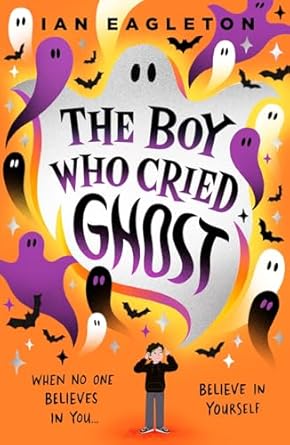
There’s a ghost in Richard’s wardrobe. Every day he carries out a series of rituals that he believes will keep the ghost trapped inside. He tries to tell his friends and family, but they dismiss his worries and concerns as being part of his OCD. But then one day, the wardrobe door is opened… And that’s when the hauntings begin.
Cover illustrator, Melissa Chaib and designer Sarah Baldwyn
I loved everything about this book: the main character, his friends, and the supportive adults. Adored the book recommendations, bad jokes, and actually-quite-scary bits…so I was very pleased to be able to ask the author, Ian Eagleton, some questions!
What can you tell us about your new book, The Boy Who Cried Ghost? The Boy Who Cried Ghost is a spooky, thrilling, heartwarming and funny story, full of twists and turns. It was inspired by my love of horror movies, Hocus Pocus, the Goonies, Buffy, Casper, and a friend who used to tell the most terrifying ghost stories when we went away camping. Richard is just starting Year 6 when he has to move with his mum into his grandma’s old house. He is angry and resentful and filled with worry about making new friends at a new school. He is also consumed by obsessive behaviours, low self-esteem and grief. I always think the best ghost stories are nothing to do with the ghost, but instead explore what it’s like to be haunted by trauma. Over the course of his journey, Richard has to learn to accept himself and understand how to start dealing with his OCD.
You’ve said that you have OCD and hope that it means you’ve portrayed it well, but did that personal connection also mean that it was difficult to write? So difficult! I really wanted the story to feel authentic, raw and challenging, as well as being fun and gripping too. I had to dig deep and go back in time to explore my own experiences of living with OCD. Throughout the story, we get to read Richard’s flashbacks and memories as he comes to terms with how his brain works. These were all based on my own memories, so it was often very emotional and draining to write. I remember being absolutely terrified as a child and teenager by these strange, intrusive thoughts and all-encompassing rituals I carried out. However, I do really feel that books for children and young adults are the MOST important of all books and that my readers therefore deserve the absolute best of me. this means putting everything I have into my writing, no matter how painful it might be at the time. By the end of the process, I often feel a sense of relief and acceptance. Writing can definitely be cathartic!
There is a growing selection of titles for children that feature mental health issues and disability in a positive way, but are there any other books you’ve read that you think represent OCD well? There are three books which stand out for me. They are: The Goldfish Boy by Lisa Thompson When I See Blue by Lily Bailey A Flash of Fireflies by Aisha Bushy
Have you any suggestions for how those that work with a child/teen with OCD might best support them? As an adult, I read Because We Are Bad by Lily Bailey, which was life-changing and really helped me understand what I had experienced myself as a child and teenager with OCD. I would also recommend the following books to people who work with children and teenagers with OCD: The Man Who Couldn’t Stop by David Adam Pure by Rose Bretécher Brain Lock by Jeffrey M. Schwartz I think these books portray the terror and uncertainty of OCD particularly well and would really help people understand the complexity of this mental health disorder.
I would also remind people that saying things like ‘Oh, I’m SO OCD’ just because you like things to be neat or tidy can be quite harmful and offensive to people who suffer with OCD.
I love the diversity of your characters, in all your books. Are they ever based on friends or colleagues? Hmmmm. Sometimes they are. A good friend of mine told me a story once about how she’d whacked a nasty boy at school around the face with a bouquet of stinging nettles. I was so shocked and amused by this story – don’t try it at home – that I asked her if I could include it in my first middle-grade book, which was Glitter Boy. She kindly agreed! In The Boy Who Cried Ghost, one of the adults in Richard’s life is called Mr Levick, who is based on someone I know. He often wears gender-defying clothes and is openly gay and I felt like this sort of positive role model should be celebrated in the story. Sometimes, however, my characters are based on what I like to call ‘wish-fulfilment’. In Glitter Boy, James has an amazing teacher called Mr. Hamilton who is marrying his boyfriend, Sam, and spends a lot of time talking to the class about LGBTQ+ history and rights. This would have been transformative for me as a queer teenager, but it wasn’t something that ever actually happened. I just wish I’d had a teacher like Mr. Hamilton who could’ve supported and guided me.
I know a lot of the jokes were suggested by your dad while you were writing the book, but do you have a favourite? There’s a scene in the story where Richard’s stepdad, Tony, and his new school friend, Quinn, are trading jokes and quips and I LOVE it! Here’s an extract from it, which you might enjoy!
But Tony and Quinn were already walking off, chatting happily and loudly. “I’ve been telling everyone at school about the benefits of eating dried grapes today,” Quinn was saying animatedly. “I’ve been raisin awareness…” Tony burst out laughing and slapped Quinn good-naturedly on their back. “That’s nothing!” Tony began. “I asked someone at work today to bring me a newspaper. They told me that newspapers are ‘old school’ and handed me their iPad instead. Well, that fly didn’t stand a chance!” “Oh … my…!” Quinn guffawed. “That was HILARIOUS! Tell me more!”
I think Tony’s joke about evolution and Darwin has to be my favourite though – I hope you enjoy it too!
What are you reading at the moment and who would you recommend it to? I’m currently reading A Ship in the Dark by Yarrow Townsend. It’s about a young girl called Anna, whose father is arrested for smuggling. She sets out to prove his innocence and soon discovers that the truth may lie on a mysterious, missing ship called the Albatross. Yarrow Townsend’s A Map of Leaves was one of my standout books of 2022 and I am thoroughly enjoying their new story. The writing is fresh. gripping and immediate, whilst also being beautiful and lyrical, and the story is a rip-roaring adventure full of twists and turns. I would recommend A Ship in the Dark to readers who have enjoyed The Girl of Ink & Stars and The Lost Whale.
Imogen Quinn is a chaotic bisexual with dreams of becoming a stand-up comedian, crushing stereotypes about autistic people. When she decides to put on a pride festival that’s accessible for everyone, she enlists the help of the openly gay captain of the football team, Ollie Armstrong.
Dealing with the fallout from his parents’ divorce, Ollie is initially hesitant. But it doesn’t take long for him to be swept up by Imogen’s passion, and he’s not the only one. Joined by the (infuriatingly perfect) head girl, musicians, an artist and a star baker – a dream team soon assembles to help plan pride and tackle injustices in their school and beyond. You’d better listen out – they’re getting ready to make some noise.
Packed full of fun, forever friendships and fighting back, this YA debut is perfect for fans of I Kissed Shara Wheeler, Gwen and Art are Not in Love, Feel Good, Heartstopper and Not My Problem.
SOMETHING TO BE PROUD OF is Anna Zoe Quirke‘s debut novel and published TODAY! I really loved this book, it ticks most of my boxes: realistic teens, humour, friendship, angst (but not too much), romance (but not too much), positive disability rep, unashamedly LGBTQIA+ characters, present but imperfect families…and, a personal highlight: a non-US based author as I am often annoyed by the number of American titles published and highlighted in the UK when there is so much home-grown (or anywhere-else-on-the-globe-grown) talent we could be supporting. I got the chance to ask a few questions!
The book is own-voices but is it autobiographical at all?
Not really. Imogen is an own-voices character as I’m also a queer autistic person, but I definitely wasn’t brave enough in high school to get up to half the shenanigans that they do! (Although there was a photoshopping incident with my headteacher but that was less an act of protest and more a ‘teenager being a little sh*t’ thing.)
I’ve always thought that I would have been more like Imogen had I known I was autistic and been able to unmask earlier. There are hints at what Imogen used to be like before they fully came into their own and felt comfortable in their identity and those experiences and feelings were definitely inspired by how I felt when I was younger.
If anything, Ollie’s story is the more autobiographical one for me. Nothing was taken directly from my life because, you know, boundaries, but my parents also got divorced when I was in high school, and I’ve had to navigate tricky dynamics with loved ones like he does. Plus, his journey with figuring out what his gender means to him was really special for me to write, as I’ve had to do a lot of figuring out what I wanted my gender to mean to me too.
Was the dual narrative there from the very first draft?
It was. I’m a very character-focused writer so when I’m coming up with a book idea I always know who the characters are first before I know exactly what the plot will be, and Something to be Proud Of was no exception. Both Imogen and Ollie burst into my head and demanded that I write about them, so yes, it was always going to be a dual narrative story – I always knew they both had really important things to say and I felt like they deserved to say them in their own voice. Plus – in my very unbiased opinion – I feel like it’s really lovely that we get to see what their friendship means to them from both their perspectives as it’s developing.
Which character was your favourite to write?
I loved writing all of the characters, but I think I do have to go with Imogen. Writing Imogen’s character was the most fun I’ve had writing ever. They’re funny, silly, unashamedly passionate and I’ll always have fond memories of sitting at my desk cackling out loud to myself and making my dog think I’d lost my marbles while I was writing certain chapters of Imogen’s. However, that being said, all of my absolute favourite moments to write were the ones that were between Imogen and Ollie. Their friendship was an utter joy to write and I’m so grateful that I had them to keep me company during the COVID lockdowns!
What advice would you give to a teen if you’ve inspired them to get involved in setting up an inclusive Pride event in their area?
I love this question and I really do encourage everyone to try and make all their Pride events as inclusive as they can! Here are some thoughts/questions you might want to consider:
– Think about the specific community you want to do your event in – do you know of any particular needs there that you can take into consideration?
– What’s been lacking from other pride events you’ve been to? Were they accessible for wheelchairs/people with other mobility aids? Did they cater to different sensory needs?
– Don’t be afraid to do some research – no one’s expecting you to know absolutely everything straight away, in fact, it’s really important to recognise that you don’t know things. If you think you know everything then you’re closing off the possibility to continue learning. (Also, just as a reminder, when you’re doing research, reading the thoughts and opinions of the groups of people you’re trying to involve in your event is always best, rather than people without that lived experience.)
– Imagine an environment where you are entirely comfortable, calm, and feel celebrated for who you are. What does that space look like? How can you take even just small steps towards creating that space?
– If you can, try and gather an amazing team around you. Chances are you’re not the only person that cares about making things more inclusive and besides, everything’s easier with a great team around you so that you can support each other, brainstorm ideas, commiserate when things don’t go to plan and celebrate together when they do.
– A last reminder: the fact that you’re trying is such a wonderful starting place. You have that softness and that ‘I just want everyone to feel safe’ part inside you, and that’s a really beautiful thing. Be gentle with yourself, and if you feel like you didn’t do something right or forgot something you feel like you should have included, then give yourself grace and just make a note to do that next time. There’s so much pressure to be the ‘perfect’ activist and it’s often really counterproductive. If people worry too much about being perfect, then they might become so anxious that they can’t do anything at all. But doing something is always better than nothing.
What are you reading at the moment and who would you recommend it to?
I’m currently rereading Jane Austen’s Emma. I’d recommend any of Jane’s work (Persuasion is my favourite!) to pretty much anyone. Jane’s stories are so warm, her characters feel so real, and she writes with such wit – she’s a huge writing inspiration of mine.
And then I’m also rereading the Northern Lights trilogy with the students in the ‘Book to Screen Club’ that I run in my library (alongside watching the BBC adaptation) and we’re having an excellent time with it. If you like magic, adventure and high stakes, whether you’re a teen or adult, I definitely recommend those books.
I’ve also just been sent an ARC of Not for the Faint of Heart by my friend, Lex Croucher, which is a historical queer romance/adventure inspired by the story of Robin Hood. Lex’s books are always super fun, laugh-out-loud reads, so I’m very excited to dig into this one.
Will we see more of Imogen or are you working on something different?
Both Imogen and Ollie will always occupy a big chunk of my brain. I have dozens of little snippets of scenes written in my phone notes because I’m always thinking about them and what might have happened in their lives after we leave them at the end of STBPO. Unfortunately though, sequels are pretty rare, so I doubt I’ll ever fully return to the world of STBPO in that way.
But, I am currently working on edits for another book that’s coming out in 2025. It’s a queer rom-com this time, with similar found family vibes and hijinks to STBPO but alongside themes of mental health and figuring out (or not) the nuances of your sexuality. I feel like I’ve properly fallen in love with this book during the editing process and I can’t wait for people to read it next year!
Anna Zoe Quirke is a queer and autistic author and librarian from the North of England. She currently lives in Manchester with her partner, Rachael, and their very angry tortoise, Sheldon. They’re at their happiest writing stories about queer and neurodivergent people finding and claiming their place in the world, exploring the literary wonders of the UK, or making a big ol’ mess in the kitchen baking things for their loved ones.
‘An uplifting, hopeful, empowering memoir that celebrates self-discovery and self-love’ – Alice Oseman, author of the bestselling Heartstopper series
An unmissable graphic novel perfect for fans of the global hit Heartstopper and Juno Dawson’s What’s the T?
Hello! I’m Theo. I like cats, Dungeons & Dragons . . . and I’m trans and non-binary.
Ever since I was young, I’ve been on a journey to explore who I am. To discover the things that make me . . . me.
Sometimes it can feel like the world is trying to fit you into a box, to label you one way or another, but there is nothing more wonderful than finding your true authentic self, whoever you are. Whether you are transgender or cisgender, we are all searching for ways to make our houses feel like homes . . .
In Homebody, Theo tells the heartwarming story of discovering how to live life on their own terms through beautiful illustrations and lyrical text.
The way Theo looks back on their life so far is so honest and eloquent, figuring out how they feel about themselves as well as how to present themselves to the world on their own terms, and could really help teens and adults not only empathise but reflect on their own path and the journey they’re still on. I absolutely *adored* this book and wish everyone that has “concerns” about trans youth would read it to really think about what it means to be comfortable in yourself, something that many people take for granted especially as they get further away from the growing pains of their teen years. Some people will know themselves and hardly change, others will go through lots of different outward expressions before they feel that the world’s view of them matches their own, some are scared to express themselves honestly, while others still will think that they know themselves until they come across something new to them that opens their eyes to an aspect of themselves they’d neglected.
So much of it resonated with me: When I was a teenager I was frequently mistaken for a boy because of my short hair and baggy clothes and I had conversations with family and friends (not all, but enough) about how no one would ever love me if I didn’t change the way I looked…all the thoughts about what girls and boys should like and not fitting in and knowing that it *shouldn’t* matter what your hobbies are or what you wear wear or how you style your hair but that society will tell you that you’re getting it wrong because for some reason it *does* matter. I keep going back to the book because there are so many beautiful, insightful pages. Anyway, a boy did (does) love me, short hair and all, so listen to Theo’s advice below.
I was lucky enough to be given the opportunity to share some pages from the book, and also ask Theo a few questions:
Tell us about your new graphic novel
Homebody is an uplifting and affirming graphic memoir about life outside of the gender binary. An honest and heartwarming look at the joy and beauty of finding yourself and the positive impact of living as your authentic self. Homebody speaks to a universal experience of exploring what makes us who we are, how we express that to the world and of the relationship we all have between our minds and bodies. Whether you are transgender, cisgender or still figuring it out, we are all searching for ways to make our houses feel like homes, and to come to a place of ease within ourselves.
Which advice would you pass on to your younger self?
Find the people who love and accept you for who you are, exactly as you are, you don’t have to change anything about yourself to be liked. Instead of trying to figure out what other people want or expect you to be, focus on being the person that you want to be and the rest will fall into place.
Homebody is such a unique book, but do you have any titles you could recommend for teens that devour your story?
I have a long list of graphic novels I love! But my top picks for teens who enjoyed Homebody would be: ‘The Girl From the Sea’ by Molly Knox Ostertag- a sweet coming of age sapphic romance with a sprinkle of fantasy. ‘Deadendia’ by Hamish Steele – a funny and imaginative series set in a theme park that’s connected to demonic realms, with a trans protagonist and great LGBTQ+ and neurodivergent representation. ‘Welcome to St Hell’ – a hilarious, honest and relatable autobiography from trans creator Lewis Hancox about his time at high school and figuring out his trans identity.
Have you any other projects on the go that are developing into full books? After such a personal debut, what would you most like to write about?
I am currently working on my second graphic novel, which is going to be another fairly personal book actually! It’s based on my experiences of moving through the world as neurodivergent but not realising that until much later in life. Beyond that I would love to write fantasy as it’s one of my favourite genres to read.
Homebody is published today by Macmillan, aimed at age 14+
An unflinching verse novel about a teenage boy who is sexually assaulted in an attack he struggles to remember.
Jay wakes in a park, beaten and bruised. He can’t remember what happened the night before. But he has suspicions.
Jay realises he has been raped — and that his ex-boyfriend may have been involved.
Counselling sessions cause Jay to question everything. His new friend Rain encourages his pursuit of justice. Jay wants answers, but his search will lead him down a perilous path.
TRIGGER is not an easy read by any means, definitely YA+, I read it in one sitting with my heart in my mouth. It is definitely one to spark conversations but also definitely one that requires talking about because it could bring up a lot of feelings for some readers. It ends with hope but isn’t unrealistic about how such a traumatic event affects a victim’s life in an ongoing way. If you’re feeling up to an emotional rollercoaster in verse, it is a gripping read!
I was given the opportunity to ask the author, C.G. Moore, a few questions:
Your very first novel was prose and then your second was verse, as is TRIGGER. What prompted you to try verse? How different is the process?
Both TRIGGER and GUT FEELINGS are deeply personal novels. When I was having a relaxing weekend in the Lake District, everything clicked into place and I started to write GUT FEELINGS it in verse. It was all very natural. Initially, I tried to write TRIGGER in prose but as someone who was a victim of sexual assault, I often felt like I couldn’t talk about it and there was shame attached to my experience (like I had brought it upon myself which is obviously not the case). I couldn’t find my voice in the moment so when approaching TRIGGER, it became clear that it needed to be in verse with each word carefully weighted. Writing in free verse is a massive challenge and it has its limitations but it makes you hyperaware of the words on the page and how they contribute to the plot, characterisation and narrative of the story.
Do you think you’ll only write in verse now or does it depend on what you’re writing about?
I have no plans to write in verse going forward although I am sure I’ll return to it at some point. With that said, I have a lot of ideas that play with form so we’ll see. For now though, I’m focused on prose.
TRIGGER is, unsurprisingly given the title, about a very emotive subject. How did you balance writing an impactful story with the potential for sensationalising or downplaying the ongoing impact of rape on the victim?
There are also different ways to approach subjects like this but I think that inferring the rape was more important than showing it and making it somewhat gratuitous. I wanted consent to be one of the key focuses of the story, and for the book to facilitate discussion and engagement around this. The main character’s – Jay’s – experiences are not my experiences. It was definitely a challenge tapping into the emotions of my past without letting those memories and experiences seep into my writing. One of the key messages I wanted readers to take away was to think about what consent means and how it might apply to them in their own lives. I was also conscious of the audience I was writing for and ensuring the reading experience allowed them to explore some issues that are often considered taboo, but doing so in a way that was sensitive and considered.
In your author’s note you mention that you had similar experiences yourself. Do you think that made it harder or easier to write this?
I think it was easier to write than GUT FEELINGS in some ways. I’d already written a verse novel and although I won the KPMG Children’s Books Ireland Book of the Year Award, I didn’t feel any pressure or concern in being compared to GUT FEELINGS. I had a clear idea of Jay’s experience, what happened and how the story would turn out which made it easier to write.
Was the ending different when you first wrote it or did you know what you wanted to happen (if you can answer that without spoilers)?
The ending was always the same but I wrote Jay as having a gun but agents found it a bit sensationalist and unrealistic, and I agreed.
Who, do you think, is the target audience of TRIGGER?
I would say readers aged 13+ but although it’s considered Young Adult, it shouldn’t stop adults picking it up. I wrote in a way that could bridge that gap and appeal to both audiences without patronising teenage readers.
What are you working on at the moment?
I can’t say too much about it but it will definitely be told in prose. It’s a YA “coming out” story with a massive twist.
C.G. Moore
C. G. (or Chris) Moore is the published author of three books. His second book – Gut Feelings – explored his own experiences living with chronic illness and was nominated for the Yoto Carnegie Medal and won the KPMG Children’s Books Ireland Book of the Year Award 2022. His new book – Trigger – is inspired by his own experiences of sexual assault and looks at consent. Chris has also contributed a poem to Our Rights – an anthology endorsed by Amnesty International. He previously taught on the BA and MA in Publishing programmes at the University of Central Lancashire. When Chris isn’t writing, he can be found walking his Jack Tzu, Lola, baking or caffeinating at his local coffee shop.
Hi Rhonda, welcome to TeenLibrarian and thank you for taking the time to answer some questions about Tagging Freedom!
Can you please introduce yourself to readers of TL?
I am the daughter of Syrian immigrants to the United States. I am a journalist and have written about Islam and the Arab world for many years. I started writing children’s literature in 2017. The war in Syria was raging and I was very frustrated with adults and how little they understood what was happening or what had happened in Syria. I wanted children to hear our stories earlier so that when they grow up, they’ll do a better job making sense of the world around them.
Would you be able to give a short elevator pitch to us to introduce Tagging Freedom?
Tagging Freedom is about two cousins – a Syrian boy named Kareem and his Syrian American cousin named Samira – who, through graffiti and artivism, learn to make sense of the revolution taking place in Syria and discover what they stand for in the process and what their role might be even when they’re far away.
My next question is going to go a bit wide, but it does tie in to the book – do you know how things in Syria are going at the moment? (Most of the news about the war in Syria has been overshadowed by Ukraine and now the Gaza conflict). Are there any trustworthy sources of news you could recommend for anyone wanting to find out more?
In English, I recommend reading the Guardian and Al Jazeera English for news about the Arab world. I also follow Middle East Eye, Al-Monitor.The New Arab, The Public Source, and the BBC. I always check information. I want to know who owns the news source and what their spin might be. No news is completely unbiased. These days, I always check where the journalist is reporting from and I’m always asking who their sources are and checking facts with other sources or reports.
There is still fighting in certain parts of Syria– there was even an uprising a few months ago in Idlib. But much of the country has quieted down. People in Syria are struggling financially. During the summer, the electricity is cut for most of the day. And the cost of food has skyrocketed. The entire region is really struggling right now.
As an immigrant myself I am always interested in finding out more about other communities, is there a large Syrian/Syrian-American community in the US?
I grew up in a Syrian community in Los Angeles. It wasn’t huge, but it was sizeable. We started off surrounded mostly by Syrians, but I think as we grew older and as my parents got used to being in the U.S., we naturally branched out to different groups. We ended up in different Muslim and Arab groups comprised mostly of Syrians, Lebanese, Egyptians, Iraqis and Palestinians. As we started asking more questions about our identity as Syrians and Arabs and Muslims, it was only natural that we branched out. They also came from a generation that centered around Arabism, I think. You do have large groups of Arabs in Los Angeles, as well as in other large U.S. cities like New York City, Boston, and various mid-western cities like Toledo, Dearborn, Patterson and other cities in New Jersey and even in cities like New Orleans. There’s even a large Jewish Syrian population in New York.
Young people have always formed an integral part of any uprising/protest against brutal regimes and abuses of power – how true to life were Kareem’s experiences in Syria?
I actually wasn’t in Syria during the uprising in 2011. But I was there in 2002-2006, when the opposition movement was taking shape in Syria, during a time that was dubbed the Damascus Spring. Young people were definitely interested and young people were integral to the revolution in Syria. I based Kareem on different people that I had read about and people that I remembered from my time there. He is a compilation of characters, really. The fact that the revolution was ignited by a small act of resistance, by a group of kids who graffitied on a wall outside their school makes it so much about young people. But the revolution involved people of all ages really. The scene where Kareem is experiencing his first protest is an important one. Most kids would have seen or been a part of pro-government rallies. But to see people of all ages, coming out to protest the government, to demand freedom – on this level – that was new. So that is very much based on reality. Also, I worked for an organization that brought Syrian students to the U.S. and Canada to complete their education, and many of those students became activists or voices for freedom in the U.S. So I definitely based Kareem on some of those students.
When reading fiction works based on fact, I always enjoy an author’s afterword and factual vignettes that tie in to the narrative (when they are included) and your work was no exception. Can you recommend other books or articles for anyone (me) who is interested in learning more about the Arab Spring in general and Syria in particular?
There’s the graphic novel Muhammad Najem: War Reporter. I can’t think of a book that would explain the entire revolution, along with the conflict– for teens. Maybe that needs to be written. Some of the best journalists during the war were women. I especially loved the reporting of Rania Abouzeid, Anne Bernard, and Lina Sinjab. Rania wrote a book called No Turning Back: Life, Loss and Hope in Wartime Syria. She also wrote a Middle Grade/ YA book based on that book called Sisters of War. I would definitely recommend reading anything she wrote! Sisters of War would be a good start.
The themes of speaking up in the face of inequality and social justice are woven throughout Tagging Freedom. Do you have any recommendations for young readers who may wish to do the same but are not sure where or how to start?
History is constantly being rewritten as different groups are able to tell their own stories. Watching what is happening in Palestine right now speaks to that. As Arabs, as Syrians, the story of what happened in Palestine has always been close to our hearts because we know people who have been displaced, people who have lost their homes. We know people from Gaza. They are our best friends. So, I would say that the first thing we need to do is ask questions. Look at stories from different points of views. Even stories that you have grown up with. Then, as you learn more, you will naturally find others who are interested, others who want to know more. And it will build. With time, you will find your people who care about the same issues that you care about. Whether it’s the environment, or what is happening in your city or schools, or anything that you’re interested in. First learn as much as you can about what has happened. The more knowledge you have, the more you can contribute to the narrative that exists about that subject. It will grow organically– finding others who care about the same subject, others who want to take action.
There is a small (but growing) group of Muslim authors writing books for younger readers in the US, are you able to recommend any personal favorites you may have?
I have so many!! I think if you’re talking about picture books, I absolutely love Jamilah Thompkins-Bigelow (YOUR NAME IS A SONG and ABDUL’S STORY), Hannah Moushabeck (Homeland: My Father Dreams of Palestine), and Aya Khalil (THE ARABIC QUILT and THE NIGHT BEFORE EID). For Middle Grade, there’s Reem Faruqi’s novels in verse. I absolutely love her work. And for YA, there’s Huda Fahmy, of course! Huda F Cares? and Huda F Are YOU? and Malaka Gharib (graphic novels), Zoulfa Katouh and Reem Shukairy. It’s so hard to mention only a few. The Kidlit space for Muslims is very exciting right now!
Thank you so much for taking the time to answer these questions! I really enjoyed Tagging Freedom and was wondering if you had any plans for a follow up novel or sequel?
I do not have plans for a sequel, but I do have two picture books coming out this year. One is called Insha’Allah, No, Maybe So (Holiday House) and another is called Umm Kulthum, Star of the East (Interlink Publishing.) I’m also working on a new Middle Grade but prefer to keep that a secret for now! Thank you for your questions!
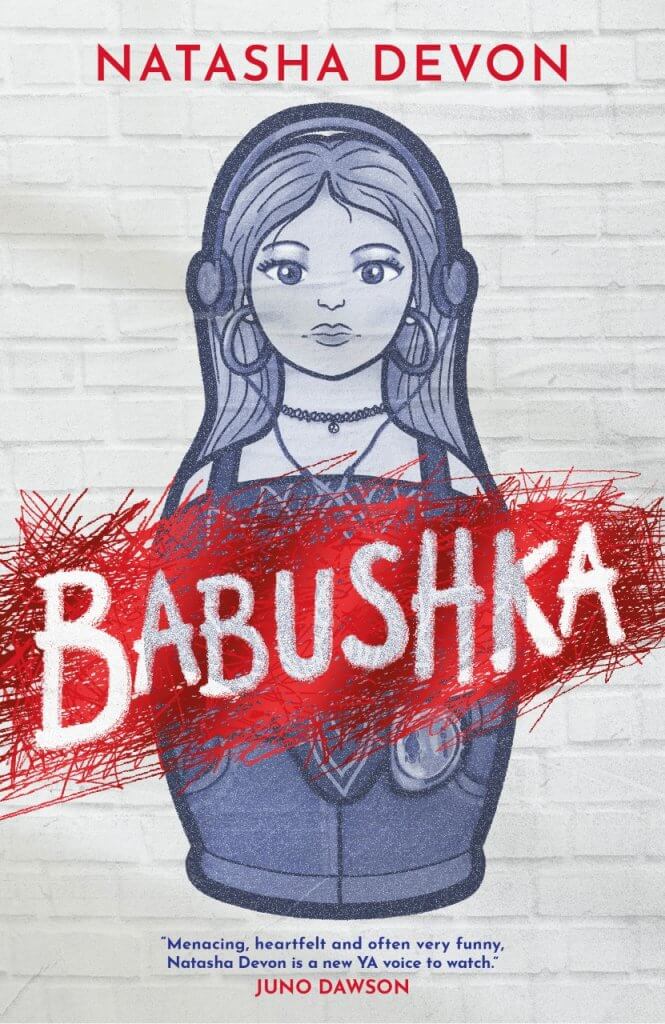
‘A little babushka is made when you’re young and something happens to you that leaves a scar…’
Cerys Williams has swapped her village in the Welsh Valleys for art college in London and the spare room in glamorous Auntie Wyn’s flat. Cerys knows there’s more out there for her in the world; it’s the year 2000 – she definitely doesn’t have to just get married and have babies and wear beige and cook stews for the rest of her life, even if Mam thinks she should.
But Cerys’s London is not glossy or cool or sophisticated, despite what Adept, her favourite magazine, has told her. It’s lonely and overwhelming and confusing. Until, that is, she meets him…
The prequel to Toxic. A coming-of-age novel about love – the love you think you know and the love you never realised you had, all along.
I’m reading BABUSHKA at the moment and am feeling very emotional about the concept of us having babushkas inside us like nesting dolls, reacting to events of today in your subconscious in different ways because of personal experiences and traumas. I was also a 90s teen (went to uni in 2000) so a lot of it is very familiar, I’d love to hear what modern teens make of it. Natasha Devon is a proving to be a great writer of thoughtful and thought provoking YA. Another brilliant YA author, Kate Weston (you must read MURDER ON A SCHOOL NIGHT, it is a hilarious and gripping and maddening all at once thriller), did a Q&A with her for a Waterstones event and I’m very happy to be able to share that with your here:
What was the inspiration behind Babushka?
Babushka is the prequel to my previous novel Toxic. My protagonist Cerys is the mother of Llewella, who is the protagonist in Toxic. At some point it occurred to me that Cerys and I would have been teenagers at the same time – the turn of the century. I wanted to write what about life was like for young women at the millennium, when we’d lived through the kind of inch-deep, Spice Girls inspired feminism of the 90s but were still contending with things like lads’ mags and celebrity magazines which put big red rings around women’s ‘flaws’. I wanted to make the point that some of the things Cerys grapples with – like consent, victim blaming and misogyny weren’t invented by social media. Sure, these problems have shapeshifted for the modern era but they were just as prevalent in the lives of women throughout the ages.
Where did the title come from?
Right at the beginning of the novel, someone says to Cerys that we all have previous versions of ourselves that live inside us, like Russian dolls. In Russia, these are called matryoshka dolls but elsewhere in the world people call them Babushka dolls. I went with Babushka as the title because it’s also the name of a track by Kate Bush, and what with ‘Toxic’ being a Britney track, I thought it would be fun if both my novels had titles which were songs by iconic women.
When during the process of writing and planning Toxic or after that, did you realise that you wanted to write about Loo’s mum’s story?
When people first read Toxic, some said they were surprised by how ‘hands off’ Cerys apparently was as a parent. It’s obvious Cerys really cares about her daughter, but she doesn’t try to micromanage her life in the way that another mother might. I wanted to explore why Cerys became that way and in my head it was all to do with how her mother was (the polar opposite – always interfering and nagging, or at least that’s how Cerys sees it). That’s how the idea for Babushka originally took root.
What’s your process when you’re writing? Do you plot or do you let your characters grow as you go?
Babushka was a very different writing process from Toxic. With Toxic, even though it’s also a character-driven novel, I already had a really strong idea of how the plot was going to play out. With Babushka, I had fleshed Cerys out almost entirely in my head before I even put pen to paper (or finger to keypad, technically), so the story really evolved through the prism of her. It’s fitting, really, because at one point Cerys tells another character that she’s never felt that she didn’t know who she was, just that she was in the wrong place.
You absolutely nailed the vibe or the women’s magazine in 2000 – especially with things like the circle of shame around someone’s cellulite – do you think that culture is in anyway improved? Or has it just moved on to a different format?
Misogyny shapeshifts as patriarchy uses the considerable resources at its disposal to protect itself. Some of the things that used to happen in media at the millennium would be considered unacceptable now, but that doesn’t mean they haven’t found a different way to do the same thing (straightforward fat-or-skinny shaming has now become ‘concern for health’ for example. Pointing out someone’s flaws just for the hell of it has become ‘aren’t they brave for going out like that?’).
What I do think is great is how much more of a breadth of content young women have to choose from, now. There are truly revolutionary content creators, TV series and magazine-style articles that you can get at the click of a button. There also isn’t the sense of ‘everyone’ watching the same thing and therefore absorbing the same beauty paradigms and life advice that we had with, say, Friends or Sex & The City.
There’s a conversation around page 40 between Wyn and Cerys where they discuss whether you would want to be remembered as you are or with certain perceived imperfections changed or “improvements” made. I liked how the conversation focused on “the real you” but avoided mentioning anything about a person’s personality, focusing solely on looks. I imagine this was on purpose because this was very much how things were perceived back then but do you think in 2023 that we’ve moved on from that? Or do you think looks still form the basis of how we’re remembered as a person.
That conversation is based on a thought I have all the time – Does a painting or a sculpture capture the essence of a person better – because artists can draw out certain otherwise intangible qualities – or is a photograph more accurate? And is even a photograph a ‘real’ representation of you when it can’t show how you move, what you sound like or how you smell?
I think in 2023 we’re all David Bowie (bear with me on this one). He talked about how there was a version of him he had curated and sent out into the world and that was what his fans were responding to, not the real him. So there’s a lack of actual connection, there. I think in the age of social media we all do that. We create an avatar of who we wished we were and send it out into the internet to interact with other people on our behalf. And that’s part of the reason there’s been an epidemic of loneliness because in order to truly connect with someone they need to see the whole you, perceived ‘imperfections’ and all.
How do you think the beauty industry has changed since 2001 and what impact do you think that’s having on young people?
Again, the answer is different depending on what end of the telescope you are looking at. On the one hand, we’re seeing more diversity in media and advertising and a greater breadth to the understanding of what it means to be beautiful than ever before and that’s to be celebrated. On the other, the beauty industry has continued to create areas of the face and body for women to feel apologetic about. When I was young the message was ‘be as thin as possible’, which was problematic for a number of reasons and left many people in my generation with eating disorders and other enduring issues. But now there are all these obscure beauty trends dictating exactly what shape and size every single millimetre of your body should be.
We’re also seeing the resurgence of hellish fashion trends we endured in the early 2000s like low rise jeans (just no), so-called ‘heroin chic’ and really thin eyebrows. Although not strictly relevant I do just want to mention to any young person reading this that is thinking of overplucking their eyebrows that, unless you are in the small percentage of people who are genetically blessed, THEY DO NOT GROW BACK.
Do you think that things can get better in terms of the way that the media and society views women and the things that are expected? Or do you think the list of things that we’re disapproved of for will just get longer?
You have to believe it can get better or you’ll just go and live in a hole in the mud somewhere and cry.
I have noticed two things about the women in their early twenties I work with at LBC that are very different from my generation. 1. They’re not afraid to take up space. Nothing about their body language suggests they are trying to make themselves smaller. And 2. They’re so supportive of one another. When I was in my twenties the message to women was ‘there’s a limited slice of the pie for you so every other woman who might have her eye on it is a threat’. A lot of us ended up very ‘pick me’ as a result (and I include myself in this – I’m a Pick Me Girl in recovery). Young women now seem to be all about celebrating each other and raising each other up, which is wonderful.
I want to talk about Darsh a bit without any spoilers. It feels like it would have been really easy to make him into a complete bastard but there’s far more subtle things that he does that are in the guise of protecting her or ‘loving’ her. How did you come up with his character?
I’ve learned through experience that the people who are going to treat us badly in life don’t announce themselves with a giant neon sign saying ‘HEY! I’M REALLY TOXIC AND I’M GOING TO MAKE YOUR LIFE UNBEARABLE!’. If they did it would be really easy to avoid them. The red flags are much subtler, in reality, and therefore easy to miss or overlook. It also had to be believable that someone as clever and independent minded as Cerys would fall for Darsh. Like most f**kboys, Darsh is really charming, exciting, handsome and a little bit mysterious.
I also learned writing Toxic (which is also features a dysfunctional relationship, albeit a platonic one) that creating a good story means it would make sense if told from the perspective of any of the characters. People aren’t generally badly behaved or mean for no reason – There’s always a journey that’s brought them to that point.
What’s next? Are you working on anything you can share with us at the moment?
I’m in the very early ideas stages for another novel but I have no idea if it’ll ever see the light of shelves at this moment. In the meantime, I’m doing my ‘day’ job of visiting three schools a week delivering talks and conducting research on mental health, writing my columns for Teach Secondary and doing my weekly radio show on LBC.
Natasha Devon (photo credit: Jonathan Donovan)Kate Weston
This book made me angry. Proper, impotent rage at how horrifyingly possible this scenario is. I don’t think words could do it justice, you just need to read it, and then hand it to every teen you know.
I was lucky enough to be given the opportunity to ask Holly Bourne some questions!
I feel like this is essential reading for teens, if only we could put it in the hands of everyone in a UK secondary school. What would you say to encourage boys to pick it up as well?
I do think this book would help male readers have a sense of enormous empathy for just what girls put themselves through each day in order to look like a girl. I can imagine it’s quite shocking to know the extent of the pressures their female friends are under, and how they probably respond to that pressure invisibly and effortlessly as they create their faces each morning. Beauty standards are a vital part of feminism to understand because they stunt girls’ confidence to fight for a better world, so any boy wanting to be an ally needs to have a grasp on what they are, and how they serve those in power. The book also looks at the more toxic ideas around what masculinity is too, and would hopefully give them food for thought in their own lives too.
Which character came to you most easily? Was it always from the dual POV?
I definitely found Belle easier to write because I was a slave to beauty standards for most of my life, and still struggle to show my ‘raw’ face to the world. Even just a decade ago, I used to spend almost two works just getting ready for work each morning – applying a full face of makeup, GHDing my hair into ringlets, mashing my feet into heels which has caused lasting podiatric damage. Since I found feminism in my late-twenties, I’ve definitely eased up on myself and read so much about the contradictions and confusions of feminism and the concept of ‘beauty’ – but I’m still nowhere as near as brave as Joni. I loved writing Joni’s parts, and feel I’m braver as a result, and go out looking like myself more often.
Did you know from the beginning that it would have to end as it did (no spoilers)?
I’d say the book has a typically ‘Holly Bourne’ ending – in that it’s not the ending you want, but it’s the ending my readers need. I always knew what the afterword would be and say, though I still sobbed while writing it.
Have you thought about what Belle and Joni do next? Would you write a sequel?
I’m very excited for what they’d do next and feel the world of The Doctrine certainly needs to watch out. However, their adventures are likely to remain off page for now. I’m currently writing a new YA, away from the world of The Doctrine, and don’t think I’ll return for a while. I always welcome fan-fic though!
All of your books are fiercely feminist and pretty rage-inducing. I imagine that while you’re writing it could be quite emotionally overwhelming, how do you enable yourself to switch off and calm down?
Weirdly, I calm down by consuming ridiculously trashy and problematic media that goes against all the messages of my books. For some reason, I’m able to hold my feminist ideals and bring myself to the brink of sanity writing about the wrongs of this world and how rage-inducing they are…and then I’m quite happy to curl up on the sofa and watch some horrendous reality TV show.
What are you reading at the moment and who would you recommend it to?
I’m just finishing I’m A Fan by Sheena Patel and I’m absolutely loving it – although I’m not sure that’s the right word for that book. It’s a very claustrophobic funny, dark, and lyrical exploration of parasocial relationships and I’m wincing with each page. The narrator is deranged but I kind of love her. Her takes on social media and inauthenticity and race and abusive power dynamics are just gaspingly insightful.
1. How did you get involved in writing for Rick Riordan Presents and how did it feel to be asked?
I’ve been with Disney-Hyperion since 2008, and Stephenie Lurie has been my editor through all that time. She’s also Rick’s editor. So I was given a heads up when RRP was starting, that she and Rick would love me to be involved. But the pitch I sent didn’t really work, so I didn’t get involved till a couple of years later, basically I needed the right idea. Then I wrote up a partial (first few chapters, outline) of CITY OF THE PLAGUE GOD and sent that to Steph. She took it to Rick and the rest of the team, we got the thumbs up and we were off!
2. As a very white guy raised in a western/Christian milieu it was a delight to read a book that was steeped in Muslim values and a story based in Mesopotamian mythology, do you have more stories planned that pull on these influences? I know that City of the Plague God was supposed to be a one-off but after Fury of the Dragon Goddess I am hoping for more stories of Sikander and his friends.
Oh, I have SUCH PLANS! I am literally waiting for the publisher to give the okay to go public. So much of publishing is waiting…
3. For readers that enthralled by the Mesopotamian influences in your Sikander stories what books would you recommend that they discover more?
I mainly used the works of Stephanie Dalley and Andrew George. Look at their translations of the Epic of Gilgamesh and Myths of Mesopotamia. Plenty of great history books covering that period too. Ancient Iraq by Georges Roux was brilliant.
4. I cheered during the British Museum scenes in Fury of the Dragon Goddess and am sure that some people will get hot under the collar at the criticism of the British Imperialism method of collection development. Do you have any suggestions on where people can find out more information about repatriation of museum collections and ethical museums?
I think the key thing is supporting local museums. They don’t need to be in Iraq! This is a HUGE topic, the fallout of colonialism. It won’t be sorted out in our time, but the signs of the shift are already there. The recent unrest in Niger is rooted in its colonial past, and those same pressures created much of the modern Middle East and we’re seeing how native Hawaiians are bringing their stories of American colonialism to the fore with their recent eco-disasters. Our problem us thinking that colonialism is in the past. It isn’t. The old colonial powers still wield great power (most to their advantage) over their former colonies. We are in for a rough time, but we must keep an open mind with regard to whose narrative we are being fed.
5. One of the early quotes in City of the Plague God is one that has stayed with me since I first read it (& it is in the pages that I read whenever I am asked to give book recommendation talks in schools): Daoud laughed. “Guys like us don’t get to be heroes. You know that.” “Why? Cause you’re an Arab, or ‘cause you’re a Muslim?” “Take your pick, cuz. Take your pick.” Can you recommend any books (for readers of all ages) that have positive representations of Arabs and Muslims?
Pick a book written by a Muslim and/or Arab! I’ll recommend the following authors off the top of my head but there are more: Sufiya Ahmed, SF Said, Irfan Master, Saadia Faruqi.
6. I recall seeing a tweet (RIP twitter) from you a while ago wherein you mentioned that Ash Mistry had been optioned, can you share any details about that?
Ah, it’s with LIGHTHOUSE, a production company. It is a slow, slow process but there’s a young British-born Asian director involved and writing the pilot, so I feel it’s in safe hands.
7. What are you currently reading?
Just finished 1984, which was brilliant. A masterclass in writing Third Person Perspective as well as (almost goes without saying) incredibly powerful about the manipulation of the masses. Always current, always essential reading. Not sure quite what to start next. Got the Three Musketeers ready as my big holiday read.
8. I am aware that you are an avid collector of tabletop role playing games, do you have any plans to create or work on a RPG?
Too lazy to create one of my own, tbh! I just love running games, leaving all the hard design work to better gamers than me. Just wrapped up a 2 and a half year campaign we ran online throughout covid. Really helped me get through the lockdowns having that to look forward to every week. Now running a few short mini-campaigns. Star Trek (TOS), some JUDGE DREDD and now STORMBRINGER, set in the world of Elric of Melnibone. It all, one way or another, feeds into my writing, keeping my story cells refreshed. If you want to become a writer, start running an rpg.