Category Archives: Essays

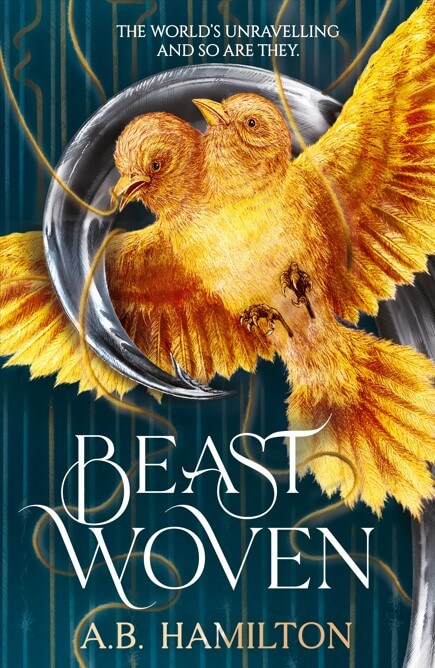
Beastwoven by A.B. Hamilton

Two girls forced to share a body as they hunt and destroy beasts. The irony? They’re the very beast they must destroy. The first in an incredibly written and dazzlingly original YA fantasy duology, perfect for fans of Leigh Bardugo and Tomi Adeyemi.

Lia and Ali are trained to use their elemental weaving powers to destroy burl beasts – mindless, bloodthirsty monsters created when the threads of their world tangle together. Their secret? They themselves are a burl beast: twin sisters, forced to share one body. Quiet and reserved Lia controlling by day. Outspoken and abrasive Ali leading by night.

When news arrives that an elusive criminal is creating bespoke burl beasts by practising the illegal magic that could finally separate them, the girls jump at the chance to join the team sent to investigate. But as the girls get closer to their new flock and, more importantly, two different boys, it becomes harder to hide who – or what – they really are.

Delving deeper into the dangerous world of flesh-weaving and political intrigue, the girls get closer to the answers they so desperately seek. But is the price of their separation truly worth the risk?

Hachette

I’ve not seen it talked about much, but I really enjoyed this debut YA from London (UK) based A.B. Hamilton. Sometimes it felt a comfortable fantasy, I knew where it was going, then a spanner would be thrown in the works and I’d be surprised. I was very satisfied with the conclusion (though also left wanting more…). I have a guest post about his writing process for you to enjoy just in time for publication next week!

Ask a hundred writers about their process, and you’ll get a hundred answers. Ask me about my process on a Monday, and you’ll get a different answer than if you’d asked me on Saturday.

Writers tend to fall into two camps (forgive me if you’ve heard this before). You have your gardeners, those who plant the seed of an idea in the soil, give it some water, and watch it bloom. They sit down with a premise, maybe some interesting characters, and see where the story takes them. Then you have the architects, those who meticulously plan the details of their story before they begin writing in earnest. The terms were popularised by an obscure, up-and-coming writer, George R. R. Something – and, for a long time, that’s what I believed writing was: something you either planned or made up as you went along.

Beastwoven started with a simple premise: two girls sharing one body. In the beginning, I fancied myself an architect. That approach made sense to me. Plan everything out, then write it. Simple, right?

So I started planning. I mapped out the characters, outlined their journeys and arcs, worked through the setting, the world, and the magic system. Then I started writing. Six months and half a book later, I realised my mistake.

My story was too big. Too many characters, too many things happening over too great a distance. Ideas that looked great in a plan turned into a sprawling, chaotic mess once it came time to write them.

I had to start again. It was painful, but I knew the story just wasn’t working. Still, I was determined to finish the book. If the architect had failed, I’d put on the gardening gloves and try that approach. I went back to my premise (two girls sharing one body), threw out the rest, and wrote whatever came to mind.

And that approach worked, for a while. Then I ran into different problems. I wrote myself into corners I couldn’t get out of. I introduced ideas that were interesting in the moment but went nowhere. There were glaring plot holes and obvious inconsistencies with the magic. I needed a plan – not a detailed blueprint like the first go-around, but key plot points and beats, character arcs, a beginning, a middle, and an end.

Looking back, it was a combination of both approaches that eventually got the book over the line.

So what does that say about my process? That I’m part architect and part gardener, yes. But more importantly, writing this book made me realise the whole gardener/architect split doesn’t describe what writing actually is – at least not for me.

It was Stephen King’s On Writing that helped me think differently about how we find our stories.

For King, writing is excavation. Writers aren’t architects drawing blueprints or gardeners planting seeds; they’re paleontologists scouting the site, readying their tools, then digging up the story buried beneath the earth one bone (or word) at a time.

That’s the best way to explain my process – not just how I write, but what writing is to me. Stories aren’t something we create. They’re pre-existing things buried somewhere deep, and it’s our job to dig them up and carry them from one world to the next without cracking too many pieces on the way.

When you realise it’s not your job to grow or plan a story, but simply to discover it, then the words flow so much more freely.

Planning, then, is just another tool in the box. That’s why on Monday I might sit and let the words flow while two characters hash out an argument, but on Saturday, when the characters have a detailed heist to enact, I’ll get out the blueprints and plan the next chapter or two. Ultimately, finding your process is about finding what works not just for you, but for the moment, and for the story.

A Note on Reading and Mental Health

I love reading because, even when you’re lonely, your favourite characters feel like they’re there with you. Or, rather, you feel like you’re there with them. You go on their journeys with them, feel their fears and their thrills. For a brief moment, you’re somewhere else, with someone else, and that has actual benefits. Studies back this up: immersive reading lowers cortisol and gives your brain genuine respite. But the deeper gift is empathy. It’s not like watching a movie, where you simply see what the character does on the outside. Reading brings you inside their heads, and inhabiting another mind rewires how you perceive real people. You learn to hold contradictions and forgive flaws, because you’ve seen the world first hand through another’s eyes. And, ultimately, when you read enough books and forgive enough characters for their mistakes, you might finally start to forgive your own mistakes, too.

A.B. Hamilton

Beastwoven is published in the UK on the 8th October by Hachette

Netta Becker and the Timeline Crime

A mysterious labyrinth. A desperate king. A rebellious princess.

Being stuck in a crumbling old villa in Crete with her annoying, history-obsessed little brother Remy isn’t exactly Netta’s idea of a fun summer holiday. But before she can even get bored, Netta starts having very real dreams where she is dragged back thousands of years to Ancient Greece. Here, King Minos is preparing for the opening of his precious labyrinth, and there are rumours that a monster lurks inside.

As Netta becomes more drawn to the past, her present-day self starts slipping away. Netta and Remy must figure out what is pulling her back before they run out of time – and if they don’t solve the puzzle soon, Netta might just become history herself.

Fox & Ink Books

Jennifer Claessen’s page-turner of a time travel mystery was published today! She wrote a piece for us about ideas:

I have an idea! Is it mine?

I don’t know if all writers experience a blind panic that follows an idea but I do.

Last night, for example, I dreamt about zombies but who chase the living with affection, just wanting to love them, pass on the kiss of death. This idea feels FUN and odd – it was a dream after all – kiss chase zombies?! What’s that about?

But immediately on waking, I tried to cite the sources for this dream. I’ve watched the first series of The Last of Us – maybe that planted this seed. I saw the film Warm Bodies years ago – maybe that is the inspiration?!

There are a few analogies I think are useful – the first that ideas must be like magnets, gathering the iron filings of other ideas to them. The other is that our brains (braiiiins) are just giant composters, mulching together what we read, watch, hear and spitting it out, hopefully in new and interesting ways.

And as authors, we must ensure that what our brains (braiiiiiiins) spit out is uniquely ours. Originality is so rare, everything is recycled and comes back around again, especially when working with myth and legend as I do.

Netta Becker and the Timeline Crime grew from a ‘magnet idea’ – to mix my metaphors, it just kept snowballing, growing and sucking in more ideas as it went.

Here are some of my notes that I made in July 2022 when I started to experiment:

NEW NOVEL IDEA

Netta is called back to a certain time period to solve a ‘cold case’?

It LOOKS and FEELS like being transported to a different era but it’s actually an intense haunting?

This idea felt so compelling, I wasn’t sure if I had made it up myself or if it had entered the compost of my brain from elsewhere. I was cautious. I did a lot of time travel research! I knew HOW I wanted my protagonist, Netta, to travel, I just wasn’t sure where I wanted her to go.

I wrote:

No equipment to travel in? The world just grows up around her?

I wrote to my agent, trying to sell her on this concept:

A focus on the sidelined women in myths and unworshipped gods. Curriculum links!

I tried to be very professional by making a business case for why I thought this is a good idea. I have a lot of ideas and many of them are unsaleable so I had to be convincing.

I spent ages on the mechanism of time travel, tried to ensure that WHY Netta time travels remains an exciting mystery.

Only once the idea had nested in my brain for a whole year did I begin writing.

I wrote, in something a bit like a ‘writing journal’:

I stop reading any other fiction. I know that the new idea will drive other stuff out. Some non-fiction books arrive that I want for research purposes. My ideas about the book radically shift.

I stick a lot of post-it notes to the wall and talk the plot through in a LOT of detail.

I feel now, in publication month, more panicked than ever – will people like it? Will people get it? – but the worry about whether this idea is mine is gone: Netta Becker time travels in her own way. The question now is, when haunted, when sucked into the past by a crime in the timeline, whether she can get back home?

In the meantime, I’ll be on the internet, googling zombie romances to check if they’ve been done before.

Jennifer Claessen (photo credit: Jack Barnes)

The Wycherleys

For the Kingdom. For the magic. And for love . . .

Seventeen-year-old Aurelia Wycherley is entering her debutante season as a witch. Aurelia should be excited about finding the perfect match to tether her magic to. But her magic is cursed – dark, dangerous, and not the kind that her peers want to match with – and, without a tether, she faces losing her magic completely.

But when Aurelia learns that enigmatic, aloof Jules, a member of arch enemy family the Nightlys, is searching for a way that a witch can keep their magic without tethering, she realises he may be her only hope. A forbidden alliance is formed . . . but as they navigate the Magical Season with its glamoured balls and perilous trials, they uncover dark forces that threaten their families and the magical world they live in.

Expect family secrets, generational curses, forbidden romance, gorgeous ballgowns, bribery, extortion, trespass, magic and kissing . . . lots of kissing.

Simon & Schuster

Treating you to a guest post from ex-Librarian Annaliese Avery about her fantastical new UKYA!

Wycherley Worldbuilding

Discovering the worlds of the stories that I am writing is one of my favourite aspects of writing. I write in quite an open and free way, I think of it as exploring, I set off into the story armed with very little details; sometimes I don’t even know the destination, but I will know a few things and I will follow those like trails in the wildness and see where the story leads. As I am navigating these tracks and pathways, I will start to discover the story around me either through the writing of the story itself or through the thinking that I do about the story – usually when I am not at my desk.

For The Wycherleys I knew quite a bit as I set off to write; I knew the basis for the magic system, and I knew the time period that I wanted to set the story in. Importantly I also had my main character Aurelia Wycherley and her brother Vaughn. I find it best to explore a story with a guide and my characters are always that for me – as I write about them they show me the world that they live in and I learn about it as the story progresses and grows.

About a year before I started writing The Wycherleys I had written a proposal for a middle grade story that had a pair of witches who could only perform magic when in close proximity to one another, although nothing came of that proposal, I thought the idea was a good one and it grew into the basis for the magic system in The Wycherleys.

By the time I sat down to start work on writing I knew that in this story world magic was in decline and unstable, and that when a witch received their magic they had a handful of years before it would fade away to nothing, unless they could find someone to tether their magic too, this would keep it in place but that tethering bond would last a lifetime. Finding a tether was paramount, finding the right tether was also important.

The alternate Regency time period for the story was there early on too. I knew I wanted to write a magical fantasy story with a romance to it, and one of my favourite romances is that of Darcy and Elizabeth in Pride and Prejudice, and of course I had been watching Bridgerton and something about the debutante season and the season of the witch clicked together. I thought, what if when the debutante season finished the Season of the Witch began, with the debutantes of magic taking over London and making their way through the Sabbats of the wiccan wheel of the year as they attended balls and magical soirées all will exploring their power and the possible magical matches available to them.

I do remember at one point in the drafting stage I wrote “In this third age of magic …” and stopped as I realised if my characters were living in the third age of magic then there had been another two ages before them. I then had a lot of fun looking at key historical events and seeing how they would have played out in this alternate magical timeline. I discovered the rise and fall of the witch clans and their queens and how this gave way to the burning times and the persecution of the magically gifted. The civil war where malevolent magic rose and the witches of the day stood beside the non-magical folk to fight it in a magical war that caused a shift in magic, a shift that meant that witches now needed to tether.

Editing is a key phase in my writing process, if I am exploring my way through the writing of the story then editing is where I get out the notes and musings that I’ve made on my journey and put it all into a guide book, my book bible, then I use that to edit the story so that when I share it with the reader they won’t get lost or stray from the path. It’s at this phase in the process that I might do some deeper thinking if needed or sometimes realise that things link up in a way that I didn’t notice when I was writing. It’s a little like journeying to the top of a mountain and then being able to look back at the land you have covered, seeing it all and how it relates to each other.

The Wycherleys was such a fun world to discover, I adored spending time there and I hope that you will have a magical time there too.

The Wycherleys is out now!

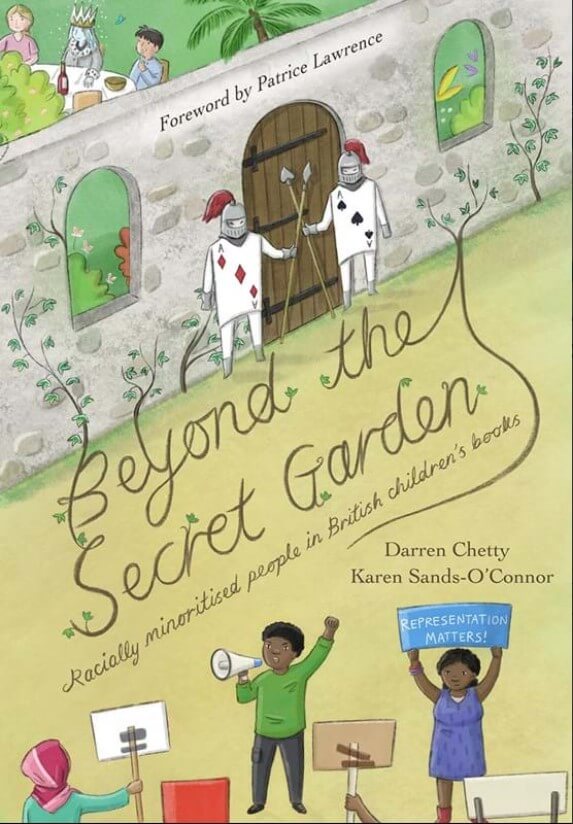
Beyond the Secret Garden

Drawing on and expanding their long-running column for Books for Keeps, Dr Darren Chetty and Professor Karen Sands O’Connor trace how Black and racially minoritised characters have been represented in ‘the secret garden’ of British children’s literature from its earliest stages. Examining how children’s literature has both been shaped by, and shaped, prevailing attitudes towards people of colour, they take a thematic approach that offers teachers and parents contextual knowledge that will enrich how books are discussed with children. 

English Media Centre
Cover illustration by Lucy Farfort

Beyond the Secret Garden has long been my favourite article in the (entirely brilliant) Books for Keeps virtual magazine, exploring the representation of Black and racially minoritised characters in British children’s literature, so when Darren and Karen were supported to expand that into a book by the English Media Centre I was thrilled. It is essential reading for anyone involved in children’s books in any capacity. I’ve heard Darren speak a number of times about the importance not only of representation, but of *positive* representation, in the books children consume. The duo have written us a piece about how teens specifically are engaged.

Teen Readers and YA Books Beyond the Secret Garden

When we conceived of our column, Beyond the Secret Garden, we were mostly thinking about British children’s books and the way that they created a safe haven—adventure without risk, and with a nice hot something waiting to eat or drink at the end of it—but only for certain readers and certain characters.  White British characters in books like Frances Hodgson Burnett’s The Secret Garden (1911) or C. S. Lewis in the Narnia chronicles get to have the adventure, while Mary Lennox’s servants are ‘not people’ and the Pevensie children fight the dark-skinned Calormenes in The Last Battle (1956).  But children’s books traditionally follow a home-away-home pattern, so their main characters are always going to have the keys to the secret garden, and people who are not like them are barred out.  Teenagers, on the other hand, more typically are on a quest away from home, away from safety.  They are, in some sense, leaving the secret gardens behind to find new continents and new worlds, or new ways to be themselves.  So, does that make YA literature inherently beyond the secret garden already?

Historically, the answer is no.  Before YA literature had a label, books for teen boys and teen girls published in Britain had very separate functions.  Books for teen boys, written by the likes of G.A. Henty or Captain Marryat for example, were about conquering and maintaining the Empire, which often involved recreating Britain in far off locations such as India and an often generic version of Africa.  Books for teen girls, such as Julia Horatio Ewing’s Six to Sixteen, were about becoming good future wives and mothers when the adventuring boys returned home. But Henty’s heroes, like the Pevensie children, had ‘savages’ to tame and Margery in Six to Sixteen (1872) exchanges an Ayah’s education for the freedom of the Yorkshire countryside—much as Mary Lennox would do a few decades later. Black and Brown ‘savages’ and servants alike disappear from the narratives the closer the teenaged British character comes to achieving their proper adult role.

Many modern British YA novels begin with the secret garden of childhood already destroyed. Clare Furniss’s The Things We Leave Behind (2024) opens with a picture of the main character, Clem’s, last perfect day, a birthday picnic with nostalgic childhood food and best friends she’d known most of her life.  Yet despite the perfection, cracks are already appearing—Britain (minus Scotland which has seceded) is run by an authoritarian leader who wants to expel or imprison all foreigners and refugees.  This includes Clem’s stepmother, Claudia, who is Jamaican by birth and who is forcibly removed from their home and detained.  Following a mass protest in London, Clem and her younger half-sister Billie (Claudia’s and Clem’s father’s daughter) are separated from their father, and ultimately must escape from London to Edinburgh in order to survive. Clem’s thoughts are constantly on her stepsister, but Billie remains carefree throughout.  The ending of the book contains a reunion, but it is a broken reunion, and the perfection of the picnic birthday is gone forever, as is any semblance of childhood innocence. 

Like Clem, Patrice Lawrence’s character Charlene in Needle (2022) is concerned for her younger half-sister Candy.  However, unlike Clem, Charlene is Black British, living in present-day Britain rather than a dystopia, and the concern she has for Candy is portrayed differently from the concern Clem has for Billie.  Clem’s sense of responsibility for her sister leads to a mental breakdown, which is treated by the adults around her with kindness and compassion.  Charlene, on the other hand, is constantly under surveillance and is always presumed to be leading her sister astray rather than looking out for her.  Charlene does not become mentally ill over her concern for her sister, she becomes angry, and this anger leads to her eventual arrest and a journey through the juvenile justice system.  She, unlike Clem, is not granted a reunion, even a broken one, because she remains angry at those who would separate her from her half-sister, including a foster brother who, despite inciting Charlene’s anger, is free to carry on at university without punishment.  While both books examine teenage experiences outside of the secret garden of childhood, only Clem is allowed to keep sacrosanct the idea of innocent childhood that the secret garden protects, at least in her memories.  Black youths like Charlene, and even Billie, do not get to remain safe in Britain’s secret garden; instead, their well-being is viewed by society as less important than that of the white youths who retain innocence – this is seen starkly in real-life cases of ‘adultification’ where Black children are treated as adults by authority figures..  While all young adult characters may be outside the secret garden, their access to it was never equal to begin with.

Professor Karen Sands O’Connor is Visiting Professor at the University of Sheffield and a former British Academy Global Professor specialising in the history of Black, Asian and Minority Ethnic children’s literature and publishing, and the author of three books on children’s literature. Dr Darren Chetty taught in primary schools for over twenty years. His essay in the best-selling The Good Immigrant has been used in schools, and universities and shared widely in children’s and young adult publishing. In addition to their Books for Keeps column, Darren and Karen advise on CLPE’s Reflecting Realities research and contributed to the CILIP Carnegie Awards Diversity Review.

This Song is About Us

When stardom calls, can love survive?

Everyone wants a piece of the Drew Schafer, the talented and troubled lead singer of up-and-coming band The Kerbs. Only his girlfriend Ruby knows the real Drew – the gentle, vulnerable boy beneath the stardust. But no one else even knows that Ruby exists…

Told over three music festivals, this searing new novel from bestselling prize winner Sara Barnard charts the highs and heartbreaks of what it means for a dream to come true.

Walker

I’m clearly not the target audience for This Song is About Us, being well out of my youth, but Sarah Barnard is one of my favourite writers, in any genre for any age group, and this is one of her best. This might seem a strange statement from me if you know that I tend to balk at the idea of “escapist romance”, as this was pitched, but she is just absolutely brilliant at writing the most real characters that the reader ends up rooting for whether they feel they can relate to them or not. I was . It also has that most precious and elusive of things: a satisfying and believable ending (no spoilers)!

The basic idea of idolising musicians isn’t new, I had brilliant festival experiences as a teen and had posters of my favourite bands (though mine came from Kerrang magazine instead of Smash Hits), but I never quite got into a fandom…Sara has written a piece for TeenLibrarian about how her love of pop as a youth inspired This Song is About Us, and how much some things never change…

On your experience with fandom and music as a teen and what that means to you, and how it
inspired This Song is About Us

What did you love as a teenager? I mean, really love. Love in the way that it became a part of you. Love you made a personality out of. Love that made you understand yourself, and explain yourself to the world.

Me, I loved music. I loved books as well; reading and writing and everything in between. But music – specifically, pop music – was something else, because loving pop music, loving a band, means you become something very special: a fan.

The late ’90s and early noughties were a great time to be a fan of pop music, because it was everywhere. It was Radio 1 and Party in the Park. It was the majority of the charts. Most of the 99p singles on sale at Woolworths or ASDA. This was the era of magazines like Smash Hits and TOTP, which were full of posters and interviews, facts and lyrics. Saturday morning kids’ and music TV shows like CD:UK, with performances and comedy skits. The earliest days of official websites, with community spaces like message boards where you could talk to other fans – people who understood.

As a fan, you had access to your idols on what was, at the time, an unprecedented scale. You could go online and watch videos whenever you wanted. Email in questions to be answered on an online Q&A. That seems like a strange thing to say now, in 2025, when social media is ubiquitous and stars post TikToks from their living rooms and livestream their make-up routines. What once felt like precious glimpses into the possible lives of little more than fictional characters is now ordinary, even expected. It’s content.

What hasn’t changed in this new world is the very thing that eluded me as a teenage fan: these popstars aren’t fictional characters. They’re real people, living a real life, just one that is being packaged and sold. This was always true, and it’s the kind of thing that seems obvious as an adult, but in those long-ago days, when I was a teenager breathlessly flicking through Smash Hits for what I honestly believed was a real insight into someone I idolised, I wouldn’t have believed it. I was being sold a product; I was the consumer. Everything about those popstars was carefully curated especially for girls like me.
It’s easy to forget now how much this is still the case, even if the packaging has changed so drastically. The curation may be more about TikTok FYPs and Instagram feeds than Smash Hits interviews and Sunday paper exclusives, but it’s still curation. We are conditioned to believe that the glimpses we see of famous people – celebrities, if we want to use the word – amount to their whole lives, their whole selves, when of course they don’t. They can’t, and they shouldn’t. There’s a big gap between the version we’re sold and the real life they’re living.

It’s this gap that has fascinated me in adulthood, as I continue to love pop music – and other music, too! – and the people who make it. There’s so much that happens in that gap that we never see, and barely even think about. But what does it do to a person, psychologically, to live in it? In a music industry so consistently obsessed with youth, what happens to young stars who never have the chance to develop a sense of self before they’re told who they are by managers and critics, and even their own fans? And when all of this is packaged as a dream, what right do they have to complain? How can they learn to balance giving enough of themselves so it feels authentic to the fans they really do love, appreciate and value, but not so much that they lose themselves along the way?

These are the kinds of questions that make my brain spark, and they’re the reason I wrote This Song Is About Us, which is the story of Drew – talented, troubled and tantalisingly close to fame – and his long-term girlfriend, Ruby, when Drew’s band, The Kerbs, achieves the dream of fame, fortune and success. Ruby and Drew decide to keep their relationship a secret to protect it from the fans, the press and the savage world of social media, because so long as they know what’s true, nothing else matters.

But what does ‘true’ mean in the world of the famous when the headlines and TikToks and Discord posts and blinds are where everyone else looks for answers?

Drew and Ruby are about to find out.

Sara Barnard is a bestselling author of seven novels for young adults. Her debut, Beautiful Broken Things, was a Zoella Book Club Pick, and she went on to win the YA Book Prize with her third novel, Goodbye, Perfect. This Song Is About Us is her second novel with Walker Books. Sara believes that sad books are good for the soul, and happy books lift the heart. She hopes to write lots of books that do both.

Huge thanks to Walker Books for a review copy, This Song Is About Us is out now!

CLEM FATALE HAS BEEN BETRAYED

London, 1951: Clem Fatale, the youngest crook in the city, is on a mission to find her dad. Jimmy Fatale, notorious jewel thief and leader of the Spider Gang, has gone missing and with him the greatest prize in London: the Fool’s Canary.

Along with her prisoner and/or sidekick Gilbert (depends who you’re asking), Clem sets off on a rip-roaring chase through the London underworld. Racing through dodgy dives, glamorous nightclubs, greasy spoons and secret alleyways, Clem and Gilbert are soon pursued by a host of friends and foes.

Will Clem find her father in time? Or will the most sinister villain this side of the river put a stop to all her plans?

A rollicking middle grade series full of madcap escapades, fast-talking dames and unlikely heroes, perfect for fans of MURDER MOST UNLADYLIKE, ENOLA HOLMES, ADVENTURES ON TRAINS and Katherine Woodfine.

illustrated by Honie Beam

Eve really has written the ultimate pacey thriller for MG readers, literally every page has drama and/or intrigue. I read pretty fast and felt quite breathless with how quickly everything happened! She had good reasons for writing in this way, and she has written a fab piece for TeenLibrarian about it:

How to help dyslexic children foster a love of books by Eve Wersocki-Morris

When I wrote my latest book, Clem Fatale Has Been Betrayed, my central aim was to make it entertaining. I packed in twists and turns, mysteries and moments of mayhem, whenever I felt like a chapter was getting a little too slow. I have always liked fast and funny books. As a child, I really struggled to read some of the long, complicated epics my classmates were reading – no matter how beautiful the covers or how much my friends raved about the stories. I found it really hard to focus on books which had more description than action and always found my mind wandering off (often coming up with my own story based on the beautiful illustrations on the book’s cover).

When I was twelve years old I was diagnosed with dyslexia. I was really worried that this meant books weren’t for me. Luckily books and I have continued to have a lifelong friendship!

Here are some of my top tips in helping dyslexic kids engage with books:

  1. Let them pick their own books – I soon found out that I liked fast and exciting books with lots of action. Even if I didn’t understand every word, finding out what happened next helped keep me motivated to read on!
  2. Listening to audiobooks is good – the recent NLT research has shown us that children and young people are listening to a lot of audio and podcasts. This isn’t necessarily a bad thing. I loved audiobooks as a child. I loved listening to them over and over again and then going away and re-reading the physical book. Even if I was often reading by memory, it helped give me confidence and enjoyment in reading alone.
  3. Talk as you read – books are for fun! Stories are for sharing! Parents and teachers, when you’re listening to a dyslexic child read aloud make sure you get them excited in the story. Discuss clues and theories – don’t focus too much on the words they’ve got wrong.

Books are for everyone and we shouldn’t let anyone miss out on the amazing worlds inside their pages.

Clem Fatale Has Been Betrayed by Eve Wersocki-Morris is out now (Little Tiger)

Eve Wersocki Morris grew up in North London and has been making up stories her whole life. Diagnosed with dyslexia aged 12 and called out by a teacher as the ‘worst speller in the class’, she is now the author of two novels for older MG readers, with her debut The Bird Singers now nominated for multiple awards. A standout performer at school events thanks to a background in drama, Eve is also a volunteer with Coran Beanstalk Literary Charity.

When We Become Ours

A groundbreaking and must-read young adult fiction anthology written by adoptees of all backgrounds, for adoptees, that inclusively represents diverse experiences of youth adoptees, edited by award-winning authors Shannon Gibney and Nicole Chung. Includes a letter from the editors as well as a foreword by Rebecca Carroll and an afterword by JaeRan Kim.

Two teens take the stage and find their voice . . .

A girl learns about her heritage and begins to find her community . . .

A sister is haunted by the ghosts of loved ones lost . . .

There is no universal adoption experience, and no two adoptees have the same story. This anthology for teens edited by Shannon Gibney and Nicole Chung contains a wide range of powerful, poignant, and evocative stories in a variety of genres.

These tales from fifteen bestselling, acclaimed, and emerging adoptee authors genuinely and authentically reflect the complexity, breadth, and depth of adoptee experiences.

This groundbreaking collection centers what it’s like growing up as an adoptee. These are stories by adoptees, for adoptees, reclaiming their own narratives. 

With stories by: Kelley Baker, Nicole Chung, Shannon Gibney, Mark Oshiro, MeMe Collier, Susan Harness, Meredith Ireland, Mariama J. Lockington, Lisa Nopachai, Stefany Valentine, Matthew Salesses, Lisa Wool-Rim Sjöblom, Eric Smith, Jenny Heijun Wills, Sun Yung Shin.

Foreword by Rebecca Carroll. Afterword by Jae Ran Kim, MSW, PhD

Harper Teen

Today we have a guest post from one of the editors of this new anthology, Shannon Gibney:

It is a very strange thing to never see yourself represented, and then when you do, to
not even recognize yourself.

And yet, this is often the experience of the more than five million American adoptees,
and millions more around the globe.

Don’t get me wrong: adoptees and “orphans” are well-represented in American popular
culture – especially in KidLit. From Harry Potter to Loki to Peter Parker, adoptees are
imbued with magic powers, enact elaborate schemes to seek revenge, and generally
misunderstood by all the “normal” non-orphans and non-adoptees around them. Our
lack of an origin story is seen as a mysterious advantage, something that not only sets
us apart from mundane others, but also conveys a sense of specialness, an ethos that
something else of consequence (not just to us, but the world) is buried and waiting to be
uncovered.

In real life, of course, things are different.

We feel strange in a culture that so deeply values at least the appearance of a
seamless individual or family history, not having any. And as a result of this condition,
we are unable to prepare for or even acknowledge any troubling health issues (such as
breast cancer in my family) that may be hereditary.

If we are transracially adopted, that is, a BIPOC child adopted into a white family, we
may keenly feel the loss of not just our first family and community, but also our culture
and racial identity.

All of these losses are rarely if ever present in mainstream narratives of adoption –
whether they are imaginary or real. Adoption is presented as an uncomplicated and
beneficent act on the part of the adopters, and the positives that adoptees gain
(economic mobility, educational stability, etc.) are seen to eclipse any possible
negatives.

And of course, this is because the vast majority of these stories are written by non-
adoptees. They are written by people who have never felt strange in their own bodies
because they don’t look like anyone in their family/school/town. They are penned by
people who never had to process the loss of a first mother’s embrace as a baby, the
lack of that primary first attachment present in every cell of their body.

Historically, these stories have been written by white adoptive parents, either
intentionally or not intentionally putting forth a very different view of the adoptee
experience, occupying a very different location in the adoption triad. But lately, many of
these stories are being written by non-adopted BIPOC writers, many of whom use
troubling tropes of adoption as shorthand (this character is mentally ill because of
adoption; due to her blackness in this white family, this secondary character
demonstrates the cluelessness of the white protagonists; etc.).

When this is the territory of adoptee stories, as it has been for generations, it becomes
clear why it is absolutely necessary for adoptees to write our own. And why a book like
When We Become Ours, the first anthology of stories by adoptees about adoptees, is
resonating so deeply with adoptee readers and allies.

Edited by myself and Nicole Chung, this collection features sci-fi, fantasy, horror,
straight literary, and even graphic stories from fifteen of the best adoptee writers today.
Our writers are straight and queer; youngish, oldish, and middleish; cis-gender and
gender queer; Black, Korean American, mixed, Latina, Chinese American, Taiwanese
American, and Native American; and hail from all over North America and the world (we
have one contributor who is Canadian, and another who lives in New Zealand). Their
stories are as broad and inclusive as their experiences. And as adoptees, they each
have an embodied understanding of living as an adoptee in a world that has little idea
what this is actually like.

All of this turns out to be very important, in terms of how readers engage with the
stories. Although the book has only been out for two months, the response from
adoptee communities has been overwhelming. I had one Chinese American adoptee tell
me she never expected to see herself in her favorite genre: sci-fi. She called the
experience, “mind-blowing.” A group of transracial adoptees at the same event told me
that although they appreciated the honesty and craftsmanship of many adoptee
memoirs, the emotional rawness of this genre was just too close. But in the imaginative
realms of short stories by and about adoptees, they could confront some difficult truths
of their lives far more easily.

We are in an era of incredible adoptee-authored cultural output, and I am here for all of
it. Adoptees telling our own stories, on our own terms, in our own voices is transforming
inner and outer landscapes: our own, and those of the people we love.

Adoption — the institution, and the stories we tell about it – will never be the same.

Shannon Gibney is a writer, educator, and activist in Minneapolis. Her newest book is
When We Become Ours: A YA Adoptee Anthology (HarperTeen, 2023), co-edited with
Nicole Chung.

On December 7th a Librarian died in Gaza. 

Doaa al-Masri and her family were killed in an Israeli airstrike on December 7th 2023. 

Doaa receives a group of schoolgirls at the Edward Said Library in Gaza

Why have I focused on Doaa you may ask. Well, we shared a profession and belief in public service, and it is hard to get one’s head around the scale of the tragedy and loss of life that has been unfolding in the Middle East; from the 1,139 Israeli lives lost in the Hamas attacks on October 7th to the sheer brutality of their response across Gaza.

To paraphrase a statement allegedly made by Stalin: 20,000 deaths is a statistic, one death is a tragedy. 

It is not easier to acknowledge a single death that 20,000 but it is less numbing. Each of the thousands of lives lost to this violence will have a ripple effect on thousands more, but their faces blur and get lost in the scale of this tragedy and they become numbers, rather than individuals.

In their tribute to her memory, the Middle East Children’s Alliance (MECA) captured in part her spirit and dedication to her community: 

…Doaa Al-Masri was killed with her family on Thursday night. Doaa was the librarian at the Edward Said Public Library in Gaza. She was a kind and energetic young woman who organized many activities for children and youth at the library including reading groups, classes, and field trips for schools. 

Doaa was also a volunteer in many other projects. During each Israeli attack on Gaza, she joined her colleagues at MECA partner Youth Vision Society in procuring, packing, and delivering emergency aid to children and families. Just last week, in the midst of intense Israeli attacks, she joined two other  volunteers to provide warm clothes to children in northern Gaza. 

We mourn the loss of Doaa, a loss for MECA, for the many children whose lives she touched, and for Palestine. We will miss her smile and her radiant energy. Doaa is one of tens of thousands of people killed in Gaza over the last 64 days. Each one is a terrible loss to those who knew and loved them. 

Let’s be honest, when one thinks of Gaza and the West Bank, Libraries are not the first thing that pop into your mind. No matter who they are or where they live people enjoy reading and need to find information – and those are two of the core functions of public libraries. 

The Gaza Municipal Library and the Rashad al-Shawa Cultural Center that was the home of the Diana Tamari Sabbagh Library  that contained more than 100.000 books and was founded by Haseeb Sabbagh in the memory of his wife Diana Tamari, have both been razed by Israeli forces. There is currently no news on the current condition of the Edward Said Public Library in North Gaza. 

The remains of the Gaza Municipal Library

The Gaza Municipality has alleged that the destruction of libraries by Israeli forces during the conflict has been a deliberate act and has called on the United Nations Scientific and Cultural Organization (UNESCO) to intervene and protect cultural centers and condemn the occupation’s targeting of these humanitarian facilities protected under international humanitarian law.

Public Libraries form one of the cornerstones of a society that nurtures and cares for the people that comprise its individual parts. Apart from educating and entertaining their users, libraries function as repositories of history and cultural knowledge. To destroy a society first you wipe out the commonalities that bind them together, their shared history, their art, anything that ties them together and the fastest way to do that is to start with destroying their libraries and those that care for them.

When Libraries in Sarajevo were bombed people stood up and protested, when al Qaeda attacked the library in Timbuktu there was eventually a book celebrating those who stood up to save priceless, ancient manuscripts, when Russia invaded Ukraine there was a massive outpouring of support for Ukrainian Libraries and Library workers. In Gaza there is proof of libraries being destroyed and one confirmed report of a Librarian (& her family) being killed in an aerial attack and nothing – where is the outrage?

Understand me when I write that I unequivocally condemn Hamas for their bloodthirsty action on October 7th, but the heavy-handed response by the Israeli War Cabinet and the IDF is just as reprehensible!

Articles 6, 7 & 8 of The Rome Statute of the International Criminal Court specifically outlaw Genocide, Crimes Against Humanity & War Crimes.

Article 33 of the fourth Geneva Convention specifically outlaws collective penalties, pillage & reprisals:

No protected person may be punished for an offence he or she has not personally committed. Collective penalties and likewise all measures of intimidation or of terrorism are prohibited.

Pillage is prohibited.

Reprisals against protected persons* and their property are prohibited.

* The term “protected person” means any person entitled to protection under one or more of the Geneva Conventions, including civilians not taking an active part in hostilities, military personnel placed out of combat by sickness, wounds, or detention, and military medical or religious personnel.

Do the actions of Hamas and the IDF rise to these levels of criminal wrong-doing? I think they do, but untrained as I am in international jurisprudence I may be wrong; I do however know that the murder unarmed civilians is wrong, no matter who does it!

Links:

Founding the First English-Language Library in Gaza by Mosab Abu Toha

Libraries in Gaza: Between Despair and Hope by Mosab Abu Toha

Articles by Mosab Abu Toha

How girls built a library in the Gaza Strip by Mohammed Abu Sulaiman, with Chris Niles

Gaza’s main public library has been destroyed by Israeli bombing. by Dan Sheehan

Gazans mourn loss of their libraries: Cultural beacons and communal spaces by Mohamad El Chamaa

Middle East Children’s Alliance

Youth Vision Association

Youth Vision Association: Edward Said Public Library

Edward Said Public Libraries in Gaza

Librarians and Archivists with Palestine

When Shadows Fall

Kai, Orla and Zak grew up together, their days spent on the patch of wilderness in between their homes, a small green space in a sprawling grey city. Music, laughter and friendship bind them together and they have big plans for their future – until Kai’s family suffers a huge loss.

Trying to cope with his own grief, as well as watching it tear his family apart, Kai is drawn into a new and more dangerous crowd, until his dreams for the future are a distant memory. Excluded from school and retreating from his loved ones, it seems as though his path is set, his story foretold. Orla, Zak and new classmate Om are determined to help him find his way back. But are they too late?

Little Tiger

I am a big fan of everything that Sita Brahmachari has written, and interviewed her last year for When Secrets Set Sail, so I was expecting WHEN SHADOWS FALL to be good but I didn’t realise it would be a beautiful object as well! Told in prose and verse and annotation, with the illustrations by Natalie Sirett an integral part of telling the story.

Illustrations (c), Natalie Sirett (2021), from When Shadows Fall by Sita Brahmachari,
published by Little Tiger, 11 November 2021 (Hardback, £12.99, 9781788953160)

There is a formal blog tour starting on the 15th November (details at the bottom of the page), but I snuck under the radar and got an exclusive piece from Sita about the background to creating the book:

‘Let me tell you a story’….

So began a play I worked on called Lyrical MC some years ago for Tamasha Theatre Company. Myself and the director worked with a group of young people exploring Shakespeare’s ‘The Tempest’ in the contexts of their own lives. It ended up being a play that was about living in an island culture in the middle of an urban city. It explored the sounds of the city for them and how it felt to be negotiating life today at school and at home. It was a piece of theatre that enjoyed the musicality and interplay of the young people’s voices as they mediated each other’s realities, histories and identities in a fluid interplay.

I have never seen a great fissure between my community theatre work and writing novels for young people. When I set out to write When Shadow’s Fall I remembered a young woman I met in a unit for excluded teenagers in Ladbroke Grove. She was a fantastic young actress and storyteller but already completely switched off reading and education at the age of fourteen. It wasn’t until she started to write her own script and saw other actors reading it and paying attention to her words that reading became interesting to her. Another young actor reading out her words asked if he could change something and she became agitated saying, No! I put a lot of thinking into those words. You have to work at them to find the meaning!

Kai is the author sitting on the Green Hill writing his story – ‘When Shadows Fall’ – even he seems surprised that this is what he has done… that he, who was excluded from school, could become the author of his own story and yet this is what he finds himself doing.

Over the years, I have mentored many young people to help them with their writing. The process of finding your voice (in writing as Kai does) In art (as Omid does) and in speaking out (as Orla does) is a powerful one.

When readers open When Shadows Fall I hope the creative form of the book with its annotations, poetry, prose and art portfolio and testimony will lead readers and aspiring writers to take up the pen, charcoal or paintbrush and begin their own story.

When Shadows Fall is out now! Thank you Little Tiger for the review copy, Nina Douglas for organising the piece for TeenLibrarian, and Sita for writing it!

Allies

This book is for everyone. Because we can all be allies.

As an ally you use your power-no matter how big or small-to support others. You learn, and try, and mess up, and try harder. In this collection of true stories, 17 critically acclaimed and bestselling YA authors get real about being an ally, needing an ally, and showing up for friends and strangers.

From raw stories of racism and invisible disability to powerful moments of passing the mic, these authors share their truths. They invite you to think about your own experiences and choices and how to be a better ally.

There are no easy answers, but this book helps you ask better questions. Self-reflection prompts, resources, journaling ideas, and further reading suggestions help you find out what you can do. Because we’re all in this together. And we all need allies.

A donation of 5% net sales in the UK will be donated to The Black Curriculum

DK

By coincidence, I received a copy of this title in the same week as I read a post by Dr Muna Abdi about the term “allies” and its limitations, so had that in mind when I started reading…and the very first chapter, DANA’S ABSOLOUTELY PERFECT FAIL-SAFE NO MISTAKES GUARANTEED WAY TO BE AN ALLY by Dana Alison Levy addresses the same issues in brilliant fashion. The collection of essays is wide ranging, eye opening, and thought provoking, including contributions from Shakirah Bourne (co-editor alongside Dana Alison Levy), Derick Brooks, Sharan Dhaliwal, Naomi and Natalie Evans, I. W. Gregorio, Lizzie Huxley-Jones, Adiba Jaigirdar, Brendan Kiely, Dana Alison Levy, Cam Montgomery, Andrea L. Rogers, Aida Salazar, A. J. Sass, Eric Smith, Kayla Whaley, and Marietta B. Zacker. The stories they share are both personal and powerful and will encourage readers to think critically about what allyship means to them. The authors are from all across the globe, with uniquely personal essays, and include UK based Lizzie Huxley-Jones, to whom I put some questions!

What do you think of the term ‘ally’?

I think ally as a phrase is useful in terms of reminding people who aren’t part of marginalised groups that they should care about the struggles of people within those marginalisations, literally to ally their aims and work to the community’s own aims. As with all language, it evolves really quickly and we will drop certain words over time (and some people have suggested moving on from allyship to solidarity), but I think the overarching concept of allyship, or solidarity, is really important! We cannot be complacent within our role as supporters, and over identifying *as* something without doing the work to *be* something is always a danger when we’re talking about stepping out of our comfort and privileges. Every day must be a learning day.

Have you read the other contributions? If so, did any particularly strike you?

I was lucky enough to get a proof of the US edition this week which I just finished reading. Each essay was really brilliant and made me think a lot. Naomi & Natalie Evans’ essay about being an ally in a racist situation made me think a lot about how easy it is for people to be bystanders – this is something I touch upon in my essay – and Eric Smith’s piece about finding a chosen family and his culture was beautiful. I think Dana’s essay that sets the tone of the book is really great, and Adiba Jaigirdar’s piece about racism in feminist ‘safe spaces’ really resonated with me. Basically, everything is extremely well written, interesting and important. I’m so honoured to be a part of such a key activist text.

The essays are very personal, did you find it difficult to write yours or did it come easily *because* it is so personal?

I’ve had seizures for basically my entire adult life, and have been on Twitter pretty much since then. When I was having video telemetry (a fun process where you live in a tiny room wired up to scanners for a few days to see if you have any seizures) I turned to Twitter for comfort and friendship but to talk about my experiences – this was back in like 2008. I think because I’ve been openly and frankly speaking about  my seizures for a long time, that confessional aspect wasn’t too hard. It was strange to write about during the pandemic, though. And I really did start to worry about what it’d be like as things started opening up, whether people would help more or less. I think that was the hardest part, really.

You have edited your own anthology, Stim, of stories by autistic authors, what, do you think, is the appeal of anthologies?

I think there’s a few things – the opportunity to access a lot of different voices in a small book, plus the focus on a particular topic but from multiple viewpoints. I personally also love mixed anthologies, so you’ll read something, not entirely sure if it’s an essay or fiction – sometimes that blur can make it really interesting when, for instance, a selkie turns up like in Robert Shepherd’s story in Stim. They’re just a really great way to explore a topic, I think, and a good anthology can keep you interested for a long time. I also really like that you might not enjoy every part of an anthology, though I know not everyone feels that way, as to me that’s part of the process of coming across different voices. I also edited 3 anthologies at 3 of Cups Press, On Anxiety, On Bodies and On Relationships, so I’m a big antho fan, haha!

You’ve also written a non-fiction children’s title about David Attenborough. Do you favour any particular style of writing?

I’m really a fiction writer at heart! Nothing definite I can talk about now, but hopefully in the future you’ll see some fiction from me on the shelves. I do love essay writing though, so I think Allies has spurred me to think about writing more of those in the future.

What are you reading at the moment and who would you recommend it to?

I just finished All Our Hidden Gifts by Caroline O’Donoghue which is a The Craft esque modern witch tale about a girl who discovers a lost set of tarot cards. What struck me about it is that it’s also very much about modern Ireland and the pushback against queerness we are seeing all around us from fundamentalists and transphobes, particularly against trans people. The love interest, Roe, is a non-binary femme who I completely love. I’d recommend it to fans of Moira Fowley-Doyle and Deirdre Sullivan. The next YA book on my pile is Ace of Spades by Faridah Àbíké-Íyímídé, which I’m so excited about. It’s Gossip Girl meets Get Out. Outside of YA, I’m listening to a lot of memoirs that touch on disability and are laced with humour. I’ve really been loving Samantha Irby’s three books of essays, and right now I’m in love with Keah Brown’s The Pretty One.

What will we see from you next?

Hopefully, some fiction, but you’ll just have to wait and see!

Lizzie (Hux) Huxley-Jones is an autistic author and editor based in London. They are the editor of Stim, an anthology of autistic authors and artists, which was published by Unbound in April 2020 to coincide with World Autism Awareness Week. They are also the author of the children’s biography Sir David Attenborough: A Life Story (2020) and a contributor to the anthology Allies: Real Talk About Showing Up, Screwing Up, And Trying Again (2021). They are an editor at independent micropublisher 3 of Cups Press, and also advise writers as a freelance sensitivity reader and editorial consultant. In their past career lives, they have been a research diver, a children’s bookseller and digital communications specialist. They tweet too much at @littlehux, taking breaks to walk their dog Nerys. They are represented by Abi Fellows of The Good Literary Agency.

ALLIES was published in the UK on 29th July 2021. Thanks to DK for sending a review copy and Antonia Wilkinson for organising the interview.