Category Archives: Books

The Fountains of Silence

A haunting and romantic novel set in post-war Spain by Ruta Sepetys – winner of the Carnegie Medal 2017.

Madrid, 1957.

Daniel, young, wealthy and unsure of his place in the world, views the city through the lens of his camera.

Ana, a hotel maid whose family is suffering under the fascist dictatorship of General Franco.

Lives and hearts collide as they unite to uncover the hidden darkness within the city.

A darkness that could engulf them all . . .

Master storyteller Ruta Sepetys once again shines light into one of history’s darkest corners in this epic, heart-wrenching novel about identity, unforgettable love and the hidden violence of silence.

Penguin

I was lucky enough to be invited to join a small Q&A session with Ruta Sepetys on zoom last month, to discuss her latest title THE FOUNTAINS OF SILENCE. It was an absolutely fascinating conversation between her and Carmen McCullough (editorial director at Puffin), followed by some questions from the invited bloggers. Do read all the other blogs to discover her answers to some really interesting questions about the research behind her writing as well as the writing itself and its reception.

Ruta talked about building narratives from what you know (and assume) about a person, and how important it is to give a voice to unheard stories to maybe change opinions and open up minds. It was amazing hearing about the lengths she went to in researching details to include that would immerse the readers in a sensory experience – to the extent that she owns a key to a room in the hotel that her American family stayed in, brochures they would have seen in the foyer, a spoon they would have used!

When it was my turn to ask some questions, mine weren’t really about FOUNTAINS at all (although it was relevant as it had recently been announced that it had been longlisted for this year’s Carnegie AND NOW SHORTLISTED!!!), but rather about her experience being nominated for and winning the Carnegie medal:

On your website it says your “books have won or been shortlisted for over forty book prizes”, but the Carnegie is the only one specifically mentioned, why is the medal so special?

Ruta’s answer to this question blew me away:

One of the oldest, most enduring prizes that is recognised world-wide…When I began writing…many of the true witnesses would say “don’t bother, no one’s interested, the world has forgotten us”, and to be recognised on a longlist for an award like this…is restoring a bit of dignity to these people…The true survivors feel honoured by the award, and that is really powerful. It brings history out of the dark.

Is it just a nice thing to win an award, or do you think they are important for bigger reasons?

Ruta made some great points about the Carnegie promoting a culture of reading, being a reading community, and bringing people together around one story. Reading is a creative partnership between the author and the reader:

…the author provides the text and the reader brings the character to life, the setting, amplifies the emotion…walks by their side for 300pages feeling their fear…Awards acknowledge that empathy, I think that’s the most important part.

Thank you so much to Ruta for the really thoughtful answers.

THE FOUNTAINS OF SILENCE is out in paperback now!

The Deep-Sea Duke

When Hugo and Ada travel to their friend Dorian’s planet for the holidays, Hugo is anxious about being accepted by Dorian’s powerful family. But when they arrive on Hydrox, there are more pressing things to worry about, as the planet has become a temporary home for refugee butterflies. Displaced from their home by climate change, the butterflies have been offered sanctuary by Dorian’s parents, but they’re quickly running out of space. Meanwhile, beneath the seas, a strange creature is wreaking all kinds of havoc … Can Hugo, Dorian and Ada step in before the crisis gets out of control?

Barrington Stoke
cover design: Helen Crawford-White

You all know how much I love the extra-readable YA from Barrington Stoke (and everything else they publish, but anyway…) so I’m always excited when I get the chance to review one of their titles. I was especially excited to see The Deep Sea Duke arrive, as The Starlight Watchmaker introduced some utterly amazing characters and I wanted to join them in another adventure. I also got a chance to follow up with the author, Lauren James:

When I interviewed you for TeenLibrarian around the publication of The Starlight Watchmaker, you mentioned that you had plans to write a sequel on Dorian’s planet because there was still a lot more story to tell about Dorian and Hugo’s relationship. I’ve loved to see that come true (and was really pleased to see my favourite character, Ada, still plays a large part – pun intended). Is the final version much different to what you had planned 18 months ago?

Not much, really! I’ve always had a really clear vision for these books, and one of the joys of writing short novellas (each book is around 20,000 words long) is that the edits tend to be quite low-key. Not much changes, unlike my novels, which are torn to bits before I’m through with them. But I’ve always been able to see exactly where Hugo and Dorian’s story is going, and it’s so nice to see it come together. 

There is a definite focus on climate change (and the causes) in this novella, did you find yourself doing a lot of research before (or during) the world building?

I’m very interested in climate politics in general, so a lot of the content in the book was stuff I was already aware of. I read a lot of newsletters about climate change, and reading articles helped me establish what I wanted to say with the novella.

What is your main piece of advice for a teen concerned about climate change, and how they can do anything about it?

So many of the climate fiction books I read focus on the effect that individuals can have on the planet, with the message that we all need to be more responsible, greener consumers. I wanted to look at how industry and businesses are causing pollution, to make it clear to my young, scared readers that it’s not their responsibility to fix climate change. No amount of careful consumption can fix an industry-wide problem.

However, there are some things people can do to help! My biggest tips are: 

  • Vote in all political elections you are able to, and make sure your representatives are aware that your vote is based on their climate policy views
  • Replace garden lawns with wildflower meadows
  • Switch to LED lightbulbs
  • Don’t fly – and pay for carbon offsetting for any flights you are required to take
  • Make sure your savings and pensions schemes are not invested in companies contributing to climate change. Ask your company to divest from their harmful default options
  • Avoid eating beef, and transition to dairy alternatives
  • Buy in-season food, grown locally (avoiding hot-house produce grown out of season)
  • Change to a renewable energy utility supplier
  • Buy electric cars – but only once your current car is absolutely unable to be fixed. Keep current cars on the road for as long as possible, to keep manufacturing emissions low
  • Install solar panels or solar roof tiles
  • Air dry clothing instead of tumble drying
  • Avoid disposable, cheap fashion and invest in long-term, quality pieces that can be worn for many years

And, of course, plant trees wherever you can. They truly are the lungs of our planet. Depleted forests, savannahs, peatlands, mangroves and wetlands have the ability to grow back quickly, but we need to give them the opportunity to do that. 

How did the Climate Fiction Writers League come about?

The idea was inspired by a similar writing collective, the Women Writers Suffrage League, formed in 1908 by activists, who said, “A body of writers working for a common cause cannot fail to influence public opinion.” They encouraged professional writers to create work about the suffrage movement working to give women the vote. These books were written and published before women got the vote – when they had no idea whether their activism would be successful. 

The comparison between the suffragettes and modern Extinction Rebellion activists is something I’d been thinking about a lot while writing my own climate fiction novel – it’s one of the big questions of our time, I think. Is political protest enough for something as urgent as the climate crisis? Should activists be taking direct action, similar to those taken by the suffragettes? 

I’ve been trying to answer that question for myself while writing my novel, and the Women Writers Suffrage League was mentioned in some non-fiction about the suffragettes. Immediately, I wanted to join a similar movement for climate fiction writers – but I couldn’t find any when I googled it. In fact, I couldn’t really find any comprehensive resources about climate fiction at all. It seemed like something that would be really useful to a lot of people, so I decided to set one up. 

The group has really taken on its own life beyond what I ever imagined, with over 100 authors on board now, and lots of essays and interviews to read: https://climatefictionwritersleague.substack.com/ 

I will always ask: what are you reading at the moment and who would you recommend it to?

I just read an early copy of A Psalm for the Wild-Built by Becky Chambers, which is a really lovely far-future look at a world where humans have worked to stop climate change – and succeeded! I think there’s a desperate need for futures which aren’t dystopian, to encourage people to keep trying to save the planet and not give up – and this does that really well. I also really enjoyed Winter’s Orbit by Everina Maxwell, a nice space opera romance.

What are you working on at the moment?

My next novel continues the climate change theme with Green Rising, set in a future where teenagers can grow plants, and use it to rewild the planet. I’m also working on the novel adaptation of my internet murder mystery An Unauthorised Fan Treatise, which I posted online at https://gottiewrites.wordpress.com/ So lots of stuff in the pipeline!

Huge thanks to Lauren for her wonderful answers and to Barrington Stoke for sending me a review copy. The Deep Sea Duke is out now!

Lauren James is the twice Carnegie-nominated British author of many Young Adult novels, including The Reckless Afterlife of Harriet Stoker, The Loneliest Girl in the Universe and The Quiet at the End of the World. She is also a Creative Writing lecturer, freelance editor, screenwriter, and the founder of the Climate Fiction Writers League. Her upcoming release is Green Rising, a climate change thriller.

Her books have sold over a hundred thousand copies worldwide, been translated into five languages and shortlisted for the YA Book Prize and STEAM Children’s Book Award.

Her other novels include The Next Together series, the dyslexia-friendly novella series The Watchmaker and the Duke and serialised online novel An Unauthorised Fan Treatise.

She was born in 1992, and has a Masters degree from the University of Nottingham, UK, where she studied Chemistry and Physics. Lauren is a passionate advocate of STEM further education, and many of her books feature female scientists in prominent roles. She sold the rights to her first novel when she was 21, whilst she was still at university.

Her writing has been described as ‘gripping romantic sci-fi’ by the Wall Street Journal and ‘a strange, witty, compulsively unpredictable read which blows most of its new YA-suspense brethren out of the water’ by Entertainment Weekly. The Last Beginning was named one of the best LGBT-inclusive works for young adults by the Independent.

Lauren lives in the West Midlands and is an Arts Council grant recipient.  She has written articles for numerous publications, including the Guardian, Buzzfeed, Den of Geek, The Toast, and the Children’s Writers and Artist’s Yearbook 2021. She teaches creative writing for Coventry University, WriteMentor, and Writing West Midlands, providing creative writing courses to children through the Spark Young Writers programme.

Proud of Me

Becky and Josh are almost-twins, with two mums and the same anonymous donor dad.

Josh can’t wait until he’s eighteen, the legal age when he can finally contact his donor, and he’ll do anything to find out more ­­­- even if it involves lying.

Becky can’t stop thinking about her new friend, Carli. Could her feelings for Carli be a sign of something more?

Becky and Josh both want their parents to be proud of them…but right now, they’re struggling to even accept themselves.

Usborne

I loved Sarah Hagger-Holt’s debut MG novel, NOTHING EVER HAPPENS HERE and was lucky enough to have the chance to interview her, read it here, so I was really pleased to be asked to be on the tour for PROUD OF ME.

A Pride group is being set up at school, run by older students but our protagonists get involved (if you like the group scenes, I’d recommend Alex Gino’s RICK as well, for an American version). Friendships play an important role in this story – both brilliant friendships and less satisfying ones – and the feelings Josh and Becky have about their friends are wonderfully described, everything feels very true. In the meantime, Josh and Becky both find themselves keeping very different secrets as he investigates their donor father and she realises she might have feelings for a new friend.

Becky’s best friend Archie is a great character. Openly gay, he (rather than their Mums) is why Becky and Josh both initially go along to the Pride group, and he has some very interesting things to say, for example:

“…Look, if someone else puts a label on you and uses that to define you or put you in a box or to treat you like dirt, then of course that’s bad. But when people say that they’re not into labels, it’s probably because they’ve bought the whole idea that being LGBTQ or whatever is bad, so they don’t want to be associated with it. But labels can be good if you reclaim them, then you can share who you are with other people and be stronger together.”

but he also got into my bad books with this one, which will have every librarian shaking their head in despair, hah:

“Wow, did you know he even has his books in height order? Is your brother for real? Perhaps he’s not really a teenager at all, but a librarian disguised in a teenager’s body?” 

Josh’s secret investigations show him trying to find his place, and his uncertainty around friendships is brilliantly portrayed. It is a really positive book. Their Mums’ fears for them are genuine, remembering how different and difficult it was to “come out” 30 years ago, with the reactions of adults and children in the story really shining a light on how inclusive and safe (hopefully) schools today can be. The children are supporting one another and turning around the attitudes of surrounding adults with positivity!

Do take a look at the other sites for the rest of the tour, and thanks to Usborne for the review copy!

The Shark Caller by Zillah Bethell

I want to be able to call the sharks. Teach me the magic and show me the ways.

A beautiful tale of love, loss, family and forgiveness set in Papua New Guinea. Blue Wing is obsessed with revenge on the shark that killed her parents but is denied lessons that will enable her to become a shark caller giving her the ability to summon sharks to call to the one that she desires to slay.

Thrown together with Maple, a newcomer to the island at first they are combative but as they spend time together they form a tentative friendship and start unpicking the sadness and grief that they each possess and begin a slow journey towards understanding, acceptance and healing.

I received a copy of The Shark Caller via Netgalley and it arrived soon after my family had experienced a tragic loss. Reading this book helped me in a small way to cope with my loss and for that I will always be grateful to the author Zillah Bethel.

The Shark Caller is published by Usborne Publishing Ltd and will be released on February 4th 2021.

The Awesome Power of Sleep

The essential guide to sleep from award-winning teenage well-being expert Nicola Morgan, author of bestselling Blame My Brain, The Teenage Guide to Stress and The Teenage Guide to Friends.

Late nights, addictive technology and minds racing with exam stress and friendship worries: it’s no wonder the teenage stereotype is tired eyes and sleeping through the weekend. Just like adults, teenagers are sleeping less now than ever before, yet sleep is crucial to our health and well-being. Internationally renowned expert on the teenage brain, Nicola Morgan, tackles this essential subject – asking why teenagers so desperately need a good night’s sleep, exploring what a lack of sleep does to their developing brains, and explaining how to have the best sleep possible. Authoritative, accessible and informed by the latest scientific evidence, Nicola Morgan writes a fascinating and helpful guide for both teenagers and adults alike.

Walker Books

Nicola Morgan has written extensively about the teenage brain and mental health, and this, her latest book, focusses on the science of sleep. Now, I go through life feeling tired, thinking that there’s nothing I can do about it as it is all down to being woken up most nights by a restless child, but THE AWESOME POWER OF SLEEP reminded me that there are so many things I can do about it…and I’m trying! Less screens in the evening (she typed, on a screen, just before bedtime…), less alcohol and caffeine, more deep breathing and stretches – I really do think everyone could get something out of reading this book.

Nicola wrote this piece for Teen Librarian (any similarities to persons living or dead are purely coincidental):

In which I become a little bit bossy (to adults) about sleep

While I was writing THE AWESOME POWER OF SLEEP, this was a common scenario when I arrived at a school to talk to teenagers about some aspect of their wellbeing.

The librarian and someone in the Senior Leadership Team – let’s call them Matt and Caroline, just for fun – greet me and we walk towards the staffroom. “What are you working on at the moment?” Matt asks, conversationally.

“Sleep,” I say. Two pairs of ears prick up. They ask for some tips.

On questioning, I discover that Caroline arrives home exhausted after work, eats some biscuits (because sugar), collapses on the sofa and falls asleep with the TV on, wakes an hour later feeling groggy, cooks a meal, has wine, does some work, goes on social media, has another glass of wine “to help me sleep” and then settles down to finish her work and answer emails before going to bed.

Matt is similar except that he isn’t allowed to fall asleep on the sofa because the house is cacophonous with family members at various stages of homework or emotional meltdown and he can’t do his emails and work until he’s in bed and everyone else is asleep. He has strong coffee to keep him awake enough to do the work. The wine still features, though. Thank goodness, he thinks. Because wine helps you sleep, doesn’t it?

Matt and Caroline have only done one thing right: created a routine. And, yes, I recommend a routine. But not like this! These are terrible routines which will wreck their sleep length and quality.

The main mistakes are:

  • Having a nap late afternoon or early evening. It’s OK (though not practical on a workday) to nap earlier but a nap after work hinders the important night sleep.
  • The second glass of wine. (Possibly the first, too, but I won’t take all your pleasures away!) Alcohol raises heartrate and we need a lower heartrate to get the benefits of deep sleep. More deep sleep happens in the first half of the night while the alcohol is still in your blood, so a huge proportion of restorative sleep is damaged.
  • Answering emails (or doing anything on screen) in the late evening – because of the light and because emails are almost never relaxing…
  • Working late at night, because it wakes your brain with adrenaline and dopamine while still making you tired. So, you are tired but alert.
  • Caffeine – but you know that.

I don’t blame Matt and Caroline for any of this! These are very natural habits for over-worked people. They are so focused on getting through the work and life stuff, thinking about the young people in their care, never having enough time to look after themselves, that they have done what busy people tend to do: take the easiest paths down the hill.

Matt and Caroline are not getting enough sleep. This negatively affects their:

  • Concentration
  • Mood
  • Appetite and food choices – sleep deprived people are hungrier and more drawn towards fatty, sugary and salty foods
  • Self-control and resistance to temptation
  • Controlling words and actions in response to emotions
  • Memory and retention of information
  • Hormones
  • Immune system
  • Mental and physical health and wellbeing in pretty much every way

Matt and Caroline need to read The Awesome Power of Sleep before a teenager gets their hands on it and starts telling them off! But what I really care about is that everyone gets better sleep because when we have better sleep we feel better and when we feel better we function better. Matt and Caroline, by looking after themselves will be better able to look after the people they care about.

So, if I seem to be critical, I’m really not. I just need to be a little bit bossy because I care! I also know what it feels like not to have enough sleep: I’ve had my baby grandson living with us for the last six months. Now, there’s a boy who’s going to need The Awesome Power of Sleep as soon as he can read!

The good news is that habits are not so difficult to break. You might need a bit of help, though, and that’s where I come in. You’ll find all the tips and explanations in my book and on my website. The main one is to create a healthy routine in the winding-down period towards sleep, avoiding the things that hinder sleep: alcohol, caffeine, stress, work, and the lights and notifications from screens.

2020 was hard on many people’s night-time rest because anxiety is one of the worst enemies of sleep. But as we enter 2021 and really need to take care of ourselves, I hope Matt and Caroline, and all the other adults working or living with young people, will sleep well: but not on the sofa after work!

Nicola Morgan, The Teenage Brain Woman, is a multi-award-winning author whose work on young brains, psychology and mental health is loved by teenagers, schools and families around the world. For someone whose last school science report said, ‘Nicola has no aptitude for science subjects’, she’s written a lot of science-based books and gained the respect of real scientists. She has been a YA novelist, English teacher and dyslexia specialist and the mother of two teenage (now grown-up) daughters. Now, when not writing and dreaming in a garden office over a valley, she keeps herself physically and mentally healthy as a passionate vegetable gardener, decent cook and determined runner.

Nicola does talks, online or in-person, for conferences, schools, parents and public audiences. She has created unique teaching materials, including videos: terrific value for schools, bringing all the benefits of repeated visits at a fraction of the cost of one!

Website: www.nicolamorgan.com

Twitter: NicolaMorgan

Insta: NicolaMorgansBrain

The Awesome Power of Sleep is out now!

Fighting Fantasy

PART STORY, PART GAME – PURE ADVENTURE!

You, the hero of this story, are a member of the Sky Watch keeping the floating archipelago of Pangaria safe. When the Nimbus isle suddenly crashes out of the sky into the Ocean of Tempests below, you must explore the remaining islands, and battle both storms and sea beasts in your mission to raise Nimbus from the deep. The brand new book in the FIGHTING FANTASY series – by the first ever female guest author!

Scholastic

I read a few Fighting Fantasy books when I was younger and am really pleased that some are being reissued as well as new stories being published. Scholastic very kindly sent me a copy of Crystal of Storms, the first in the franchise to be written by a female guest author: Rhianna Pratchett no less! I had a go and it was just as exciting as I remember – and I was as unlucky as I remember – hard to put down once you begin (unless you die…but then you try again)! They also gave me the opportunity to ask her, and the mind behind the original series, Ian Livingstone, a few questions.

Rhianna Pratchett

Did you read the original Fighting Fantasy books as a child?

Yes, I read a few when I was about 8 or 9 years old and really enjoyed them. I even got into trouble with my local library for holding onto them for so long.
 
How did you get involved in the reboot?

Ian Livingstone and I had known each other for many years and had also done press together as part of the Tomb Raider 2013 reboot. One day he just emailed me out of the blue and asked whether I’d be interested in giving it a go. I’d never done anything like it before, and it seemed a bit scary, so it
was clearly something I needed to do!
 
I imagine you’ve faced some opposition in the game industry, as a female creator. What advice would you give girls that are interested in working in the field?

I’ve been quite lucky that I’ve never faced too much discrimination for being a woman in games. In fact, I’ve had more problems working within narrative, because it’s an area of games development which is sometimes undervalued and not always well supported.
 
How different is writing a book to writing a game?

With a book you’re in complete control of the narrative and everything around it. Aside from a couple of editors, it’s usually just you and the blank page. With games, particular AAA games (the blockbusters of the game world) you are working with hundreds of people across multiple
departments. They will all have their own battles to fight and views on narrative, so you will need to be very flexible, accommodating, and thick skinned!
 
What are you reading at the moment and who would you recommend it to?

I’m reading Margaret Attwood’s The Testaments; which fans of The Handmaid’s Tale will definitely love. I’m particularly enjoying the fleshing out of Aunt Lydia, who is such a terrifying and complex character. I’m also reading Flora Curiosa, which is a collection of classic short stories in the rather niche genre of ‘Botany Gothic’. I’ve become obsessed with building out my plant collection during lockdown, so I’ve become fascinated with all things botanical.
 
What’s next from you?

I’m bringing some of the skills I developed whilst working on Crystal of Storms, to Bardsung (Steamforged Games) a tabletop cooperative dungeon explorer. I’ll be writing and narratively designing the project, which is a fantastic challenge. I’ve also working on a few film, TV and game projects, which are sadly still in the Vault of Secrecy at the moment.

Ian Livingstone

What do you think has prompted a renewed interest in Fighting Fantasy?

Being interactive, Fighting Fantasy books naturally resonate with today’s children. Part book, part game, the readers decide where the story goes which is empowering and more engaging than a traditional book. Set in worlds of monsters and magic adds a further layer of excitement to stimulate children’s imaginations. In parallel, there has also been a huge revival in Dungeons & Dragons, and Warhammer has never been more popular. 

Which is your favourite of the adventures?

That’s a bit like asking me who is my favourite child when I have four! So, I’m going to narrow it down to my favourite four books. They are The Warlock of Firetop Mountain because it was the first one, Forest of Doom, City of Thieves and Deathtrap Dungeon.

How much direction do you give guest authors contributing to the franchise?

We ask that guest authors stick within the Fighting Fantasy canon to maintain the look and feel of the world and characters we have created. We also require them to adhere to the game system we created using dice for combat and SKILL, STAMINA and LUCK attributes. But as far as story and plot goes, we give them pretty much free rein.

What kind of feedback do you get from readers?

Readers are pretty quick to let us know on social media what they think about new titles. There are fans of the books all over the world and a large community has built up around Fighting Fantasy over the years with dedicated Facebook groups. There are also suggestions and comments sent to us via fightingfantasy.com. All communications are gratefully received!

What are you reading at the moment and who would you recommend it to?

I’m currently re-reading Do Androids Dream of Electric Sheep? on which the film Blade Runner was based. It’s a classic by my favourite science fiction author Philip K Dick. I’d recommend it to anybody who has a thing about post-apocalyptic worlds and rogue androids!

Huge thanks to both the authors and Scholastic for the interview.

Lots of Fighting Fantasy books are available to buy now!

4 Reasons Verse Novels are Awesome, by Lucy Cuthew

Blood Moon is an extraordinary YA novel in verse about the online shaming of a teenage girl. During astronomy-lover Frankie’s first sexual experience with the quiet and lovely Benjamin, she gets her period. It’s only blood, they agree. But soon a graphic meme goes viral, turning an innocent, intimate afternoon into something disgusting, mortifying and damaging. As the online shaming takes on a horrifying life of its own, Frankie begins to wonder: is her real life over? Blood Moon is a punchy, vivid and funny story of first-time love, hormone-fuelled sexuality and intense female friendships – whilst addressing, head-on, the ongoing exploitation of young girls online and the horror of going viral. Both shocking and uplifting, it cuts to the heart of what it is to be a teenager today and shows the power of friendship to find joy in even the darkest skies.

Walker Books

Blood Moon is a truly outstanding (and pretty unique) UKYA by Lucy Cuthew, her debut, and I recommend getting a few copies for every KS4/5 library! It is one of what feels like a recent flurry of amazing novels in verse, and Lucy has shared with us some of her favourites!

4 Reasons Verse Novels are Awesome

and 4 Awesome Verse Novels to Read

by Lucy Cuthew

Have you ever read a novel in verse? If so, did you like it? I love them, and wanted to share some of my favourites. If you’ve never read one, here are some reasons I love them:

* Big feels – I love a story that makes me laugh/cry/feel big feelings. Poetry can do that, just like music can.

* A fast read – I absolutely love sitting down and reading a book in one/two sittings. I love verse novels that are intense and immersive.

* Visually interesting – verse novels, because of the way they are set out, are visually very lovely things. There is much more white space than in a prose novel (prose just means normal writing, not broken up in any rhythmic way), and the way the text is set out on the page is playful and interesting. Each page looks different.

* Rhythm – when I read, I read out loud in my head (I know you know what I mean), and I love how reading a verse novel can be like hearing song or rap lyrics.

TOP YA VERSE NOVELS

The Poet X by Elizabeth Acevedo

This is a great one to start with. It takes you right up close to the main character and into her world. It’s a really moving and interesting story, and the writing is amazing. Acevedo is a spoken word poet and you can hear it when you read this book.

Gloves Off by Louisa Reid

I absolutely devoured this book. The main character becomes a boxer alongside her mother facing her agoraphobia. You get fast-moving punch verse from both characters and reading from both of their perspectives is so interesting. Reid’s other verse novel, Wrecked, is also absolutely amazing – the whole thing takes place in a court room as a young couple go on trial and the story of who was driving when someone was hit unravels.

Long Way Down by Jason Reynolds

This story is extremely short and follows a young boy as he takes a lift down his apartment block, joined by a ghost on each of the 6 floors, to decide whether he’s going to kill the guy that killed his brother. It’s an absolutely gripping moral dilemma full of moments outside the lift which expand our understanding of his world and how complicated the decision he has to make is.

The Black Flamingo by Dean Atta

This is the story of a boy finding himself in a world of strict gender rules. The edition I read (borrowed and really need to give back, sorry Wibke) is illustrated, set out in the most deliciously creative way and is just a perfect book. The writing is superb, it flows, it is really moving and it deals with some difficult subjects with tenderness, nuance and bravery.

Lucy Cuthew is the author of Blood Moon, a YA novel-in-verse about periods, sex and online shaming, published by Walker YA. Available at Waterstones, Barnes and Noble (US), and Amazon. 

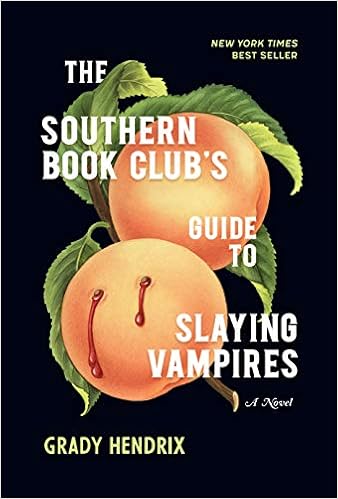
The Southern Book Club’s Guide to Slaying Vampires

Patricia is a Charleston housewife whose husband Carter spends more time traveling for work than he does at home. Her two teenage kids don’t appreciate her, and much of her time is spent caring for her senile mother-in-law. The only thing giving her life is her book club. So what if their typical picks, like Cry, the Beloved Country are less her speed than the true crime titles they actually discuss? One night after book club, an elderly neighbor attacks Patricia, which brings the woman’s handsome nephew into Patricia’s life, and just like that, her life takes a turn for the more interesting. James is smart, well-read, well-traveled, and attentive. But as time goes on, Patricia realizes that she is not the only one James is interested in; that she, her family, and even her beloved book club are being groomed by a man who may be a monster. 
Grady Hendrix is one of the greatest living writers of Horror!

This was a theory I had long held that was confirmed when I read The Southern Book Club’s Guide to Slaying Vampires. He is also one of the few authors for whom I will drop everything else I am reading when a new work by him is published.

It took me ages to figure out why this book is so terrifyingly good, it is because it could take place next door to me or in the homes of my friends. Look mothers generally get a bad rap in horror (and to be honest many other genres as well), this book goes a long way to show the sacrifice, strength and love that mothers have for their children, friends and families that is so often overlooked or looked down upon. Grady also skewers the 1980’s yuppie mantra of greed is good as well as deflating toxic masculinity for good measure. Honestly it is not a stretch to believe that a soulless, blood-sucker could morph into something even worse.

Along the way he also makes the reader look long and hard at the racism and segregation that has suffused many communities in the US (and still does to this day) but was never discussed in polite society.

Patricia is not a hero, she is just a mother, as are her friends in the book club. They are nice ladies, who welcome new folk in to the neighborhood and make them feel at home; but when something starts threatening their children they know they have to do something – what they don’t rightly know, but they will find out, they have to!

The Southern Book Club’s Guide to Slaying Vampires is written by Grady Hendrix and was published by Quirk Books back in April, this review is very late!

Check out The Southern Book Club’s Guide to Slaying Vampires gift box – out just in time for Christmas, Kwanzaa, Yule and many other December celebrations:

https://quirkbooks.biz/product/the-southern-book-clubs-guide-to-slaying-vampires-box/?v=757e5b5109ed

A Thousand Questions blog tour

Set against the backdrop of Karachi, Pakistan, Saadia Faruqi’s tender and honest middle grade novel tells the story of two girls navigating a summer of change and family upheaval with kind hearts, big dreams, and all the right questions.

Mimi is not thrilled to be spending her summer in Karachi, Pakistan, with grandparents she’s never met. Secretly, she wishes to find her long-absent father, and plans to write to him in her beautiful new journal.

The cook’s daughter, Sakina, still hasn’t told her parents that she’ll be accepted to school only if she can improve her English test score—but then, how could her family possibly afford to lose the money she earns working with her Abba in a rich family’s kitchen?

Although the girls seem totally incompatible at first, as the summer goes on, Sakina and Mimi realize that they have plenty in common—and that they each need the other to get what they want most.

This relatable and empathetic story about two friends coming to understand each other will resonate with readers who loved Other Words for Home and Front Desk.

HarperCollins

A THOUSAND QUESTIONS is a brilliant new middle grade novel by Saadia Faruqi. I really enjoyed reading from the two perspectives, as they realise that the differences in their upbringings don’t change the things that are really important. Saadia’s love of Karachi shines through in her portrayal of the city and its landmarks, at the same time though, she doesn’t shy away from showing the disparities between rich and poor and it could lead to some really interesting conversations if you’re reading it as a class novel or with a reading group (or with your own child).

For the blog tour I was pleased to have the opportunity to ask Saadia a few questions!

I believe your writing began in a local newspaper, followed by the Yasmin books for beginning readers, and now longer middle grade like your new book A THOUSAND QUESTIONS. Which audience do you prefer writing for?

Wow those newspaper columns were such a long time ago, I hardly remember them! Yes, that’s right, and I also wrote a nonfiction academic-style book, plus a short story collection for adults. However, it was only when I started writing for children that I found my true passion. Children’s
books are so fun to write, and even when the message is serious, the act of writing them isn’t. I enjoy crafting stories that give hope and entertain my readers, showing them the world in a way that’s authentic but also full of positive aspects. Whether I’m writing early readers like Yasmin or middle grade novels like A Thousand Questions, I approach them the same way. I’d be hard- pressed to chose which I enjoy more.

Why do you think it is so important to have Muslim characters starring in children’s stories?

It’s very important to have stories that center Muslim characters, families and countries. The fact is that a growing number of our young readers are Muslim, and they deserve to see their stories reflected in the books they read. This means positive stories, ones that show realistic people and situations rather than caricatures and stereotypes. It also means everyday stories about experiences all children face at school, at home and in their neighborhoods. Finally, it means making Muslim children the heroes of our fantasy, sci-fi and mystery books, the ones who solve the crime or save the day. All this is important because storytelling is part of community, and
readers from Muslim backgrounds should know that they’re an essential part of our communities. Readers from other backgrounds should also realize that their friends and neighbors, their classmates in school, can be the heroes of the books they read.

Your author note says you were inspired by your children’s reactions to visiting Karachi, where you grew up. What do you think is the biggest difference between your childhood and theirs (aside from technology!)?

It’s a world of a difference, specifically for immigrant families like mine. I grew up in Pakistan with one type of culture, traditions, lifestyle, and everything else. My children are growing up in the U.S. with another type of culture. As a parent, I try very hard to keep Muslim and South Asian traditions alive in my house, but when they step outside it’s a very different world for my children. I believe that the physical differences aren’t as vast, but the emotional and mental differences are huge. My children feel “other” in a way that I never did. They feel the stress of living in a country that’s their own, but not their parents’. They experience life with each of their
feet on a different continent. I can’t even imagine what they go through every day, not completely fitting in because of their skin color or their background. I never had anyone ask me “where are you from?” growing up, and that’s probably the biggest, most insurmountable difference.

In A THOUSAND QUESTIONS, Mimi and Sakina do a lot of sightseeing. Which of the spots that the girls visit is your favourite?

Hmmm that’s an interesting question because I put all my favorite spots in the book! I really wanted to showcase all the best places to visit in Karachi, so that even if you never travel there physically you can understand what a beautiful, complicated, incredible place it is! If I had to choose a favourite, I’d say the beach. I’ve loved the ocean since I was a child, and still do. Clifton Beach, where Mimi and Sakina visit in the book, is also very fun because of the swarm of people, the camels, the food, and everything else.

The divide between wealthy and poor is highlighted brilliantly by the girls’ friendship. How hard was it to strike a balance between harsh reality and a fun story?

I love writing about juxtapositions. It’s what I do best, bringing to life characters who are diametrically opposed to each other, so my readers can understand that we can find something in common with everyone we meet, even if they’re very different. Imagine how peaceful the world would be if we all found something in common with each other and focused on that
commonality? In the book, Mimi seems well off, and Sakina seems poor. But when they get to know each other, they realize that they are both rich in some ways, and poor in others. Life in Pakistan (and other poor nations) is often reduced to poverty, like it’s something horrible and insurmountable. It was really important for me to change that narrative and write about complex, beautiful life for all people, including those that are poor. It wasn’t hard to do once I had those goals in mind.

Have you done virtual events with children about your books?

Absolutely! I do a ton of virtual events with schools and libraries around the world. Since the pandemic started, I’ve actually increased this aspect of my author-life significantly, because it’s the only way I can reach my readers and give them an encouraging word. I schedule 3-5 virtual visits every day, and most of them are free of charge because of the budget difficulties everyone is going through at the moment. I love meeting readers, answering their questions and inspiring them to be writers. Anyone who wants to schedule a short virtual visit can visit my website and
contact me there.

What are you reading at the moment and who would you recommend it to?

I’ve been reading the Planet Omar series by Zanib Mian with my daughter and really enjoying it. I think it’s great for children in elementary school, but can also be used as a read aloud for younger children. However, I enjoyed it as an adult, so my recommendation would be for everyone to read this series!

What are you working on at the moment?

I have several books in the pipeline, some of which are still secret. Ah, the joys of publishing! Four new Yasmin books are releasing in 2021, as well as a couple of picture books and a new middle grade novel featuring a boy main character, white supremacists, and a twenty-year old journal. I’m really excited about all my upcoming projects, but more than that I’m excited about the future of children’s books with all the fantastic BAME authors putting out great books for young readers. I’m proud to be a part of this new wave of books!

Saadia Faruqi (photo credit: QZB Photography)

A THOUSAND QUESTIONS is out now!

Thank you to HarperCollins UK for sending me a review pdf and involving me in the blog tour, and thank you to Saadia for answering my questions so thoughtfully (and I love the Planet Omar series too)!

Hijab and Red Lipstick – blog tour

Being a teenager isn’t easy. All Sara wants to do is experiment with make-up and hang out with friends. It doesn’t help when you have a super-strict Egyptian dad who tells you that everything is “haram” a.k.a. forbidden. But when her family move to the Arabian Gulf, it feels like every door is being closed on Sara’s future. Can Sara find her voice again? Will she ever be free? 

Hashtag Press

HIJAB AND RED LIPSTICK is not an easy read, in the author’s note to the reader she mentions that it covers some upsetting subjects (TW: including discussions of rape, coercive behaviour, self-harm, domestic abuse and sexual abuse), so it is definitely a Young Adult title. We join Sara as she begins talking to a journalist about her childhood experiences, her early years in the UK and then moving to the Gulf because of her father’s job. I can’t say I enjoyed reading it, as we were warned she doesn’t have a particuarly happy time, but it was a glimpse into a different (for me) culture that really made me think about things we take for granted in the UK.

I had the opportunity to ask the author, Yousra Imran, some questions about writing:

Your note to the reader said you drew on your own experiences as well as those of others, was it difficult to write or was it cathartic?

It was both difficult writing about such painful topics, even if it was a fictional piece of work, but also cathartic, as I felt by giving a voice to stories based on real life experiences that I was almost giving myself the talking therapy I never got to have.

How different was your approach to writing a full length novel compared to pieces for publications?

Writing an article for a publication is very different to writing a novel. At the moment I write current affairs articles which are of course much shorter (usually 800-1500 words) and they usually require me talking to lots of people to collect views, witness statements and facts. When it comes to writing a novel, even if I am basing it off things I have seen, heard or experienced, and even if I carry out research, I have that leeway to completely make up the characters and the story’s events. I don’t feel under pressure writing a novel as there is no deadline, whereas there is usually a tight deadline for an article. I don’t tend to map everything out when it comes to a novel – I have an idea of the storyline and I map out the characters, but the story evolves as I write it. With articles I have to completely map them out before I write them.

Did you always intend for this to be for young adults?

I think it was always going to naturally be for young adults if the main character is a teenager/young adult and is talking as a teen/young adult. However, the novel can be read by any adult too – that’s what I love about most YA books today – they can be read by adults too!

What advice would you give to a young woman in similar circumstances to Sara’s teen years?

Sadly this is a very tough question to answer, as it really depends on which country the young woman is living in. If she was living in Europe, the UK, America, Canada, Australia or New Zealand, I’d be able to say here’s a list of organisations that can help you and provide you with support. It’s a completely different ball game in other countries like those in the Middle East. Without sounding pessimistic, in Middle Eastern countries the legal system is patriarchal in the literal sense, meaning your father literally owns you. My advice to a teen or young woman in the Middle East would be to study hard, try to get a qualification and become financially independent, as financial independence gives you choices.

If you could write extensively about only one of the various topics you mention on your blog, which would you choose?

If I could only write about one topic it would definitely be about women’s rights in the Middle East, no hesitation!

Are you planning more YA?

My next novel is adult fiction, however, I do have an idea for a novel after that which would fall under YA!

Have you had an opportunity to talk to young people about the book?

The publishers and I had been talking about school visits before the pandemic and unfortunately lockdown meant we have been unable to, however, I am definitely planning to do virtual school and college “visits” where I can engage with young people and talk about the book.

What are you reading at the moment and who would you recommend it to?

I am reading The Seven Necessary Sins for Women and Girls, Mona El Tahawy’s feminist manifesto, which came out last year. It is hardcore feminism and I love it, and I would recommend it to everyone, regardless of gender. Reading it really puts the way world governments perceive and treat women, people of colour,  people with disabilities and the LGBTQ+ community into perspective. It’s also nice reading thoughts that I have had myself, thoughts which male family members said I was “weird” for having. I can’t be so weird if there are other women sharing the same exact thoughts!

HIJAB AND RED LIPSTICK is out now! Have a look at the rest of the blog tour (and thankyou to Hashtag Press and LitPR for including me):