Over the past few years of being a school librarian I have been using reading passports/diaries to help students keep track of their reading. These schemes were all relatively successful but did not really work well when it came to encouraging students to pick up books that others had read.
This year I have started an ongoing project to create book review bunting. I have asked every student in years 7,8 & 9 to write a short review on the back of an image of a library book that they have enjoyed and use it to create bunting to decorate the library. The bunting will be hung low enough for students to reach & read what others think about the book, I am hoping that this will encourage them to hunt down and read the book itself.
At the end of the year I am hoping to have introduced as many students as possible to new books via peer review and also decorate the library with bunting that mirrors the collection. It will also be interesting to see what the most popularly reviewed books are.
Pablo & Jane and the Hot Air Contraption is one of my favourite books, published by Flying Eye Books (the people that brought you the Kate Greenaway Medal winning Shackleton’s Journey by William Grill).
It is a brightly-coloured insane romp that appeals to the cartoon, adventure and monster loving young reader inside of me! The artwork sears itself onto the back of my eyelids so that each time I blink I catch flashes of the story, It is a bit like after-images of the sun when you walk inside on a really bright day.
But – for all the brightness, Pablo & Jane and the Hot Air Contraption is a dark, twisty adventure story filled with insane cat scientists, monsters, a heroic mouse and two children on an urgent journey through the monster dimension. The artwork is beautiful and incredibly intricate, it is what you get if you mash up Where’s Wally, Billy & Mandy and fever dreams that Roman Dirge & Jhonen Vasquez would shelve as being too far out there!
It is not just the story and art that is fantastic! Flying Eye has gone all out to make sure that Pablo & Jane feels as wonderful as it looks, from the gleaming soft-to-touch cover to sumptuous end-papers and high quality paper the book is a work of book-making art as well as being a bright and beautiful book to read!
This is an adventure comic book to read again and again, to revel in the art, and work your way over the pages marvelling at all the little things that you missed the first 50 times you paged through the book. If it was purely a written work it may be as long as War and Peace as so much is going on in the pages!
Seriously take a look at the image below:
and that is just a part of one page.
If there was ever a book to buy to keep your kids quiet or partner out of the way or even just to full hours of time with looking in amazement at and enjoying the story; then Pablo & Jane and the Hot Air Contraption is it!
I don’t often say this, but, buy this book! Support Flying Eye Books and Nobrow Press as they challenge the boundaries of what picture books are and can be!
Find out more about the book and where to get it here:
My favourite character in Zeroes is Crash. She’s observant, thoughtful, basically good-hearted and trying really hard to be responsible. Her power is that she can sense any networked systems around her—any phones, computers, security systems, anything relying on a satellite, wifi, broadband or even a humble optical fibre cable. What’s bad about this power is that:
(a) It hurts to feel all these things—being in a big crowd is like being stung by a swarm of bees, with everyone’s phone’s attacking her, and places with big complex networks are torture for her
(b) If she doesn’t actually make an effort to keep these systems functioning, they crash—hence her code name. So she can do a lot of damage.
She’s also got a very strong moral sense. She’s caught between loving the cleansing relief of crashing things that have been bugging her, and trying to obey her Mom’s rule of Do no harm. She’s an interesting character!
On Collaboration
Compared to writing a novel by myself, I have to say, writing a three-author novel was a piece of cake. I was only technically writing a third of it, even though I still had to be fully engaged with Scott’s and Deborah’s chapters. We all read each other’s chapters, noting where things don’t chime with our own chapters, or where we feel our characters haven’t been done right. Pointing out the number of times Scott used the words “sparkling” or “sputtered”…
Generating the plot was so much easier than my usual method, where I spend months drawing plot maps that don’t work, and drafting screeds of material that never gets used. Not that we didn’t throw stuff away—sometimes our plot got superseded by something cooler. But it all happened so fast! And sitting around at Plot Camp making each other laugh with stupid plot ideas is the best fun. I can highly recommend collaboration.
Scott Westerfeld
Favourite Character
My favorite character is probably Scam. His power is “the voice,” which says whatever will get him what he wants. In a way, the voice reminds me of smart-talking detectives in the pulp era, who could disarm the bad guys just by saying the right thing, or convince the cops to let them go if they were found in the wrong place at the wrong time.
Alas for Scam, he’s not as cool as Sam Spade. Growing up with the voice on his side has left him not very proficient with words. He’s never had to learn! So he’s sort of like a kid who’s big brother always protected him, and has never fought his own battles.
On Collaboration
For me, collaborating is like going back in time. When I was a younger novelist, the bad days of writing were dark and horrible and full of despair. The good days were the most amazing I’ve ever had. That’s how things work when you’re new at something–the highs are very high, the lows disastrous.
But since then I’ve written twenty-something novels, and the lows aren’t really that bad anymore. I know from experience that I will get through this. Alas, this also means the highs aren’t as great. But writing with Deb and Margo has brought back those highs. There are sentences and scenes in this book that I never would have managed on my own. And the bad times? Well, let’s just say there are three times as many people to get annoyed with.
Deborah Biancotti
Favourite Character
My favourite character is Flicker, because she’s the one I can most imagine having lunch with. She seems like she’s the sanest and most well-grounded. Maybe it’s a result of having to—literally!—see through other people’s eyes. Despite being born blind, she can see—but only when there’s someone else nearby whose eyes are open.
Of course, every power has a price. Flicker can become overwhelmed by all the different viewpoints that she’s trying to parse in her head. Imagine trying to see a dozen things at once, or a dozen viewpoints on the same thing. And sometimes, she ends up seeing something she really, really doesn’t want to see.
On Collaboration
For me, collaborations are the way of the future. They’re like supercharged writing. TV writers learned this before novelists did. Collaboration lets you air your craziest, wildest ideas. It lets you short-circuit the plotting exercise. You can throw a half-baked idea at your team and then bounce it around between you until it becomes something great. Or you can have your idea shot down in flames within a matter of minutes. That happens.
The best part of the Zeroes collaboration has been what we call Plot Camps. We leave our ordinary lives and come together for three or four days of detailed planning. We work out what will happen and which character will be most affected, and whose point of view chapter this will be. It’s only when you’re back home, alone, trying to make your chapters fit the glamorous ideas of Plot Camp that the doubt begins to creep in. “Why did I agree to this?” and “Can I even pull this off?” are constant companions.
Hi Linda, welcome to Teen Librarian for the Eight Questions With… interview! The first question I ask all authors is: can you please introduce yourself to the audience?
Hi Matt and hi to all you lovely readers out there, so, who am I? Good question. I’m lots of different people depending on what novel I am writing (I get so into the book I do feel as if I am the main character and am living their lives!), but I suppose there’s an external consistency to who I am: I’m an Oxford University economist by training but a novelist by nature. I spent seven years working as an investment banker in London, New York and Eastern Europe, being exposed to more potential plots than was decent. Then I escaped and wrote my first book, Nest of Vipers. Longbow Girl is my twelfth book.
I’ve lived in various parts of the world.
I spent three years living in Peru and more recently eight years living in the Middle East. In 2005 my husband and I were kidnapped at sea by Iranian government forces and held hostage in Iran for two weeks before being released after high-level intervention by the British government. I wrote about that in my first non-fiction book, Hostage.
I am married and have three great children are who occasionally drive me mad but then they’d no doubt say the same about me. My family play a big part in my books. My husband reads various drafts aloud to the children and me, then they all give me their brutally honest opinion. I then slink away to try and write a better draft!
I also have two dogs, Rhodesian Ridgebacks called Boudicca and Beowulf, and a desert cat called Cutie. We live near the sea in Suffolk, where I try to swim all year round.
Longbow Girl is a thoroughly gripping tale set in the Wales of the modern era as well as the late Tudor period, how much research went into writing it?
One way and another, I’ve done a lot of research, both years ago and recently. The roots of Longbow Girl are very personal and go back to my own childhood. When I was eight years old, my father gave me a longbow for Christmas. I would shoot it for hours, perfecting my aim, practising until my hands were covered in calluses. My older brother, Kenneth, also had one. We would shoot cans off walls and also, rather terrifyingly, we’d aim for the high wires on the electricity pylons. Happily, we missed!
As a girl, I just wielded my longbow for fun, but I always used to feel different whenever I picked it up. Longbows are lethal weapons. They changed the course of history. This October sees the six hundredth anniversary of the Battle of Agincourt, an ‘unwinnable’ battle, won by the Longbow against all the odds. I did a lot of research into this and also the battle of Crécy in 1346, another ‘unwinnable’ battle won by the Anglo-Welsh longbowmen.
I didn’t really need to research the locations. The setting of Longbow Girl, in the Brecon Beacons and in the Black Mountains, was close to where I grew up. When I was a girl we would regularly go on forced family marches up Pen Y Fan in all weathers. I used to grit my teeth until we got to the top, and then run all the way down to the Storey Arms with my brothers. I never thought that I would write about it, but I love that journey back in my head to the mountains of my youth. It’s my very own form of time travel! I went back several times when I was writing Longbow Girl as well, just to see it all with fresh eyes. It’s such a beautiful and atmospheric part of the world. Revisiting was a joy and an inspiration.
The historical aspect of Longbow Girl took a lot of research. I read widely about the Tudor period, both in factual books but also via fiction. Sometimes it is fiction that gives you a much more vivid portrait of a time and place. Here is a photo of some of the books I’ve either read or repeatedly delved into for my research. Are you a fan on the Mabinogion and are you able to recommend any particular translations of the text?
I am a huge fan of the Mabinogion. My father had a copy of the 1989 Everyman revised edition (translated by Gwyn Jones and Thomas Jones, one of whom signed it but with an illegible signature!) and he gave that copy to me over twenty years ago. I always had a sense even then that I would write something linked to it. Recently, my brother Roy gave me an Oxford University Press hardback Mabinogion published in 2007. It’s lovely but my late father’s copy will always be my favourite.
Much like Merry, you grew up using a longbow, have you kept up proficiency in its use?
Absolutely I still have Huntress. If you have a look at my website: www.Lindadavies.com, you will see a video clip of me shooting arrows with Huntress. I practice every few weeks. I wish I could say I can consistently hit an empty can on a wall 50m away… but I’d be lying! I can consistently hit my standard archery target from 30m away and if I sneak a bit closer I can periodically get a bull’s-eye or what archers insist on calling the ‘gold’ at the centre of the target.
Are any parts of Longbow Girl based on actual historical events or have you just woven historical characters into a fictional setting?
Yes, they are! A particular historical fact that I discovered about six years ago acted as a catalyst to writing Longbow Girl. I learned that Henry VIII issued an edict ordering the destruction of wild Welsh ponies under a certain height in order to improve his stock of destriers, or war horses. I was outraged on their behalf! The other childhood inspiration for Longbow Girl was my own black Welsh Mountain Section B pony, Jacintha. I was horrified by the idea of her ancestors being hunted down and destroyed, just because they were small! I dreamt of being able to go back in time to rescue some of those ponies, and then I thought, what if a young girl did just that…
So I came up with the brave, strong and wonderful Merry – the fifteen-year-old heroine of Longbow Girl. She is a supreme archer, the first longbow girl in a tradition of longbow men that stretches back seven hundred years to the Battle of Crécy. She’s also a great rider. One day, while out on her pony Jacintha, Merry discovers a treasure that offers her the chance to turn back time. She travels back to the brutal kingdom of Henry V111. Fighting against battle-seasoned men, she has to wield her longbow to save her family. To save herself… and a few ponies too!
In a strange co-incidence, mirroring one of the central plot lines from Longbow Girl which I dreamed up over five years ago, I recently discovered that in 1346 the Longbowmen of Llantrisant (the village right next to where I grew up!) fought for the Black Prince at the Battle of Crécy and saved his life.
The grateful Prince granted them a piece of land to be held in perpetuity. To this day, nearly seven hundred years later, the direct descendants of those longbowmen hold that parcel of land in Llantrisant.
Here’s another personal link that goes all the way back to the Battle of Crécy. During the battle, the Black Prince claimed the emblem of the defeated Bohemian King: three ostrich feathers. This emblem has been adopted by every Prince of Wales since. I was given a ‘Royal’ ring bearing the crest with the three ostrich feathers when I was a little girl when our current Prince Charles was invested as Prince of Wales. My father was involved in the Investiture and gave me the ring to mark the occasion. I still wear it now! I have never taken it off.
Have you ever read The Gauntlet by Ronald Welch? I read it about 25 years ago now, Longbow Girl reminded me a bit of it as they share a slightly similar time-slip plot and it is also set in Wales.
I’ve never come across it till now. It sounds intriguing! I’ve just ordered it.
Although the main storyline was tied up there were a couple of plot threads dangling at the end – do you have any sequels planned?
There are a few dangling threads aren’t there…? And yes I would dearly love to write a couple of sequels exploring what and where Merry goes next. I’ve just started plotting a different book, also Y/A/middle grade and will write that one first.
I am also a big fan of your Djinn books and reviewed the first two back in 2009 & 2010, moving away from Longbow Girl for just a moment can you let me know when Djinn War is due out?
Thank you so much! I am delighted to hear that. War of the Djinn is currently filed away, both in my brain and on my PC. I have done some work on it and hope to reprise it one day. At the moment, the wonderful Tanabi Films is deep in the process of putting together a deal to make an animated movie of Sea Djinn and then hopefully the rest of the Djinn books after that, so watch this space!
Thank you so much for giving up your time!
Is my absolute pleasure Matt. Thank you for your interest in my books and for your support and kind words.
I have only written two novels so it’s difficult to say precisely what sort of writer I am. Furthermore, who knows what I’ll end up writing next. But it is true to say that in my first two books I have grafted the magical and the supernatural onto the real world in which both stories take place. I’m not entirely sure why this is because it’s just been a natural process of storytelling for me, but I’ll have a go at trying to give you some reasons as to why I think it might be.
Certainly I have always been a bit of a daydreamer, a person who likes to imagine ‘what if’ and escape the confines of the real world in which we live. It has therefore seemed a logical step to do this in my writing too, where a blank page gives me the opportunity to imagine anything I want to and make it come alive with words. I have also been a big observer of people too, making me slightly detached from the real world. Perhaps a combination of these two traits adds a twist to the stories I try and write?
Or perhaps it’s just because I’m lazy, that I can’t be bothered to world build a huge alternative universe so I just take a few magical elements and graft them onto the ordinary world that I know and can describe. Or maybe it’s down to the things that I have read that influence my writing. For example I like poetry and this can be quite hyper real or even surreal sometimes, using heightened, powerful language as a lens through which to view the world. (I often think of reading poetry like looking through a child’s kaleidoscope and seeing lots of different things at once, such can be the power of the words sometimes). It could be that I haven’t really grown up and that my inner child is still quite strong and influencing the way I write, infusing it with a slightly magical view of the world.
I don’t seem to be very good at pinning this down!
So perhaps I should try a different approach and look elsewhere for an answer. After all whatever there is in my personal make up that makes me put the real and the magical together does not really make me unique because there are lots of writers who write novels in a similar vein, who write stories in ways that put a unique spin on the world we know. Some people define it as magical realism whilst others don’t. Regardless of what label to use, this type of writing seems to be a genre defined by the fact that it is quite difficult to define, flirting as it does with various other genres and where anything is possible in the story, limited only by a writer’s imagination.
Another notable trait of this form of storytelling is that to enable the magical element to resonate the normal world has to feel very real too. So magical realist writers, whilst being imaginative and off kilter, have to be very gritty realists as well, showing us the real world in a finely tuned manner. I think this realism is one of the key strengths of this type of work.
However, I think the best way to portray magical realism is by describing the feeling it engenders when read, namely a vague dislocation of normality, a slightly skewed vision of the world that can make a reader giddy, putting them off balance. In other words, books of this type can be constantly surprising.
So why is it such a popular genre for writers (me included) to work in? Well, I think it might be because writers are explorers, weighing up what they have been told about the world (what their brains have stored up through childhood, adolescence and beyond) and how it functions. Through the process of storytelling they are working things out for themselves about life without necessarily drawing conclusions.
For example, David Almond, whose work is often described as magical realism, talks a lot about the impact of his Catholic upbringing in many of the interviews I have read, and he is aware of how wrestling with it has impacted on his writing, namely that of negotiating the tension between rational and magical thinking, of what to believe:
When you are at a limit, you pray. At the end of rationalism that’s what’s left. My work explores the frontier between rationalism and superstition and the wavering boundary between the two.
This idea that writers are working things out for themselves may be one reason why magical realism is popular in YA and also MG. Children and adolescents usually accept they don’t know everything about the world and are in the process of trying to work it all out too. There is, perhaps, a sense of collaboration between these readers and magical realist writers within the arena of storytelling. I like to think those adults who read magical realism – whether YA, MG or the literary stuff for grown ups – are ones who still have enough sense to realize they don’t know everything about the world either, that they aren’t overpowered by hubris.
So I think magical realism is a powerful tool for exploring and feeling one’s way in the world, allowing the reader and the writer the freedom to react to the odd, the strange, and the downright mysterious. I like to think this is one reason for why I have written the books I have so far. But I can think of another reason too.
One further spin off from this genre is that readers’ imaginations are given a work out. I know from my own experiences of writing that creativity is a muscle – it needs to be inspired to grow stronger – and if books that fuse the magical, the fantastical and the mysterious with the real help to inspire and fuel creativity in other people then that has to be a good thing. Maybe that’s the real reason I write the way that I do, to inspire readers and make them think and question and imagine for themselves…?
I have spoken about the love I have for Roman Dirge’s work before; it is a weird, slightly disturbing love that would have a restraining order out against it if it were not so lazy and just waited for comics by Mr Dirge to be delivered.
The latest item to be delivered was Roman Dirge’s The Cat with a Really Big Head. It is a collection of textual works with illustrations by the man himself and it is totally disgusting* (and sickeningly cute)! It reminded me of something my cat threw up, if fact there is an illustration of something the cat did throw up!
Please note that I am not saying that I disliked this work – no not at all! It is wonderful and disturbing, the stories contained within are fairly simple and incredibly entertaining but it is the artwork that makes this volume sing.
There are three stories contained within – the first one being the titular cat, and anyone who has owned a cat will recognize the illustrations as being horribly accurate (although not everyone will have owned a cat with a huge head).
The second story, A Big Question, told in verse is my favourite tale it is a fairly short intermission between the two main stories and concerns Little Alisa McGee who was as cute as could be… needless to say it does not end well but it does put the ‘awwww’ in autopsy.
The second chapter is The Monsters In My Tummy which is sort of like the Star Trek Mirror Universe version of Pixar’s Inside Out except it was written years before it came out.
This story is for anyone who has been in love and had their heart pulled out and ripped to shreds by the one they loved.
The stories Cat with a Really Big Head is recommended for anyone who loves their stories dark and disturbing but with a really good rhythm.
It goes without saying that it may not be suitable for the very young, sensitive or those that take a dim view of gratuitous dark humour…
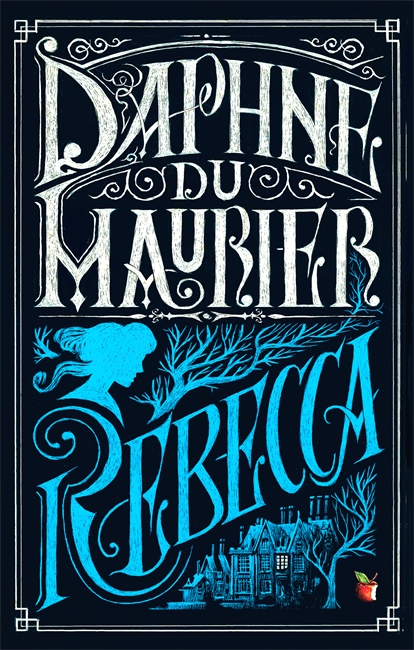
On a trip to the South of France, the shy heroine of Rebecca falls in love with Maxim de Winter, a handsome widower. Although his proposal comes as a surprise, she happily agrees to marry him.
But as they arrive at her husband’s home, Manderley, a change comes over Maxim, and the young bride is filled with dread. Friendless in the isolated mansion, she realises that she barely knows him.
In every corner of every room is the phantom of his beautiful first wife, Rebecca, and the new Mrs de Winter walks in her shadow.
It has been over 20 years since I first picked up the book and when I started reading the chills crawled down my spine.
It was the opening line that did it;
Last night I dreamt I went to Manderley again.
I have never experienced a reread so viscerally as I did with Rebecca!
This read was haunted by the ghost of past reader me who hung over my shoulder reliving the feelings I experienced back then.
I would have been around 11 going on 12 when I first encountered it, I heard the girls in my class whispering about it – it was always whispers with Rebecca. The only other book that was spoken of in hushed tones was Flowers in the Attic by Virginia Andrews – but talking about that book is a topic for another time!
I was a nosy child, I still am depending on whom you ask; so I asked them who Rebecca was, and was told that “Rebecca is not a ‘who’ Rebecca is a ‘what’ and she showed me the book but would not let me touch it.
I managed to get a copy from my school library (a medium-sized room full of books), I can remember that it was old and creased but I did not care as I loved reading.
Rebecca was first published in 1938 and stands up well against modern fiction. The pacing is slower than late 20th/early 21st century works but the language is rich and draws you in, painting a rich tapestry in your mind with beautifully descriptive passages. I found that reading it as an adult gave me a greater appreciation for du Maurier’s skill as an author and her ability to give me chills on a second reading.
Rebecca is a wonderful and near perfect example of a gothic novel; it is dark, bleak and has enough twists to keep the reader guessing. If this tome is new to you then get yourself ready to stay up all night visiting with the second Mrs. de Winter in her lovely home!
If you have already read Rebecca don’t you think it is time to go to Manderley again?
Last week I won a Dinosaur competition run by Templar Publishing, the prize was three dinosaur picture books and a small pack of tiny dinosaurs. Now I love dinosaurs, I love books and put them together and you have two of my lifelong favourite things in one package.
I am also a massive fan of toys, so I thought I would send my toy dinos on a quest to find out about themselves and at the same time take a look at these wonderful books.
So without further ado, may I present my first, pictorial review of Factfinders Dinosaurs, Adam Stower’s Dinosaurs and Dinosaurology The Search for a Lost World in Templarassic Park
Well the CILIP Carnegie & Kate Greenaway Medals have been awarded for 2015 and what was an amazing experience for a first-time judge is now receding rapidly in the rear-view mirror.
The selection of Buffalo Soldier by Tanya Landman for the Carnegie Medal and Shackleton’s Journey by William Grill for the Kate Greenaway Medal was no easy task, cutting the long-list of 20 books (for each of the awards) down to eight titles was a painful process. I will not even attempt to describe the bloody winnowing of the nominated titles that went into creating the long-list.
Tears were shed, passionate arguments were heard and many persuasive techniques were made by the judges and now looking back I can honestly say that the correct decisions were made! As a judge alongside my fellow judges we stand proudly by the titles we chose.
Attending the Awards Ceremony is a perk of being a judge and I really recommend that everyone with an interest in literature for children and young people try and attend at least once. Heck, if you are a librarian and a member of CILIP then get involved with your regional YLG Committee and put yourself forward for the position of CKG regional representative (aka a Carnegie & Kate Greenaway Judge), it really is rewarding, you get to meet reps from other regions, improve your knowledge of children’s books (including YA, MG & picture books) and get to be part of a panel that selects the most outstanding books of a year (for children & young people).
The ceremony this year was amazing! It took place in the British Library, prior to the awarding of the medals there was a mingling with coffee and biscuits in the foyer with authors & illustrators being besieged for signatures by shadowing groups and everyone else in attendance that did not write or draw. During the awards ceremony we were welcomed by CILIP CEO Nicholas Poole and entertained by MC Mel Giedroyc, host of the Great British Bake-off. Chris Riddell the Children’s Laureate was in attendance and showed how swift he is at drawing by live-sketching the ceremony, you can view his sketches on his Instagram site here: https://instagram.com/chris_riddell/
You can see what the judges thought of the Carnegie-nominated titles here:
the Greenaway-nominated titles here:
and hear Tanya and William’s acceptance speeches here:
Atom are offering readers the chance to win a year’s supply of books in anticipation of CJ Daugherty’s amazing new series, The Secret Fire!
That’s right, CJ Daugherty – the internationally best-selling novelist of the Night School series – will be publishing her next YA series this September! The Secret Fire is about a boy in Paris and a girl England who meet as pen pals. Unbeknown to them, they are connected by an ancient curse which dictates that our Parisian hero, Sacha Winters, will die on his eighteenth birthday and an ancient prophecy will be fulfilled. Unless Taylor Montclair can save him . . .
Atom want to know what you would like to do MOST before you turn eighteen. As well as what kind of books you love reading. Take their survey and have a chance at winning that life-time supply of books!
Co-written with French author Carina Rozenfeld, The Secret Fire is the first cross-channel YA novel ever and promises to be the most anticipated book this year!