Author Archives: Caroline Fielding

Chartered School Librarian, CILIP YLG London Chair, Bea-keeper

This Song is About Us

When stardom calls, can love survive?

Everyone wants a piece of the Drew Schafer, the talented and troubled lead singer of up-and-coming band The Kerbs. Only his girlfriend Ruby knows the real Drew – the gentle, vulnerable boy beneath the stardust. But no one else even knows that Ruby exists…

Told over three music festivals, this searing new novel from bestselling prize winner Sara Barnard charts the highs and heartbreaks of what it means for a dream to come true.

Walker

I’m clearly not the target audience for This Song is About Us, being well out of my youth, but Sarah Barnard is one of my favourite writers, in any genre for any age group, and this is one of her best. This might seem a strange statement from me if you know that I tend to balk at the idea of “escapist romance”, as this was pitched, but she is just absolutely brilliant at writing the most real characters that the reader ends up rooting for whether they feel they can relate to them or not. I was . It also has that most precious and elusive of things: a satisfying and believable ending (no spoilers)!

The basic idea of idolising musicians isn’t new, I had brilliant festival experiences as a teen and had posters of my favourite bands (though mine came from Kerrang magazine instead of Smash Hits), but I never quite got into a fandom…Sara has written a piece for TeenLibrarian about how her love of pop as a youth inspired This Song is About Us, and how much some things never change…

On your experience with fandom and music as a teen and what that means to you, and how it
inspired This Song is About Us

What did you love as a teenager? I mean, really love. Love in the way that it became a part of you. Love you made a personality out of. Love that made you understand yourself, and explain yourself to the world.

Me, I loved music. I loved books as well; reading and writing and everything in between. But music – specifically, pop music – was something else, because loving pop music, loving a band, means you become something very special: a fan.

The late ’90s and early noughties were a great time to be a fan of pop music, because it was everywhere. It was Radio 1 and Party in the Park. It was the majority of the charts. Most of the 99p singles on sale at Woolworths or ASDA. This was the era of magazines like Smash Hits and TOTP, which were full of posters and interviews, facts and lyrics. Saturday morning kids’ and music TV shows like CD:UK, with performances and comedy skits. The earliest days of official websites, with community spaces like message boards where you could talk to other fans – people who understood.

As a fan, you had access to your idols on what was, at the time, an unprecedented scale. You could go online and watch videos whenever you wanted. Email in questions to be answered on an online Q&A. That seems like a strange thing to say now, in 2025, when social media is ubiquitous and stars post TikToks from their living rooms and livestream their make-up routines. What once felt like precious glimpses into the possible lives of little more than fictional characters is now ordinary, even expected. It’s content.

What hasn’t changed in this new world is the very thing that eluded me as a teenage fan: these popstars aren’t fictional characters. They’re real people, living a real life, just one that is being packaged and sold. This was always true, and it’s the kind of thing that seems obvious as an adult, but in those long-ago days, when I was a teenager breathlessly flicking through Smash Hits for what I honestly believed was a real insight into someone I idolised, I wouldn’t have believed it. I was being sold a product; I was the consumer. Everything about those popstars was carefully curated especially for girls like me.
It’s easy to forget now how much this is still the case, even if the packaging has changed so drastically. The curation may be more about TikTok FYPs and Instagram feeds than Smash Hits interviews and Sunday paper exclusives, but it’s still curation. We are conditioned to believe that the glimpses we see of famous people – celebrities, if we want to use the word – amount to their whole lives, their whole selves, when of course they don’t. They can’t, and they shouldn’t. There’s a big gap between the version we’re sold and the real life they’re living.

It’s this gap that has fascinated me in adulthood, as I continue to love pop music – and other music, too! – and the people who make it. There’s so much that happens in that gap that we never see, and barely even think about. But what does it do to a person, psychologically, to live in it? In a music industry so consistently obsessed with youth, what happens to young stars who never have the chance to develop a sense of self before they’re told who they are by managers and critics, and even their own fans? And when all of this is packaged as a dream, what right do they have to complain? How can they learn to balance giving enough of themselves so it feels authentic to the fans they really do love, appreciate and value, but not so much that they lose themselves along the way?

These are the kinds of questions that make my brain spark, and they’re the reason I wrote This Song Is About Us, which is the story of Drew – talented, troubled and tantalisingly close to fame – and his long-term girlfriend, Ruby, when Drew’s band, The Kerbs, achieves the dream of fame, fortune and success. Ruby and Drew decide to keep their relationship a secret to protect it from the fans, the press and the savage world of social media, because so long as they know what’s true, nothing else matters.

But what does ‘true’ mean in the world of the famous when the headlines and TikToks and Discord posts and blinds are where everyone else looks for answers?

Drew and Ruby are about to find out.

Sara Barnard is a bestselling author of seven novels for young adults. Her debut, Beautiful Broken Things, was a Zoella Book Club Pick, and she went on to win the YA Book Prize with her third novel, Goodbye, Perfect. This Song Is About Us is her second novel with Walker Books. Sara believes that sad books are good for the soul, and happy books lift the heart. She hopes to write lots of books that do both.

Huge thanks to Walker Books for a review copy, This Song Is About Us is out now!

CLEM FATALE HAS BEEN BETRAYED

London, 1951: Clem Fatale, the youngest crook in the city, is on a mission to find her dad. Jimmy Fatale, notorious jewel thief and leader of the Spider Gang, has gone missing and with him the greatest prize in London: the Fool’s Canary.

Along with her prisoner and/or sidekick Gilbert (depends who you’re asking), Clem sets off on a rip-roaring chase through the London underworld. Racing through dodgy dives, glamorous nightclubs, greasy spoons and secret alleyways, Clem and Gilbert are soon pursued by a host of friends and foes.

Will Clem find her father in time? Or will the most sinister villain this side of the river put a stop to all her plans?

A rollicking middle grade series full of madcap escapades, fast-talking dames and unlikely heroes, perfect for fans of MURDER MOST UNLADYLIKE, ENOLA HOLMES, ADVENTURES ON TRAINS and Katherine Woodfine.

illustrated by Honie Beam

Eve really has written the ultimate pacey thriller for MG readers, literally every page has drama and/or intrigue. I read pretty fast and felt quite breathless with how quickly everything happened! She had good reasons for writing in this way, and she has written a fab piece for TeenLibrarian about it:

How to help dyslexic children foster a love of books by Eve Wersocki-Morris

When I wrote my latest book, Clem Fatale Has Been Betrayed, my central aim was to make it entertaining. I packed in twists and turns, mysteries and moments of mayhem, whenever I felt like a chapter was getting a little too slow. I have always liked fast and funny books. As a child, I really struggled to read some of the long, complicated epics my classmates were reading – no matter how beautiful the covers or how much my friends raved about the stories. I found it really hard to focus on books which had more description than action and always found my mind wandering off (often coming up with my own story based on the beautiful illustrations on the book’s cover).

When I was twelve years old I was diagnosed with dyslexia. I was really worried that this meant books weren’t for me. Luckily books and I have continued to have a lifelong friendship!

Here are some of my top tips in helping dyslexic kids engage with books:

  1. Let them pick their own books – I soon found out that I liked fast and exciting books with lots of action. Even if I didn’t understand every word, finding out what happened next helped keep me motivated to read on!
  2. Listening to audiobooks is good – the recent NLT research has shown us that children and young people are listening to a lot of audio and podcasts. This isn’t necessarily a bad thing. I loved audiobooks as a child. I loved listening to them over and over again and then going away and re-reading the physical book. Even if I was often reading by memory, it helped give me confidence and enjoyment in reading alone.
  3. Talk as you read – books are for fun! Stories are for sharing! Parents and teachers, when you’re listening to a dyslexic child read aloud make sure you get them excited in the story. Discuss clues and theories – don’t focus too much on the words they’ve got wrong.

Books are for everyone and we shouldn’t let anyone miss out on the amazing worlds inside their pages.

Clem Fatale Has Been Betrayed by Eve Wersocki-Morris is out now (Little Tiger)

Eve Wersocki Morris grew up in North London and has been making up stories her whole life. Diagnosed with dyslexia aged 12 and called out by a teacher as the ‘worst speller in the class’, she is now the author of two novels for older MG readers, with her debut The Bird Singers now nominated for multiple awards. A standout performer at school events thanks to a background in drama, Eve is also a volunteer with Coran Beanstalk Literary Charity.

Carnegies Shortlists

UK based readers have surely (hopefully) seen by now that the shortlists for the Carnegie awards for outstanding writing and illustration for children have been published!

The Carnegies celebrate outstanding achievement in children’s writing and illustration and are unique in being judged by children’s and youth librarians, with the respective Shadowers’ Choice Medals voted for by children and young people.

16 books have been shortlisted in total, with eight in each category for the Carnegie Medal for Writing and Carnegie Medal for Illustration; whittled down from the 35 longlisted titles by the expert judging panel which includes 14 librarians from CILIP: the library and information association’s Youth Libraries Group. Click here to read more about the fantastic books that have been chosen.

The 2025 Carnegie Medal for Writing longlist is (alphabetical by author surname):

  • Treacle Town by Brian Conaghan (Andersen Press)
  • The Things We Leave Behind by Clare Furniss (Simon & Schuster UK)
  • The Final Year by Matt Goodfellow, illustrated by Joe Todd-Stanton (Otter-Barry Books)
  • King of Nothing by Nathanael Lessore (Bonnier Books UK)
  • Little Bang by Kelly McCaughrain (Walker Books)
  • Glasgow Boys by Margaret McDonald (Faber & Faber)
  • All That It Ever Meant by Blessing Musariri (Zephyr, Head of Zeus)
  • Play by Luke Palmer (Firefly Press)

The 2025 Carnegie Medal for Illustration longlist is (alphabetical by illustrator surname):

  • The Invisible Story by Wen Hsu Chen, written by Jaime Gamboa, translated by Daniel Hahn (Lantana)
  • Grey by Lauren Child, written by Laura Dockrill (Walker Books)
  • I Love Books by Mariajo Ilustrajo (Quarto)
  • Clever Crow by Olivia Lomenech Gill, written by Chris Butterworth (Walker Books)
  • Letters in Charcoal by Juan Palomino, written by Irene Vasco, translated by Lawrence Schimel (Lantana)
  • Homebody by Theo Parish (Macmillan Children’s Books)
  • Wolf and Bear by Kate Rolfe (Macmillan Children’s Books)
  • Flying High by Yu Rong, written by Cao Wenxuan, translated by Simone-Davina Monnelly and Jake Hope (UCLan Publishing)

Ros Harding, Chair of Judges for The Carnegies 2025, said:

“On behalf of the judging panel, I would like to offer a huge congratulations to all the shortlisted authors and illustrators. The two lists highlight the diversity and high quality within publishing for children and young people in the UK. Many of the titles on the writing shortlist deal with themes around masculinity and boys finding their place in society, and the shortlisted authors successfully tackle these big ideas through believable and relatable characters, whilst avoiding lecturing young people. The concept of stories plays an important part in the shortlisted books across both lists, whether this is about the joy that can be found through discovering books or about the stories we tell ourselves and others to make sense of the world around us. It is wonderful to see such a inclusive range of cultures, experiences, voices and illustrative styles feature in the shortlisted books and as a judging panel, we are so excited to be a part of introducing these incredible books to the shadowing groups.”  

A couple of my favourite novels are up for the writing medal, but I am extra-specially excited that Homebody is on the illustration list, I reviewed it here, but it will definitely reinvigorate the age-old request from shadowing leaders to have age categories and not just the two awards (Matt blogged about the idea years ago) as Macmillan have a suggested age on the back cover of 14+.

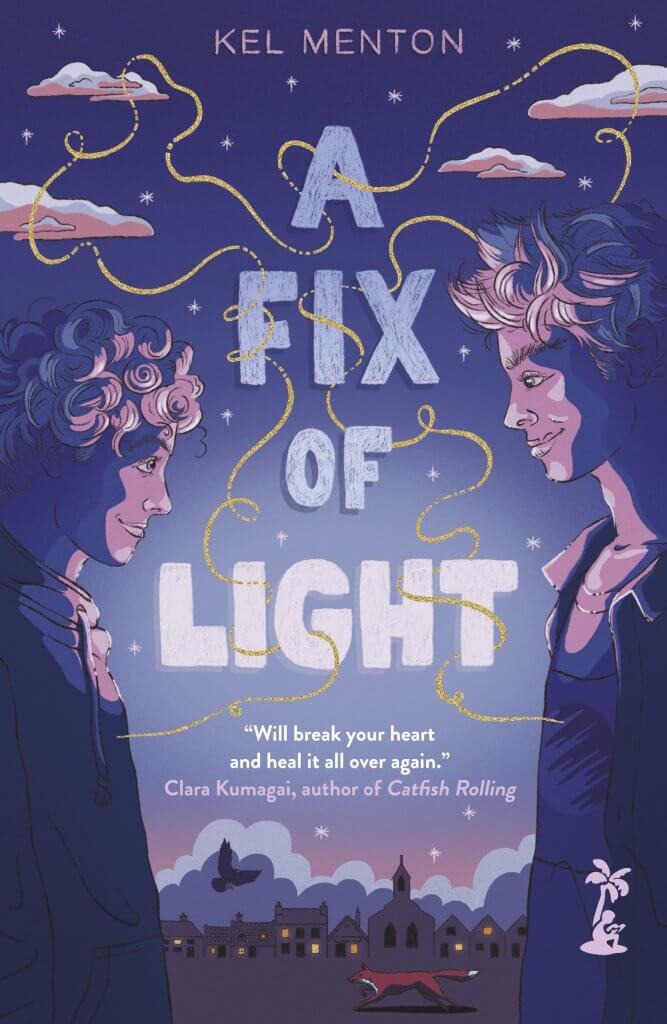
A Fix of Light

Hanan is supposed to be dead.

The forest outside Skenashogue sent him home alive – but changed. A strange new magic makes every emotion a physical force he can’t control.

Bright and gentle, fox-like Pax is everything Hanan is not. And when he touches Hana he mutes his secret power, quiets the curse.

To survive their own darkness they’ll need to open up to each other. But Hanan isn’t sure Pax will like what he finds out …Can their love help them find their way back to the light?

Little Island

Be Careful. The dark is listening.

The cover blurb on the proof states “The latest YA debut from Little Island is a trans love story with a dark magical twist from an astonishing new voice in Irish writing”…and it doesn’t lie about it being dark! It is definitely not one for a precocious younger reader. The content note is stark:

A Fix of Light contains references to suicide and self-harm, depression, anxiety and episodes of psychosis, as well as other symptoms associated with borderline personality disorder. It also contains graphic depictions of homophobic and transphobic hate speech and physical violence, and references to past sexual assault, Reader discretion is advised.

The prologue sets the tone, as a boy walks into the forest intending to die. To be honest, I found those first few pages extremely difficult to read and wasn’t sure I wanted to continue, but I did, and was quickly drawn into the story of Hanan and Pax. I keep typing sentences and deleting them because they feel a bit too spoilery, but the magical fantasy aspects are woven neatly into a contemporary story of two traumatised teenagers. Dual POV, their worlds very quickly revolve around one another, for better and for worse, with a classic ‘things get worse before they get better’ storyline. The reader is drawn in by their hopeful, tentative connections and the heartbreaking events that test them, it is hard going at times but also a very satisfying read.

Kel wrote a thoughtful piece for TeenLibrarian about writing through the conflicting memories of childhood wonder and teenage angst:

When I was a child, I spent one week every summer with my mom’s side of the family – grandparents, aunts, uncles, cousins and all – in Dingle. It was my favourite week of the year.

We wrote messages to mermaids in the sand, sipped hot chocolate from flasks, shared halved apples, and searched for faeries among the fuschia. I remember staring out across the sea at the Sleeping Giant, hoping to see his chest rise and fall, or standing on top of cliffs and staring down at the shifting water, seeking flashes of mermaid’s tails. I was an explorer, an adventurer, just like the protagonists of my favourite books, and the air was thick with potential and magic.

When I started writing A Fix of Light, I was about 16 years old, and I was becoming increasingly unhappy that with each passing year I grew further from childhood and closer to adulthood. Adults, in my opinion, were disenchanted and miserable creatures. I raged against my descent into such banality. What better way to fight disenchantment than to write?

I knew I wanted A Fix of Light to have magic. I knew I wanted it to be set in Ireland, somewhere by the sea. Looking back, I think I was trying to preserve some of that childhood wonder. Every time I sat down to write a little more, I could steep in those memories, try to conjure up the feelings again and translate them onto a page. The act of writing the book, as well as the finished product, could keep those memories pressed like flowers.

The story, though, and the characters, were born of my teenage self. If you are or have ever been a teenager, you know that self-actualisation is a pretty uncomfortable process. Lots of growing pains. I was figuring out How To Write A Novel and Who I Am at the same time, against the backdrop of idyllic childhood memories. How do I make these contrasting flavours complement each other? How do I make this novel coherent, when it feels like I am trying to cram a thousand of my selves into it?

Phillip Pullman, the author of His Dark Materials and other fantastic works, wrote that “…if we are going to do any good in the world, we have to leave childhood behind” (Introduction to Oxford UP’s World’s Classics ed. of Paradise Lost, 2005). I will never be a child again, and that used to make me sad. It felt like someone had locked the door to my favourite room, and hidden the key on Mars. I wanted to go back, and I never could. That is sad, I suppose. But spending the rest of my life staring at a locked door would be much worse.

Trading your childhood for adulthood is exactly that: a trade. You are not left empty-handed, but exchange your innocence for experience and wisdom. Here’s another great Pullman quote: “Innocence is not wise; wisdom cannot be innocent.” (“The Writing of Stories”, May 2002). I have gained wisdom – and will hopefully continue to collect it forever – which has opened a thousand new doors.

As I got older, I realised that adults are not necessarily miserable and disenchanted creatures. In fact, one of the brilliant things about being an adult is that you become responsible for creating the magic. I can make it with my mind, with my hands, with speech, with writing. I did not have to surrender my wonder or enchantment; I just had to start making my own. That’s how I made my childhood wonder and teenage angst become friends.

That’s how I made A Fix of Light.

Kel Menton (they/them) is a non-binary, neurodivergent writer from Cork in Ireland. Kel works in youth theatre as a facilitator and playwright mentor. They were selected as a Young Writer Delegate for the 2021 Dublin Book Festival. They hold a master’s in medieval English literature from University College Cork.

Thankyou to Little Island for sending me a proof copy to review and to Antonia Wilkinson for organising the guest post.

A FIX OF LIGHT publishes on the 6th February 2025.

This Feast of a Life

From the author of If You Still Recognise Me comes a delicious story of two people brought together by a shared love of food as they figure out themselves and each other.

Auden is finding different ways to be themself. The first – using their new chosen name, which feels most authentically them. The second – starting a food blog where they can share their passion for food, through family recipes and the stories behind them. And when the blog brings them Valerie, they discover more than they’d ever expected.

It’s been over a year since Valerie lost her mum – her beautiful, vibrant mum who loved cooking. Since her mum’s death, Valerie and her dad have drifted further and further apart, the kitchen left cold and empty, until Valerie finds Auden’s blog. The blog (and its writer) spark something in Valerie. Could she have found a recipe for happiness?

I interviewed Cynthia when their first novel IF YOU STILL RECOGNISE ME came out, so was very keen to read their next offering and pleased to see that the premise was completely different while still focusing on young people reflecting on their identities and exploring relationships (friendships, romances, and family). I asked a few new questions:

The parents played a significant role in this story. I really appreciated that they weren’t perfect but also weren’t awful, they felt very real. Did you consider making Auden’s parents more or less supportive?

I did think about making them less supportive, but I know that there’s a desire for something a bit more upbeat when it comes to narratives around trans/nonbinary characters. And I didn’t want dealing with unsupportive parents to be a big focus of the book – and if the parents were less supportive, I felt like that would have to take up too much space within the narrative. That wasn’t the story I was trying to tell.

So I did also consider making them more supportive, but I personally don’t find it very satisfying or easy to write about parents who are wholly supportive – maybe because I don’t actually know anyone whose parents are like that. (If your parents are, then I’m thrilled for you!)

That’s why they ended up more in the middle, and I’m glad they seem real!

I *love* all the food references in THIS FEAST OF A LIFE, do you cook yourself?

Yes, I do! Although I don’t think of myself as a great cook, I can follow a recipe well enough and I cooked for myself for years. My wife Olivia now does the majority of the cooking in our household (she’s incredible at it) but I still cook regularly.

When I asked you about the reaction from teens to IF YOU STILL RECOGNISE ME you hadn’t really had any as it was still brand new…what response from readers has the last couple of years brought you?

Readers who have messaged me about how the book helped them through a tough time, how it felt like a warm hug or made them feel less alone – these are the responses I treasure the most. One teen reader I met in a signing queue said they found me inspirational as a person from a different background discovering their identity, which is something I wrote down word for word in my diary because it moved me so much! I’m really glad my books can be there for queer teens who don’t always feel seen.

Have you started working on a fantasy novel yet or can we expect more beautiful contemporary characters?

Yes, I have started working on a fantasy novel – very slowly! It’s a contemporary fantasy though and I’m especially interested in trying to balance a contemporary narrative that includes my usual elements of queer romance and identity – understanding yourself  and figuring out who you want to be in the world – with the fantastical aspects.

Cynthia So (credit Caitlin Wilder)

Cynthia So was born in Hong Kong and lives in London. Their work has been published in speculative fiction magazines such as Uncanny, Strange Horizons and Anathema. They are also one of the new voices in PROUD, an anthology of LGBTQ+ YA stories, poems and art by LGBTQ+ creators, published by Little Tiger in March 2019. When they’re not writing, they can often be found at the theatre, entranced by a play or a musical. They’re also extremely enthusiastic about board games and tabletop role-playing. If You Still Recognise Me – shortlisted for the Waterstones Prize, the YA Prize and the Diverse Book Awards – was their first novel.

THIS FEAST OF A LIFE is out now in the UK, published by Little Tiger. Thanks to Jade for sending me a review copy and co-ordinating interview questions.

Can We Live On Mars?

No one has ever been to Mars. It is millions of miles away and takes months to travel there. In many ways it is the planet most like Earth, yet it has a thin and unbreathable atmosphere, intense radiation and planet-sized sandstorms. There is no fuel and the only water is frozen in ice caps and soil. But space scientists are developing a rocket to take us there.

How do we know when to go? Can we land without crashing and burning? How will we survive when we get there, and how long can we stay for? Can We Live on Mars? explores and unravels the difficult questions behind this incredible challenge.

This book is structured in a unique way, using a visual-thinking technique called mind mapping. Complex ideas are broken down into a clear flow of visual information and the mind map connects the information, making it easy to grasp.

‘Mars once looked a lot like Earth does today. It may even have supported simple life forms. Landing humans on Mars would offer countless opportunities to search for evidence for Martian life while pushing the boundaries of what is possible for our own species.

Dr Elizabeth Rampe, NASA

I was hesitant to share this title, I can’t think about human exploration of Mars without thinking about M*sk and having a little spiral…but the subject is really interesting and something that a lot of young people have a lot of questions about (well, and old people!) and I really liked the way this book is set out. It is part of a series called Mind Mappers, published by Weldon Owen, and has a contents page like this:

And each chapter starts like this:

It is one of those books that is clear enough for an interested reader aged 8 or 9 but also detailed enough to engage an older reader and prompt further investigation, leading to (as NASA planetary scientist Dr Rampe’s introduction ends with the hope of) careers in space science.

It does all make it sound eminently achievable…while avoiding mentioning issues of the expense of it all and who might fund it…but is also realistic about the enormity of the task and how getting there is the smallest hurdle when it comes to actually surviving there, and that it would be generations of hardship. It is well worth having a copy both in primary and secondary libraries, and I’m going to check out the rest of the series too!

Thank you to Weldon Owen for sending me a copy for review.

Why Don’t Things Fall Up?

Has a child – or anyone else – ever asked you why the sky is blue? Could you explain why ice cream melts? Have you forgotten why scientists think the universe started with a Big Bang, and do you understand the difference between respiration and breathing?
Why Don’t Things Fall Up? will gently remind you of everything you may have learnt once upon a time, but have somehow forgotten along the way. If you’ve ever changed the subject when a child has asked for homework help, or if you have the curiosity of a seven year old yourself, or if you know everything but have forgotten the basics or don’t want to know anything except the basics – then this is the book for you.

Using questions asked by children as a starting point, Alom Shaha (who has spent over two decades trying to help people of all ages understand this stuff) takes us on a tour of the “big ideas” of science from his unique perspective. His experience as a dad, a teacher and science communicator means he knows exactly what people don’t know -and especially the misconceptions and other intellectual hurdles which prevent us from grasping key ideas. Combining his proven skill for explaining science with storytelling and flashbacks to school experiments, Why Don’t Things Fall Up? reminds us that science is not just for scientists – it’s a human endeavour that enriches all our lives.

Alom Shaha

Back in 2021, we had a Q&A with Alom Shaha about one of his titles for primary age children (and their families), Mr Shaha’s Marvellous Machines. We’ve kept in touch on social media (sadly no more twitter for me but we’re both on Bluesky) and it came to my attention that his “popular science” book for adults is being published in paperback this week (Alom very kindly sent me a copy)!

Some readers will know that before my MA in Librarianship, I did a BSc in Geology following A-Levels in biology, chemistry, and geography. Science was my favourite subject all the way through school, I gave up English as soon as I was allowed to and didn’t choose any arty GCSEs, but I really appreciate this line from his introduction:

I think science comes from the same thing that drives us to make art, music and literature – our response to being alive, existing in this world, and the urge to make sense of it and share what we have understood with others. Science is not only for those who want to become scientists, just as art is not only for those who wish to become artists; it is a human endeavour that enriches all our lives.

This book is officially for adults but would also be really interesting to older teenagers. Somehow Alom has, very cleverly, extended a primary school answer to questions such as ‘why is the sky blue?’ into in depth and accurate explanations without ever patronising the reader or leaving them behind. He brings in fascinating background information to scientific discoveries that almost certainly aren’t included in school text books but that will also lead readers to wanting to do more research. Having had a scientific focus during my education (albeit 20 years ago), I thought I’d be nodding along and just appreciating the style, but I definitely learned things I swear I *never* knew! My favourite popular science book (that I’d also recommend to older, interested teens) until now is Bill Bryson’s ‘A Short History of Nearly Everything’, but this is a much more focused text…that is also significantly shorter…not including information “just” because it is interesting but also because it is just about all directly relevant to our everyday lives. He also shares some great practical ideas to actually see the science.

If you haven’t come across Alom before, do browse his website as it is full of ideas for all ages and abilities, including video directions for lots of his practical ideas. Why Don’t Things Fall Up? is published in paperback on Thursday 7th November by Hodder & Stoughton.

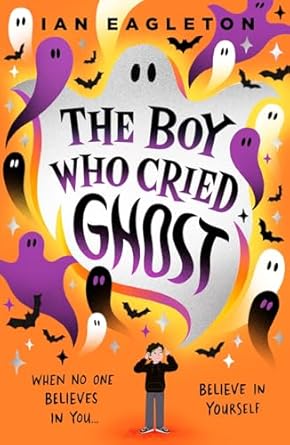
The Boy Who Cried Ghost

There’s a ghost in Richard’s wardrobe. Every day he carries out a series of rituals that he believes will keep the ghost trapped inside. He tries to tell his friends and family, but they dismiss his worries and concerns as being part of his OCD. But then one day, the wardrobe door is opened… And that’s when the hauntings begin.

Scholastic
Cover illustrator, Melissa Chaib and designer Sarah Baldwyn

I loved everything about this book: the main character, his friends, and the supportive adults. Adored the book recommendations, bad jokes, and actually-quite-scary bits…so I was very pleased to be able to ask the author, Ian Eagleton, some questions!

What can you tell us about your new book, The Boy Who Cried Ghost?
The Boy Who Cried Ghost is a spooky, thrilling, heartwarming and funny story, full of twists
and turns. It was inspired by my love of horror movies, Hocus Pocus, the Goonies, Buffy,
Casper, and a friend who used to tell the most terrifying ghost stories when we went away
camping.
Richard is just starting Year 6 when he has to move with his mum into his grandma’s old
house. He is angry and resentful and filled with worry about making new friends at a new
school. He is also consumed by obsessive behaviours, low self-esteem and grief. I always
think the best ghost stories are nothing to do with the ghost, but instead explore what it’s like
to be haunted by trauma. Over the course of his journey, Richard has to learn to accept
himself and understand how to start dealing with his OCD.

You’ve said that you have OCD and hope that it means you’ve portrayed it well, but
did that personal connection also mean that it was difficult to write?

So difficult! I really wanted the story to feel authentic, raw and challenging, as well as being
fun and gripping too. I had to dig deep and go back in time to explore my own experiences of
living with OCD. Throughout the story, we get to read Richard’s flashbacks and memories as
he comes to terms with how his brain works. These were all based on my own memories, so
it was often very emotional and draining to write. I remember being absolutely terrified as a
child and teenager by these strange, intrusive thoughts and all-encompassing rituals I
carried out. However, I do really feel that books for children and young adults are the MOST
important of all books and that my readers therefore deserve the absolute best of me. this
means putting everything I have into my writing, no matter how painful it might be at the
time. By the end of the process, I often feel a sense of relief and acceptance. Writing can
definitely be cathartic!

There is a growing selection of titles for children that feature mental health issues and
disability in a positive way, but are there any other books you’ve read that you think
represent OCD well?

There are three books which stand out for me. They are:
The Goldfish Boy by Lisa Thompson
When I See Blue by Lily Bailey
A Flash of Fireflies by Aisha Bushy

Have you any suggestions for how those that work with a child/teen with OCD might
best support them?

As an adult, I read Because We Are Bad by Lily Bailey, which was life-changing and really
helped me understand what I had experienced myself as a child and teenager with OCD. I
would also recommend the following books to people who work with children and teenagers
with OCD:
The Man Who Couldn’t Stop by David Adam
Pure by Rose Bretécher
Brain Lock by Jeffrey M. Schwartz
I think these books portray the terror and uncertainty of OCD particularly well and would
really help people understand the complexity of this mental health disorder.

I would also remind people that saying things like ‘Oh, I’m SO OCD’ just because you like
things to be neat or tidy can be quite harmful and offensive to people who suffer with OCD.

I love the diversity of your characters, in all your books. Are they ever based on
friends or colleagues?

Hmmmm. Sometimes they are. A good friend of mine told me a story once about how she’d
whacked a nasty boy at school around the face with a bouquet of stinging nettles. I was so
shocked and amused by this story – don’t try it at home – that I asked her if I could include it
in my first middle-grade book, which was Glitter Boy. She kindly agreed! In The Boy Who
Cried Ghost, one of the adults in Richard’s life is called Mr Levick, who is based on someone
I know. He often wears gender-defying clothes and is openly gay and I felt like this sort of
positive role model should be celebrated in the story.
Sometimes, however, my characters are based on what I like to call ‘wish-fulfilment’. In
Glitter Boy, James has an amazing teacher called Mr. Hamilton who is marrying his
boyfriend, Sam, and spends a lot of time talking to the class about LGBTQ+ history and
rights. This would have been transformative for me as a queer teenager, but it wasn’t
something that ever actually happened. I just wish I’d had a teacher like Mr. Hamilton who
could’ve supported and guided me.

I know a lot of the jokes were suggested by your dad while you were writing the book,
but do you have a favourite?

There’s a scene in the story where Richard’s stepdad, Tony, and his new school friend,
Quinn, are trading jokes and quips and I LOVE it! Here’s an extract from it, which you might
enjoy!

But Tony and Quinn were already walking off, chatting happily and loudly.
“I’ve been telling everyone at school about the benefits of eating dried grapes today,” Quinn
was saying animatedly. “I’ve been raisin awareness…”
Tony burst out laughing and slapped Quinn good-naturedly on their back.
“That’s nothing!” Tony began. “I asked someone at work today to bring me a newspaper.
They told me that newspapers are ‘old school’ and handed me their iPad instead. Well, that
fly didn’t stand a chance!”
“Oh … my…!” Quinn guffawed. “That was HILARIOUS! Tell me more!”

I think Tony’s joke about evolution and Darwin has to be my favourite though – I hope you
enjoy it too!

What are you reading at the moment and who would you recommend it to?
I’m currently reading A Ship in the Dark by Yarrow Townsend. It’s about a young girl called
Anna, whose father is arrested for smuggling. She sets out to prove his innocence and soon
discovers that the truth may lie on a mysterious, missing ship called the Albatross. Yarrow
Townsend’s A Map of Leaves was one of my standout books of 2022 and I am thoroughly
enjoying their new story. The writing is fresh. gripping and immediate, whilst also being
beautiful and lyrical, and the story is a rip-roaring adventure full of twists and turns. I would
recommend A Ship in the Dark to readers who have enjoyed The Girl of Ink & Stars and The
Lost Whale.

The Undying Tower

What if living forever was a death sentence?

Decades after the discovery that a small percentage of the population has stopped ageing, the Avalonia Zone is in crisis. From overpopulation to food shortages, the ‘Undying’ have been blamed for the state’s problems, banished to the fringes of society, and punished for every minor infraction.

When sixteen-year-old Sadie takes the fall for an attack by a rebel group, The Alchemists, she suddenly finds herself wrenched away from her quiet life and from her ailing father. Armed with little help and even less knowledge, Sadie is thrust into a cold and cryptic ‘correctional facility’ – The Tower. Here she’ll have to rethink everything she’s been told about the Undying population in an attempt to save the life she knows, protect a group of unlikely friends, and give voice to the voiceless in a society on the brink of catastrophic upheaval.

Melissa Welliver

After a long silence from me on the blog (sorry), please accept a guest post as an offering, from UKYA author Melissa Welliver all about the journey of her debut title, recently re-released by UCLan Publishing (she has also, in between, had 2 dystopian YA novels published by Chicken House, both of which are great fun):

From Self Publishing to Traditional

In 2019, I signed with my second agent and went out on submission with the book that would become The Undying Tower. We edited over the summer and then in late 2019, we hit the submission trenches… around 4 months before the pandemic hit. Obviously this meant we were submitting to editors that had been sent on Furlough. And this early in the pandemic, the work-from-home strategies hadn’t really been put into action, so we entered a traffic jam of manuscripts all seeking an editor. This went on for 11 months and I quietly lost hope for TUT and started a new project.

In November 2020, almost a year after we went on sub, we had interest from a digital first publisher called Agora Books. They were small but mighty, and really loved the book. They wanted to schedule a 2021 release and, while there was no advance attached, the royalties looked good. It wasn’t quite a traditional publishing deal in all the ways I thought it would be, but it was an offer. I bit their metaphorical hands off and we got going.

The book came out in October 2021 to a small but enthusiastic fan base. Over the next 6 months we sold maybe 500ish copies and I worked steadily on the sequel. In March 2022, the Agora team emailed to ask for a meeting. Assuming it was about book 2, I logged on, eager to chat about future plotlines. But sadly, the future of any plotlines had to go on hold, because the pandemic hadn’t been kind to small publishers. Agora told me they were folding, and the trilogy – plus distribution of book 1 – were going with it.

My editor was great and despite my initial concerns, she gave me all the publication files to allow me to self-publish, in the hopes of earning enough to self-fund book 2. I had signed up to a lot of festivals over the summer of 2022 that I needed to sell the book at, so this was a good short-term solution. However, the sheer workload of self-publishing soon took its toll. By the time I did my last summer gig, a panel at UCLan in late September, I was exhausted.

After the event, the UCLan editorial team pulled me for a chat to say they were pleased with my work and to ask about the book, so I explained it was self-published and in a moment of madness, I pitched the idea to them. They seemed enthusiastic, so I went home and asked my agent to submit The Undying Tower to them directly. And six months later in spring 2023, the mighty UCLan offered – an advance! Bookseller distribution! – for summer 2024.

So I always tell this little book’s story as this: once upon a time, there was a book that wouldn’t die. And The Undying Tower certainly lives up to its name to this day.

Something to be Proud Of

Imogen Quinn is a chaotic bisexual with dreams of becoming a stand-up comedian, crushing stereotypes about autistic people. When she decides to put on a pride festival that’s accessible for everyone, she enlists the help of the openly gay captain of the football team, Ollie Armstrong.

Dealing with the fallout from his parents’ divorce, Ollie is initially hesitant. But it doesn’t take long for him to be swept up by Imogen’s passion, and he’s not the only one. Joined by the (infuriatingly perfect) head girl, musicians, an artist and a star baker – a dream team soon assembles to help plan pride and tackle injustices in their school and beyond. You’d better listen out – they’re getting ready to make some noise.

Packed full of fun, forever friendships and fighting back, this YA debut is perfect for fans of I Kissed Shara Wheeler, Gwen and Art are Not in Love, Feel Good, Heartstopper and Not My Problem.

Little Tiger
Cover illustration by Lucía Gomez Alcaide

SOMETHING TO BE PROUD OF is Anna Zoe Quirke‘s debut novel and published TODAY! I really loved this book, it ticks most of my boxes: realistic teens, humour, friendship, angst (but not too much), romance (but not too much), positive disability rep, unashamedly LGBTQIA+ characters, present but imperfect families…and, a personal highlight: a non-US based author as I am often annoyed by the number of American titles published and highlighted in the UK when there is so much home-grown (or anywhere-else-on-the-globe-grown) talent we could be supporting. I got the chance to ask a few questions!

The book is own-voices but is it autobiographical at all?

Not really. Imogen is an own-voices character as I’m also a queer autistic person, but I definitely wasn’t brave enough in high school to get up to half the shenanigans that they do! (Although there was a photoshopping incident with my headteacher but that was less an act of protest and more a ‘teenager being a little sh*t’ thing.) 

I’ve always thought that I would have been more like Imogen had I known I was autistic and been able to unmask earlier. There are hints at what Imogen used to be like before they fully came into their own and felt comfortable in their identity and those experiences and feelings were definitely inspired by how I felt when I was younger.

If anything, Ollie’s story is the more autobiographical one for me. Nothing was taken directly from my life because, you know, boundaries, but my parents also got divorced when I was in high school, and I’ve had to navigate tricky dynamics with loved ones like he does. Plus, his journey with figuring out what his gender means to him was really special for me to write, as I’ve had to do a lot of figuring out what I wanted my gender to mean to me too.

Was the dual narrative there from the very first draft?

It was. I’m a very character-focused writer so when I’m coming up with a book idea I always know who the characters are first before I know exactly what the plot will be, and Something to be Proud Of was no exception. Both Imogen and Ollie burst into my head and demanded that I write about them, so yes, it was always going to be a dual narrative story – I always knew they both had really important things to say and I felt like they deserved to say them in their own voice. Plus – in my very unbiased opinion – I feel like it’s really lovely that we get to see what their friendship means to them from both their perspectives as it’s developing.

Which character was your favourite to write?

I loved writing all of the characters, but I think I do have to go with Imogen. Writing Imogen’s character was the most fun I’ve had writing ever. They’re funny, silly, unashamedly passionate and I’ll always have fond memories of sitting at my desk cackling out loud to myself and making my dog think I’d lost my marbles while I was writing certain chapters of Imogen’s. However, that being said, all of my absolute favourite moments to write were the ones that were between Imogen and Ollie. Their friendship was an utter joy to write and I’m so grateful that I had them to keep me company during the COVID lockdowns!

What advice would you give to a teen if you’ve inspired them to get involved in setting up an inclusive Pride event in their area?

I love this question and I really do encourage everyone to try and make all their Pride events as inclusive as they can! Here are some thoughts/questions you might want to consider:

–        Think about the specific community you want to do your event in – do you know of any particular needs there that you can take into consideration?

–        What’s been lacking from other pride events you’ve been to? Were they accessible for wheelchairs/people with other mobility aids? Did they cater to different sensory needs?

–        Don’t be afraid to do some research – no one’s expecting you to know absolutely everything straight away, in fact, it’s really important to recognise that you don’t know things. If you think you know everything then you’re closing off the possibility to continue learning. (Also, just as a reminder, when you’re doing research, reading the thoughts and opinions of the groups of people you’re trying to involve in your event is always best, rather than people without that lived experience.)

–        Imagine an environment where you are entirely comfortable, calm, and feel celebrated for who you are. What does that space look like? How can you take even just small steps towards creating that space?

–        If you can, try and gather an amazing team around you. Chances are you’re not the only person that cares about making things more inclusive and besides, everything’s easier with a great team around you so that you can support each other, brainstorm ideas, commiserate when things don’t go to plan and celebrate together when they do.

–        A last reminder: the fact that you’re trying is such a wonderful starting place. You have that softness and that ‘I just want everyone to feel safe’ part inside you, and that’s a really beautiful thing. Be gentle with yourself, and if you feel like you didn’t do something right or forgot something you feel like you should have included, then give yourself grace and just make a note to do that next time. There’s so much pressure to be the ‘perfect’ activist and it’s often really counterproductive. If people worry too much about being perfect, then they might become so anxious that they can’t do anything at all. But doing something is always better than nothing.

What are you reading at the moment and who would you recommend it to?

I’m currently rereading Jane Austen’s Emma. I’d recommend any of Jane’s work (Persuasion is my favourite!) to pretty much anyone. Jane’s stories are so warm, her characters feel so real, and she writes with such wit – she’s a huge writing inspiration of mine.

And then I’m also rereading the Northern Lights trilogy with the students in the ‘Book to Screen Club’ that I run in my library (alongside watching the BBC adaptation) and we’re having an excellent time with it. If you like magic, adventure and high stakes, whether you’re a teen or adult, I definitely recommend those books.

I’ve also just been sent an ARC of Not for the Faint of Heart by my friend, Lex Croucher, which is a historical queer romance/adventure inspired by the story of Robin Hood. Lex’s books are always super fun, laugh-out-loud reads, so I’m very excited to dig into this one.

Will we see more of Imogen or are you working on something different?

Both Imogen and Ollie will always occupy a big chunk of my brain. I have dozens of little snippets of scenes written in my phone notes because I’m always thinking about them and what might have happened in their lives after we leave them at the end of STBPO. Unfortunately though, sequels are pretty rare, so I doubt I’ll ever fully return to the world of STBPO in that way. 

But, I am currently working on edits for another book that’s coming out in 2025. It’s a queer rom-com this time, with similar found family vibes and hijinks to STBPO but alongside themes of mental health and figuring out (or not) the nuances of your sexuality. I feel like I’ve properly fallen in love with this book during the editing process and I can’t wait for people to read it next year!

Anna Zoe Quirke is a queer and autistic author and librarian from the North of England. She currently lives in Manchester with her partner, Rachael, and their very angry tortoise, Sheldon. They’re at their happiest writing stories about queer and neurodivergent people finding and claiming their place in the world, exploring the literary wonders of the UK, or making a big ol’ mess in the kitchen baking things for their loved ones.