In 2012, there over 1200 events at schools, libraries and bookstores celebrating Star Wars Reads Dad across America. In 2013, the rules have changed!
This year you don’t have to sign up! In 2013, any bookstore, library or school around the world can hold a Star Wars Reads Day event. Put the date (Saturday, October 5th) on your calendar and start planning and promoting an out-of-the-world event. (Schools and school libraries are encouraged to hold their events on Friday, October 4th).
It’s been over eight years since Geniver Loxley lost her daughter, Beth.
Since that day, Gen has been floundering. While her husband Art builds his business reputation and their fortune, she can’t let go of Beth.
And then one day, everything changes. A strange woman shows up on Gen’s doorstep, saying the very thing she longs to hear: that Beth is alive. that she is out there somewhere, waiting for Gen to find her…
Close My Eyes is a very demanding read, it demands that you forgo things like sleep, making dinner, being sociable and is extremely distracting when you have to do things like go to work or shop for groceries I was very tempted to say to heck with it and just read.
Anyway on with the review…
Losing her daughter at birth has affected Gen deeply, even eight years later on the cusp of again attempting IVF to have another child she can barely face the thought of replacing the child that she never knew.
When a stranger connected to a member of the operating theeatre team that helped her give birth appears on her doorstep with the shocking news that Gen’s daughter is still alive and that her husband was complicit in the subterfuge she decides to take matters into her own hands by investigating the woman’s claims.
Ignoring advice from her friends and husband she finds an ally in Lorcan an ex-colleague of her husband that has his own agenda in getting involved with Gen and her search. a mystery that, at times had me wondering if it were real or if Gen was slowly going mad.
The chapters of the story are interspersed with twisted tellings of a budding psychopath’s adventures as a child.
This is Sophie McKenzie’s first adult novel, I am a big fan of her young adult books and she has not lost the spark present in her previous writing.
I have already said that Close My Eyes is gripping and it is but it is also wonderfully twisted and comes together brilliantly with a coda that left me wanting more and hoping for a sequel.
Today we live in a very risk averse society – it has been this way for a while now, I can still remember when I suggested starting up a teen reading group soon after I started work in the UK, I was told that it was not a time for growth in the teen service side and rather I should focus on supporting existing groups as I was not a member of the children’s team and if my attempt failed I could destroy any chances of a future group being started in my library. Fortunately with the support of my line manager I was given the go ahead and started laying the groundwork for the launch of a new teen group.
For two months I chatted to the teens and other young people that came in to the library, I gave out leaflets and parental permission forms for addresses and then posted out invitations to the launch of the group. About 12 or so teens came in to see what was up and were hanging round the library to see what happened. As the hour sounded some of the kids asked me what was going to happen, I told them it was for a teenage reading group – it was the fastest clear out of a library I have ever seen, they recoiled in disgust and ran for the hills.
I was distraught, after sitting in shock for about 15 minutes and whimpering softly to myself; I stood up, dusted myself off and with the help of two colleagues rounded up some of the teens who had not bolted too far and with the promise of snacks and drinks lured them back into the library. Over some small cans of coke and a bag of mini chocolates we spoke about what they would activities they would like to do in the library, which authors they enjoyed reading and how we could tempt them back the following month.
In just over three years I built a teen group that had around 70 active members – they did not all come every month (average attendance was about 40 per session) but it taught me how not to go about getting a group started.
Failure is not always bad, it can teach us what does and does not work in a particular situation. My initial failure led me to finding a way to connect with young people that I may not have discovered had the initial group activity (centred around The Matrix Movies and comics and books centred around the concept of mind control) worked.
I have tried other activities that have not worked with the various groups I have worked with over the years some have taken on a life on their own while others have withered away.
Do not be too concerned if a brilliant idea has failed to gain traction in a particular environment or with a specific group – it does not mean that it is a bad idea it just means that that it does not work with that group or it may need a bit of tweaking to get it right. If it does not take in a different situation put it on the shelf for a while and reuse it in a different context or offer it to colleagues in other areas as it may prove to be successful with them.
Fear of failure can lead managers to ask staff to go for the safer option of starting a reading group or a manga group but not even those are guaranteed to succeed – by all means go for those options if you are unsure but do not be afraid to tailor those to the interests of the kids that use the library and attend the group, it may fail but it may succeed beyond your wildest hopes! All that failure means is that you have found something that does not work in that particular library; and by then the teens will have started talking to you and that gives you the opportunity to try something different with them!
Do not be frightened to try something new with the kids you work with, it may well work and if it doesn’t it will still give you something to talk about with them and offer other avenues of engagement. Once you have a few teen successes under your belt it gets easier to try out new ideas, both your own and ideas from friends and colleagues! Another plus of failure is if you do fail you can use the experience to learn new things – about yourself, your library and the teens you are working with.
Remember: failure to try is not trying to fail – it is failing, not just yourself but also the kids in the library and that kind of failure is the worst kind as it teaches you nothing!
What influenced your decision to write for Teenagers?
I’ve always loved children’s literature and YA. I didn’t make a conscious decision to try and write for teenagers, but when I started plotting ‘The Skull in the Wood’, my characters Matt and Tilda just emerged as aged 12 and 13. I feel very happy writing that for age group, and I’m interested in writing for an older YA readership too.
How do you get into the heads of your characters?
It’s a cliché that your characters take over, but they genuinely do. I try and imagine how they behave in all sorts of situations, not just the ones on the pages of the book. I even wrote a few scenes that I never intended to appear in the book, just so that I knew how Matt and Tilda had reacted at crucial times in their lives.
Do you know instinctively what will appeal to Teens or is it more a hit or miss process?
Mostly I write about what appeals to me – I don’t consciously gear it to a particular age group. If I get excited about it, I hope that teens will too.
What is the most satisfying part of the writing process for you?
Writing the early drafts is amazing – a story just seems to take shape out of nothing and the process is utterly magical. But I like the detailed editing too – I think you have enjoy that if you’re ever going to finish a novel, because if you get bored at any stage, your readers will too.
Do you ever read the works of other Teen/YA authors? If yes what can you recommend?
At the moment I’m reading Patrick Ness’s ‘Chaos Walking’ trilogy and really enjoing it. Meg Rosoff’s ‘How I Live Now’ blew me away, as did Sally Gardner’s ‘Maggot Moon’. And I loved Louis Sachar’s ‘The Cardturner’ – it just amazed me that you can construct a whole novel around playing bridge!
Are any of your novels based on personal experiences?
Not really – I like to make things up, and none of my characters are based on real people. But of course, things that have happened to me do have a knack of edging in where I least expect them.
Are you working on anything new at the moment or do you have anything planned?
I’m in the early stages of a new novel – but it’s way too soon to talk about it!
Do you ever do Library visits to Teen Reading Groups? If yes, what is the best way to get into contact with you or your agent about it?
I’m going to do some library and reading group visits in the autumn, and I’m always happy to do more – it’s great to meet committed readers! At the moment it’s best to email on tina(at)doublecluck.com at my publishers and requests will be passed on to me. And I’ll have a website up and running soon.
As of now the staff of Ontario Public Libraries are my heroes!
“Why Matt why?” I hear you cry, “Why are those crazy Canucks your heroes?”
Let me tell you why! Have a read of this:
GOALS FOR LIBRARY SERVICES FOR TEENS:
Young people are valuable members of our library community who deserve the same respect, dignity and human rights as all library members. This document provides a framework for developing library services to teens that meet the educational, informational, and cultural and leisure needs of young people in ways that are developmentally appropriate.
Each public library has a different community to serve and therefore different priorities and needs. although specific services for teens have not been well established in all libraries, these goals are created in the belief that young adulthood is a unique life stage and that young adults are entitled to the same quality of library services offered to other age groups in the population. (adapted from the IFLA Guidelines for Library Services for Young adults, 2006 and the YAlSA Guidelines for library Services to teens, ages 12-18, 2006.) the goal of library services for teens is to assist with the transition from children’s services to adult services and to provide access to both resources and an environment that meets the needs of young people for intellectual, emotional and social development.
Teens in Ontario Public libraries have the right to:
1. INTELLECTUAL FREEDOM
The library establishes clear policy statements concerning the right to free access by young adults to library resources and information sources; and respect for the rights of young adults to select materials appropriate to their needs without censorship, the library’s teen collection, policies and services should be consistent with the concepts of intellectual freedom defined by the Cla, ola and Ontario human rights code.
2. EQUAL ACCESS TO THE FULL RANGE OF MATERIALS, SERVICES, AND PROGRAMS SPECIFICALLY DESIGNED AND DEVELOPED TO MEET THEIR UNIQUE NEEDS
The library integrates library service to teens into the overall plan, budget and service program for the library. Library service to teens is integrated with those offered to other user groups.
3. ADEQUATE FUNDING FOR COLLECTIONS AND SERVICES RELATED to POPULATION, USE AND LOCAL COMMUNITY NEEDS
The library incorporates funding for materials and services for teens in the library operating budget and ensures there is equitable distribution of resources to support programs and services for young adults.
4. COLLECTIONS THAT SPECIFICALLY MEET THE NEEDS OF TEENS
The library provides a wide spectrum of current materials of interest to young adults to encourage lifelong learning, literacy, reading motivation, and reader development. the library endeavors to develop collections that encourage leisure reading, support homework and school success and responds to gender and cultural diversity. the library provides unfettered accessto technology including social networking, licensed databases, and other online library resources for teens./ o p l a 23
5. A LIBRARY ENVIRONMENT THAT COMPLEMENTS THEIR PHYSICAL AND DEVELOPMENTAL STAGES
The library provides identifiable spaces for teens that are separate from children’s spaces where possible, reflects their lifestyle and allows for teens to use this library space for leisure or study, either independently or in groups.
6. WELCOMING, RESPECTFUL, SUPPORTIVE SERVICE AT EVERY SERVICE POINT
The library promotes friendly, positive, non-biased customer interactions with teens, providing staff development and training and ensures that services for teens embrace cultural and gender diversity and economic differences. Library staff will endeavor to respect the teen’s need for privacy and non-judgmental service and assist young adults in acquiring the skills to effectively access all library resources and become information literate.
7. LIBRARY SERVICES AND PROGRAMS APPROPRIATE FOR TEENS
The library fosters youth development by providing programs for teens that contribute to literacy, life- long learning and healthy youth development. The library endeavors to provide volunteer opportunities for helping others through community service hours including participating on library advisory Boards, and other projects that help develop a sense of responsibility and community involvement. The library’s teen services initiatives are effectively managed according to best practices in the field of Youth Services.
8. TRAINED AND KNOWLEDGEABLE STAFF SPECIALIZING IN TEEN SERVICES
Library staff is knowledgeable about adolescent development and age appropriate resources for young adults inclusive of those with special needs. The library provides services by teen specialists as well as by others who are trained to serve teens.
9. AN ADVOCATE WHO WILL SPEAK ON THEIR BEHALF to THE LIBRARY ADMINISTRATION, LIBRARY BOARD, MUNICIPAL COUNCIL AND COMMUNITY TO MAKE PEOPLE AWARE OF THE GOALS OF TEEN SERVICES
The Library works in partnership with other community agencies and organizations to support all aspects of healthy, successful youth development.
10. LIBRARY POLICIES ARE WRITTEN TO INCLUDE THE NEEDS OF THE YOUTH
I’ve been asked to talk a bit about the idea of Dystopia, which has, of course, been a major trend in novels, movie, and television for the last few years. But why? What makes it so popular?
It’s an interesting question – one you could probably write a university thesis on, if you wanted to.
Dystopia has become a catch-all phrase that means every kind of semi-sci-fi, or post-Apocalyptic, or “bad society of the future” story out there. The Apocalypse is a great equalizer, and these stories always have some major cataclysm that starts the world on a downward spiral into darkness. It can be a war, or a global blight, or alien invasion, but something has to light the match that causes society to implode.
What’s left is a lot like what happens when fire strikes shrub forests. Everything’s razed to ash, and it looks like a wasteland, but soon, something amazing happens. You see, there’s a handful of flower species that only bloom after such a blaze. They need the destruction as their spark of life, and right there in the middle of all that monochrome rubble and devastation, they burst into full color, bringing life that never would have been seen otherwise.
The main characters in most Dystopias are like that. They only flourish after the burn; that’s when they shake off the ashes and stand up to be seen while everything else falls apart into smoking heaps around them. Everyone wants to be that kind of person. Everyone wants to be able to say: “Don’t look at the destruction, look at me. I’m still here; I’m alive and I’m perfect for this situation.”
Dystopia is society-soup. It doesn’t matter who or what they anyone was before the fire – only after counts. Money means nothing when there’s no economy. Power shifts based on who’s in charge at the moment and how much they can trust the person standing behind them. All the rules go out the window and people who had no voice are suddenly on even footing with those who used to be in charge.
Basically, everything’s high school, if high school had zombie viruses and killer robots.
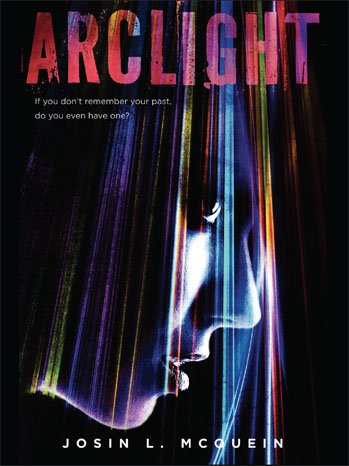
In my novel, Arclight, the flash point was a medical disaster. I won’t go into it too much because of spoilers, but basically the world fell to someone’s good intentions gone wrong. Now, all that’s left of human society is one outpost that has to live in a state of perpetual daylight because there are monsters called the Fade outside their walls that thrive in the darkness.
Into this world steps a girl who is the only person known to have ever faced these creatures and survived, unfortunately, she can’t tell anyone how she did it. The trauma of losing her family and her home, on top of running from the darkness and the Fade for days caused a mental block, meaning she literally doesn’t know her own face when she sees it. She’s blank. She’s got desolation inside and out, and she’s trying to figure out how to flourish despite that.
A lot of people would crumble under that kind of pressure, but such people do not make good heroines for novels. Marina perseveres, and I honestly think the draw of Dystopian novels and movies is that simple. It’s not about the destruction or the death, and it’s not about the fear or the loss. It’s about hope and life, and finding the strength to stare death in the face and say “no more.” They aren’t depressing at all.
Great Dystopians stand up after the fire and dance in the ashes like they’re playing in the snow, and who doesn’t love that?
Five hundred people live in in single community in an enclosed valley on the sunless planet Eden where, over a century ago, their two ancestors were marooned.
Calling themselves Family, they still cling to the hope that one day someone will come and bring them back to Earth, where light and heat does not come from trees, but from a bright star in the sky.
John Redlantern defies Family’s most sacred traditions and leads a small group of followers out of the valley and across mountains that are not only covered in snow and ice, but are completely dark, in search of wider lands. It had to happen but it comes at a terrible price, for it brings bloodshed and division into the world.
This is a first for me – I have never reviewed an audiobook before, I have listened to a some over the past few years but generally prefer reading with my eyes rather than my ears.
Anyway – on to my review of Dark Eden by Chris Beckett. To start off I will just say that although Teen Librarian is primarily a site aimed at librarians and people that work with teens in libraries Dark Eden is not a book for younger readers, I would say the more mature year 10s and up that have a liking for science fiction will enjoy it.
The production values of the audiobook are fantastic the narrators Oliver Hemborough and Jessica Martin give a brilliant performance of the male and female characters. At over 13 hours it demands a lot of listening – I found out that I could not do anything too demanding while listening as I tried listening as if your mind wanders you can lose which viewpoints are being narrated or get so engrossed in the story that everything else fades away. when I was cataloguing books in my library but found that I either stopped typing the records into the catalogue or in a couple of instances started typing what I was hearing, so I listened to the story on my way to and from work as well as late at night when I was supposed to be sleeping – as I type this I realise why I have had a number of disturbing dreams lately.
Dark Eden is a dark (ha ha) tale about humanity, survival and hope – any story that has a population of characters descended from a tiny group of progenitors can be a bit squicky if you think about it too much and there is violence, sex and death, it makes for compelling listening. Hearing the narration of taboo subjects makes for uncomfortable listening but it all added to the story of John Redlantern.
Like many of the best science fiction stories, Dark Eden focuses on the characters, their interaction and development rather than the science-y side of things.
Dark Eden is stunning and, if you have already read or listened to the story, the news that there is a sequel coming up should make me very happy!
It was a deserved winner of the Arthur c Clarke Award!
If you have followed the links above and have been keeping track of the austerity cuts over teh past few years then you will be aware of the perilous state libraries are in and have been in for a few years now. Every part of the library service will be affected by the new cuts that are coming up, we all know colleagues that have lost their posts due to cuts and that is set to become more severe.
So, I am issuing a challenge to everyone that works with young people in libraries. Ever since starting Teen Librarian – the newsletter and the blog over seven years ago I have asked readers to share ideas for library-based activities aimed at encouraging teenagers to engage with their libraries (public and school). To date a number of librarians have contributed some really excellent ideas that I have shared.
If everyone sends in at least one idea of events they have run in the past then it will be possible to create a series of events that can run for over a year.
We are all in the same boat – we have more demands on our work time, less time to plan events, budgets if we have them are being stretched to breaking point to cover everything we do.
So if you have ever run an event for young people in a library then send it in. If you have ever had an idea about a library-based activity for teens and young readers then we would love to hear about it. If you have ever run a library event and have it go horribly wrong then please share – ideas that do not work in one location may soar in others.
Everyone that sends in an idea or activity will receive the credit, if several people send in the same or similar ideas, credit will be shared. If you wish to remain anonymous then that is what will be done.
Starting from the next edition of Teen Librarian Monthly and on the website I will be rerunning articles about events that may spark new ideas or even be dusted off and reused and I would love to run new ideas as well!
This will only work if everyone shares – the idea you send in may help a colleague on the brink of despair, it could spark a teens love of reading or case a teen group to form in a library under threat of closure due to lack of services.
1. Hi Soman thank you for taking the time to be interviewed for Teen Librarian. For the first question would you please introduce yourself for the readers?
My pleasure! I’m Soman Chainani, the author of THE SCHOOL FOR GOOD & EVIL series and the writer of the upcoming film adaptations for Universal as well. I’m thrilled to be here at Teen Librarian to give you a little peek behind the scenes of the SGE world. I’m also a massive, massive Anglophile and worked in the British film and TV industry for years before I started work on the series. I’d live in London in a heartbeat if I didn’t have to fly to Los Angeles so often for film work.
2. School for Good & Evil is your first novel, everyone I have spoken to that has read it has been raving about it (in a good way) myself included – how does it feel to have such a rapturous response?
Any temporary ego boost is tempered by how hard I’m working on the second book in the series, called A WORLD WITHOUT PRINCES. Sequels tend to be disappointing, but I’ve always told myself that each book in the SGE series has to be better than the last – and wildly different — or there’s no point writing them. So I’ve been holed up in various rooms and coffee shops, writing like a madman. Even when I was in London for the UK tour, I’d spend half the day at a tea shop in Soho banging my head against the wall on a new chapter.
That said, I’m fully aware of how special and lucky this whole run has been so far. I had a list of goals I wanted to achieve by the end of the series – and they all happened in the first week! I stumbled around for a while, feeling like I was in a dream. Good news can sometimes be as disorienting as bad news. But now I’m happily back to work, abusing myself daily as to why I can’t write faster.
3. I have heard that the movie rights for SfG&E have been purchased – will you be involved in the adaptation?
I’m writing the adaptation for Universal with Malia Scotch Marmo (the writer of Hook). The movie will be very different from the book. For one thing, there’s just too much story in the book to fit into a two-hour movie. For another, a literal adaptation of a book can be quite dreary and repetitive. I’m much more interested in finding a new way to tell the story of Sophie and Agatha, so that the film feels like a new experience, even to lovers of the book.
4. On the surface, the story looks like your typical fairy tale of good and evil but once you get past the cover it challenges ones preconceptions of good and evil – what influences did you have in the writing of the story?
We didn’t have cable when I was young, so all we had was our rickety TV set and VHS tapes of every single Disney animated movie. Until age 8 or so, that was all I pretty much watched. Everything I learned about storytelling, I learned from Disney. When I went to college, though, I became fascinated by the gap between the original tales and these Disney revisions.
As a relentless student of the Grimms’ stories, what I loved about them was how unsafe the characters were. You could very well end up with wedding bells and an Ever After – or you could lose your tongue or be baked into a pie. There was no ‘warmth’ built into the narrator, no expectations of a happy ending. The thrill came from vicariously trying to survive the gingerbread house, the hook-handed captain, or the apple-carrying crone at the door – and relief upon survival. Somewhere in that gap between the Disney stories and the retellings, THE SCHOOL FOR GOOD AND EVIL was born.
In recent years, fairy tale mash-ups, retellings, and revisions have become popular – and for good reason, given how enduring and inspiring the source material is. That said, I had my sights set on something more primal: a new fairy tale, just as unleashed and unhinged as the old, that found the anxieties of today’s children. To acknowledge the past – the alumni of the genre, so to speak – and move on to a new class. As soon as I started thinking in those terms, I knew I wanted to do a school-based novel. I was walking in Regents Park in London before a meeting when I had the first image… a girl in pink and a girl in black falling into the wrong schools… I got so caught up thinking that I missed my appointment entirely.
5. There are some superficial comparisons to Hogwarts Harry Potter, but the School for Good and Evil is a much darker place – has your book faced any challenges yet or is it still too new to have popped up on outraged parents radars yet?
It is a much darker place – Hogwarts you choose to go to. You’re kidnapped to The School for Good and Evil and there’s no return. But encouragingly, I haven’t heard a single complaint about the book’s content. There’s certainly been commentary about its amoral universe and the intensity of what the kids have to face – but the course of the story seems to solve any concerns.
That said, there will be rumbles about Book 2. You’ll see.
6. Have the majority of your fans identified themselves as Evers or Nevers? and how would you describe yourself?
Hmm, good question. It’s been so evenly split! It’s quite amazing, really. Even when I go to schools, by the end, it’s a very clear 50-50.
I can be comically high maintenance (my friends joke Sophie is the real me), so I’d surely be an overachieving Ever and the most regular user of the Groom Room (the medieval spa, which only the top ranked students are allowed to use). That said, Evil’s classes have no boundaries – for sheer entertainment value alone, I can see the allure.
That’s if I had a choice. In the process of writing the book, I realized I wasn’t quite sure which school I would actually end up in– so I created an online assessment to answer that question. At www.schoolforgoodandevil.com, every reader can take a 10-question SGE Entrance Exam to determine whether they’re an Ever or a Never. I wrote all the questions myself and there’s a bank of over 100, so the questions change every time.
I’ve taken it a number of times, trying to be as honest as I can, and I always end up 75% Evil and 25% Good. Those who read the novel will agree that this isn’t a surprising result in the least.
7. Fairy tales were originally dark and bloody tales before they were tamed by the Grimm brothers and Charles Perrault (and later Walt Disney) and had most of the blood and death removed, your story returns to the roots of the tales were bad things happen to the deserving (those deserving of having bad things happen to them) – was this intentional returning to the roots of the stories and removing most of the sugar?
Absolutely. As I mentioned earlier, I just don’t quite understand why children of two hundred years ago could handle these frank and brutal stories of survival and cleverness – while children today must endure the sanitized versions. Frankly, I find the latter far more offensive and damaging. So in the School for Good and Evil, I point out this disparity. Once upon a time, Good and Evil were in pure balance. But now Good wins all the time, is obsessed with beauty, clothes, and superficial romance. The School itself has become Disneyfied and is trying to find its way back.
8. Finally do you have any plans for a sequel either involving Sophie and Agatha or staying with students at the School?
It’s a three-book series, so you’ll see what’s next. As for who’s in it… well that’s the question isn’t it!
Thanks for having me on your wonderful blog. SGE fans can join the jam-packed Facebook page, message me on Twitter at @somanchainani, and keep up with all things Good and Evil on www.schoolforgoodandevil.com.
COMPETITION TIME:
Win One of Five Copies of The School For Good & Evil!
Follow this link: http://schoolforgoodandevil.com/exam/
Take the exam and then comment on this post with your name and if you were determined to be Good or Evil. Winners will be chosen at random at the end of the month!
On Toby’s eleventh birthday, he and his friends get a mysterious invitation to Happyland, the abandoned funfair in town. It’s too good an opportunity to miss, even though the place gives them the creeps.
What they find there is more terrifying than any of them could have imagined. Getting in was the easy part. Surviving long enough to escape will be much harder.
Once upon a time Happyland was filled with laughter. Now it’s filled with fear.
Weirville – a rather nice-looking seaside town, if you avoid the abandoned funfair on the pier, ignore the clouds that always hang ominously overhead, overlook the stories of children that have gone missing mysteriously over the years and the fact that the local residents call it Weirdsville…
Welcome to Weirdsville… a new series written by I.M. Strange and published by Little, Brown Young Readers (younger sibling to Atom).
Even for me as an adult Happyland had some rather creepy moments, it is the sort of book I would have loved as a younger reader – who does not like being creeped out reading a spooky book, alone late at night?
I think it is down largely to Happy the Clown – I have always had a thing about clowns – and not in a good way, it all goes back to me watching IT when I was 15 which as every connoisseur of horror knows starred Tim Curry as Pennywise… oh great I may not sleep tonight!
Anyway I digress – Happyland is a creepy adventure and horror story about facing your fears and trying to escape alive and unscathed…