A positive and uplifting book for young people who are queer or questioning – and their allies looking to support them.
In this empowering and uplifting book, award-winning podcaster Alexis Caught sets out to help queer and questioning teenagers explore their LGBTQ+ identity and understanding. Alongside the author’s personal experiences are first-hand stories from notable LGBTQ+ figures, providing an inclusive account of what it means to grow up queer. With chapters on questioning, coming out, friends and family, love and relationships, sex, shame, pride, being transgender and/or non-binary and allyship, this helpful, honest and heart-warming book is essential reading for any queer or questioning teen and their allies looking to support them.
I was excited to be asked if I’d like a review copy of QUEER UP, as I immediately thought of students of mine who have asked for books that do exactly what this does: answer questions, through advice and activites, about (basically) how to understand themselves…
To kick of the blog tour, I’ve been given the opportunity to share an extract from the very beginning of the book, part of the chapter on questioning:
Alexis Caught is the creator and co-host of the British Podcast Award-winning LGBTQ+ podcast Qmmunity, exploring queer culture, history and identity. He is also a mental health advocate, qualified psychotherapist, writer, speaker, model and rugby player. His writing has been featured in Attitude magazine and The Mirror along with the best-selling anthology It’s Not Okay to Feel Blue. His areas of passion and expertise are mental health, wellness and the queer community. On talking about the book, Alexis said this is the book that he “so desperately needed when [he] was 14.”
Walker Books will be donating 20p for every copy sold to Shout 85258, a free, confidential, 24/7 text support service for anyone in the UK who is struggling to cope, for which Alexis is an ambassador and trained mental health volunteer. 45% of young people who text Shout 85258 identify as LGBTQ+.
Kai, Orla and Zak grew up together, their days spent on the patch of wilderness in between their homes, a small green space in a sprawling grey city. Music, laughter and friendship bind them together and they have big plans for their future – until Kai’s family suffers a huge loss.
Trying to cope with his own grief, as well as watching it tear his family apart, Kai is drawn into a new and more dangerous crowd, until his dreams for the future are a distant memory. Excluded from school and retreating from his loved ones, it seems as though his path is set, his story foretold. Orla, Zak and new classmate Om are determined to help him find his way back. But are they too late?
I am a big fan of everything that Sita Brahmachari has written, and interviewed her last year for When Secrets Set Sail, so I was expecting WHEN SHADOWS FALL to be good but I didn’t realise it would be a beautiful object as well! Told in prose and verse and annotation, with the illustrations by Natalie Sirett an integral part of telling the story.
Illustrations (c), Natalie Sirett (2021), from When Shadows Fall by Sita Brahmachari, published by Little Tiger, 11 November 2021 (Hardback, £12.99, 9781788953160)
There is a formal blog tour starting on the 15th November (details at the bottom of the page), but I snuck under the radar and got an exclusive piece from Sita about the background to creating the book:
‘Let me tell you a story’….
So began a play I worked on called Lyrical MC some years ago for Tamasha Theatre Company. Myself and the director worked with a group of young people exploring Shakespeare’s ‘The Tempest’ in the contexts of their own lives. It ended up being a play that was about living in an island culture in the middle of an urban city. It explored the sounds of the city for them and how it felt to be negotiating life today at school and at home. It was a piece of theatre that enjoyed the musicality and interplay of the young people’s voices as they mediated each other’s realities, histories and identities in a fluid interplay.
I have never seen a great fissure between my community theatre work and writing novels for young people. When I set out to write When Shadow’s Fall I remembered a young woman I met in a unit for excluded teenagers in Ladbroke Grove. She was a fantastic young actress and storyteller but already completely switched off reading and education at the age of fourteen. It wasn’t until she started to write her own script and saw other actors reading it and paying attention to her words that reading became interesting to her. Another young actor reading out her words asked if he could change something and she became agitated saying, No! I put a lot of thinking into those words. You have to work at them to find the meaning!
Kai is the author sitting on the Green Hill writing his story – ‘When Shadows Fall’ – even he seems surprised that this is what he has done… that he, who was excluded from school, could become the author of his own story and yet this is what he finds himself doing.
Over the years, I have mentored many young people to help them with their writing. The process of finding your voice (in writing as Kai does) In art (as Omid does) and in speaking out (as Orla does) is a powerful one.
When readers open When Shadows Fall I hope the creative form of the book with its annotations, poetry, prose and art portfolio and testimony will lead readers and aspiring writers to take up the pen, charcoal or paintbrush and begin their own story.
When Shadows Fall is out now! Thank you Little Tiger for the review copy, Nina Douglas for organising the piece for TeenLibrarian, and Sita for writing it!
This book is for everyone. Because we can all be allies.
As an ally you use your power-no matter how big or small-to support others. You learn, and try, and mess up, and try harder. In this collection of true stories, 17 critically acclaimed and bestselling YA authors get real about being an ally, needing an ally, and showing up for friends and strangers.
From raw stories of racism and invisible disability to powerful moments of passing the mic, these authors share their truths. They invite you to think about your own experiences and choices and how to be a better ally.
There are no easy answers, but this book helps you ask better questions. Self-reflection prompts, resources, journaling ideas, and further reading suggestions help you find out what you can do. Because we’re all in this together. And we all need allies.
A donation of 5% net sales in the UK will be donated to The Black Curriculum
By coincidence, I received a copy of this title in the same week as I read a post by Dr Muna Abdi about the term “allies” and its limitations, so had that in mind when I started reading…and the very first chapter, DANA’S ABSOLOUTELY PERFECT FAIL-SAFE NO MISTAKES GUARANTEED WAY TO BE AN ALLY by Dana Alison Levy addresses the same issues in brilliant fashion. The collection of essays is wide ranging, eye opening, and thought provoking, including contributions from Shakirah Bourne (co-editor alongside Dana Alison Levy), Derick Brooks, Sharan Dhaliwal, Naomi and Natalie Evans, I. W. Gregorio, Lizzie Huxley-Jones, Adiba Jaigirdar, Brendan Kiely, Dana Alison Levy, Cam Montgomery, Andrea L. Rogers, Aida Salazar, A. J. Sass, Eric Smith, Kayla Whaley, and Marietta B. Zacker. The stories they share are both personal and powerful and will encourage readers to think critically about what allyship means to them. The authors are from all across the globe, with uniquely personal essays, and include UK based Lizzie Huxley-Jones, to whom I put some questions!
What do you think of the term ‘ally’?
I think ally as a phrase is useful in terms of reminding people who aren’t part of marginalised groups that they should care about the struggles of people within those marginalisations, literally to ally their aims and work to the community’s own aims. As with all language, it evolves really quickly and we will drop certain words over time (and some people have suggested moving on from allyship to solidarity), but I think the overarching concept of allyship, or solidarity, is really important! We cannot be complacent within our role as supporters, and over identifying *as* something without doing the work to *be* something is always a danger when we’re talking about stepping out of our comfort and privileges. Every day must be a learning day.
Have you read the other contributions? If so, did any particularly strike you?
I was lucky enough to get a proof of the US edition this week which I just finished reading. Each essay was really brilliant and made me think a lot. Naomi & Natalie Evans’ essay about being an ally in a racist situation made me think a lot about how easy it is for people to be bystanders – this is something I touch upon in my essay – and Eric Smith’s piece about finding a chosen family and his culture was beautiful. I think Dana’s essay that sets the tone of the book is really great, and Adiba Jaigirdar’s piece about racism in feminist ‘safe spaces’ really resonated with me. Basically, everything is extremely well written, interesting and important. I’m so honoured to be a part of such a key activist text.
The essays are very personal, did you find it difficult to write yours or did it come easily *because* it is so personal?
I’ve had seizures for basically my entire adult life, and have been on Twitter pretty much since then. When I was having video telemetry (a fun process where you live in a tiny room wired up to scanners for a few days to see if you have any seizures) I turned to Twitter for comfort and friendship but to talk about my experiences – this was back in like 2008. I think because I’ve been openly and frankly speaking about my seizures for a long time, that confessional aspect wasn’t too hard. It was strange to write about during the pandemic, though. And I really did start to worry about what it’d be like as things started opening up, whether people would help more or less. I think that was the hardest part, really.
You have edited your own anthology, Stim, of stories by autistic authors, what, do you think, is the appeal of anthologies?
I think there’s a few things – the opportunity to access a lot of different voices in a small book, plus the focus on a particular topic but from multiple viewpoints. I personally also love mixed anthologies, so you’ll read something, not entirely sure if it’s an essay or fiction – sometimes that blur can make it really interesting when, for instance, a selkie turns up like in Robert Shepherd’s story in Stim. They’re just a really great way to explore a topic, I think, and a good anthology can keep you interested for a long time. I also really like that you might not enjoy every part of an anthology, though I know not everyone feels that way, as to me that’s part of the process of coming across different voices. I also edited 3 anthologies at 3 of Cups Press, On Anxiety, On Bodies and On Relationships, so I’m a big antho fan, haha!
You’ve also written a non-fiction children’s title about David Attenborough. Do you favour any particular style of writing?
I’m really a fiction writer at heart! Nothing definite I can talk about now, but hopefully in the future you’ll see some fiction from me on the shelves. I do love essay writing though, so I think Allies has spurred me to think about writing more of those in the future.
What are you reading at the moment and who would you recommend it to?
I just finished All Our Hidden Gifts by Caroline O’Donoghue which is a The Craft esque modern witch tale about a girl who discovers a lost set of tarot cards. What struck me about it is that it’s also very much about modern Ireland and the pushback against queerness we are seeing all around us from fundamentalists and transphobes, particularly against trans people. The love interest, Roe, is a non-binary femme who I completely love. I’d recommend it to fans of Moira Fowley-Doyle and Deirdre Sullivan. The next YA book on my pile is Ace of Spades by Faridah Àbíké-Íyímídé, which I’m so excited about. It’s Gossip Girl meets Get Out. Outside of YA, I’m listening to a lot of memoirs that touch on disability and are laced with humour. I’ve really been loving Samantha Irby’s three books of essays, and right now I’m in love with Keah Brown’s The Pretty One.
What will we see from you next?
Hopefully, some fiction, but you’ll just have to wait and see!
Lizzie (Hux) Huxley-Jones is an autistic author and editor based in London. They are the editor of Stim, an anthology of autistic authors and artists, which was published by Unbound in April 2020 to coincide with World Autism Awareness Week. They are also the author of the children’s biography Sir David Attenborough: A Life Story (2020) and a contributor to the anthology Allies: Real Talk About Showing Up, Screwing Up, And Trying Again (2021). They are an editor at independent micropublisher 3 of Cups Press, and also advise writers as a freelance sensitivity reader and editorial consultant. In their past career lives, they have been a research diver, a children’s bookseller and digital communications specialist. They tweet too much at @littlehux, taking breaks to walk their dog Nerys. They are represented by Abi Fellows of The Good Literary Agency.
ALLIES was published in the UK on 29th July 2021. Thanks to DK for sending a review copy and Antonia Wilkinson for organising the interview.
Fans of master storyteller, Darren Shan, will be delighted to hear that the second volume in his major new fantasy series is coming this summer. Comprised of three novels, the second volume in the Archibald Lox series takes readers further into the Merge and the adventures of locksmith, Archie. Shan, known for his globally successful series The Saga of Darren Shan, The Demonata and Zom-B, published the first volume in the Archibald Lox series as three ebooks in April 2020, earlier than originally planned to bring some relief to fans during the first national Covid-19 lockdown. Paperback editions followed, along with a combined paperback of the first three books entitled The Missing Princess. As with the first volume, the three novels comprising Volume Two are designed to be read in quick succession as a trilogy. Readers should prepare to pick up the pace as book 4 continues the action. Archibald Lox and the Forgotten Crypt sees a couple of assassins catch up with Archie, and he’s forced to flee to the Merge in search of friendship and safety. As his skills develop, he opens a gateway to a long-forgotten crypt, where ancient secrets are revealed. In a city of ice, the greatest gropsters of the six realms have assembled for a legendary Tourney, but a small group of plotters are more interested in kidnapping… Travel with Archie through books 5, Archibald Lox and the Slides of Bon Repell, and six, Archibald Lox and the Rubicon Dictate, as he faces further challenges and grave danger, including a fight for his freedom – and his sanity. What will the fates have in store, and can Archie defeat some of the most powerful and merciless rulers of the realms…?
I read the first of the Archibald Fox trilogy last summer and really enjoyed it, I can’t believe book 4 is already here! Here’s an interview with Darren Shan by Catherine Ward, in anticipation:
For those who haven’t started this new series yet, can you give us a quick overview?
A boy called Archie spotted a girl on a bridge in London, being chased by a pair of killers. She pulled some strange faces and opened a doorway to another dimension, called the Merge. When the killers had departed, Archie found he had the power to reopen the door, and followed the girl to the universe of the Merge, where he got involved in a quest to save a realm from falling under the control of the villainous SubMerged.
Why did you structure this series as Volumes comprising 3 books each? Is that something you planned from the beginning?
I actually planned the Volumes as very long single books, and wrote them that way. But I’d been considering breaking them down into shorter books and serialising them from the start, as that’s the way I’ve released all my other lengthy series. (The Saga of Darren Shan, The Demonata, Zom-B.) I hummed and hawed over the decision for ages, and still wasn’t 100% sure when it came time to release them! In the end I decided that I would break the volumes down into trilogies, but also then do omnibus edition bind-ups several months after the release of the shorter books, offering people the chance to read the stories as they were originally composed, if that was their preference.
Your Zom-B series was designed as a serial, with shorter books being released more often. What is it you like about this formula?
I’ve always loved a good cliff-hanger! I grew up as an avid reader of comics – for many years I never missed an issue of The Eagle and 2000AD – and I loved how stories would unreel over the space of several weeks or months. The gap between instalments added to the pleasure of the reading experience. It’s how books used to be published in the past — for instance, Charles Dickens released all of his books in serialised chunks. It was largely a forgotten art for many decades, but I was interested in reviving it almost from the very beginning of my career, and internet publishing has seen serial books enjoy a real surge since the turn of the millennium — I guess I was just a few steps ahead of the curve!
Although your main character, Archie comes from our world – known as the Born – most of Volume 1 takes place in the ‘other’ world he accesses via a hidden portal. Will we revisit the Born in Volume 2? Will we learn more about how the two worlds coexist?
Oh yes! Some of the action takes place in our world – there are important scenes set in London, Moscow and New York – but the bulk of the story is set in the Merge. I don’t think there’s much point in creating a huge fantastical universe and not spending most of your story time there. Readers would quite rightly be up in arms if I told them “I’ve created this really cool parallel universe, but I’m not going to show much of it to you!” We’ll learn more about the Merge in this Volume, as well as in the third set of books next year. As a fish out of water, Archie is learning new things each time round — and discovering new things about himself each time as well.
We first meet Archie when he’s in a bad place but we see him gain self-belief and confidence and intuition as he gets to grips with his locksmith abilities and the ways of the Merge. I would say he’s a pretty relatable and inspiring character for children & young adults, especially at a time when a lot of us are feeling a bit derailed by the pandemic – was that intentional?
I can’t say it was, as I started this series several years before most of us had ever even heard of a coronavirus! But I think childhood and our teens can be a confusing, alienating time for many of us, even when the world is operating as normal, and I’ve always tried to use my YA books to give readers hope that all obstacles in life can be overcome. The world can often seem like a weird, hostile place when you’re growing up, and I think fantasy and horror books can help kids come to understand that they can triumph no matter how weird and dark things get.
We journey through a variety of incredible realms and zones in the Merge, featuring all manner of societies and dwellings and inhabitants. Did these evolve in your imagination as you were writing, or did you develop much of the Merge in the planning stages of this series?
I spent a lot of time planning the books before I started writing them, far more than I ever did on any of my other series. Most of the action in my other long series took place on our world, so I was able to pretty much dive straight into them and flesh things out as I went along. With the Merge, I knew most of the story would take place in these parallel worlds, so I had to put a lot of thought and work into what those worlds would be like, and how they’d function. I also wrote far more than I needed in my first drafts, especially Volume 1, packing in loads of extraneous details that I would go on to cut as I edited the books, but which I needed to inform myself about the Merge. The first drafts were almost like travelogues, which I then set about converting into action-packed stories.
Will we visit new realms in Volume 2?
Absolutely! We’ll revisit some familiar places in Volume 2 and Volume 3, but each time round we’ll also venture into new realms and settings. I want to show readers as many different facets of the Merge as I can before Archie’s story concludes, so each time round we’re going to be hitting for pastures new.
In Volume 1 we have a few brushes with dangerous locations and beings in the Merge – will we see more of that in Volume 2?
I think, given my track record, that’s a safe assumption to make! I left the horror genre behind with these books, to focus on the fantasy elements, but I don’t think it would be a proper Darren Shan series if it didn’t have a strong dark strain to it.
You’ve mentioned in a previous interview that you have planned three volumes of Archibald Lox at least… any more news on that?!
Yes, there will be three Volumes in total. My plan is to release the final Volume (again, made up of three books) in 2022, and I’m looking good to hit that target. Touch wood!
Are you working on anything else besides this Archibald Lox series?
Bizarrely enough, I’m currently trying my hand at a few picture books! I have two young children, so I’ve been reading a lot of picture books over the last several years, and I started having ideas for some of my own. I don’t know if those ideas will ultimately lead to anything, but watch this space…
Have you missed being able to do live events over this past 18 months? Do you miss touring?
I’d actually stepped back from touring since I finished my Zom-B series. After many years on the road, I wanted to spend more time at home, especially since Mrs Shan and I had decided to go into the baby-making business! So I wouldn’t have been out on the road regardless of the lockdowns. That said, I have started to miss that side of things now — I’ve always enjoyed a close relationship with my fans, and I love meeting them at events, chatting with them and signing their books. Hopefully, over the next few years, I’ll be able to get back out on tour.
Were you a keen reader throughout your teen years, or did your interest wane at all? Were you drawn to fantasy worlds as a young reader?
I actually read more in my teens than I’ve read at any other time of my life. I was a voracious reader, ploughing through a couple of books a week in my prime, as well as reading loads of comics and graphic novels. And yes, I was always a big fan of fantasy, horror and sci-fi. I read all sorts of other genres too, but those were my favourites as a child and teenager.
Did you have a library and/or school librarian at Secondary School? If so, did it/they influence your reading habits at all?
Sadly, no. But I’ve visited loads of schools and libraries on tour, and been amazed by the knowledge and enthusiasm of the librarians I’ve met. I thought I knew a lot about books until I started talking to those guys and gals — then I quickly came to realise I was an amateur! I think a good librarian is a real treasure, especially in a library that is either part of a school or closely linked with schools. I got really angry when I was on tour with Zom-B, because it was during the time when the Conservatives in the UK were shutting a lot of libraries, and telling full-time librarians in those that survived the cull that they were going to be replaced with well-meaning part-timers, as basically anyone could run a library, right? Their ignorance of what a librarian does, and how important they can be – especially where children are involved – astonished and disgusted me. And still does.
What are you reading at the moment?
I’m currently working my way through a book called Harbour, by John Ajvide Lindqvist, the guy who wrote a brilliant vampire book called Let The Right One In.
As you conjure such vivid and original worlds in your books, I wondered if you have vivid dreams in strange worlds?! Do you ever dream that you’re inhabiting one of your own worlds or characters?
Short answer — nope! My ideas tend to be fairly mundane affairs. I guess I spend so much time in weird worlds in my waking hours, that my brain enjoys some boring down time when I sleep!
The three books comprising Volume 2 of the Archibald Lox series will be released this summer, in ebook and paperback:
Book 4: Archibald Lox and the Forgotten Crypt – 1st July 2021
Book 5: Archibald Lox and the Slides of Bon Repell – 3rd August 2021
Book 6: Archibald Lox and the Rubicon Dictate – 1st September 2021
Luka is in prison again – but this time it’s worse.
He’s in the Block, a place where reality and simulation start to blur. But an audacious breakout reunites Luka and his friends at last. Hiding out in the heart of the destroyed city, Luka realises the scale of their mission to defeat all-powerful AI, Happy. How can they stay hidden, let alone win the war? Old friends and new – including annoyingly cheerful companion drone, Apple-Moth – hold the key to their slim chance of victory …
The sequel to acclaimed debut The Loop: Prison Break meets 1984 in this cutting-edge sci-fi thriller series.
I finished reading a proof of The Loop on a train on the way to the last live Chicken House Breakfast event in Jan2020 and excitedly got Ben Oliver to sign it at the event – it is one of the best sci-fi (dare I say, dystopian) YA novels I’ve read for years – so I was really excited to be offered a spot on the blog tour for the equally thrilling sequel: The Block. Ben has written a bit about the inspiration for the series:
INSPIRATION BEHIND THE LOOP SERIES
The Loop was the fifth full-length novel I had written, and straight away it felt different. It felt as though I was writing the book I really wanted to write. I had learned from my mistakes in previous books, I had developed as a writer and now I had the tools to write the kind of book I wanted to read. The inspiration to write this series came from the desire to write the type of book I would love to have read when I was fourteen, and I felt like that’s what I’m doing when I’m writing – I’m trying to write for myself when I was fourteen (don’t get me wrong, I still love these books as a 35 year old, but books meant the world to me when I was in high school).
As for the concept of the book (kids breaking out of a futuristic death-row prison), that idea came from … well, nowhere, really. I know that’s a bit of a disappointing answer, but it’s the truth. I wasn’t researching the prison system at the time, I wasn’t watching a documentary about death row – the idea just popped into my head one day, and that’s where it stayed for about a year, slowly developing into a plot, characters appearing, twists and turns materialising. And one day I sat down and started writing, and – like I said – straight away it felt different from what I had written before, and that sense of excitement, that sense that I was writing something really good was as much an inspiration to keep going as anything else.
I think Neil Gaiman put it best when he was asked about where he gets his inspiration and ideas from – I’m probably misquoting, but he said something like, ‘Ideas comes from a lot of different places, but mainly from daydreaming. I suspect it’s something that every human being does, but writers train themselves to notice when they’ve had an idea.’
The writing of The Loop happened very quickly – once the idea was ready to go, I was getting somewhere between two and four thousand words a day (looking back, I have no idea how as I was working full time and studying to get my teaching qualification). Writing the sequel to The Loop; The Block was a different experience. I’d never written a sequel before and I learned very quickly that it’s a whole new skill! I’m so grateful that I had my agent and editor there to keep me on track and to proof-read and make suggestions. It took a lot longer, but The Block is even better than The Loop in my opinion.
THE LOOP and THE BLOCK by Ben Oliver are out now, each priced £7.99. Read chapter 1 of THE LOOP here
The Hollow sisters – Vivi, Grey and Iris – are as seductively glamorous as they are mysterious.
They have black eyes and hair as white as milk. They share the same birthday, spaced exactly two years apart. The Hollow sisters don’t have friends – they don’t need them. They move through the corridors like sharks, the other little fish parting around them, whispering behind their backs.And everyone knows who the Hollow sisters are. Because one day the three Hollow sisters simply disappeared. And when they came back, one month later, with no memory of where they had been, it was as if nothing had changed.
Almost nothing, apart from, for example, the little scar that had appeared in the hollow of their throats … and a whispering sense that something is not quite right about them, despite (or maybe because of) the terrible passion to be with them that they can exert on anybody at will…
A thrilling, twisting, novel that is as seductive and glamorous as the Hollow sisters themselves….
I don’t really know how to describe this book…it is mysterious, creepy, glamorous, gross, fantastical and modern…Haunting & unsettling but totally gripping. I was so taken in I could nearly smell Grey’s perfume. I was thinking about it for a long time after finishing reading, and just had to ask the author some questions:
House of Hollow is an…unsettling novel, did you have any routines when writing to get yourself into the right mood?
I listened to the Annihilation soundtrack over and over and over again to keep me in an eerie headspace. I find music and movement to be particularly good gateways into a story. If I used to do this thing when I was a kid called “imagination time” where I would just walk around in the back yard for hours or jump on the trampoline and imagine my way through stories. It was my favourite hobby! Now I walk or drive or (in the Before Times) catch public transport while listening to music to get my imagination flowing.
What first idea sparked the story?
It’s a scrapbook of different ideas that eventually merged together. The first spark came to me when I was out hiking with my sister and I thought, “What if I turned around right now and she was just gone?” If there was no sound, no struggle, no one else around – it was such a horrifying thought.
The story really started to percolate after I visited Anuradhapura in Sri Lanka and saw “ghost doors” scattered around the forest – ruins where every part of a structure had fallen away except the doorframe. They felt at once inviting and dangerous, like fairy circles. I wanted to walk through one, but found myself afraid that if I did I might end up somewhere… else. Those two elements really drew me in and I started to build the story and characters and world around them.
Liminal spaces are such an interesting concept, did you read lots about them before writing the book?
I actually started an Honours thesis on liminal spaces while I was writing House of Hollow, so not only was I creating my own liminal space, I was researching other liminal spaces in literature at the same time.
Liminality feels particularly relevant to young adult stories. To borrow an idea from the Chemical Hearts movie, the teenage years really are like of limbo between childhood and adulthood. It’s very much an in-between time; you feel stuck halfway between no longer and not yet. I wanted to explore that in House of Hollow, albeit in a more overt way.
Who is your favourite of the sisters?
Ugh! I love them all, don’t make me choose! I suppose I’m most like Iris, who’s quiet and studious and keeps her head down. Vivi and Grey were a lot more fun to write though. They’re dream girls, you know? They’re the women I wanted to be when I was growing up. Vivi is rough and wild and heavily tattooed. Honestly, is borderline feral, a ball of walking chaos. Grey is the opposite: The height of glamour and the embodiment of control. I think Grey is the most morally grey (and appropriately named) character in the book, so I’ll say she’s my favourite.
Was there anything your editors asked you to tone down?
Surprisingly, no. I’m always a little shocked by what I’m allowed to do! The director of Chemical Hearts was an early reader of House of Hollow and his feedback was something along the lines of, “How the hell did you get away with this?!” So far the reaction to the book has been hugely positive, but I was worried for a little while that I might have pushed things too far!
In an ideal world, what kind of events would you like to be doing with your readers?
In an alternate universe in which COVID didn’t exist, I’d love to host a House of Hollow fashion show. Everyone would get dressed up in their most eccentric, lavish, Alexander McQueen-esque outfit and we could all hang out looking glamourous and creepy. Sigh.
What are you reading at the moment and who would you recommend it to?
I’m reading The Electric Kingdom by David Arnold, who’s probably most well-known for Mosquitoland. It’s pitched as “Station Eleven meets The 5th Wave” which might not be everyone’s cup of tea at this particular moment in time, but I’ve found it full of hope.
What are you working on at the moment?
I’m currently working on the first draft of my fourth YA book which, like House of Hollow, is set in a version of London that brushes up against the supernatural. In a world where only women can use magic and the men who know about it seek to eradicate them, three lonely teenage girls – one cursed, one hunted, one out for revenge – team up to track down and take out a brutal killer. It’s a lot of fun!
Huge thanks to Krystal for her great answers and to Hot Key Books for giving me a review copy and facilitating this interview!
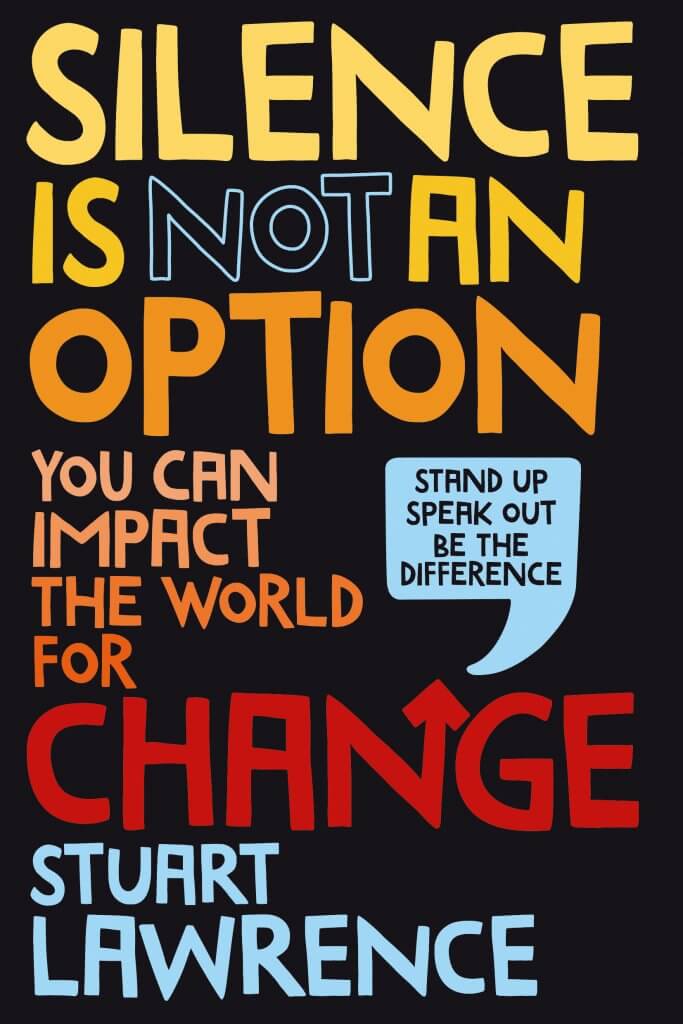
Silence is Not an Option is the first book by Stuart Lawrence – the younger brother of Stephen Lawrence who tragically died in an unprovoked attack on 22 April 1993. The book is interspersed with reflections on his brother Stephen’s life and murder as well as the tools that have helped him live positively and kept him moving forwards when times have been tough. An inspiring read directed at younger readers (aged 10 +) Stuart’s aim is to use his own experience to help young people – to help all people – find their own voice, stand up for change, and contribute towards creating a more positive society. Stuart is determined to ensure that children today understand the impact of their actions against others and the importance of inclusion through teaching tolerance and celebrating difference. He has a background in education – working as a teacher for over 15 years – and is now a motivational speaker and youth engagement specialist. Stuart is also a mentor for several young people in the South London area. Since his brother’s death, Stuart and his family have had a huge impact on the change of attitude towards racism within British society. Their story is still as impactful and important today.
This is a great book to read slowly. It gives the reader practical activities in each chapter, to really think about themselves and how they can impact those around them, before moving onto the next chapter. It is for independent reading and reflection, but could also prompt some brilliant discussions between young people if shared with a group. Chapters range from the influence of role models (Stuart discusses meeting Nelson Mandela) to championing yourself and others. Stuart is incredibly busy, but I just asked him to quickly recommend some books for teenagers to help them understand their place in the world and how to contribute positively:
– Black and British by David Olusoga (I’ve read the abridged “short history” version for younger readers and it is brilliantly fascinating)
– This Book is Anti-Racist by Tiffany Jewell (another full of practical advice)
– Everyone Versus Racism by Patrick Hutchinson
– No Win Race: A Story of Belonging, Britishness and Sport by Derek A Bardowell
Scholastic also allowed me to share this excerpt from chapter 3: YOU ARE IN CONTROL:
SELF-CONTROL
After losing my brother Stephen, I really had to learn self-control. Suddenly, my family and I were in the newspapers and on the TV. A lot of the time, the public were being misinformed about our story. I was so angry that my brother was being portrayed as a gang member and a drug dealer, when he was an A-level student aspiring to become an architect.
However, I had to control myself, because lashing out would only affect my family and my brother’s case negatively. It didn’t mean I didn’t speak out, but I had to exercise self-control in the way I handled the situation. I had to be calm and composed, even though I didn’t feel like it.
What is Self-control? Having self-control means being able to manage your decisions, emotions and behaviours so that you can achieve your goals. This skill is what separates humans from the rest of the animal kingdom!
Self-control is rooted in the front part of our brains, in an area called the prefrontal cortex. This is the planning, problem-solving and decision-making centre of the brain. Did you know that this part of the brain is much larger in humans than it is in other mammals? This area of our brain acts differently at different stages of our lives. For example, teenagers are more likely to act on impulse or to misunderstand their emotions than older people. As much as you might not want to believe us adults and feel like you are an exception to the rule, these are scientific facts!
You can only control yourself. For example, let’s say you are trying out to become the captain of the school netball team and, unfortunately, you aren’t picked for the role. Instead of sulking, getting angry or upset, you show good sportsmanship and shake the hand of your competitor. In doing this, you use your self-control. You are unable to control the situation but you are able to control your reaction and that is what is important. Don’t forget, it’s always useful to get feedback so that you can improve and win next time.
About the author: Stuart Lawrence is the younger brother of Stephen Lawrence, the young man who, on 22 April 1993, at the age of just 18, was murdered in an unprovoked racist attack. Stuart is an educator and motivational speaker, dedicated to helping to transform the life chances of young people.
Stephen Lawrence Day is held on 22 April each year to commemorate Stephen’s life. Follow the journey: #SilenceIsNotAnOption Insta @hon_stuartlawrence Twitter @sal2nd
SILENCE IS NOT AN OPTION is published today by Scholastic.
A haunting and romantic novel set in post-war Spain by Ruta Sepetys – winner of the Carnegie Medal 2017.
Madrid, 1957.
Daniel, young, wealthy and unsure of his place in the world, views the city through the lens of his camera.
Ana, a hotel maid whose family is suffering under the fascist dictatorship of General Franco.
Lives and hearts collide as they unite to uncover the hidden darkness within the city.
A darkness that could engulf them all . . .
Master storyteller Ruta Sepetys once again shines light into one of history’s darkest corners in this epic, heart-wrenching novel about identity, unforgettable love and the hidden violence of silence.
I was lucky enough to be invited to join a small Q&A session with Ruta Sepetys on zoom last month, to discuss her latest title THE FOUNTAINS OF SILENCE. It was an absolutely fascinating conversation between her and Carmen McCullough (editorial director at Puffin), followed by some questions from the invited bloggers. Do read all the other blogs to discover her answers to some really interesting questions about the research behind her writing as well as the writing itself and its reception.
Ruta talked about building narratives from what you know (and assume) about a person, and how important it is to give a voice to unheard stories to maybe change opinions and open up minds. It was amazing hearing about the lengths she went to in researching details to include that would immerse the readers in a sensory experience – to the extent that she owns a key to a room in the hotel that her American family stayed in, brochures they would have seen in the foyer, a spoon they would have used!
When it was my turn to ask some questions, mine weren’t really about FOUNTAINS at all (although it was relevant as it had recently been announced that it had been longlisted for this year’s Carnegie AND NOW SHORTLISTED!!!), but rather about her experience being nominated for and winning the Carnegie medal:
On your website it says your “books have won or been shortlisted for over forty book prizes”, but the Carnegie is the only one specifically mentioned, why is the medal so special?
Ruta’s answer to this question blew me away:
One of the oldest, most enduring prizes that is recognised world-wide…When I began writing…many of the true witnesses would say “don’t bother, no one’s interested, the world has forgotten us”, and to be recognised on a longlist for an award like this…is restoring a bit of dignity to these people…The true survivors feel honoured by the award, and that is really powerful. It brings history out of the dark.
Is it just a nice thing to win an award, or do you think they are important for bigger reasons?
Ruta made some great points about the Carnegie promoting a culture of reading, being a reading community, and bringing people together around one story. Reading is a creative partnership between the author and the reader:
…the author provides the text and the reader brings the character to life, the setting, amplifies the emotion…walks by their side for 300pages feeling their fear…Awards acknowledge that empathy, I think that’s the most important part.
Thank you so much to Ruta for the really thoughtful answers.
When Hugo and Ada travel to their friend Dorian’s planet for the holidays, Hugo is anxious about being accepted by Dorian’s powerful family. But when they arrive on Hydrox, there are more pressing things to worry about, as the planet has become a temporary home for refugee butterflies. Displaced from their home by climate change, the butterflies have been offered sanctuary by Dorian’s parents, but they’re quickly running out of space. Meanwhile, beneath the seas, a strange creature is wreaking all kinds of havoc … Can Hugo, Dorian and Ada step in before the crisis gets out of control?
You all know how much I love the extra-readable YA from Barrington Stoke (and everything else they publish, but anyway…) so I’m always excited when I get the chance to review one of their titles. I was especially excited to see The Deep Sea Duke arrive, as The Starlight Watchmaker introduced some utterly amazing characters and I wanted to join them in another adventure. I also got a chance to follow up with the author, Lauren James:
When I interviewed you for TeenLibrarian around the publication of The Starlight Watchmaker, you mentioned that you had plans to write a sequel on Dorian’s planet because there was still a lot more story to tell about Dorian and Hugo’s relationship. I’ve loved to see that come true (and was really pleased to see my favourite character, Ada, still plays a large part – pun intended). Is the final version much different to what you had planned 18 months ago?
Not much, really! I’ve always had a really clear vision for these books, and one of the joys of writing short novellas (each book is around 20,000 words long) is that the edits tend to be quite low-key. Not much changes, unlike my novels, which are torn to bits before I’m through with them. But I’ve always been able to see exactly where Hugo and Dorian’s story is going, and it’s so nice to see it come together.
There is a definite focus on climate change (and the causes) in this novella, did you find yourself doing a lot of research before (or during) the world building?
I’m very interested in climate politics in general, so a lot of the content in the book was stuff I was already aware of. I read a lot of newsletters about climate change, and reading articles helped me establish what I wanted to say with the novella.
What is your main piece of advice for a teen concerned about climate change, and how they can do anything about it?
So many of the climate fiction books I read focus on the effect that individuals can have on the planet, with the message that we all need to be more responsible, greener consumers. I wanted to look at how industry and businesses are causing pollution, to make it clear to my young, scared readers that it’s not their responsibility to fix climate change. No amount of careful consumption can fix an industry-wide problem.
However, there are some things people can do to help! My biggest tips are:
Vote in all political elections you are able to, and make sure your representatives are aware that your vote is based on their climate policy views
Replace garden lawns with wildflower meadows
Switch to LED lightbulbs
Don’t fly – and pay for carbon offsetting for any flights you are required to take
Make sure your savings and pensions schemes are not invested in companies contributing to climate change. Ask your company to divest from their harmful default options
Avoid eating beef, and transition to dairy alternatives
Buy in-season food, grown locally (avoiding hot-house produce grown out of season)
Change to a renewable energy utility supplier
Buy electric cars – but only once your current car is absolutely unable to be fixed. Keep current cars on the road for as long as possible, to keep manufacturing emissions low
Install solar panels or solar roof tiles
Air dry clothing instead of tumble drying
Avoid disposable, cheap fashion and invest in long-term, quality pieces that can be worn for many years
And, of course, plant trees wherever you can. They truly are the lungs of our planet. Depleted forests, savannahs, peatlands, mangroves and wetlands have the ability to grow back quickly, but we need to give them the opportunity to do that.
How did the Climate Fiction Writers League come about?
The idea was inspired by a similar writing collective, the Women Writers Suffrage League, formed in 1908 by activists, who said, “A body of writers working for a common cause cannot fail to influence public opinion.” They encouraged professional writers to create work about the suffrage movement working to give women the vote. These books were written and published before women got the vote – when they had no idea whether their activism would be successful.
The comparison between the suffragettes and modern Extinction Rebellion activists is something I’d been thinking about a lot while writing my own climate fiction novel – it’s one of the big questions of our time, I think. Is political protest enough for something as urgent as the climate crisis? Should activists be taking direct action, similar to those taken by the suffragettes?
I’ve been trying to answer that question for myself while writing my novel, and the Women Writers Suffrage League was mentioned in some non-fiction about the suffragettes. Immediately, I wanted to join a similar movement for climate fiction writers – but I couldn’t find any when I googled it. In fact, I couldn’t really find any comprehensive resources about climate fiction at all. It seemed like something that would be really useful to a lot of people, so I decided to set one up.
The group has really taken on its own life beyond what I ever imagined, with over 100 authors on board now, and lots of essays and interviews to read: https://climatefictionwritersleague.substack.com/
I will always ask: what are you reading at the moment and who would you recommend it to?
I just read an early copy of A Psalm for the Wild-Built by Becky Chambers, which is a really lovely far-future look at a world where humans have worked to stop climate change – and succeeded! I think there’s a desperate need for futures which aren’t dystopian, to encourage people to keep trying to save the planet and not give up – and this does that really well. I also really enjoyed Winter’s Orbit by Everina Maxwell, a nice space opera romance.
What are you working on at the moment?
My next novel continues the climate change theme with Green Rising, set in a future where teenagers can grow plants, and use it to rewild the planet. I’m also working on the novel adaptation of my internet murder mystery An Unauthorised Fan Treatise, which I posted online at https://gottiewrites.wordpress.com/ So lots of stuff in the pipeline!
Huge thanks to Lauren for her wonderful answers and to Barrington Stoke for sending me a review copy. The Deep Sea Duke is out now!
Lauren James is the twice Carnegie-nominated British author of many Young Adult novels, including The Reckless Afterlife of Harriet Stoker, The Loneliest Girl in the Universe and The Quiet at the End of the World. She is also a Creative Writing lecturer, freelance editor, screenwriter, and the founder of the Climate Fiction Writers League. Her upcoming release is Green Rising, a climate change thriller.
Her books have sold over a hundred thousand copies worldwide, been translated into five languages and shortlisted for the YA Book Prize and STEAM Children’s Book Award.
Her other novels include The Next Together series, the dyslexia-friendly novella series The Watchmaker and the Duke and serialised online novel An Unauthorised Fan Treatise.
She was born in 1992, and has a Masters degree from the University of Nottingham, UK, where she studied Chemistry and Physics. Lauren is a passionate advocate of STEM further education, and many of her books feature female scientists in prominent roles. She sold the rights to her first novel when she was 21, whilst she was still at university.
Her writing has been described as ‘gripping romantic sci-fi’ by the Wall Street Journal and ‘a strange, witty, compulsively unpredictable read which blows most of its new YA-suspense brethren out of the water’ by Entertainment Weekly. The Last Beginning was named one of the best LGBT-inclusive works for young adults by the Independent.
Lauren lives in the West Midlands and is an Arts Council grant recipient. She has written articles for numerous publications, including the Guardian, Buzzfeed, Den of Geek, The Toast, and the Children’s Writers and Artist’s Yearbook 2021. She teaches creative writing for Coventry University, WriteMentor, and Writing West Midlands, providing creative writing courses to children through the Spark Young Writers programme.
What if you could bring your best friend back to life – but only for a short time?
Jamal’s best friend, Q, doesn’t know that he died, and that he’s about to die . . . again. He doesn’t know that Jamal tried to save him. And that the reason they haven’t been friends for two years is because Jamal blames Q for the accident that killed his parents.
But what if Jamal could have a second chance? A new technology allows Q to be reanimated for a few weeks before he dies . . . permanently. And Q’s mom is not about to let anyone ruin this miracle by telling Q about his impending death. So how can Jamal fix everything if he can’t tell Q the truth?
Forever Ends on Friday weaves together loss, grief, friendship, and love to form a wholly unique homage to the bonds that bring people together for life – and beyond.
Published in the US as EARLY DEPARTURES, FOREVER ENDS ON FRIDAY is the second YA novel by Justin A. Reynolds. I interviewed him around the publication date of OPPOSITE OF ALWAYS and his answers were great, do have a look (and read that book if you haven’t yet)! The synopsis for FOREVER actually really reminded me of OPPOSITE, with the idea of doing things right the second time around, so I was a little worried that it might feel samey…thank goodness I was wrong! Although the idea of second chances is important in both books, it was a refreshingly different read. Family, again, is huge in the story, it is about the importance of family and relationships of all sorts. I loved the humour, brightening even the darkest moments but without spoiling them, and the warmth in the relationships. Jamal’s voice is just great. The premise is so interesting and plays out believably, leaving the reader with lots to ponder over: Do you think it is a good idea to have a second chance to say goodbye?
My last interview with Justin was one of my favourite for the blog, so when Amber at Macmillan asked if I’d like to be part of the blog tour for this second book I took the opportunity to ask just a few more questions…
What is it about the idea of second chances that sparks your imagination?
Great question! I think it probably has to do with my overanalyzing brain, ha. I tend to replay moments and episodes in a loop, turning over a situation on all sides, trying to grasp either what went right or wrong, what I could’ve done better or just differently. The idea of having the time and space to fix the things we stubbornly broke out of frustration, anxiety, or hurt feelings I think will forever remain intriguing to me. We’re so tragically flawed as people, all of us—and yet, most of us believe in redemption, myself included; and I believe it’s love that makes such healing possible.
Love, in its most honest form, is such a powerful experience; it’s like we’re being remade from the inside out—like remodeling for the soul. You are forever changed. And once you’ve had it, it’s crushing to be without it. For me, the reason we’re here on this planet is to form meaningful, interpersonal relationships, which only happens when we reciprocate vulnerability—but with such openness, we expose ourselves to pain, betrayal, and apathy. It’s not a question of if we’ll be hurt, but when, even at the hands of those who truly love us. I suppose all of my stories stem from this: I so desperately want to believe in humanity; I need to believe that, given the opportunity, we’ll do what’s right by each other. But I also appreciate that sometimes that requires a second chance.
I love the banter between the friends. Do you listen to a lot of teenagers chatting in real life for inspiration?
Thank you. I’m so happy you enjoy it because dialogue is probably the thing I enjoy most about writing—or maybe it’s the thing that I’ve always had the easiest time with, ha. I’m lucky that I get to visit schools all over the country and meet and listen to lots of young people talking about their experiences, the things that matter to them. I think listening is the most important part of writing, other than being a good reader. There’s a rhythm to language, to our conversations, whether those be internal or with our family and friends—and for me there are few greater writerly feelings than when you successfully tap into that sound. Another kinda weird thing I do is I watch movies and television with the subtitles (captions) on—which I know drives some people crazy, haha. But there’s something about seeing the words as they’re being spoken that I find both beautiful and instructive. The fact that there are so many ways to say the same thing to someone else, I love that.
Have you had much opportunity to engage with readers in these…interesting times?
I’m fortunate in that I’ve gotten to do quite a few virtual events, including book festivals and conferences and interviews. I’ve also done several virtual school visits, which are always fun. We also had our second annual Cleveland Reads (#CLEReads) Book Festival this year, also via a virtual platform, and that was such a thrilling experience, connecting with awesome readers, young and old, all over the world.
I will always ask: what are you reading at the moment and who would you recommend it to?
I always love this question because I love talking about other people’s books! So Bryan Washington’s MEMORIAL is amazing; any story highlighting “found family” is already going to be high on my list but then Bryan’s inventive language and his unique POV is absolutely electric. I should mention I believe this is formally categorized as an adult title.
Also, I’m reading and loving Danielle Evans’s new short story collection, THE OFFICE OF HISTORICAL CORRECTIONS. I don’t know if there’s a short story writer I enjoy and admire more; what she manages to convey in such small spaces detonates fireworks in my brain. Every Evans story makes me green with envy; she’s a master.
I also want to say thank you so much for having me; it’s always such a pleasure talking with you!
Thank you so much for your wonderful answers, it is my pleasure to read your books and have a chance to ask a few nosy questions!
Huge thanks to Macmillan Kids for sending me a review copy and inviting me to be part of the blog tour for another awesome Justin A. Reynolds!