Author Archives: Matt Imrie

Rocking the Boat at Oneworld: an Interview with Juliet Mabey

Hi Juliet welcome to Teen Librarian and thank you for giving up your time for the Q&A
I am sure that almost everyone in the library and book world already knows who you are but for those who do not would you like to introduce yourself to the audience?

My husband and I founded Oneworld almost thirty years ago to publish quality non-fiction on a broad range of subjects, always looking for ways to make big ideas accessible and interesting to a wide readership, and we now publish over 100 titles a year. Six years ago I launched a fiction list to publish beautifully written novels that showcase emotionally engaging stories, strong narratives and original literary voices, which is going from strength to strength and now makes up about a third of our output.

What spurred you on to start a YA imprint?

I had a chance conversation with a children’s publisher at a conference who mentioned that issue-driven novels are very popular in the YA market, and since many of our adult novels deal with big issues and explore the human condition in all its vagaries, like all the best fiction, we thought extending our approach into the YA market made a lot of sense. I have four children myself, so we are focusing on publishing the sort of books I would have loved them to read as teenagers!

YA publishing has been growing year on year – do you have any idea why it is so popular?

I think right now some of the best writing is popping up in YA. Publishers of YA fiction are bringing out some incredibly well written and exciting novels – they have set the bar very high – and this is clearly resonating with a wide range of readers, not only teens but also many adults. They are also putting a lot of effort into great cover designs and innovative marketing, and the YA market is particularly responsive to creative social media campaigns.

I read recently that you will also be publishing narrative non-fiction, do you have any authors lined up or will you be initially focusing on your fiction titles?

Our primary focus at the moment will be on fiction, but we have recently published an edition of Jared Diamond’s best-selling non-fiction book, The Third Chimpanzee, adapted for teenagers, which we’re very excited about. And making cutting-edge research and ideas – from science to history and global issues – interesting and accessible to a YA market is a challenge we would love to embrace, so watch this space.

The books are all so different – Mindwalker is a dystopian tale, Conversion is a modern retelling of The Crucible and written by a descendent of three of the accused women from the Salem trials (which is awesome); Nest is a contemporary drama and Minus Me is one I have just started so am not sure what exactly it is yet. How did you find these authors and why did you choose them for your first Rock the Boat titles?

They have all come to us in different ways. I met a translator who had read Minus Me in its original Norwegian and adored it (it is a beautiful story about a teenage girl who develops a heart condition and comes up with a bucket list of things every teenager should do at 13), and her enthusiasm was so infectious I immediately contacted the publisher and asked for the English-language rights, while Mindwalker came up in a chance conversation with a literary agent, and when I described what we were looking for in our YA novels, she immediately recommended Mindwalker and its sequel, Mindstormer (out in 2016). Conversion and Nest both came with passionate recommendations from American editors.

How many titles are you planning on releasing this year?

This year we are publishing 6 titles for YA and Middle Grade readers, with two novels coming out in the Autumn. The first is a fantastic fantasy novel called Illuminae, the first in a trilogy, jointly written by two bestselling YA authors, Jay Kristoff (author of the Lotus War series) and Amie Kaufman (author of the Starbound series). It’s set on a spaceship in the year 2575 in a time of deadly plague, and told through a fascinating dossier of hacked documents, including emails, schematics, military files, medical reports, interviews, and more. And we are also re-publishing Richard Adams’ classic The Plague Dogs, about two dogs who escape from a science lab in the Lake District, who may have been infected by a deadly virus that could put the public in danger.

The book Minus Me by Ingelin Røssland has been translated from Norwegian – translated YA titles are still fairly rare. Do you plan on introducing more non-English authors to young readers?

We are certainly very keen to sign up the best YA writing from around the world, so we will include translated fiction whenever we find titles we think will work well for our audience. We have both a Mexican and Russian YA novel currently under consideration, and last year we published the Korean novel The Hen Who Dreamed She Could Fly by Sun-mi Hwang, which was very popular with both a teen audience as well as adults. Looking further ahead, we are delighted to welcome Sarah Odedina as Publisher of Rock the Boat, whose credits include serving as Editor in Chief at Bloomsbury where she oversaw the publication of the Harry Potter series, among others, and she is planning to publish around 15 titles a year going forward, some of which will definitely be fiction in translation, as well as fiction that engages with diversity.

It would be unfair to ask you which titles are your favourites so I instead I will ask which book you would suggest readers pick up first when they discover them?

That’s an impossible question to answer – we publish what we love, so I think it will depend on where readers’ interests lie. Our list is deliberately wide-ranging, from Conversion and a group of teenage girls in the 1690s who accuse a woman of withcraft, to Mindwalker, set in the distant future, which asks interesting questions about the desirability of mind-wiping bad memories and the implications for state control. I hope readers will find each one a gem, a beautiful story, well told.

Win a Year’s Supply of Books with Atom Books

Atom are offering readers the chance to win a year’s supply of books in anticipation of CJ Daugherty’s amazing new series, The Secret Fire!

That’s right, CJ Daugherty – the internationally best-selling novelist of the Night School series – will be publishing her next YA series this September! The Secret Fire is about a boy in Paris and a girl England who meet as pen pals. Unbeknown to them, they are connected by an ancient curse which dictates that our Parisian hero, Sacha Winters, will die on his eighteenth birthday and an ancient prophecy will be fulfilled. Unless Taylor Montclair can save him . . .

Atom want to know what you would like to do MOST before you turn eighteen. As well as what kind of books you love reading. Take their survey and have a chance at winning that life-time supply of books!

You can follow the link to their survey here

Atom Books Reader Survey

Co-written with French author Carina Rozenfeld, The Secret Fire is the first cross-channel YA novel ever and promises to be the most anticipated book this year!

The School for Good and Evil #3: The Last Ever After

Coming this July

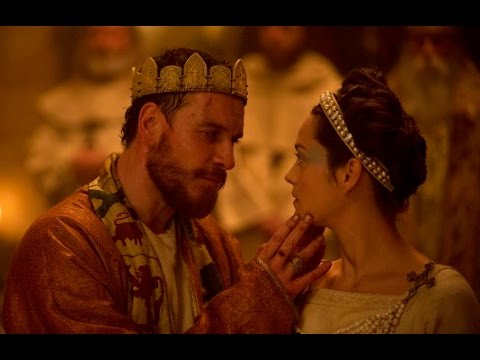
Macbeth – trailer

Out in October, starring Michael Fassbender and Marion Cotillard

I am your toothless Carny… Michael Grant on Horror


So, Matt suggested a blog post explaining how I tap into the sort of horror that will affect both kids and adults and my first thought was that I hadn’t written enough horror to have a good answer. I’ve only written one thing that’s just straight-up horror: Messenger of Fear, with sales well into the dozens.

But then I scrolled back through my oeuvre (I’ve been waiting a long time to be able to deploy that obnoxious word) and on closer reflection, huh, I do write a lot of horror, I just tend not to think of it that way. BZRK is certainly scary but it’s sci-fi horror in the Alien or Event Horizon vein, so I sweep it into the sci-fi category. And there are certainly major horror elements in the Gone series, but that gets swept into the YA dystopia drawer.

Going way back, the Everworld series I wrote with my wife, Katherine Applegate, has a lot of horror, but also a lot of mythology so I sweep that into the category of, “shouldn’t we have hired Rick Riordan to write that?” That was back in the 90’s and he hadn’t done The Lightning Thief yet, and we probably could have hired him for minimum wage. The series would have sold better, and we would have contractually enslaved a future competitor. Everybody wins! Except Riordan.

I’m sorry, that was a bit of a digression. The point is yes, yes I would like to pretend to be an expert on how to write scary stuff. Let’s see if I know what I’m talking about.

There are two kinds of people: those who think death is the ultimate threat, and those who have a sick, twisted, deviant imagination and understand that death is actually the end of fear and suffering. The instant you are dead, you can stop worrying how you look, what you can eat, and how to weasel out of attending your high school reunion. All done! Candle snuffed out. You’re not just outta here, you’re just not. You occupy no position, neither here nor there. It’s not just Buh-bye! it’s Buh-.

Death doesn’t scare me, you know what does? Mutilation. The forcible removal of useful body parts. That’s why when I meet my daughter’s boyfriends, I’m never thinking “shotgun,” I’m thinking “hack saw”. To be specific, I’m thinking one could use a metal clamp to attach some portion of the young gentleman’s anatomy to the floor, set the room on fire and leave the victim a steak knife. The element of choice is important because it makes the victim an agent of his own mutilation, it transfers enough responsibility that the moment of decision, the moment when he decides to start sawing away rather than burn alive, that moment would be with him every day of his life.

What’s the point of inflicting suffering only to end it in death?

Now, what just happened in your head, blog reader, is also important. It’s useful that you started to wonder if there was something actually wrong with me. I mean, what kind of person thinks up something like that? And that concern is useful because it means I’ve laid down a marker in your brain signalling that we could be going to some very dark places. Look at it this way: two identical roller coasters, one operated by a team of costumed Disney droids, and one operated by a toothless carny with a skull tattoo.

I am your toothless carny.

(By the way, I just Googled the phrase, “I am your toothless carny,” and it has evidently never before been written or said. I could not be more proud.)

Wherever we are taking the story, whatever the specific horror, it’s helpful if you don’t trust me to behave. I don’t want you reassured, I want you nervous. So when I set out to scare people I lay down some early scene to knock the reader off-stride. In BZRK (spoiler alert) I set up what appears to be our protagonist and then kill him in as spectacularly gruesome a way as I can while working with a plunging jet, a football stadium, a flying brain and a cup of beer. In Gone there’s the baby who starves to death in his crib, and a girl beaten to death with a baseball bat. In Messenger of Fear we start with the corpse of a teenager who has shot herself in the head.

I want the reader to understand that I don’t even know what the rules are so I’m certainly not going to abide by them. You know that place you’re afraid to go? I’m taking you there. Get in the car, we’re going right now. You are in the hands of a disturbed individual.

So, I like to create uncertainty, then I want to keep pushing your boundaries, but only so far. You can’t get into the game of trying to top yourself each time because that pretty quickly starts to reek of desperation. And it’s unnecessary. The Stand is not scarier than Pet Sematary, it’s just a different scary. We don’t need to believe Stephen King will turn the scare up to eleven, we just need to know that he’s going to take us someplace darker than we are comfortable with. No one makes you more nervous and sustains it longer than King.

Dread is the thing much more than the thing is the thing. Wait, what? Okay, what I mean is that it’s less about the specific horror – mutilation, burning alive, dad getting crazy and chasing you around the maze with an axe, vampires sucking your blood so you can sparkle too — than it is about the build-up. In the build-up you want the reader unsettled, you want an element of choice, you want feelings of helplessness, and you want the reader to see him/her/their self in at least one character and then you get dread.

It’s not death we dread, it’s all the things leading up to death. In other words: life. Only the living can experience cancer, the slow suffocation of emphysema, Alzheimers, dismemberment, the guilt of committing homicide, loneliness, depression, locked-in syndrome, uncontrollable rage, frantic impotent desperation, or a cold sore on the side of your tongue where it keeps rubbing against your molars.

So, it’s simple, really. Think of something awful. Create a character to inflict that awful thing upon. Give that character some control. Signal that, oh yes, we are absolutely going to go too far. And then try to work in the word, “eldritch” at least once.

The Territory by Sarah Govett: a Review

The Territory is a gripping fantasy thriller set in a future Britain where unflooded land is scarce.

Everyone must pass an exam at 15 to stay in The Territory or be exiled to the disease-ridden Wetlands. But how can Noa compete when the system is skewed to favour rich kids who can upload information through a Node in the back of their neck? And how can she focus when her heart is being pulled in two directions?

More 10 Things I Hate About You than The Hunger Games; The Territory is a brilliant introduction to a dystopian society not too far removed from our own. It goes beyond the expected tropes of a grim and bloody fight for survival and instead focuses on the daily life being a second class citizen in that most relatable and terrifying of settings – high school.

At Noa’s school there are only two groups – the Childes (Freakoids), teenagers that have had upload nodes grafted into their spines to allow them instantaneous access to information and near perfect recall; and Norms (Fish Faces) teenagers whose parents were either unwilling to risk the lives of their children or been unable to afford the procedure.

With Noa and er friends facing exams that could make or destroy their lives in a slowly drowning world they still have to deal with jealousy, loss and facing rivals that see them as leeches and fit for nothing except expulsion and exile outside the safety of the Territory.

In the days leading up to the most important exams of their lives, Noa Blake and her friends are about to learn that there is no upload equivalent to the human spirit.

The Territory is a believable, exciting read that had me hanging on every word and left me wanting to find out more about a world that could be our future.

Side-stepping Big Brother


In our country, do we want to allow a means of communication between people which […] we cannot read?

My answer to that question is no, we must not.

~David Cameron

 
Since the Conservative Part achieved a majority in the elections, the previously shelved Draft Communications Data Bill (also known as the Snooper’s Charter) is back on the list of things the government wants to push through at the earliest possible opportunity. The original draft bill required internet and other service providers to retain records of all communications for 12 months, including emails, web phone calls and use of social media and it is unlikely that it will have changed much since it was first tabled.

The bill currently has the support of the National Crime Agency, Met Police and City of London Police.

It is not too late to start lobbying our MPs in the hope that they will vote against this bill.

The British people are in danger of ‘sleep-walking into a surveillance society!’

~Richard Thomas former Information Commissioner

 
Compared to other industrialised Western states, the UK was “the most surveilled country”

~Dr David Murakami-Wood

 
If you have nothing to hide you have nothing to fear is a saying that I seen being quoted by politicians more and more lately; it is the thought that if you are honest, law-abiding and open then you will have no problems with the government looking into what you are saying and doing. I am a firm believer in privacy and believe that it is a right that no government should be able remove.

I know that it is very easy being tracked if you use an RFID travel card or carry your mobile phone with you, even walking in public through a built-up area the chances of you ending up on CCTV are very good.

It is even easier to track a person online, with cookies being placed on our computers, ISPs tracking where we go, search companies retaining all our searches and now governments wanting access to everything we say and do.

It is fortunate that in this modern, hyper-connected world there are tools available to end-users to allow us a modicum of privacy online. I have included links and some information on three of them below.

The Onion Router (Tor)

Tor allows internet users to surf the web anonymously and is used for both legal and illegal purposes.

From the Electronic Freedom Foundation Surveillance Self Defence page:

Tor is a volunteer-run service that provides both privacy and anonymity online by masking who you are and where you are connecting. The service also protects you from the Tor network itself.

For people who might need occasional anonymity and privacy when accessing websites, Tor Browser provides a quick and easy way to use the Tor network.

Users are able to download a version of the Firefox browser modified to work through the Tor network:
https://www.torproject.org/projects/torbrowser.html.en

The Tor Browser works just like other web browsers, except that it sends your communications through Tor, making it harder for people who are monitoring you to know exactly what you’re doing online, and harder for people monitoring the sites you use to know where you’re connecting from. Keep in mind that only activities you do inside of Tor Browser itself will be anonymized. Having Tor Browser installed on your computer does not make things you do on the same computer using other software (such as your regular web browser) anonymous.

The Tor Project also provides secure browsing apps for Android & iPhone users.

TAILS

The Amnesic Incognito Live System (Tails) is a Debian-based live CD/USB with the goal of providing complete Internet anonymity for the user. The product ships with several Internet applications, including web browser, IRC client, mail client and instant messenger, all pre-configured with security in mind and with all traffic anonymised. To achieve this, Tails uses the Tor network to make Internet traffic very hard to trace.

When your computer boots up after the USB or CD is inserted, instead of booting with the installed operating system it will start up the Tails temporary OS that will be run off the CD/USB. When shut down all traces of the temporary OS will be removed from the computer and when the CD/USB is removed the standard OS will begin when next the computer is turned on.

Off the Record Messaging

is a cryptographic protocol that provides encryption for instant messaging conversations.

Websites worth visiting

Library Freedom Project

The Library Freedom Project is a partnership among librarians, technologists, attorneys, and privacy advocates which aims to make real the promise of intellectual freedom in libraries. By teaching librarians about surveillance threats, privacy rights and responsibilities, and digital tools to stop surveillance, we hope to create a privacy-centric paradigm shift in libraries and the local communities they serve.

The Electronic Freedom Foundation

The Electronic Frontier Foundation is the leading nonprofit organization defending civil liberties in the digital world. Founded in 1990, EFF champions user privacy, free expression, and innovation through impact litigation, policy analysis, grassroots activism, and technology development. The EFF works to ensure that rights and freedoms are enhanced and protected as our use of technology grows.

The Open Rights Group

The Open Rights Group upholds human rights like free expression and privacy. We condemn and work against repressive laws or systems that deny people these rights.

The ORG campaigns, lobbies, goes to court — whatever it takes to build and support a movement for freedom in the digital age.

Teen Librarian Monthly May 2015 – 9 Years Old Today

Today marks nine years of Teen Librarian and Teen Librarian Monthly

Download (PDF, 1.03MB)

Libraries in the Internet Age

Introduce your students to what Libraries are capable of in the Information Age.

Good for an introduction to the Library lesson at the start of the school year and more!

Interview with Sarah Govett Author of The Territory


Hi Sarah, thank you for taking the time to answer some questions for Teen Librarian!

My obligatory first question is could you please introduce yourself to the audience?

My name’s Sarah Govett (but I guess you know that already!). My debut novel, The Territory, is out this month with Firefly Press. I was initially a lawyer, then a tutor, a mum and now a writer. Please buy my book as I really like writing and want to keep doing it!

How far in the future is The Territory set?

It’s set in 2059, but the exact date isn’t important. It’s just supposed to be enough in the future that environmental meltdown has happened, but close enough that people and their attitudes are pretty recognisable.

The global catastrophe that occurred – one of polar ice caps melting and the lower levels of land being flooded is potentially a very real threat, do you believe it is a catastrophe that can happen in our lifetimes?

I do. And it really scares me. I genuinely believe we need to take pretty drastic steps now to reduce population and carbon consumption, but I’m worried we’re collectively too selfish to do this. Humans are notoriously rubbish at prioritising long-term gain over short-term hardship.


Do you think that Britain is moving towards a police state?

There have been some worrying developments, but I think we’re a long way from a proper police state scenario. I hope, maybe naively, that us Brits value have such a strong tradition of liberty that we will stop any drastic infringements on our freedom. I don’t think, for example, that Spain’s draconian Citizen Safety Law would ever get through Parliament here.

The use of school students is a fairly common one in dystopian fiction (the biggest example being Battle Royale) but it is more realistic with them actually attending school and seeing the division between norms and the kids that have nodes implanted allowing them faster access to learning and near perfect recall. What inspired this?

I think the biggest influence has been working as a tutor these past 12 years. I’ve taught some incredibly bright and talented pupils at low performing schools, who, without additional input, have no chance of competing against their often less able peers at more spoon-feeding, exam-factory style schools. I wanted to take this unfairness and heighten it to a life or death situation.

I felt through the novel that you are not a fan of the levels of testing that students undergo today, nor the push to side-line the arts over the sciences – would you say that is accurate?

Absolutely. I have seen first hand the horrific pressure our results-obsessed education system places on students and I wanted my novel to reflect this. Teenagers work so hard to sit exams in 9 or more subjects, often to be rewarded by newspaper headlines denigrating their results and declaring this year’s exams to be ‘the easiest ever!’ The more creative students are forced to sweat their way through maths and science knowing that more weight will be placed on those results. And I think, growing up, I was as guilty as anyone of seeing maths and science as more important subjects or maybe better indicators of intelligence. I mean the stereotypically ‘brainy’ student is more associated with a lab or mathletes than poetry. I think my change in opinion has come through working closely with students who are clearly hugely intelligent but whose brains, for whatever reason, simply cannot process more abstract concepts in maths or science. And they feel terrible about it and somehow lesser. But the arts and humanities help foster an understanding of motivations and empathy, which I believe we need now more than ever to make the world a better place. When you imagine a world without stories, music and art you realise that whilst the Arts might not be necessary for human survival, they are necessary to preserve our humanity – even people with highly logical jobs like to relax at night with dramas and comedies, or perhaps even a YA book with crossover appeal.

Noa is a very unusual heroine, she comes across as flawed and human compared to many of her near perfect contemporaries on the dystopian YA bookshelf, what inspired you to create her?

I wanted a heroine who was a bit more relatable. I think that even in the most dystopian of societies people would be caught up in their own little trivial worlds, scared to act and, above all, determined to survive. The will to live is really, really strong, even if it means sacrificing others.

Will we be introduced to more of the drowned world in later stories or will we be confined to what remains of Britain?

Book two has the working title ‘Into the Wetlands,’ so there’s a clue!

Moving the spotlight onto your publishers for a moment, Firefly Press is a very new addition to the publishing market; apart from The Territory can you recommend any of the other titles they will be publishing?

They’ve got some great titles coming out. Also out this month is the mad sci-fi epic Lost on Mars by Doctor Who writer Paul Magrs (10+). In June they’re bringing out White Petals by Maria Grace – a warm and funny real-life drama set in a care home in the south Wales valleys (13+). And two great books in September – Aubrey and the Terrible Yoot by Horatio Clare, a modern day fable about a small boy determined to fight his dad’s depression (8 to 12); and The Boy Who Drew the Future by the brilliant Rhian Ivory – a YA fantasy fiction set in the past and present about two boys compelled to draw events that later come true.

Apart from what you may already have mentioned in previous questions, what inspired The Territory and what inspires you to write?

I’ve thought about writing for a long time and finally decided to have a go in snatched half hours while my baby slept. I’ve always been drawn to accessible novels about big ideas and my biggest influences are probably John Wyndham (The Crysalids is probably my all time favourite book), John Christopher (the amazing Death of Grass), Margaret Atwood (too many to name), Daniel Keyes (Flowers for Algernon – if you haven’t read it you need to get a copy, believe me), and more recently Gemma Malley (her thought provoking The Declaration). On a more personal note, my eldest girl is called Noa. My husband and I often panic about having given her such an unusual name so I wanted her to be able to read about a cool heroine called Noa to make her feel better about it all.

Apart from the sequel, is there anything else that you are working on at the moment?

I’ve written a few thousand words of a more humorous coming of age novel but I think I’ll return to this later. I want to crack on with the sequel!

Thank you so much for taking the time to answer these questions.

Thank you!