Author Archives: Caroline Fielding

Chartered School Librarian, CILIP YLG London Chair, Bea-keeper

When the Sky Falls by Phil Earle

Inspired by a true story. It’s 1940, and Joseph has been packed off to stay with Mrs F, a gruff woman with no great fondness for children. To Joseph’s amazement, she owns the rundown city zoo where Joseph meets Adonis, a huge silverback gorilla. Adonis is ferociously strong and dangerous, but Joseph finds he has an affinity with the lonely beast. But when the bombs begin to fall, it is up to Joseph to guard Adonis’s cage should it be damaged by a blast. Will Joseph be ready to pull the trigger if it comes to it?

Andersen Press

Phil Earle has written such a range of books, for a range of readers, and I’ve read and enjoyed most of them. WHEN THE SKY FALLS is his latest and, in my opinion, his greatest novel. There are a few strands to the story, I was particularly taken with Joseph’s school problems, all of which tie together beautifully to make a gripping and poignant read. I enjoyed it so much (including the bits that made me sob) that I had to ask Phil a few questions:

From the first few pages we get a real feel for Joseph and Mrs F’s characters. Was that always the opening scene or did you consider joining Joseph before he got to the station?

I did initially have a prologue. I’m a BIG fan of a prologue, and this one started with the bombs falling and Joseph clutching a rifle…I thought it was terribly exciting. My editor Charlie thought it was superfluous and confusing. Charlie won. She’s usually right (ok, always).

I wasn’t ever tempted to show Joseph’s life up north at the start of the book. I wanted his backstory to unravel as the reader turns the page and the story goes on…

The afterward, sharing the detail that inspired WHEN THE SKY FALLS, of your friend’s dad having to keep his gun trained on a zoo’s lion during air raids, is really interesting. How did a lion turn into a gorilla in your mind?

It was out of necessity really. I KNEW I had to write this story, it gave me goosebumps every time I thought about it, but it felt key for the boy to have formed a relationship with whatever was in the cage, otherwise the drama wouldn’t have been pronounced enough when the bombs started to fall.

It didn’t feel realistic that a lion would protect a child if it were set free, but there are lots of examples in zoos of silverback’s doing exactly this. I’ve long been fascinated by apes, so I knew as soon as Adonis popped into my head, that this was the right direction.

You’ve written books for a wide age range, including more accessible novellas for Barrington Stoke, how much does your process vary with the target audience? Which type of writing do you find most satisfying?

Unless I’m collaborating, I tend to write the same way, as in I have an idea, then I do zero planning. All I do is write. I love how exciting that feels, like I’m the reader discovering the story for the first time. Sometimes I have a start and an ending, but where it goes in-between is largely a mystery to me when I begin.

In terms of satisfaction, I don’t think there’s any one age group or genre I favour. There is nothing more satisfying than when you discover a story for any age. Or as exciting. If I’m not excited as I write, then I know it’s not working.

Did you think about writing this story for a younger audience or as a shorter Barrington Stoke title, or was a longer MG+ novel the plan from first ideas?

I think I knew that the scale of the story dictated that it would be 60,000 words, which took it outside of Barrington Stokes remit. Writing for them is an absolute joy. And it’s brilliant to work in a shorter medium. It really sharpens your skills. Ensures that every word counts.

I know you enjoy talking to children and young people about your books, but do you prefer events with younger or older readers?

People think I’m odd, but yes, I LOVE doing events. As much as I do writing itself.

It’s a different energy when you speak to different ages. For the first five years I spoke exclusively in secondary schools, and you often have to work harder and give more to keep the students attention and elicit a response (and if they’re year 9, it’s all about survival!).

In junior schools it’s different as the students are largely enthusiastic and bouncy. This means it’s about harnessing their enthusiasm, rather than trying to gee them up. Both are hugely rewarding.

In an ideal world, what kind of events would you like to do with this book?

I’d like to be in a classroom with the students. Zoom events are great, and it’s been a financial lifeline, but nothing beats being there in person.

To do an event at the Imperial War Museum would be incredible. Imagine that. One for the bucket list…

What are you reading at the moment and who would you recommend it to?

I am just finishing Tom Palmer’s Arctic Star, which is excellent. Tom is so vastly under-rated. A brilliant story-teller. I’m also reading Jonathan Stroud’s The Outlaws Scarlett & Brown. Jonathan’s ability to do fast-paced adventure AS WELL as beautifully written, is something else. I’m deep with envy.

Both these books would be perfect for upper end of junior as well as secondary (years 7,8 and 9)

What will we see from you next?

I’m staying in WW2 for the next novel, with a book called Noah’s Ark. Again, it’s inspired by real life events. In Sept 1939, as war broke out, the government told families to have all their pets put down, that it wasn’t safe to keep them alive. As a result, over 750,000 animals were killed in one month. Can you believe that?? So my story is about one rebellious boy who says no, and steals a boat in the hope of saving as many animals as he possibly can. I hope it’s a rollicking good yarn, though there may be some tears again…

Thanks Phil for your great answers, and to Andersen Press for sending a review copy.

WHEN THE SKY FALLS is out now!

The Lightning Catcher

Alfie has noticed a few things since his family moved to Folding Ford. He really misses life in the city. He and his sister don’t exactly fit in here. But the most interesting one is that the weather is BONKERS. One frost-covered branch on one tree in the middle of June? A tiny whirlwind in a bucket in the garden? Only in Folding Ford.

Armed with his bike, a notepad and his new best mate Sam, Alfie is going to investigate. His best clue is Nathaniel Clemm … the only thing in town weirder than the weather. When Alfie ‘investigates’ Mr Clemm’s garden, only SLIGHTLY illegally, he finds a strange box that freezes his trainers and makes his teeth tingle. And when he opens it, only SLIGHTLY deliberately, SOMETHING gets out. Something fast, fizzing and sparking with electricity and very, very much alive. But the creature from the box brings trouble of its own, and as barometers and tempers go haywire in Folding Ford, Alfie finds himself at the centre of a perfect storm.
Skellig meets Stranger Things in this funny, heartfelt adventure story perfect for fans of Ross Welford, Christopher Edge and Frank Cottrell Boyce.

Bloomsbury
Cover illustration by Paddy Donnelly

I loved THE LIGHNTING CATCHER! An absolutely brilliant debut, really imaginative sci-fi for MG+ with brilliant characters and some unexpected turns. I asked Clare Weze some questions and her answers are wonderfully insightful, so I’m not going to say anything else (except that: if you have the opportunity to invite an author in to do a creative writing session, I love her idea and want to come along)!

What gave you the idea of creating living weather (basically) for a story?

This is such a lovely question, because from an early age I’ve loved weather, so I was probably waiting for an opportunity to use inspiration arising from our own increasingly bizarre weather. But the idea came to me in stages rather than all at once. The isolation of the setting (based on aspects of the house I live in now) encouraged wild and unpredictable weather, but it wasn’t until I had the character that things started to gel. Because he was a curious, intrepid and somewhat contrary character, he went trespassing. The plot couldn’t have unfolded in my mind without that event, because it set off a unique chain. When he opened that box and let something loose, it gave me the perfect opportunity to have a creature that created its own weather systems. So rather than reverse-engineer a situation that would suit a creature like that, everything grew organically from playing around with a character in a setting.

Did you always intend to write for a middle grade audience, or did Alfie and the plot evolve that way?

The middle grade age has always been my favourite, not only to write for but to engage with in all ways. I particularly enjoyed being with my own children at that age. Pre-teens have such clever and original ideas, and their language use is funny and inspiring. And of all the ages I’ve been myself, that age felt the most magical in terms of the possibilities of the world, and even the universe. You get glimpses of what certain aspects of the natural world and the world of people might mean, but you don’t always get the full facts, so your mind joins the dots and comes up with something new and fun (even if it’s sometimes completely wrong!). That’s why that age felt, to me, like really living your best life. Perhaps when we’re that age, we carry that sense of ‘living in the moment’ into the worlds we inhabit when we read a book, and that’s why middle grade books feel so real and plausible to their readers.  

I find middle grade writing very freeing in terms of what can be explored. As long as you clarify things and don’t let the plot hang around, the sky’s the limit. Ordinary things can be explored afresh, and when they’re put next to extraordinary things, something new and exciting arrives.

Which is your favourite of Clemm’s menagerie?

I need two favourites, please! Lysander the hornbill is curious and cheeky, and he taps into Lily’s mood so perfectly, but I also have a big soft spot for Julia, the accidentally hairless cat. I also love the fact that Clemm has sacrificed almost everything for his conservation cause. His farm is falling down around his ears because instead of working hard to build up his finances, he’s been abroad looking for animals in distress.

Towards the end it takes quite a dark turn, with Alfie having been mistrusted by the “locals” in the small village the family have moved to, without overtly telling the reader that he was stereotyped because of his race. What led you to not be explicit about tension being caused by racism?

A lot of racism these days is covert and consists of gaslighting, so I thinks it’s fitting for the suspicions circling Alfie to follow this zeitgeist. I didn’t want to centre this particular book around race explicitly – to give it top billing – because Alfie’s exciting adventure is the main event.

It’s always nice to leave a few gaps between the lines so readers can insert their own meaning, their own interpretations, as that can be a richer experience. So with Mr Lombard in particular, his motivations can be however you choose to interpret them, because in real life, we only get to see what people show us.

The book set ups many questions about Mr Lombard’s motives. I suspect he wouldn’t view himself as racist. He might even be one of those people who thinks racism’s gone extinct, and he’s going after Alfie purely because of his audacity and rule-breaking. He’s certainly a busybody. Race might be a convenient peg for him to hang his prejudices on, but there’s always the alternative viewpoint. He could have mistrusted any incomer who’d been trespassing. The book might have worked with a white character who acted in the way Alfie did, but would Lombard have made it into such a vendetta with any other child? It’s interesting to go back and forth in this way. There’s quite a philosophical conundrum there. When someone from an ethnic minority does something slightly wrong, are they targeted because they stand out more, or is there less leeway given?

As for the other people in the village, the rumour mill is fascinating, and it doesn’t take much to get it going in small places. Racism is so complex, and it’s only getting more so as time goes on. I doubt even the most dyed-in-the-wool racist really has a firm grasp on why they’re acting that way.

I was interested in Alfie’s learning curve regarding all this, because coming from the particular area of the city he used to live in, he’d never really experienced being quite so conspicuous before. His detective cover is ruined; basically, he has no cover! His attempts at covert surveillance are therefore quite funny and touching.

Alfie and his family have moved because of his sister’s eating disorder, triggered by bullying at her old school, almost a whole storyline in itself and the main reason his parents are distracted. Did you find it harder to write these realistic scenes or the fantastical adventure side?

Both had their tricky aspects. The fantastical side probably wins the hardest label, because although it made sense in my head, there’s always the worry that it won’t transfer. I was dedicated while writing Lily, though, because I don’t think that particular kind of eating disorder gets much attention. You’re upset and traumatised, so your appetite disappears – without an appetite, there isn’t enough saliva being made, and you’re trying to chew dry food. It’s fairly common after a trauma. I thought it would be interesting to look at the consequences of bullying, the ‘next chapter’ of the part of Lily’s story that began in their former home.

In a perfect world, what kind of events would you like to do with young readers to get them interested in science and literature?

I would like to do an event where I give young readers some of my notes for The Lightning Catcher, which contain additional details for the science, and get them to formulate their own questions about everything involved. I’d also be interested in talking about where Alfie goes from here and whether he pursues science or detective work in his later teenage years. There are always more notes and ideas than a book has room for, so it would be nice to talk over some of the aspects that didn’t find space, which would be an interesting combination of science and literature for the event.

What are you reading at the moment and who would you recommend it to?

I’ve just started Voyage of the Sparrowhawk by Natasha Farrant. It appealed to me because the opening promised quirky characters and a fast-paced adventure, and the writing style is lovely and lyrical. There are orphans, and people helping each other, and others chasing them, and lots of animals, which sounds like my perfect read!

Have you plans for any more children’s books?

Yes, I’m writing my second children’s book for Bloomsbury right now! It’s about a London girl sent to live with her grandparents by the sea after her family are evicted from their home. She’s traumatised by the separation from her parents and school friends, but sees a boy in the sea who is never seen on land. An adventure begins, and the way she feels about home starts to change.

After that, I have outlines and notes for five more children’s books.

Thank you so much, Teen Librarian! These have been lovely, thought-provoking questions.

Thank you, Clare, for your brilliant, thoughtful answers! THE LIGHNTING CATCHER is out now in the UK and I’m really looking forward to what comes next! Huge thanks to Bloomsbury for sending a review copy and to Beatrice Cross for facilitating this interview.

The Block by Ben Oliver

Luka is in prison again – but this time it’s worse.

He’s in the Block, a place where reality and simulation start to blur. But an audacious breakout reunites Luka and his friends at last. Hiding out in the heart of the destroyed city, Luka realises the scale of their mission to defeat all-powerful AI, Happy. How can they stay hidden, let alone win the war? Old friends and new – including annoyingly cheerful companion drone, Apple-Moth – hold the key to their slim chance of victory …

The sequel to acclaimed debut The Loop: Prison Break meets 1984 in this cutting-edge sci-fi thriller series.

Chicken House Books

I finished reading a proof of The Loop on a train on the way to the last live Chicken House Breakfast event in Jan2020 and excitedly got Ben Oliver to sign it at the event – it is one of the best sci-fi (dare I say, dystopian) YA novels I’ve read for years – so I was really excited to be offered a spot on the blog tour for the equally thrilling sequel: The Block. Ben has written a bit about the inspiration for the series:

INSPIRATION BEHIND THE LOOP SERIES

The Loop was the fifth full-length novel I had written, and straight away it felt different. It felt as though I was writing the book I really wanted to write. I had learned from my mistakes in previous books, I had developed as a writer and now I had the tools to write the kind of book I wanted to read. The inspiration to write this series came from the desire to write the type of book I would love to have read when I was fourteen, and I felt like that’s what I’m doing when I’m writing – I’m trying to write for myself when I was fourteen (don’t get me wrong, I still love these books as a 35 year old, but books meant the world to me when I was in high school).

As for the concept of the book (kids breaking out of a futuristic death-row prison), that idea came from … well, nowhere, really. I know that’s a bit of a disappointing answer, but it’s the truth. I wasn’t researching the prison system at the time, I wasn’t watching a documentary about death row – the idea just popped into my head one day, and that’s where it stayed for about a year, slowly developing into a plot, characters appearing, twists and turns materialising. And one day I sat down and started writing, and – like I said – straight away it felt different from what I had written before, and that sense of excitement, that sense that I was writing something really good was as much an inspiration to keep going as anything else.

I think Neil Gaiman put it best when he was asked about where he gets his inspiration and ideas from – I’m probably misquoting, but he said something like, ‘Ideas comes from a lot of different places, but mainly from daydreaming. I suspect it’s something that every human being does, but writers train themselves to notice when they’ve had an idea.’

The writing of The Loop happened very quickly – once the idea was ready to go, I was getting somewhere between two and four thousand words a day (looking back, I have no idea how as I was working full time and studying to get my teaching qualification). Writing the sequel to The Loop; The Block was a different experience. I’d never written a sequel before and I learned very quickly that it’s a whole new skill! I’m so grateful that I had my agent and editor there to keep me on track and to proof-read and make suggestions. It took a lot longer, but The Block is even better than The Loop in my opinion.

THE LOOP and THE BLOCK by Ben Oliver are out now, each priced £7.99. Read chapter 1 of THE LOOP here

Thanks to Chicken House for a review copy!

House of Hollow

The Hollow sisters – Vivi, Grey and Iris – are as seductively glamorous as they are mysterious.

They have black eyes and hair as white as milk. They share the same birthday, spaced exactly two years apart. The Hollow sisters don’t have friends – they don’t need them. They move through the corridors like sharks, the other little fish parting around them, whispering behind their backs.And everyone knows who the Hollow sisters are. Because one day the three Hollow sisters simply disappeared. And when they came back, one month later, with no memory of where they had been, it was as if nothing had changed.

Almost nothing, apart from, for example, the little scar that had appeared in the hollow of their throats … and a whispering sense that something is not quite right about them, despite (or maybe because of) the terrible passion to be with them that they can exert on anybody at will…

A thrilling, twisting, novel that is as seductive and glamorous as the Hollow sisters themselves….

Hot Key Books

I don’t really know how to describe this book…it is mysterious, creepy, glamorous, gross, fantastical and modern…Haunting & unsettling but totally gripping. I was so taken in I could nearly smell Grey’s perfume. I was thinking about it for a long time after finishing reading, and just had to ask the author some questions:

House of Hollow is an…unsettling novel, did you have any routines when writing to get yourself into the right mood?

I listened to the Annihilation soundtrack over and over and over again to keep me in an eerie headspace. I find music and movement to be particularly good gateways into a story. If I used to do this thing when I was a kid called “imagination time” where I would just walk around in the back yard for hours or jump on the trampoline and imagine my way through stories. It was my favourite hobby! Now I walk or drive or (in the Before Times) catch public transport while listening to music to get my imagination flowing.

What first idea sparked the story?

It’s a scrapbook of different ideas that eventually merged together. The first spark came to me when I was out hiking with my sister and I thought, “What if I turned around right now and she was just gone?” If there was no sound, no struggle, no one else around – it was such a horrifying thought.

The story really started to percolate after I visited Anuradhapura in Sri Lanka and saw “ghost doors” scattered around the forest – ruins where every part of a structure had fallen away except the doorframe. They felt at once inviting and dangerous, like fairy circles. I wanted to walk through one, but found myself afraid that if I did I might end up somewhere… else. Those two elements really drew me in and I started to build the story and characters and world around them.

Liminal spaces are such an interesting concept, did you read lots about them before writing the book?

I actually started an Honours thesis on liminal spaces while I was writing House of Hollow, so not only was I creating my own liminal space, I was researching other liminal spaces in literature at the same time.

Liminality feels particularly relevant to young adult stories. To borrow an idea from the Chemical Hearts movie, the teenage years really are like of limbo between childhood and adulthood. It’s very much an in-between time; you feel stuck halfway between no longer and not yet. I wanted to explore that in House of Hollow, albeit in a more overt way. 

Who is your favourite of the sisters?

Ugh! I love them all, don’t make me choose! I suppose I’m most like Iris, who’s quiet and studious and keeps her head down. Vivi and Grey were a lot more fun to write though. They’re dream girls, you know? They’re the women I wanted to be when I was growing up. Vivi is rough and wild and heavily tattooed. Honestly, is borderline feral, a ball of walking chaos. Grey is the opposite: The height of glamour and the embodiment of control. I think Grey is the most morally grey (and appropriately named) character in the book, so I’ll say she’s my favourite.

Was there anything your editors asked you to tone down?

Surprisingly, no. I’m always a little shocked by what I’m allowed to do! The director of Chemical Hearts was an early reader of House of Hollow and his feedback was something along the lines of, “How the hell did you get away with this?!” So far the reaction to the book has been hugely positive, but I was worried for a little while that I might have pushed things too far!

In an ideal world, what kind of events would you like to be doing with your readers?

In an alternate universe in which COVID didn’t exist, I’d love to host a House of Hollow fashion show. Everyone would get dressed up in their most eccentric, lavish, Alexander McQueen-esque outfit and we could all hang out looking glamourous and creepy. Sigh.

What are you reading at the moment and who would you recommend it to?

I’m reading The Electric Kingdom by David Arnold, who’s probably most well-known for Mosquitoland. It’s pitched as “Station Eleven meets The 5th Wave” which might not be everyone’s cup of tea at this particular moment in time, but I’ve found it full of hope.

What are you working on at the moment?

I’m currently working on the first draft of my fourth YA book which, like House of Hollow, is set in a version of London that brushes up against the supernatural. In a world where only women can use magic and the men who know about it seek to eradicate them, three lonely teenage girls – one cursed, one hunted, one out for revenge – team up to track down and take out a brutal killer. It’s a lot of fun!

Huge thanks to Krystal for her great answers and to Hot Key Books for giving me a review copy and facilitating this interview!

House of Hollow by Krystal Sutherland is out now

(Hot Key Books, £7.99)

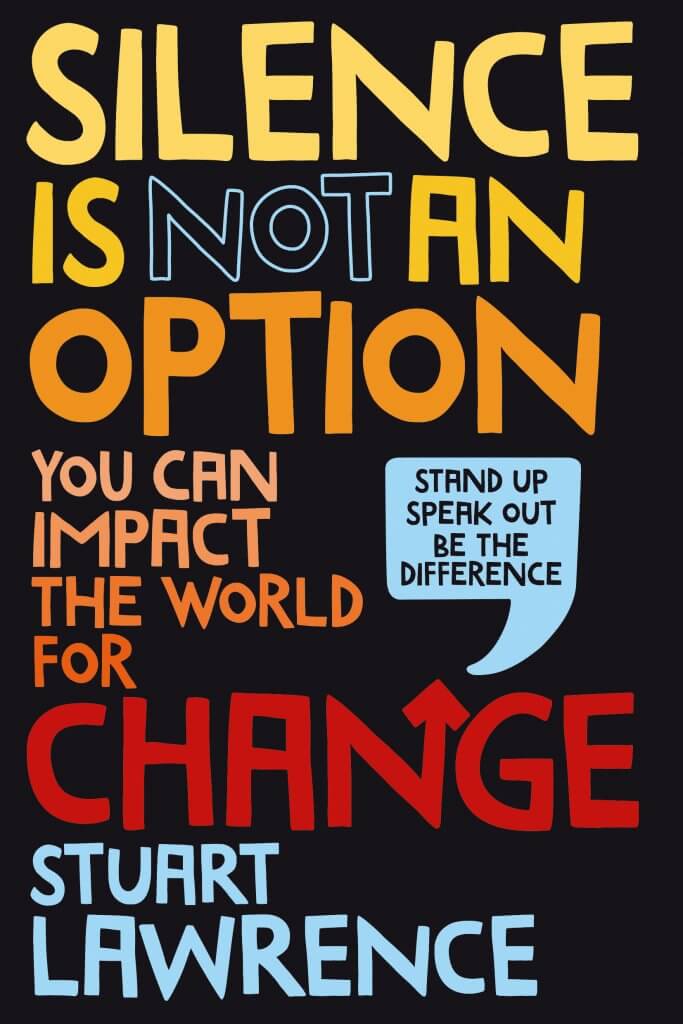
Silence is Not an Option

Silence is Not an Option is the first book by Stuart Lawrence – the younger brother of Stephen Lawrence who tragically died in an unprovoked attack on 22 April 1993. The book is interspersed with reflections on his brother Stephen’s life and murder as well as the tools that have helped him live positively and kept him moving forwards when times have been tough. An inspiring read directed at younger readers (aged 10 +) Stuart’s aim is to use his
own experience to help young people – to help all people – find their own voice, stand up for change, and contribute towards creating a more positive society.
Stuart is determined to ensure that children today understand the impact of their actions against others and the importance of inclusion through teaching tolerance and celebrating difference. He has a background in education – working as a teacher for over 15 years – and is now a motivational speaker and youth engagement specialist. Stuart is also a mentor for several young people in the South London area.
Since his brother’s death, Stuart and his family have had a huge impact on the change of attitude towards racism within British society. Their story is still as impactful and important today.

Scholastic

This is a great book to read slowly. It gives the reader practical activities in each chapter, to really think about themselves and how they can impact those around them, before moving onto the next chapter. It is for independent reading and reflection, but could also prompt some brilliant discussions between young people if shared with a group. Chapters range from the influence of role models (Stuart discusses meeting Nelson Mandela) to championing yourself and others. Stuart is incredibly busy, but I just asked him to quickly recommend some books for teenagers to help them understand their place in the world and how to contribute positively:

– Black and British by David Olusoga (I’ve read the abridged “short history” version for younger readers and it is brilliantly fascinating)

– This Book is Anti-Racist by Tiffany  Jewell (another full of practical advice)

– Everyone Versus Racism by Patrick Hutchinson

– No Win Race: A Story of Belonging, Britishness and Sport by Derek A Bardowell

Scholastic also allowed me to share this excerpt from chapter 3: YOU ARE IN CONTROL:

SELF-CONTROL

After losing my brother Stephen, I really had to learn self-control. Suddenly, my family and I were in the newspapers and on the TV. A lot of the time, the public were being misinformed about our story. I was so angry that my brother was being portrayed as a gang member and a drug dealer, when he was an A-level student aspiring to become an architect.

However, I had to control myself, because lashing out would only affect my family and my brother’s case negatively. It didn’t mean I didn’t speak out, but I had to exercise self-control in the way I handled the situation. I had to be calm and composed, even though I didn’t feel like it.

What is Self-control? Having self-control means being able to manage your decisions, emotions and behaviours so that you can achieve your goals. This skill is what separates humans from the rest of the animal kingdom!

Self-control is rooted in the front part of our brains, in an area called the prefrontal cortex. This is the planning, problem-solving and decision-making centre of the brain. Did you know that this part of the brain is much larger in humans than it is in other mammals? This area of our brain acts differently at different stages of our lives. For example, teenagers are more likely to act on impulse or to misunderstand their emotions than older people. As much as you might not want to believe us adults and feel like you are an exception to the rule, these are scientific facts!

You can only control yourself. For example, let’s say you are trying out to become the captain of the school netball team and, unfortunately, you aren’t picked for the role. Instead of sulking, getting angry or upset, you show good sportsmanship and shake the hand of your competitor. In doing this, you use your self-control. You are unable to control the situation but you are able to control your reaction and that is what is important. Don’t forget, it’s always useful to get feedback so that you can improve and win next time.

About the author: Stuart Lawrence is the younger brother of Stephen Lawrence, the young man who, on 22 April 1993, at the age of just 18, was murdered in an unprovoked racist attack. Stuart is an educator and motivational speaker, dedicated to helping to transform the life chances of young people.

Stephen Lawrence Day is held on 22 April each year to commemorate Stephen’s life.
Follow the journey: #SilenceIsNotAnOption Insta @hon_stuartlawrence Twitter @sal2nd

SILENCE IS NOT AN OPTION is published today by Scholastic.

With thanks for sending me a review copy

The Fountains of Silence

A haunting and romantic novel set in post-war Spain by Ruta Sepetys – winner of the Carnegie Medal 2017.

Madrid, 1957.

Daniel, young, wealthy and unsure of his place in the world, views the city through the lens of his camera.

Ana, a hotel maid whose family is suffering under the fascist dictatorship of General Franco.

Lives and hearts collide as they unite to uncover the hidden darkness within the city.

A darkness that could engulf them all . . .

Master storyteller Ruta Sepetys once again shines light into one of history’s darkest corners in this epic, heart-wrenching novel about identity, unforgettable love and the hidden violence of silence.

Penguin

I was lucky enough to be invited to join a small Q&A session with Ruta Sepetys on zoom last month, to discuss her latest title THE FOUNTAINS OF SILENCE. It was an absolutely fascinating conversation between her and Carmen McCullough (editorial director at Puffin), followed by some questions from the invited bloggers. Do read all the other blogs to discover her answers to some really interesting questions about the research behind her writing as well as the writing itself and its reception.

Ruta talked about building narratives from what you know (and assume) about a person, and how important it is to give a voice to unheard stories to maybe change opinions and open up minds. It was amazing hearing about the lengths she went to in researching details to include that would immerse the readers in a sensory experience – to the extent that she owns a key to a room in the hotel that her American family stayed in, brochures they would have seen in the foyer, a spoon they would have used!

When it was my turn to ask some questions, mine weren’t really about FOUNTAINS at all (although it was relevant as it had recently been announced that it had been longlisted for this year’s Carnegie AND NOW SHORTLISTED!!!), but rather about her experience being nominated for and winning the Carnegie medal:

On your website it says your “books have won or been shortlisted for over forty book prizes”, but the Carnegie is the only one specifically mentioned, why is the medal so special?

Ruta’s answer to this question blew me away:

One of the oldest, most enduring prizes that is recognised world-wide…When I began writing…many of the true witnesses would say “don’t bother, no one’s interested, the world has forgotten us”, and to be recognised on a longlist for an award like this…is restoring a bit of dignity to these people…The true survivors feel honoured by the award, and that is really powerful. It brings history out of the dark.

Is it just a nice thing to win an award, or do you think they are important for bigger reasons?

Ruta made some great points about the Carnegie promoting a culture of reading, being a reading community, and bringing people together around one story. Reading is a creative partnership between the author and the reader:

…the author provides the text and the reader brings the character to life, the setting, amplifies the emotion…walks by their side for 300pages feeling their fear…Awards acknowledge that empathy, I think that’s the most important part.

Thank you so much to Ruta for the really thoughtful answers.

THE FOUNTAINS OF SILENCE is out in paperback now!

CKG21 Shortlists Announced!

The shortlists of the prestigious CILIP Carnegie and Kate Greenaway Medals, the UK’s oldest and best-loved book awards for children and young people, were announced today for 2021.

I’ve still got to read two of the Carnegie shortlist before I think about my personal winner, they’re so varied that I can only imagine the conversations the judges will have trying to pin down a winner, I’ve honestly loved all of those that I’ve read so far.

Again, two books I haven’t seen the inside of on the Greenaway list, but I’ve ordered them to shadow at school, really looking forward to sharing them with students! Fascinating fact on the announcement blog – this is the first shortlist ever that are all author-illustrator creations!

The winners will be announced on Wednesday 16th June, so get reading…

First Story Young Writers virtual festival

The Young Writers festival, the highlight of the First Story Young Writers programme, kicks off on 24 March 2021. This festival provides a unique opportunity for hundreds of young people from less advantaged backgrounds to engage with a literature festival , often for the first time. Pre-pandemic, staged annually (at Cambridge University), the festival is an inspiring day-long event featuring acclaimed speakers, book signings, readings and writing workshops. For 2021, the festival will become predominantly a free and open access festival online, in a pandemic-necessitated change. From hundreds of students previously attending the festival in Cambridge, this move enables thousands of young writers and readers to access the festival from across the UK and beyond.“We are amazed how many schools have welcomed the festival and registered this year; a day of stimulating creative activity is clearly very welcome at the end of a long challenging term’” said Antonia Byatt, CEO First Story.

First Story partner schools will all take part in live writing workshops with First Story Writers, streamed into their classrooms.

The festival events open to the public are as follows:

24 March Angie Thomas  – access will be open until 23 April 2021 

24  March Young Writers Showcase, chaired by Dean Atta

From 24 March, all Craft and Technique Resource short events will also be available to watch at any time.

All events can be accessed via the festival site here: https://firststory.org.uk/festival/

Sign up early as a school to the Angie Thomas event and receive free copies of THE HATE YOU GIVE:  https://firststory.org.uk/festival/#angie

A limited number of workshops, and a CPD event are for First Story members only. 

Show Us Who You Are

When Cora’s brother drags her along to his boss’s house, she doesn’t expect to strike up a friendship with Adrien, son of the intimidating CEO of Pomegranate Technologies. As she becomes part of Adrien’s life, she is also drawn into the mysterious projects at Pomegranate.

At first, she’s intrigued by them – Pomegranate is using AI to recreate real people in hologram form. As she digs deeper, however, she uncovers darker secrets…

Cora knows she must unravel their plans, but can she fight to make her voice heard, whilst never losing sight of herself?

Knights Of
Cover design by Kay Wilson

A Kind of Spark was one of my top 5 books of 2020, an outstanding debut, so I was anxious to not have too high expectations of Show Us Who You Are…but I worried for nothing because it is completely different but equally brilliant! I asked the author, Elle McNicoll, a few questions (which she answered brilliantly):

In SHOW US WHO YOU ARE, artificial intelligence is not shown in a particularly positive light. Did you do a lot of research into the technology or did a piece of tech news spark the idea?

I think it’s the humans controlling the AI that are not shown in a particularly positive light, but I’ll leave that to readers. A lot of AI stories are about AI vs humans and a sentient new being rising up to take over the world. I think that’s a fear that powerful people have about the marginalised–that they will rise up if granted humanity. An interesting fear that says a lot, but not what my AI Grams do. It’s not something that happens in Show Us Who You Are. The AI are very innocent and reactive and the uprising happens elsewhere. The idea was sparked by Prince’s death, when people said they wanted to show a hologram of him performing at concerts. I thought it was a revolting idea.

It feels like SHOW US WHO YOU ARE came extremely quickly after your debut! Had you started writing the idea before A KIND OF SPARK was published or did it come to you all of a sudden?

I was writing it from March 2020, so it was something to get me through the first lockdown. I had Covid and was stuck in my room, feeling horrid and wanting to write about a future with no virus and lots of adventure. I was deep into Show Us Who You Are when A Kind of Spark came out, so 2020 was a very eventful year. 

Both of your protagonists are autistic, and wonderfully different, were you thinking about stereotypes that you wanted to challenge or did you simply want to create representative characters?

I think the latter. I always want to create dynamic neurodivergent heroines who are full of brains and heart and have complete agency over their story. 

In both your books, a growing friendship plays a really important part in the story. Why does it matter so much, do you think, to include such relationships?

Being general here, but a lot of neurodivergent children experience extreme isolation and loneliness. I had a very difficult childhood when it came to making and maintaining friendships and I was bullied a lot for being different. So, that need for connection and being understood is very strong in my work. Adrien and Cora sort of save each other by becoming best friends. They’re kindred spirits and I think it’s essential for ND readers to know that they can find their people someday, and that they deserve to be celebrated. Not just tolerated.

Publishing two books in lockdown has…not been ideal, but have you found remote events a positive thing?

I’m grateful for virtual events, they’ve been wonderful. Doing virtual school visits has been fantastic. But it’s deeply frustrating to have fallen into two lockdown periods. I’ve never been able to walk into a bookshop on publication day. Never met a reader in the flesh. It’s really demoralising and makes it harder to go home and write uplifting things. I’m so grateful to Twitter for allowing me a way to speak to readers. 

When things are “back to normal”, have you thought about what kind of events you might enjoy doing with readers?

I’m desperate to do physical events where I can talk for more than ten minutes about my work and why neurodivergent representation matters. I wrote a middle grade so that I could have these important conversations with young people. Awards have been lovely, but I need to be able to speak to readers and young people about why these books are needed. So I’d love to do more events with booksellers, schools and libraries. That’s the dream.

What are you reading at the moment and who would you recommend it to?

I’m about to start Crater Lake: Evolution by Jennifer Killick. If you love comedic horror, she’s for you. I’m looking forward to seeing her fab characters again.

What’s next for you?

I am writing two books I’m really passionate about at the moment. One is a YA, so will need to go out into the world and find its home. I’m the only one that believes in it right now, but I have the same feeling that I did with A Kind of Spark. So, I’m following it.

Show Us Who You Are by Elle McNicoll is published 4th March by Knights Of in paperback original (thank you Ed PR for sending me a copy and organising the interview).

The Deep-Sea Duke

When Hugo and Ada travel to their friend Dorian’s planet for the holidays, Hugo is anxious about being accepted by Dorian’s powerful family. But when they arrive on Hydrox, there are more pressing things to worry about, as the planet has become a temporary home for refugee butterflies. Displaced from their home by climate change, the butterflies have been offered sanctuary by Dorian’s parents, but they’re quickly running out of space. Meanwhile, beneath the seas, a strange creature is wreaking all kinds of havoc … Can Hugo, Dorian and Ada step in before the crisis gets out of control?

Barrington Stoke
cover design: Helen Crawford-White

You all know how much I love the extra-readable YA from Barrington Stoke (and everything else they publish, but anyway…) so I’m always excited when I get the chance to review one of their titles. I was especially excited to see The Deep Sea Duke arrive, as The Starlight Watchmaker introduced some utterly amazing characters and I wanted to join them in another adventure. I also got a chance to follow up with the author, Lauren James:

When I interviewed you for TeenLibrarian around the publication of The Starlight Watchmaker, you mentioned that you had plans to write a sequel on Dorian’s planet because there was still a lot more story to tell about Dorian and Hugo’s relationship. I’ve loved to see that come true (and was really pleased to see my favourite character, Ada, still plays a large part – pun intended). Is the final version much different to what you had planned 18 months ago?

Not much, really! I’ve always had a really clear vision for these books, and one of the joys of writing short novellas (each book is around 20,000 words long) is that the edits tend to be quite low-key. Not much changes, unlike my novels, which are torn to bits before I’m through with them. But I’ve always been able to see exactly where Hugo and Dorian’s story is going, and it’s so nice to see it come together. 

There is a definite focus on climate change (and the causes) in this novella, did you find yourself doing a lot of research before (or during) the world building?

I’m very interested in climate politics in general, so a lot of the content in the book was stuff I was already aware of. I read a lot of newsletters about climate change, and reading articles helped me establish what I wanted to say with the novella.

What is your main piece of advice for a teen concerned about climate change, and how they can do anything about it?

So many of the climate fiction books I read focus on the effect that individuals can have on the planet, with the message that we all need to be more responsible, greener consumers. I wanted to look at how industry and businesses are causing pollution, to make it clear to my young, scared readers that it’s not their responsibility to fix climate change. No amount of careful consumption can fix an industry-wide problem.

However, there are some things people can do to help! My biggest tips are: 

  • Vote in all political elections you are able to, and make sure your representatives are aware that your vote is based on their climate policy views
  • Replace garden lawns with wildflower meadows
  • Switch to LED lightbulbs
  • Don’t fly – and pay for carbon offsetting for any flights you are required to take
  • Make sure your savings and pensions schemes are not invested in companies contributing to climate change. Ask your company to divest from their harmful default options
  • Avoid eating beef, and transition to dairy alternatives
  • Buy in-season food, grown locally (avoiding hot-house produce grown out of season)
  • Change to a renewable energy utility supplier
  • Buy electric cars – but only once your current car is absolutely unable to be fixed. Keep current cars on the road for as long as possible, to keep manufacturing emissions low
  • Install solar panels or solar roof tiles
  • Air dry clothing instead of tumble drying
  • Avoid disposable, cheap fashion and invest in long-term, quality pieces that can be worn for many years

And, of course, plant trees wherever you can. They truly are the lungs of our planet. Depleted forests, savannahs, peatlands, mangroves and wetlands have the ability to grow back quickly, but we need to give them the opportunity to do that. 

How did the Climate Fiction Writers League come about?

The idea was inspired by a similar writing collective, the Women Writers Suffrage League, formed in 1908 by activists, who said, “A body of writers working for a common cause cannot fail to influence public opinion.” They encouraged professional writers to create work about the suffrage movement working to give women the vote. These books were written and published before women got the vote – when they had no idea whether their activism would be successful. 

The comparison between the suffragettes and modern Extinction Rebellion activists is something I’d been thinking about a lot while writing my own climate fiction novel – it’s one of the big questions of our time, I think. Is political protest enough for something as urgent as the climate crisis? Should activists be taking direct action, similar to those taken by the suffragettes? 

I’ve been trying to answer that question for myself while writing my novel, and the Women Writers Suffrage League was mentioned in some non-fiction about the suffragettes. Immediately, I wanted to join a similar movement for climate fiction writers – but I couldn’t find any when I googled it. In fact, I couldn’t really find any comprehensive resources about climate fiction at all. It seemed like something that would be really useful to a lot of people, so I decided to set one up. 

The group has really taken on its own life beyond what I ever imagined, with over 100 authors on board now, and lots of essays and interviews to read: https://climatefictionwritersleague.substack.com/ 

I will always ask: what are you reading at the moment and who would you recommend it to?

I just read an early copy of A Psalm for the Wild-Built by Becky Chambers, which is a really lovely far-future look at a world where humans have worked to stop climate change – and succeeded! I think there’s a desperate need for futures which aren’t dystopian, to encourage people to keep trying to save the planet and not give up – and this does that really well. I also really enjoyed Winter’s Orbit by Everina Maxwell, a nice space opera romance.

What are you working on at the moment?

My next novel continues the climate change theme with Green Rising, set in a future where teenagers can grow plants, and use it to rewild the planet. I’m also working on the novel adaptation of my internet murder mystery An Unauthorised Fan Treatise, which I posted online at https://gottiewrites.wordpress.com/ So lots of stuff in the pipeline!

Huge thanks to Lauren for her wonderful answers and to Barrington Stoke for sending me a review copy. The Deep Sea Duke is out now!

Lauren James is the twice Carnegie-nominated British author of many Young Adult novels, including The Reckless Afterlife of Harriet Stoker, The Loneliest Girl in the Universe and The Quiet at the End of the World. She is also a Creative Writing lecturer, freelance editor, screenwriter, and the founder of the Climate Fiction Writers League. Her upcoming release is Green Rising, a climate change thriller.

Her books have sold over a hundred thousand copies worldwide, been translated into five languages and shortlisted for the YA Book Prize and STEAM Children’s Book Award.

Her other novels include The Next Together series, the dyslexia-friendly novella series The Watchmaker and the Duke and serialised online novel An Unauthorised Fan Treatise.

She was born in 1992, and has a Masters degree from the University of Nottingham, UK, where she studied Chemistry and Physics. Lauren is a passionate advocate of STEM further education, and many of her books feature female scientists in prominent roles. She sold the rights to her first novel when she was 21, whilst she was still at university.

Her writing has been described as ‘gripping romantic sci-fi’ by the Wall Street Journal and ‘a strange, witty, compulsively unpredictable read which blows most of its new YA-suspense brethren out of the water’ by Entertainment Weekly. The Last Beginning was named one of the best LGBT-inclusive works for young adults by the Independent.

Lauren lives in the West Midlands and is an Arts Council grant recipient.  She has written articles for numerous publications, including the Guardian, Buzzfeed, Den of Geek, The Toast, and the Children’s Writers and Artist’s Yearbook 2021. She teaches creative writing for Coventry University, WriteMentor, and Writing West Midlands, providing creative writing courses to children through the Spark Young Writers programme.