A children’s guide to the science and history of telling the time and clockmaking in a fun and interactive way.
This interactive book will help children aged 7-9 understand how clocks work and learn how to tell the time on various devices.
Time is central to our experience as humans, and it’s important for children to know not just how to tell the time, but also how to make the most of it. About Time uses fun and unique elements to teach children about the topic of time and introduce concepts like time zones and time management.
DK Children

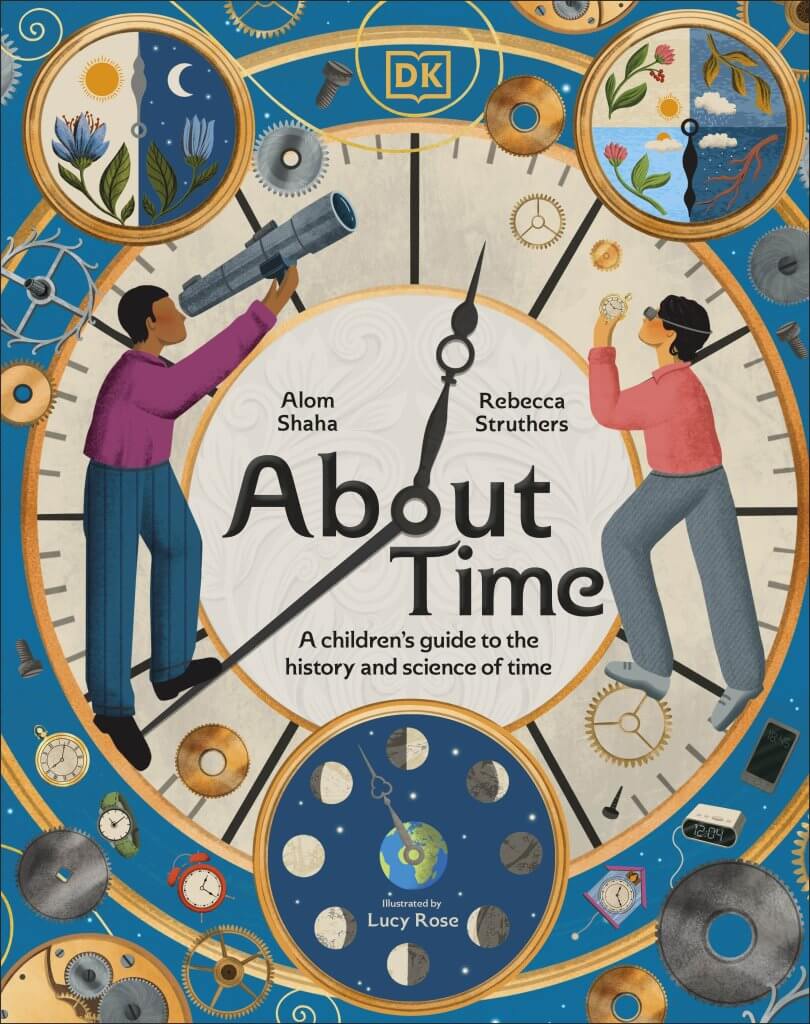
This is a fascinating book, pitched as 7+ but absolutely suitable for much older readers. I can’t believe they got so much in there…I did a degree in geology before my librarianship qualifications so I particularly loved the section on geological time.
We have some thoughts from the co-authors: watchmaker and horologist Rebecca Struthers and science teacher Alom Shaha:

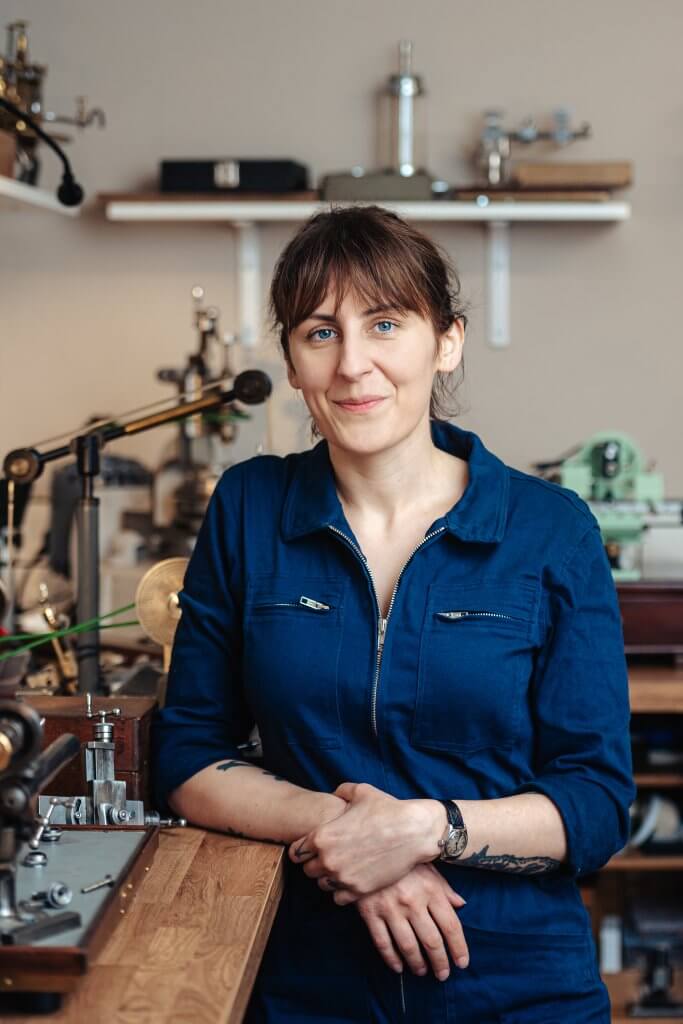
Rebecca Struthers
Your Favourite Section:
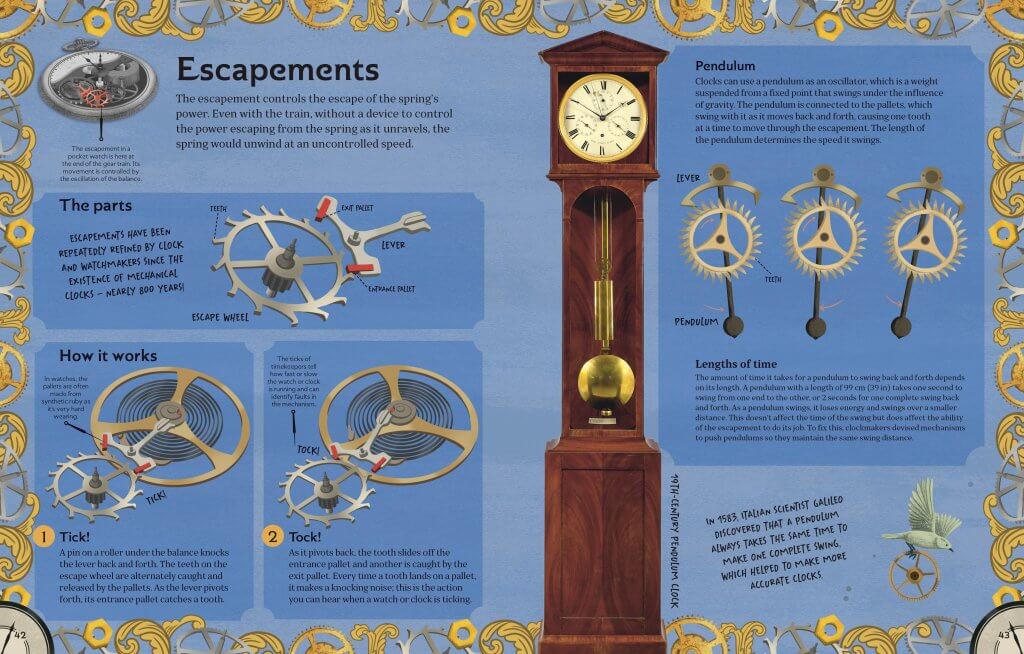
What is your absolute favourite section or concept in About Time and why? What makes this section stand out to you personally? My favourite bit of the book is the central section that takes you through the processes that make a mechanical watch work. Aside from Lucy Rose’s drawings which are stunning, I know I’d have found that fascinating to study when I was a kid.
What do you hope readers will take away from this particular part of the book? I hope it shows that even the most incredible machines can be easy to understand if we break them down and tackle them stage by stage.
Are there any interesting anecdotes or research titbits related to this section that you could share? I structured this section as an age-appropriate version of how watchmakers start their theory training, so this is what they could expect if they wanted to take up the craft when they leave school.

The Contemporary Artisans:
About Time features contemporary artisans from around the world who are keeping the craft of watchmaking and timekeeping alive. This is a fantastic aspect of the book that we’d love to highlight. Why was it important to include these contemporary artisans? I really wanted the subject of watch and clockmaking to feel real, current, and relevant. It was important to me that kids could see themselves in these sorts of jobs when they grow up so the contemporary artisans represent a diverse range of incredible makers from around the world who have learned their skills in a variety of different ways.
Could you pick one or two artisans featured in the book that particularly resonate with you? Who are they, and what makes their work unique or inspiring? They all inspire me, and I feel incredibly privileged to know them all. Alison Moriarty’s story resonates with me as a fellow woman with an auto-immune disease. She manages being an exceptionally talented watchmaker and enameller around her health and being a Mum. She’s a queen of multitasking and an all-round legend.
The book also offers insight into how to become a watchmaker. How do the stories of these artisans tie into that aspiration for young readers? I’m fast running out of my word count so one last thing I’d like to include is how varied the artisans’ training routes are. They include people who’ve studied at top training schools, and, people who are completely self-taught. Some run big companies, others work from home. Some have dyslexia. There are so many different approaches to this craft, as long as you’re passionate and motivated you can be anyone based anywhere in the world and have a successful career.
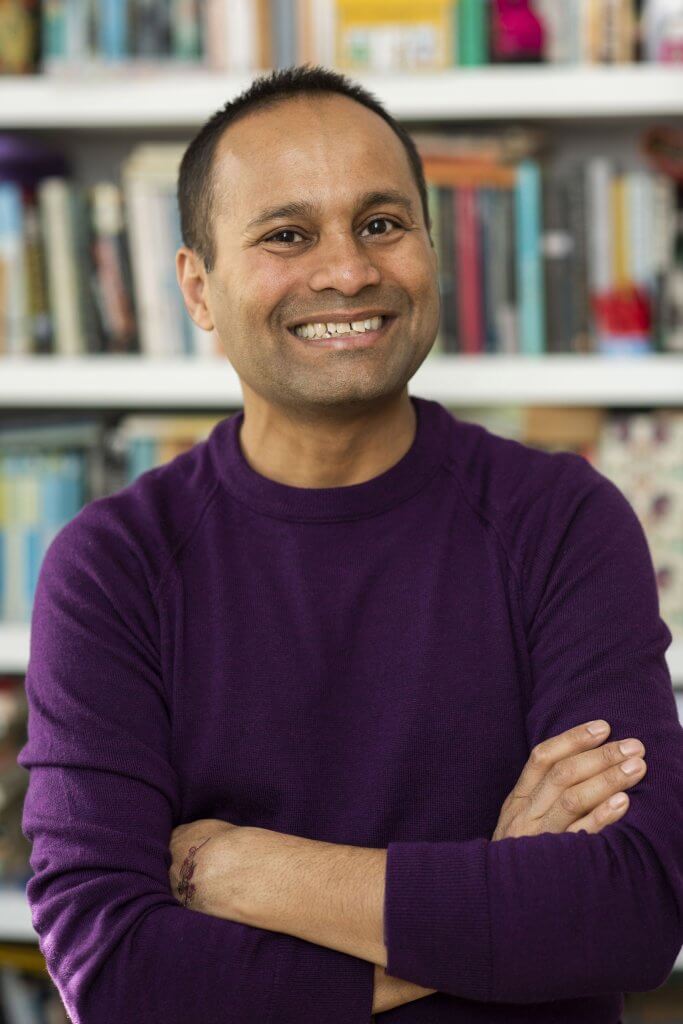
Alom Shaha
Your Favourite Section:
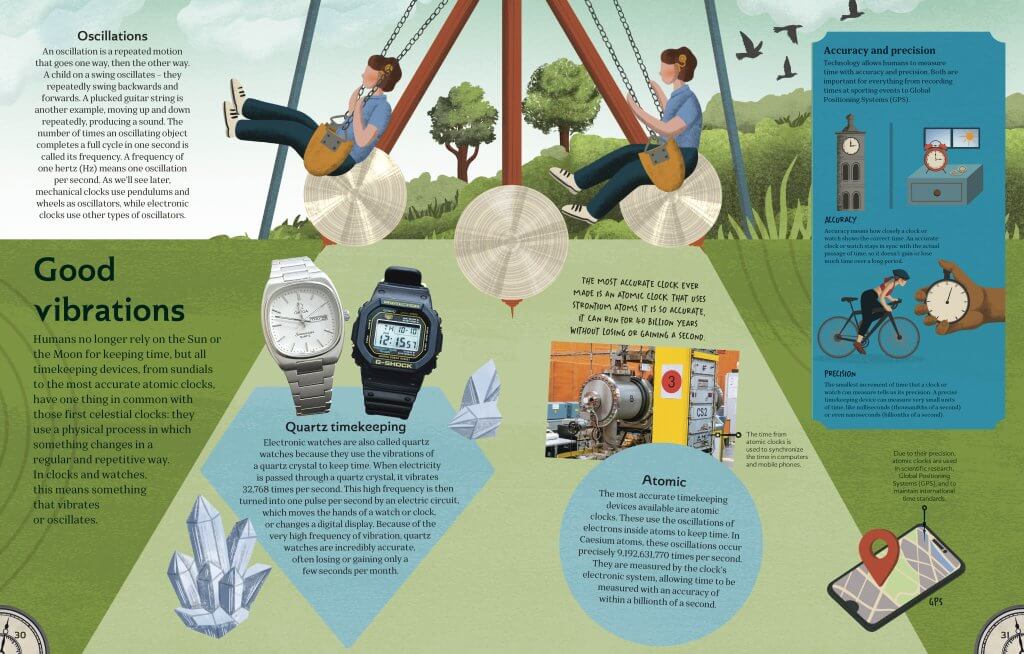
My favourite section of the book is “Telling the Time without a Clock” and the following pages, up to and including “Good Vibrations”, because they deal with an idea that is absolutely central to horology: in order to measure and record time, we “need a physical process in which something changes in a regular and repetitive way”. I’m particularly pleased with the way these spreads combine scientific and historical information with practical activities that will allow readers to experience and explore these time-keeping related phenomena for themselves. Before writing the book, I’d never actually made my own sundial and found the process of making one absolutely delightful. I think here’s a massive emotional difference between reading about how a sundial works and seeing for yourself how the shadow of a pencil stuck to the floor moves as the day progresses. I hope lots of readers will try this for themselves.
The Contemporary Artisans:
Including contemporary artisans gave us a way to emphasise the fact that watchmaking is not just a thing of the past but something that our readers might aspire to do themselves. It also allowed us to show something that is really important to me personally as a teacher – that people don’t have to choose between science, art, engineering, and craft for their work or passions. Artisans like Tabea Rude and Nathalie Jean-Louis exemplify how people can take an interest in all of these apparently different fields of human endeavour and bring them together in their work. Unfortunately, young people are often presented with very narrow “careers advice” and I’m really proud that we’ve shown that there are a variety of interests and routes that can lead to someone becoming a watchmaker. I hope readers will find someone they relate to among the diverse artisans we’ve featured.
About Time is published by DK Children on 28th August, 2025. Thank you to Natasha Finn for the review copy and organising this guest post.

